Skip to content
When you are named a beneficiary in a Texas trust, it can feel overwhelming—but with the right legal guidance, it doesn’t have to be. As a beneficiary, you are not merely a passive recipient. Texas law grants you specific, powerful rights to ensure the person managing the trust—the trustee—acts transparently and in your best interest.
These rights are your shield and your compass, designed to protect the legacy your loved one worked so hard to build for you. Understanding them empowers you to hold the trustee accountable and secure your inheritance.
Your Core Rights as a Texas Trust Beneficiary

Stepping into the world of a loved one's trust can be difficult. You are likely grieving while also facing a complex legal structure. The good news is that the Texas Trust Code is firmly on your side, providing significant protections to ensure your inheritance is secure.
Think of these rights as your personal toolkit. Understanding what they are and how to use them is the first step toward gaining confidence in the process. Let’s break down your most fundamental entitlements in plain English.
The Right to Information
You cannot protect what you do not know about. One of your most critical rights as a beneficiary in Texas is the right to be informed. At its core, this means you are entitled to receive a complete copy of the trust document.
This document is the official rulebook that lays out everything, including:
- The assets that belong to the trust.
- Who the beneficiaries are and what they are entitled to.
- The rules for how and when the trustee can make distributions.
- The specific powers and duties given to the trustee.
Trying to navigate a trust without this document is like driving without a map. If a trustee refuses to provide you with a copy, it is a major red flag. This kind of behavior often signals a bigger problem and may require you to get a Texas trust administration lawyer involved.
The Right to an Accounting
Seeing the trust document is just the start. You also have the right to know exactly how the trust's money and property are being managed. This is done through a formal report called an "accounting."
An accounting is a detailed financial statement for the trust. It shows every dollar that came in, every dollar that went out, and what remains. The Texas Trust Code provides strong legal ground for this right. Under statutes like Sections 113.152 and 111.004, you have the power to demand a formal accounting. A trustee who fails to provide one is not just being difficult—they are violating the law and can face serious penalties, including removal. You can see how these protections are discussed by professionals at TX.CPA to understand their importance.
To help you get a clear picture of what you're entitled to, here's a quick summary of your core rights.
Key Rights of a Texas Trust Beneficiary at a Glance
This table summarizes the fundamental rights granted to beneficiaries under the Texas Trust Code, helping you quickly understand your entitlements.
| Right | What It Means for You | Governing Law (Texas Trust Code) |
|---|---|---|
| Right to Information | You can get a copy of the trust document and be kept reasonably informed about its administration. | § 113.060, § 115.001 |
| Right to an Accounting | You can demand a detailed report of all trust assets, income, and expenses from the trustee. | § 113.151, § 113.152 |
| Right to Distributions | You are entitled to receive payments from the trust as specified in the trust document. | Governed by the terms of the trust itself. |
| Right to a Loyal Trustee | The trustee must act solely in your best interest, free from conflicts of interest. | § 117.007 (Duty of Loyalty) |
| Right to an Impartial Trustee | The trustee cannot favor one beneficiary over another unless the trust explicitly allows it. | § 117.008 (Duty of Impartiality) |
| Right to Enforce the Trust | You can take legal action to compel the trustee to follow the trust's terms or remedy a breach. | § 115.001, § 114.001 |
| Right to Remove a Trustee | You can petition a court to remove a trustee for misconduct or failure to perform their duties. | § 114.001, § 113.082 |
Understanding these rights is your first line of defense. They ensure the trustee is held accountable and that the trust operates as intended.
The Right to a Loyal and Impartial Trustee
A trustee is more than a manager; they are a fiduciary. This legal term carries significant weight. It means they have a strict legal duty to act with complete loyalty and impartiality toward you, the beneficiary.
In simple terms, they must manage the trust solely for your benefit—not their own. They cannot use trust funds for a personal loan, sell trust property to themselves, or play favorites among beneficiaries unless the trust document explicitly allows it. Their personal interests must be completely set aside. When they fail to do this, they are breaching their fiduciary duties.
Understanding the Trustee's Fiduciary Duties

As a beneficiary, your rights are protected by a powerful legal concept called fiduciary duties. These duties legally bind a trustee to act as a guardian of the trust’s assets. They are a set of strict, non-negotiable rules they must follow under Texas law.
These obligations are the teeth behind your rights. When you understand what a trustee must do, you can more easily spot when they’ve crossed a line and hold them accountable.
The Duty of Loyalty
The cornerstone of a trustee’s role is the duty of loyalty. The principle is simple: the trustee must act solely for the benefit of the beneficiaries. No exceptions.
This means a trustee cannot engage in self-dealing, such as selling trust property to themselves or buying an asset from their own business for the trust, even if the price seems fair. For example, a trustee who is also a real estate agent cannot list and sell a trust property to earn a personal commission. That creates a conflict of interest and is a clear breach of this core duty. Every decision must honor the trust creator's wishes and protect your financial well-being.
The Duty of Prudence
A trustee must also be careful and responsible with the trust's assets. This is the duty of prudence, which is detailed in the Texas Uniform Prudent Investor Act. A trustee is held to the standard of a "prudent investor," meaning they must make sensible, well-reasoned decisions.
This does not mean every investment must be a home run. It means they must:
- Diversify the trust’s investments to manage risk.
- Avoid overly speculative or risky ventures.
- Consider the trust's purpose, timeline, and beneficiary needs.
- Document their investment strategy and decisions.
For instance, investing the entire trust fund into a single, volatile stock would almost certainly breach this duty. A prudent trustee builds a balanced portfolio tailored to the trust's unique goals. You can explore the core fiduciary duties of trustees to learn more.
The Duty of Impartiality
When a trust has more than one beneficiary, the trustee must follow the duty of impartiality. Simply put, they cannot play favorites. They must treat all beneficiaries fairly as outlined in the trust document.
This can be tricky when beneficiaries have different interests. For example, a trust may pay income to a surviving spouse for life (the "income beneficiary") while the remaining assets go to the children upon the spouse's death (the "remainder beneficiaries"). The trustee must balance the need for generating income now without depleting the principal that the children will one day inherit.
Texas Trust Code §117.008 makes this a legal requirement, forcing trustees to manage the trust fairly for everyone involved. Other duties, like the duty to protect trust property and keep you informed, also create a protective shield around your inheritance, giving you solid legal ground if a trustee fails in their responsibilities.
How to Request an Accounting and Key Information
As a trust beneficiary, information is your most powerful tool. Texas law recognizes this and gives you the absolute right to demand a formal accounting and other key details from the trustee. Getting this information is the first practical step in ensuring the trust is being administered correctly.
Step-by-Step Guidance for Requesting Information
Asking for an accounting is about exercising your rights professionally and creating a clear record.
Here is a step-by-step guide:
- Put It in Writing: Always start with a formal written request. A certified letter with a return receipt provides legal proof that the trustee received your demand.
- Be Specific: Clearly state that you are requesting a complete copy of the trust document (and any amendments) and a formal accounting for a specific period, such as from the trust's creation or for the past year.
- Reference the Law: Politely mention your rights under the Texas Trust Code, particularly Section 113.151. This shows the trustee you are serious and informed.
- Set a Reasonable Deadline: Provide a fair timeframe for a response, such as 30 or 60 days. This demonstrates you are acting in good faith.
- Keep Copies: Save a copy of your letter and proof of delivery. This documentation is your paper trail and can become crucial evidence if legal action is needed.
What a Proper Trust Accounting Must Include
Under Texas law, an "accounting" is a detailed report that provides a full picture of the trust’s financial health. It should allow you to trace every dollar.
A complete accounting must include:
- All Trust Property: A list of all assets the trustee took control of, including their value at the start.
- Receipts and Disbursements: A full log of all money and property that came into the trust and every expense paid out.
- Liabilities: A list of any debts or obligations the trust has paid or still owes.
- Trustee Compensation: The exact amount paid to the trustee for their services.
- Current Assets: A list of all property the trust currently holds, including its location and current value.
If any of these pieces are missing, the accounting is incomplete. For a closer look, you can read our guide on what is trust accounting.
Common Trustee Excuses and Why They Are Invalid
Some trustees may offer excuses to avoid providing information. However, most of these reasons do not hold up under Texas law.
- "It's too expensive or time-consuming." The cost of preparing an accounting is a normal administrative expense of the trust. The duty to account is not optional.
- "You don't need to see it; just trust me." This completely sidesteps their legal duty of transparency. Your right to information is based on law, not the trustee's convenience.
- "The trust says I don't have to." While a trust can modify certain duties, it generally cannot eliminate the fundamental duty to account for trust assets, especially when a beneficiary makes a formal demand.
When you receive sensitive documents, it is wise to be mindful of digital privacy. You may want to protect your privacy and ensure document security. If a trustee continues to ignore a formal written request, it is time to consult a Texas trust administration lawyer to enforce your rights.
How Different Trust Types Affect Your Rights
Not all trusts are the same, and the specific type your loved one created affects when your rights as a beneficiary take effect. The biggest distinction is between revocable and irrevocable trusts.
A revocable trust is like a draft—the person who created it (the grantor) can change or even cancel it. An irrevocable trust is like a final contract; once it's signed, it is generally set in stone. This difference is critical for a beneficiary. If you are named in a revocable trust, your rights are limited while the grantor is alive. Your full rights to information and an accounting typically do not solidify until the grantor passes away and the trust becomes irrevocable.
Revocable vs. Irrevocable Trusts
Once a trust becomes irrevocable, your rights shift into high gear. The assets are now officially locked in for your benefit, and the trustee’s duties to you are fully enforceable under the Texas Trust Code.
Here’s a quick breakdown:
| Trust Type | Beneficiary Rights (While Grantor is Alive) | Beneficiary Rights (After Grantor's Death) |
|---|---|---|
| Revocable Trust | Very limited. The grantor retains control and can change or dissolve the trust. | Full rights to information, accountings, and distributions activate as the trust becomes irrevocable. |
| Irrevocable Trust | Full rights from day one. The terms are fixed, and the trustee is accountable to you immediately. | Your rights continue as defined in the trust; no changes occur. |
Understanding this distinction is crucial for anyone involved in estate planning or trust administration.
Decoding Complex Trust Clauses
Trust documents often contain specific clauses that can seem confusing. Two of the most common are spendthrift clauses and rules for discretionary distributions.
A spendthrift clause is a protection mechanism. It is designed to shield your inheritance from creditors or the temptation to spend it all at once. It prevents you from using your future inheritance as collateral and stops creditors from seizing trust assets before they are distributed to you. Importantly, a spendthrift clause does not cancel your core rights to an accounting or to hold a trustee liable for mismanagement.
Many trusts also give the trustee "discretion" over when and how to make payments. This power is rarely a blank check. The trust usually provides a standard, such as for the beneficiary's "health, education, maintenance, and support" (HEMS). This means a trustee must make reasonable decisions that fit within that framework. Even with "sole discretion," a trustee is still bound by their fiduciary duties of loyalty and good faith. An experienced Texas estate planning attorney can help you understand these terms and ensure the trustee is following the rules.
What to Do When a Trustee Breaches Their Duty
Discovering that the person entrusted with your loved one's legacy may be mismanaging it is deeply unsettling. It is natural to feel a mix of betrayal, anger, and anxiety. However, Texas law provides you with options to take action and protect your inheritance.
This is the moment to take back control. Understanding your options is the first, most powerful step.
What a Breach of Trust Looks Like in Texas
A "breach of trust" is not limited to theft. Under the Texas Property Code, it is any violation of a duty a trustee owes to a beneficiary. This can range from blatant self-dealing to simple but costly carelessness.
Here are a few real-world scenarios of how a breach of trust can occur:
- Self-dealing: The trustee sells trust property to themselves or buys assets for the trust from their own company.
- Mismanaging assets: Making reckless investments that lose value or letting cash sit without any attempt to prudently invest it.
- Failing to account: Refusing to provide a formal accounting or share information after a proper written request.
- Playing favorites: Unfairly favoring one beneficiary over others, contrary to the trust's instructions.
- Ignoring the trust's terms: Failing to make required distributions or ignoring the rules laid out by the person who created the trust.
The type of trust you're dealing with often dictates how and when you can step in.
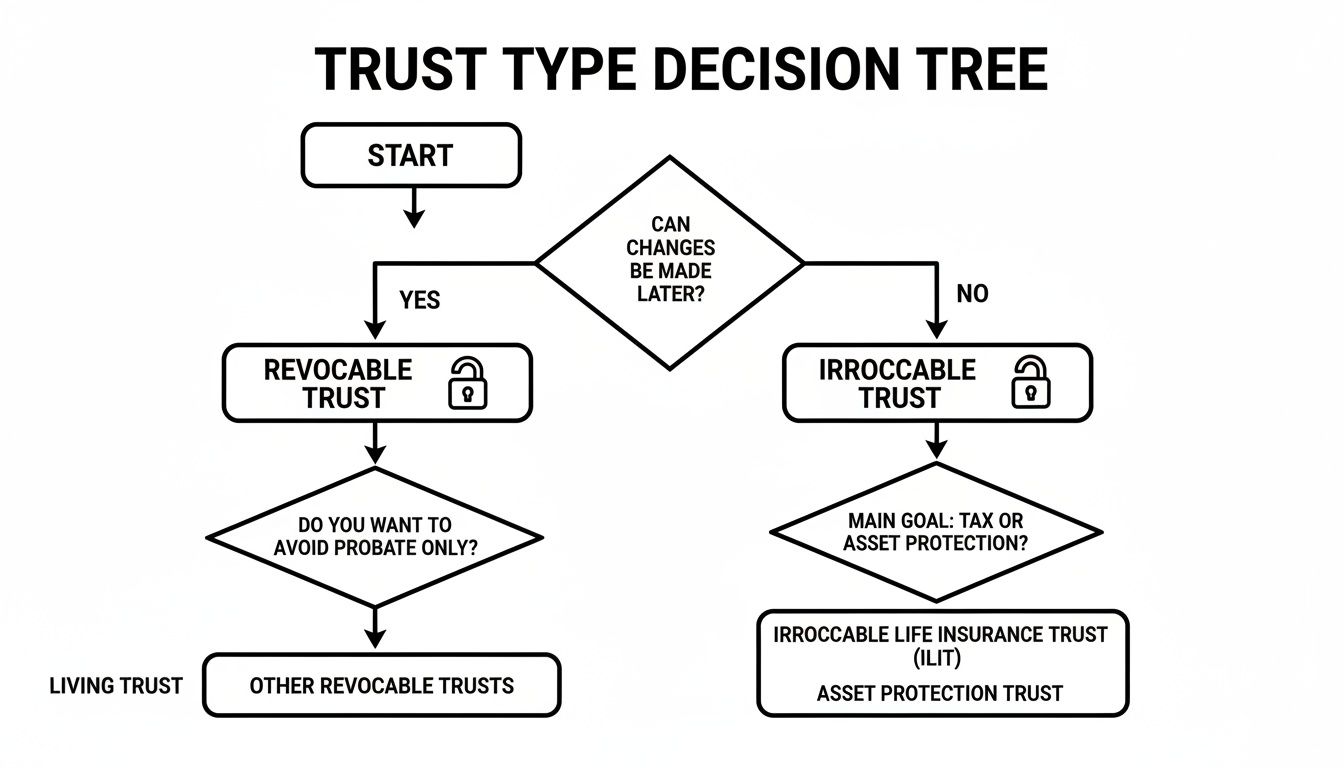
As you can see, whether a trust is revocable is a key factor. It determines when your beneficiary rights fully activate, which directly impacts your ability to legally challenge a trustee's actions.
Your Legal Remedies for a Trustee's Breach
If you have documented proof that a trustee has breached their duty, you are not helpless. Texas law gives you powerful remedies. You can petition a court to step in, protect the assets, and order the trustee to make things right.
There’s a four-year statute of limitations from the moment you knew (or should have known) about the breach, so you must act promptly. Texas Property Code §114.008 and §114.064 give courts the power to force a trustee to pay damages, recover property, and even cover your attorney’s fees.
Your main legal options include:
- Compelling the Trustee to Act: You can sue to force the trustee to do their job, such as providing an accounting or making a required distribution.
- Enjoining the Trustee from Acting: If you fear the trustee is about to take a harmful action, like selling a family property for far below market value, you can ask a court for an injunction to stop them.
- Seeking Monetary Damages: You can sue the trustee personally to recover any money the trust lost due to their misconduct. The goal is to make the trust whole again.
How to Remove a Trustee in Texas
Sometimes, the only solution is to remove the trustee entirely. This is a significant step, but it is often necessary to protect the trust from further harm.
Under Texas Trust Code §113.082, a court can remove a trustee if:
- They have materially violated the trust's terms or their duties.
- They have become incompetent or insolvent.
- There is significant conflict between the trustee and beneficiaries that impedes the trust's administration.
The key to removing a trustee is clear and compelling evidence. This is why keeping a paper trail of all communications and suspicious transactions is essential. If you suspect a breach of fiduciary duties in Texas, your first call should be to an attorney experienced in trust disputes. They can help you evaluate the evidence and champion your rights in court.
Knowing When to Call an Attorney
Knowing your rights is one thing; recognizing when you need legal backup is another. While open conversation can resolve minor issues, some situations are serious red flags that require professional guidance. Acting quickly is about protecting the legacy your loved one worked so hard to leave for you.
Red Flags That Mean It's Time to Call a Lawyer
If you encounter any of these situations, it is time to seek legal advice. These are not minor hiccups; they are signals that the trustee may be breaching their duties.
- Refusal to Provide Information: The trustee ignores your written requests for a copy of the trust or a formal accounting. This is one of the clearest red flags.
- Suspicious Financials: You notice strange withdrawals, illogical investments, or unexplained fees on trust statements.
- Lack of Communication: The trustee will not return your calls or answer legitimate questions about the trust's management.
- Obvious Conflicts of Interest: The trustee uses the trust for personal gain, such as selling trust property to themselves at a discount. This is a classic example of self-dealing.
A trustee’s job is to provide clarity and follow the rules. When their actions—or silence—create confusion, getting a lawyer's opinion is a necessary step to protect what is rightfully yours.
How a Texas Trust Attorney Can Help
Contacting an attorney does not automatically mean a lawsuit. Often, a formal letter from a law firm is enough to make a reluctant trustee comply with their obligations.
A Texas trust administration lawyer can serve as your advocate. Here’s what they can do for your family:
- Evaluate the Situation: They will review the trust document, communications, and other evidence to determine if the trustee has breached their duties.
- Enforce Your Rights: They can send a formal demand letter with legal authority, compelling the trustee to provide an accounting or other required information.
- Negotiate a Solution: Many disputes can be resolved through mediation or direct negotiation, saving time, stress, and expense.
- Take Legal Action: If the trustee remains uncooperative or has caused financial harm, your attorney is prepared to file a petition in court to force an accounting, suspend the trustee’s powers, or seek their removal.
As a trust beneficiary, your rights are powerful, but they are only effective if you enforce them. A consultation can provide a clear roadmap for protecting your loved one's legacy.
Frequently Asked Questions About Beneficiary Rights
It is natural to have questions when you are a trust beneficiary. Here are plain-English answers to some of the most common ones.
Can a Trustee Change a Trust Without My Consent in Texas?
No. A trustee’s job is to manage an irrevocable trust according to its existing terms, not to rewrite them. Only the original creator (grantor) can change a revocable trust while they are still alive. If a trustee attempts to alter an irrevocable trust on their own, it is a serious breach of duty.
How Long Does a Trustee Have to Distribute Assets in Texas?
The Texas Trust Code does not set a specific timeline. Instead, it requires a trustee to act with "reasonable diligence." What is "reasonable" depends on the trust's complexity. A trustee may need time to sell property, file tax returns, or pay debts. However, they cannot use these tasks as an excuse for indefinite delays. If you feel distributions are being unreasonably delayed, you can ask a court to compel the trustee to act.
Do I Have Rights as a Remainder Beneficiary?
Yes. As a remainder beneficiary—someone who will inherit after the initial beneficiaries—you have important rights now. You are entitled to a copy of the trust and regular accountings. This allows you to monitor how the trust is being managed. The trustee has a duty of impartiality, meaning they cannot favor current beneficiaries by depleting the trust principal at your expense.
What Is the First Step if I Suspect a Problem?
Your first step should always be to put your request for information in writing. Send the trustee a formal letter, preferably by certified mail, requesting a complete copy of the trust and a full accounting. This creates a vital paper trail. If the trustee ignores your request or provides an incomplete report, you have the proof you need for your next step: calling a Texas trust administration lawyer.
If you’re managing a trust or planning your estate, contact The Law Office of Bryan Fagan, PLLC for a free consultation. Our attorneys provide trusted, Texas-based guidance for every step of the process. Visit us at https://texastrustadministration.com to learn more.