Skip to content
Planning for your family's future can feel overwhelming, but with the right legal guidance, it doesn't have to be. Here in The Woodlands, taking that first step with an experienced estate planning attorney is the single best move you can make to protect your legacy. It’s about more than just paperwork; it’s about securing real peace of mind and ensuring your wishes are legally sound under Texas law.
Why Your Family's Future Starts with the Right Attorney

It's easy to push planning for your family's future to the back burner. Life gets busy. But procrastination has a real cost. Without a solid plan, you are leaving critical decisions about your assets, your healthcare, and even the care of your children in the hands of Texas courts.
A seasoned Texas estate planning attorney does far more than just draft documents. They build a comprehensive roadmap designed to protect everything you've worked so hard for, providing clarity and confidence every step of the way.
The Cost of Inaction
It's a strange paradox: most people understand the importance of planning, yet very few actually do it. Research from Growlaw.co highlights this gap perfectly—while 83% of Americans believe estate planning is important, a staggering 55% have no plan at all.
This isn't just a statistic; it has real-world consequences. Families without a plan are often left vulnerable to probate costs that can consume as much as 10% of an estate's value. Even worse, a lack of clear direction frequently leads to painful, avoidable disputes among loved ones.
This is precisely where good legal advice becomes essential. And it’s not just for the wealthy. Estate planning is a fundamental tool for anyone who wants to provide for their family and stay in control of their own legacy.
Gaining Clarity and Confidence
When you work with a skilled attorney, estate planning transforms from a daunting task into an empowering process. They cut through the dense legal jargon of the Texas Estates Code, explaining everything in plain English. The end result is a plan that’s not just legally sound but also a true reflection of your family's unique situation.
A proper plan gives you the power to:
- Protect Your Assets: You decide how your property, investments, and savings are distributed, shielding them from unnecessary taxes and legal fights through strategies like asset protection.
- Appoint Trusted Fiduciaries: You get to name the executor of your will or trustee of your trust—someone you know and trust implicitly to handle your affairs with integrity and in accordance with their fiduciary duties in Texas.
- Prevent Family Disputes: A clear, legally binding plan leaves no room for ambiguity. This dramatically reduces the chance of conflict among your beneficiaries during what is already an incredibly emotional time.
By connecting with a local estate planning attorney in The Woodlands, you're not just hiring a lawyer. You're gaining a trusted advisor who knows Texas law inside and out and can help you build a secure foundation for your family's future. That’s a peace of mind you can’t put a price on.
Clarifying Your Estate Planning Goals
Before you even begin searching for an estate planning attorney in The Woodlands, the most powerful first step is to reflect on your goals. A successful partnership with a lawyer doesn't start in their office; it starts with you getting a clear picture of what you want to accomplish. This transforms a vague, intimidating process into a concrete, manageable project.
Your life story and your family’s needs drive the entire strategy. For example, a young couple in The Woodlands with a toddler has a completely different set of concerns than a retiree. Their primary focus is likely naming legal guardians for their children if the unthinkable happens—a critical step outlined in the Texas Estates Code and a core part of guardianship planning.
In contrast, a local business owner's focus might be entirely on a succession plan to ensure the company they built continues to thrive. For them, it’s all about protecting business assets and ensuring a smooth leadership transition.
Real-World Scenarios and Practical Solutions
While every family is unique, most estate planning goals fall into a few common categories. Understanding yours helps an attorney select the right legal tools to achieve them.
Here are a few real-world examples showing how trust and estate issues arise in Texas:
- Protecting a Loved One with Special Needs: Do you have a child or another family member who relies on government benefits? A direct inheritance could disqualify them from those essential programs. A Special Needs Trust is the ideal solution, allowing you to provide for them financially without jeopardizing their vital support system.
- Keeping Your Family Out of Court (Probate): No one wants their family to endure the time, expense, and public nature of the probate process. A Revocable Living Trust is a common strategy for this, allowing your assets to be transferred privately and efficiently according to your wishes.
- Planning for Incapacity: Estate planning isn’t just about what happens after you pass away. What if you become incapacitated and are unable to make decisions for yourself? Documents like a Durable Power of Attorney for financial matters and a Medical Power of Attorney for healthcare decisions are crucial for appointing someone you trust to act on your behalf.
When you take the time to think through these possibilities, you walk into your first consultation with a sense of purpose. You're not just a passive client; you're an active participant, directing the conversation toward what matters most to you and your family.
To get a running start, feel free to use the resources on our site. Our comprehensive estate planning documents checklist is a great place to organize your thoughts. Jot down some notes and bring them with you to your first meeting.
Matching Your Goals to the Right Legal Tools
Think of estate planning documents as specialized tools. You wouldn't use a hammer to saw a board, and you wouldn't use a simple will when a trust is what's really needed. This table connects common life situations with the legal tools an attorney might recommend to achieve your goals in Texas.
| Your Life Goal or Situation | Potential Legal Document or Strategy |
|---|---|
| Naming guardians for your minor children. | Last Will and Testament |
| Avoiding the probate court process for your assets. | Revocable Living Trust |
| Designating someone to make financial decisions if you cannot. | Durable Power of Attorney |
| Outlining your end-of-life medical care wishes. | Directive to Physicians (Living Will) |
| Providing for a beneficiary without disrupting their government aid. | Special Needs Trust |
Seeing these connections helps demystify the process. Your goals dictate the strategy, and a knowledgeable Texas trust administration lawyer is the expert who knows which tools will build the strongest plan for your family's future.
How to Vet Attorneys in The Woodlands
Choosing the right estate planning attorney in The Woodlands requires diligence. This is not a field for general practitioners. You need someone who lives and breathes the intricate details of the Texas Estates Code and Texas Trust Code—a true specialist.
Think of it this way: you wouldn't hire a divorce lawyer to handle a corporate merger. The same principle applies here, but the stakes are your family's entire future.
This chart breaks down the process: get clear on your goals, find the right legal professional, and then build your plan together.
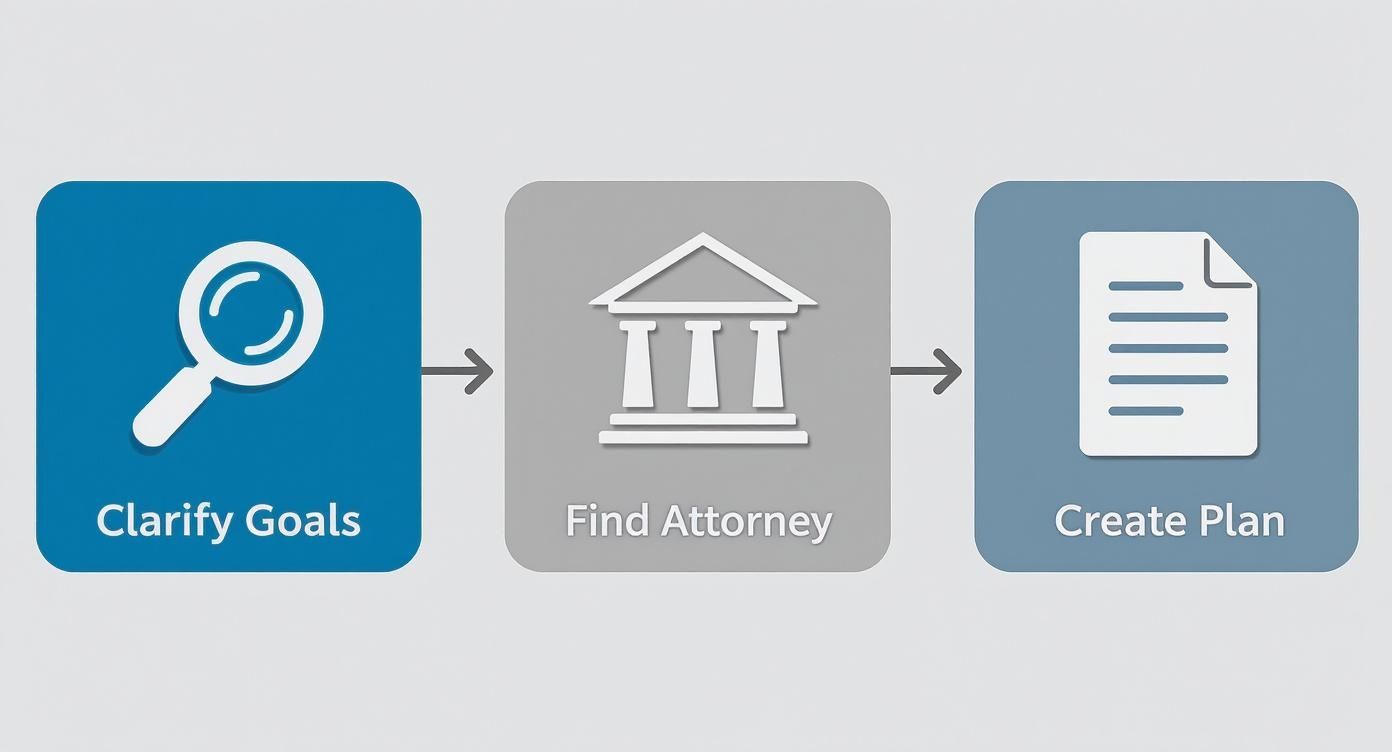
As you can see, vetting your attorney is the critical bridge connecting your personal wishes to legally sound documents. Choosing the right guide ensures your plan is built on a rock-solid foundation.
Look for True Specialization
Here’s one of the most important credentials to look for: Board Certification in Estate Planning and Probate Law by the Texas Board of Legal Specialization.
This isn't just another plaque on the wall. It’s a mark of elite expertise earned by less than 1% of all attorneys in Texas. It signifies that this person has passed a rigorous exam and has dedicated a substantial part of their career to this complex field.
Beyond formal certification, examine their firm's website. Is it focused on estate planning, probate, and asset protection? Or are they also handling personal injury, criminal defense, and family law? A lawyer who tries to be a jack-of-all-trades is rarely a master of the one you need most.
Verifying Credentials and Reputation
Your due diligence doesn't stop there. A few key checks can give you the confidence you need. First, a quick search on the State Bar of Texas website will confirm an attorney is licensed and in good standing. It’s a simple but crucial step.
Next, see what the community is saying. Online reviews and testimonials offer a window into what it's like to be their client. Since the estate law market is made up of many local firms, an attorney's reputation right here in The Woodlands is everything.
A critical part of selecting the right legal counsel involves assessing their professional standing. Delve deeper into reputation management strategies for attorneys to understand how top professionals maintain their credibility online.
Essential Qualities of a Fiduciary-Minded Attorney
Finally, you need more than just a smart lawyer; you need a fiduciary. This is someone who is legally and ethically bound to act in your best interest, putting your needs above their own, always. You can usually get a good sense of this during your initial consultation.
- Are they an educator? A great attorney will break down complex options into plain English, making sure you understand the why behind their recommendations without drowning you in legal jargon.
- Are they a good listener? They should be asking you thoughtful questions about your family, your worries, and your goals. If they jump straight into selling a pre-packaged plan, that’s a red flag.
- Do they show compassion? These conversations are deeply personal and can be emotional. The right advisor makes you feel supported and comfortable, creating a safe space to discuss sensitive family matters.
Finding an attorney with the right credentials is step one. But finding one who pairs that expertise with a genuine commitment to your family's well-being? That's the real goal. This vetting process is about being diligent to protect the people you love most.
Key Questions for Your Initial Consultation
That first meeting with a potential estate planning attorney in The Woodlands is more than a simple meet-and-greet. Think of it as an interview—and you are the hiring manager. This is your opportunity to determine if they are the right fit for your family.
You're looking for more than a fancy degree. You are searching for a long-term partner for your family, someone with the right blend of compassion, clear communication, and a genuine interest in your family’s future.
Coming prepared with thoughtful questions is key. Beyond discussing fees, the most insightful conversations revolve around their process and philosophy. You want to determine if they are simply a document preparer or a true counselor who will be there for your family down the road.
Experience and Approach
First, you need to understand their specific expertise. How do they handle situations like yours? A good attorney will know Texas law inside and out and will have seen a wide variety of family dynamics.
Here are a few questions to get the conversation started:
- How much of your practice is dedicated specifically to estate planning? This is a polite way of asking if they are a specialist or a generalist. You want a specialist.
- What is your process for helping families navigate difficult conversations, like choosing guardians or addressing unequal distributions? Their answer reveals their empathy and practical, real-world wisdom.
- Can you describe a complex estate planning challenge you solved for a client? This question helps you gauge their problem-solving skills and experience with the intricacies of the Texas Trust Code.
The Client Relationship and Ongoing Support
An estate plan is not a "set it and forget it" document. Life happens. Things change. Your plan needs to adapt. A great attorney understands this and views your relationship as a lasting partnership, not a one-time transaction.
Your estate plan is a living strategy that should adapt to your family's journey. Asking about an attorney's long-term process is crucial to ensuring your plan remains effective and relevant as your life unfolds.
To explore their long-term commitment, try asking:
- What is your process for keeping my plan current as my life changes or as laws are updated? This reveals if they are proactive or reactive. You want proactive.
- How do you typically communicate with clients? Will I be working directly with you or with paralegals and support staff? This is about setting clear expectations. There’s no single right answer, but you need to understand their system from the start.
By asking these questions, you get a much richer picture of not just what an estate planning attorney does, but how they do it. For a deeper look at the roles these legal professionals play, check out our detailed guide on what estate planning lawyers do in Texas. This preparation helps you choose a trusted advisor with confidence, knowing they are the right fit for your family.
Understanding Fees and Building a Lifelong Partnership
Talking about money can feel uncomfortable, but when it comes to choosing an estate planning attorney in The Woodlands, it's one of the most important conversations you'll have. Complete transparency about fees isn't just a courtesy; it's the foundation of a trustworthy relationship.
Think of it this way: the investment you make today is one of the most powerful forms of asset protection you can provide for your family. This proactive planning helps them avoid the significant financial and emotional costs of a public, drawn-out probate process later. It's a move that secures your legacy and provides invaluable peace of mind.
How Attorneys Typically Charge
In Texas, you will generally encounter two main billing structures for estate planning services. Knowing the difference helps you align your expectations with your needs.
- Flat-Fee Packages: This is the most common model for foundational estate plans. If you need a will, powers of attorney, and a directive to physicians, you'll likely be offered a flat-fee package. You pay one price for a clearly defined set of documents and services, which makes budgeting simple and predictable.
- Hourly Billing: For more complex situations—such as intricate trust administration, tax planning, or ongoing legal advice for a high-net-worth estate—attorneys often bill by the hour. This structure is better suited for matters where the time commitment is harder to predict upfront.
We dive much deeper into what goes into these costs in our detailed guide on understanding the intricacies of estate planning attorney costs. A reputable attorney will always make their billing method crystal clear before any work begins.
More Than a Transaction—It’s a Relationship
Here's a key insight: don't just look for an attorney to draft documents. Look for a long-term partner. Your life isn't static, and your estate plan shouldn't be either. A great Texas estate planning attorney grows with you, becoming a trusted family advisor you can call when life throws you a curveball.
The right attorney-client relationship is built on a fiduciary foundation—a legal and ethical commitment to always act in your best interest. This partnership ensures your plan adapts to new marriages, the birth of children, or major financial changes, keeping it perfectly aligned with your wishes.
This long-term value is reflected in how experienced attorneys are compensated. Salaries for specialized estate planning lawyers often range from $80,000 to over $175,000 annually, a figure that highlights the deep expertise required for this work. You can find more insights into lawyer earnings and industry trends on Esquirex.com. When you hire a seasoned attorney, you're not just paying for documents; you're investing in a guide who can help you navigate every chapter of your family's story.
Common Questions About Estate Planning in Texas

Stepping into the world of estate planning naturally brings up many questions. Getting clear, straightforward answers is the best way to make the process feel less intimidating and give you the confidence to protect your family's future.
We hear many of the same questions from families all over The Woodlands. Below, we've tackled some of the most common ones to provide the essential information you need to take that next step.
How Often Should I Update My Estate Plan?
Think of your estate plan as a living document—it needs to evolve as your life does. A good rule of thumb is to review your plan with your attorney every three to five years. You should also schedule a meeting anytime a major life event occurs.
What qualifies as a "major life event"? This includes:
- Getting married or divorced.
- Welcoming a new child or grandchild.
- A significant change in your finances, like selling a business or receiving an inheritance.
- The death of anyone named in your plan, such as a beneficiary, trustee, or executor.
An outdated plan can lead to heartbreaking, unintended consequences. Regular check-ins ensure your wishes are accurately reflected and your documents comply with any changes to the Texas Estates Code.
What Should I Bring to My First Attorney Meeting?
Coming prepared can make your first meeting incredibly productive. You don't need every detail, but a general overview of your family and finances helps your attorney understand your needs from the start.
Try to gather the following:
- A General List of Assets: This includes real estate, bank accounts, investment portfolios, and retirement funds. Rough estimates are perfectly fine.
- A List of Debts: Note any mortgages, car loans, or other major liabilities.
- Key People Information: Have the full legal names and birthdates for your spouse, children, and anyone you are considering naming as a beneficiary, guardian, or executor.
- Existing Documents: If you have an old will, trust, or power of attorney, bring it with you.
Having this information on hand helps your estate planning attorney in The Woodlands get a clear picture of your situation, allowing for more specific and helpful advice.
Estate planning is not a one-size-fits-all process. The more information you can provide about your unique family dynamics and financial picture, the better equipped your attorney will be to craft a plan that truly serves your goals.
Do I Need an Attorney If My Estate Is Small?
Yes, absolutely. This is one of the biggest and most dangerous misconceptions about estate planning. A proper plan offers critical protections for everyone, regardless of net worth. For young families, the most important function of a will is often naming legal guardians for minor children—a decision you never want to leave to a court.
Furthermore, a skilled attorney can structure even a modest estate to bypass the public, expensive, and often lengthy probate process. Investing in professional legal advice gives you control over your assets and ensures someone you trust makes decisions for you if you become incapacitated, providing true peace of mind for you and your loved ones.
If you’re managing a trust or planning your estate, contact The Law Office of Bryan Fagan, PLLC for a free consultation. Our attorneys provide trusted, Texas-based guidance for every step of the process. You can learn more at https://texastrustadministration.com.