Skip to content
Losing a loved one is overwhelming, and the legal responsibilities that follow can feel confusing. When it comes to managing an estate, you'll hear two key terms: executor and administrator. The core difference is simple: An executor is named in a will to carry out a person's final wishes, while an administrator is appointed by a court when there's no will. This single distinction dictates who has the authority to manage a loved one’s estate in Texas and how they must proceed. With the right legal guidance, you can navigate this process with confidence and clarity.
Defining Your Role in a Texas Estate

Stepping up to manage a loved one's final affairs is a significant responsibility, one that often gets tangled in unfamiliar legal terms. Understanding your specific role is the first step toward a respectful and orderly estate settlement. The path forward is decided almost entirely by one key document: a valid Last Will and Testament.
When a person dies with a will (testate), they have already chosen a trusted individual to act as their personal representative—the executor. But if they pass away without a will (intestate), the probate court must step in and appoint someone to fill that role according to Texas law. This court-appointed individual is the administrator. Both roles are fiduciaries, meaning they must act with the highest degree of loyalty and care for the estate and its beneficiaries.
Key Differences at a Glance
Let's break down the core distinctions between these two critical roles under the Texas Estates Code. This quick guide clarifies where the authority comes from and what rules must be followed.
| Aspect | Executor | Administrator |
|---|---|---|
| Source of Authority | Named directly in the decedent's Last Will and Testament. | Appointed by a Texas probate court according to legal priority. |
| Guiding Document | Follows the specific instructions detailed in the will. | Follows the Texas laws of intestate succession. |
| Level of Oversight | Often granted "independent" powers, requiring minimal court supervision. | Typically serves under "dependent" administration, needing court approval for major actions. |
The Impact of a Will
Having a will simplifies the entire probate process. The decedent has already laid out their wishes and chosen their representative. The reality is, a surprising number of people pass away without one. In the U.S., roughly 60-70% of adults die without a will. This forces courts to appoint administrators in the majority of probate cases and can easily drag out the timeline, adding stress and expense for the family.
As you define your role, it’s also critical to understand how different assets are held. For instance, exploring the role of family trusts in estate planning is important because assets held in a trust can operate completely outside the main probate estate. Whether you have been named as an executor or you're seeking to become an administrator, a firm grasp of these foundational concepts is essential to honoring your loved one’s legacy properly.
How Authority Is Granted in Texas Probate Court
Securing the legal right to manage an estate is the first major hurdle in the probate process in Texas. The paths for an executor and an administrator to gain this authority are vastly different, highlighting just how much a valid will matters. While both journeys begin in a Texas probate court, they follow separate tracks laid out by the Texas Estates Code.
An executor’s power flows directly from the will itself, but it’s not automatic. The person named as executor must still file the will with the appropriate probate court and apply to be formally recognized. After a hearing to confirm the will's validity and the executor's qualifications, the court issues Letters Testamentary. This document is the official green light, empowering the executor to act on behalf of the estate.
Contrast that with an administrator's journey, which begins with uncertainty. When there’s no will, a potential administrator must file an application for Letters of Administration. This initiates a more complex legal process where the court must determine the most suitable person for the job.
The Court's Decision-Making Process for Administrators
Without a will to provide direction, the court relies on a legal hierarchy established by Texas law to select an administrator. This hierarchy gives priority to individuals in a specific order:
- The surviving spouse
- The main beneficiary named in a will (if the executor cannot serve)
- Any other beneficiary from the will
- The next of kin, like children, parents, or siblings
- A creditor of the estate
- Any other person of good character
The court holds a hearing to review the application and any competing claims from potential heirs. A judge then appoints the most suitable candidate who is not legally disqualified (for example, due to a felony conviction or being incapacitated).
A Real-World Scenario Without a Will
Imagine three adult siblings lose their father, who passed away without a will. He left behind a house, a car, and a savings account. All three children believe they are the best person to handle his affairs. Since no will names an executor, each sibling has an equal legal right to apply to be the administrator.
This scenario often leads to family conflict. The siblings might file competing applications, forcing a judge to decide who is most qualified. This legal battle can prolong the process, increase attorney fees, and place immense strain on family relationships—all of which could have been avoided if their father had created a will naming one of them.
A key takeaway from the executor vs administrator debate is that a will removes ambiguity. It allows you to choose your representative, whereas intestacy forces your family to rely on a court's decision, which may not align with your wishes or their expectations.
The practical difference is significant. With only about 32% of Americans having a will, administrators are appointed far more often than executors. Unlike pre-selected executors, administrators often have to deal with strict residency rules and background checks. This judicial process, while necessary, can reduce the efficiency of an estate settlement, sometimes by as much as 40%, compared to an executor who can get started almost as soon as they receive their Letters Testamentary. You can find more insights on these distinctions at Probatelend.com.
Comparing Fiduciary Duties and Powers
On the surface, executors and administrators both act as the personal representative for an estate. But when you examine their day-to-day responsibilities and legal authority under the Texas Estates Code, the differences become clear. The core distinction in the executor vs administrator comparison comes down to where they get their instructions.
An executor’s path is guided by the will, giving them a clear roadmap laid out by the person who passed. An administrator, however, must navigate using the default rules of Texas intestate succession law, a process that is often more rigid and less personal.
This is where their roles truly diverge.
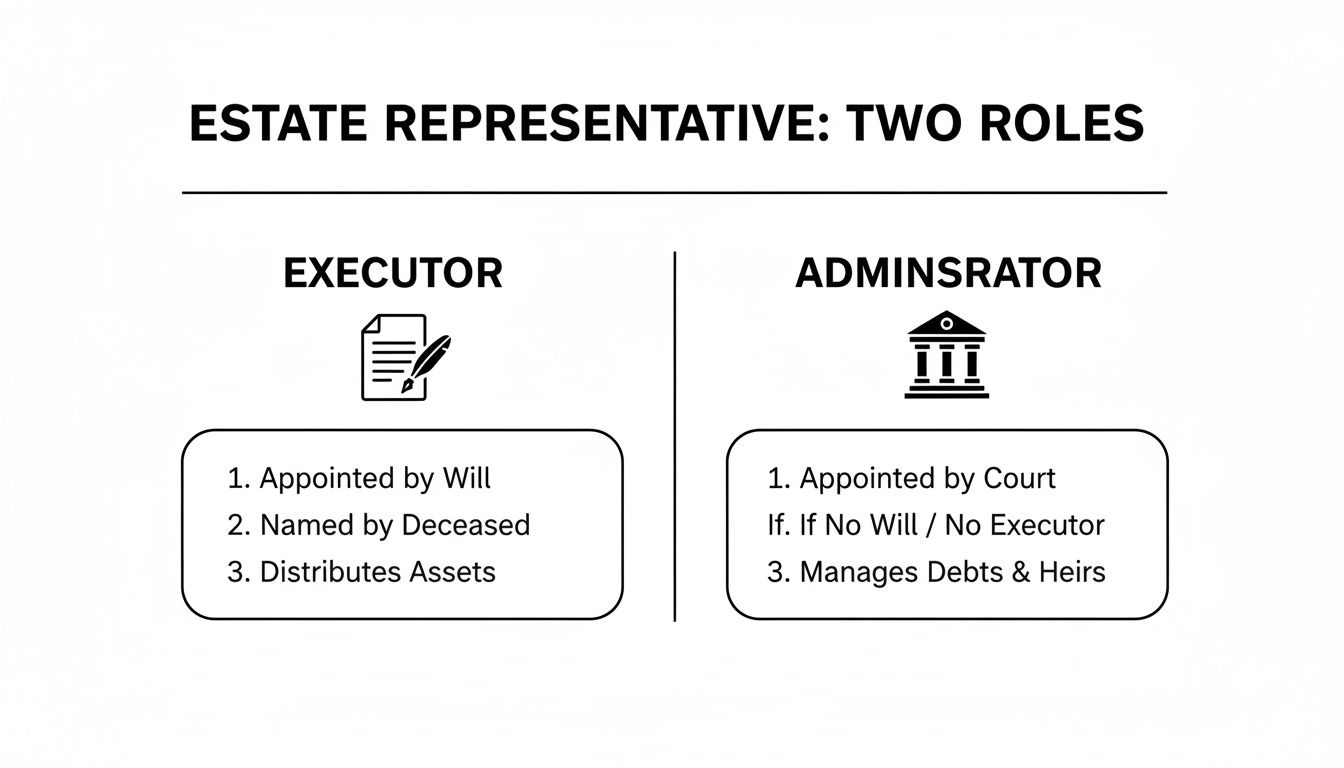
As you can see, an executor’s power flows from the will—a private document reflecting personal wishes. An administrator’s authority comes straight from the court. This one difference sends ripples through every single one of their duties.
To give you a clearer picture, let's break down the key differences between these two crucial roles in Texas.
Executor vs Administrator Key Differences in Texas
| Aspect | Executor | Administrator |
|---|---|---|
| Appointment | Named in the decedent's will. | Appointed by a probate court when there is no will. |
| Source of Authority | The last will and testament. | Texas Estates Code (intestate succession laws). |
| Level of Supervision | Often has independent administration powers, requiring minimal court oversight. | Typically operates under dependent administration, requiring court approval for most actions. |
| Decision-Making | Follows the specific instructions and wishes outlined in the will. | Must follow the strict distribution formula set by state law. |
| Bond Requirement | The will can waive the requirement for a bond. | Almost always required to post a bond to protect the estate. |
| Asset Distribution | Distributes assets to the beneficiaries named in the will. | Distributes assets to legal heirs as defined by state law. |
This table provides a high-level snapshot, but the real impact is felt in the day-to-day management of the estate.
Managing Estate Assets
One of the first major responsibilities for any personal representative is to gather, inventory, and protect all the decedent's assets, from bank accounts and real estate to family heirlooms. While both roles share this duty, their freedom to act is vastly different.
An executor, particularly one with independent administration powers granted by the will, can move quickly with minimal court interference. They can usually open an estate bank account, access safe deposit boxes, and handle property maintenance as the will directs.
An administrator, who is almost always in a dependent administration, must be much more deliberate. They often need to get a judge’s permission for actions an independent executor handles routinely, such as making major repairs to a house or consolidating financial accounts.
Handling Debts and Creditors
Every estate must settle the decedent's final bills. This involves giving formal notice to creditors and using estate funds to pay any valid claims. Both fiduciaries must be diligent, ensuring all obligations are met before any assets are distributed to the heirs.
For an executor, especially in an independent administration, the process is usually more direct. They can review claims and pay legitimate debts directly from the estate's accounts.
An administrator in a dependent administration has a more formal process to follow. They must present every creditor claim to the court for approval before they can pay it. This adds a layer of oversight but also causes delays and increases legal costs.
A core fiduciary duty for both roles is acting in the best interest of the estate. This means preventing waste, managing assets prudently, and ensuring all legal and financial obligations are met with impartiality and care. These fiduciary duties in Texas are taken very seriously by the courts.
Distributing Property to Heirs and Beneficiaries
This is the final step: distributing the remaining assets to the rightful inheritors. Here, the difference between an executor and an administrator couldn't be clearer.
An Executor: Follows the instructions in the will. If the will states, "I leave my classic car to my nephew, John," the executor is legally bound to ensure John receives the car.
An Administrator: Follows the Texas laws of intestate succession. These laws provide a rigid formula that dictates who gets what based on their family relationship to the decedent. The administrator has no discretion; they must distribute property to the legal heirs defined by statute, regardless of what the decedent might have wanted.
A crucial part of these duties is valuing and sometimes selling assets, either to pay debts or to facilitate distribution. For personal property, it's wise to consult an ultimate guide to estate sale pricing to ensure you're getting fair market value. For a deeper dive into these responsibilities, check out our detailed guide on the duties of an executor of an estate in Texas.
Navigating Independent vs Dependent Administration
One of the biggest factors determining the cost, complexity, and timeline of settling an estate is the level of court involvement. In Texas, probate is divided into two main paths: independent administration and dependent administration. Understanding which track applies is essential when comparing an executor to an administrator because it completely changes their autonomy and daily duties.
Think of independent administration as the express lane—it’s streamlined, efficient, and a unique feature of Texas law. It allows an executor to handle the estate's business with very little court supervision. This is generally only an option when a will specifically allows for it, reflecting the trust the person had in their chosen representative.
On the other hand, dependent administration is the default route, especially when someone passes away without a will. This process places the administrator under the constant supervision of the probate court, making everything more cumbersome and expensive.
The Freedom of an Independent Executor
When a will authorizes independent administration, the executor can essentially manage the estate as the owner would. Once they are officially appointed and have filed an inventory of the estate’s assets, they are free to handle most duties without repeatedly seeking a judge's permission.
This autonomy is a game-changer and covers many critical actions:
- Paying estate debts: The executor can review claims from creditors and pay valid ones directly from the estate’s funds.
- Selling property: They have the authority to list and sell real estate or other assets to cover expenses or to prepare for distribution.
- Distributing assets: After all debts are settled, the executor can transfer property to the beneficiaries named in the will without a court order.
This freedom saves a massive amount of time and money. It reduces legal fees and can dramatically shorten the probate process. It is the preferred method for most Texas estates and one of the strongest reasons to have a well-drafted will prepared by a Texas estate planning attorney.
The Hurdles of a Dependent Administrator
An administrator, appointed by the court for an estate without a will (an intestate estate), almost always operates under a dependent administration. This means that nearly every significant action they take requires the court's stamp of approval. It’s a system designed to protect heirs when there’s no will to express the deceased's wishes.
The requirements are strict and add layers of complexity:
- Posting Bond: The administrator usually must purchase a surety bond. This is an insurance policy that protects the estate from mismanagement, and the premium is paid by the estate.
- Annual Accountings: The administrator is required to file detailed annual reports with the court, tracking every dollar that comes in and goes out.
- Seeking Court Approval: For crucial steps like selling a house, paying a creditor, or distributing assets to heirs, the administrator must file a formal application and attend a court hearing to get a judge’s approval.
This constant need for court intervention is the single biggest difference in the day-to-day experience of an executor versus an administrator. It transforms simple administrative tasks into lengthy legal procedures.
A Real-World Scenario: Selling a Family Home
Let's look at a common task—selling the family home to pay final expenses—to see how different these two paths really are.
An independent executor can hire a real estate agent, list the house, accept a fair offer, and close the deal. The entire process might take a few months, similar to a normal home sale.
A dependent administrator, however, has a much longer road. First, they must file an application with the court seeking permission to sell. All heirs must be notified, and a hearing is scheduled. At the hearing, the administrator must prove to the judge that the sale is necessary and the price is fair. Only after the judge signs a court order can the sale proceed. This legal process alone can easily add months and thousands in attorney’s fees to the timeline.
This stark contrast highlights why proactive estate planning is so important. By including a simple provision for independent administration in your will, you empower your executor to settle your affairs efficiently, preserving more of your estate for your loved ones and saving them from unnecessary legal headaches.
Getting Paid and Staying Out of Trouble: Compensation and Liability
Taking on the role of an estate's personal representative is not just a favor; it's a serious commitment of time and energy. Texas law recognizes this effort. Whether you're an executor or an administrator, you are entitled to compensation for your work. However, with that payment comes significant legal risk—you can be held personally liable for mistakes.
Under the Texas Estates Code, Section 352.002, the standard compensation for both executors and administrators is a commission of five percent (5%) on all cash the estate receives and another five percent (5%) on all cash paid out. While this is a straightforward formula for most transactions, it doesn't apply to everything, such as distributing cash that was already in a bank account to heirs.
The 5% commission is not set in stone. The will might specify a different amount, or you could negotiate a different fee with the beneficiaries if everyone agrees. For particularly complex estates, the court can also approve "reasonable compensation" that is more or less than the standard commission, depending on the amount of work involved.
The Heavy Weight of Fiduciary Duty
Once you accept the job of executor or administrator, you become a fiduciary. This legal term carries significant weight. It means you are held to the highest standard of care, loyalty, and good faith. From that moment on, your personal interests must take a backseat; you must always act in the best interests of the estate and its beneficiaries.
Failing to meet this standard can have severe consequences. If an action you take (or fail to take) causes the estate to lose money, the beneficiaries can sue you directly. If they win, you could be required to repay those losses from your own pocket.
The heart of fiduciary duty is simple: the estate comes first, always. Even a hint of self-dealing or simple carelessness can put an executor or administrator's personal finances on the line.
Understanding this liability is non-negotiable. It's not just about intentional fraud. Simple errors, like missing a tax deadline or misunderstanding a legal requirement, can spiral into costly lawsuits. This is precisely why having a knowledgeable Texas probate lawyer on your side is so critical. They can provide step-by-step guidance, ensuring you meet your obligations while protecting yourself from personal risk.
Common Missteps That Can Cost You Personally
Navigating a probate case is all about the details. Many well-meaning representatives get into trouble by making avoidable mistakes. Here are a few common traps that can lead to personal liability:
- Paying Heirs Too Soon: It's tempting to distribute money to grieving family members quickly, but this is a classic error. If you distribute assets before all estate debts and taxes are settled and the estate comes up short, creditors could pursue you personally for payment.
- Forgetting About Taxes: The estate is its own taxable entity. You are responsible for filing the decedent's final income tax return, as well as any estate or inheritance tax returns that are required. Missing deadlines or underpaying can result in penalties and interest that you may have to pay personally.
- Self-Dealing: This is a major breach of fiduciary duty. It occurs when you use your position for personal benefit, such as selling an estate car to yourself for less than market value or hiring your own business to perform repairs on estate property without court approval.
- Sloppy Record-Keeping: Your best defense is a clean set of books. You must be able to account for every dollar that comes in and every dollar that goes out. If beneficiaries or the court have questions, poor records will leave you exposed.
The first step to protecting yourself and the estate is knowing where potential pitfalls lie. Proactive legal advice and solid asset protection strategies are not just for the wealthy; they are essential tools for any fiduciary managing an estate in Texas.
Your Next Steps When a Loved One Passes
Losing a family member is a deeply painful experience, and the legal duties that follow can feel overwhelming. For most people, the biggest challenge is simply figuring out where to begin.
Whether your loved one named you in their will or you are stepping up because there was no will, the first few actions you take are critical. They set the stage for a respectful and smooth estate settlement. The key is to understand your role—are you an executor or a potential administrator?—and then take deliberate, informed steps. This is not a path you have to walk alone; the right guidance makes all the difference.
Checklist for a Potential Executor
If your loved one left a will and named you as the executor, your initial task is to locate that document and begin the process of carrying out their final wishes. Your authority flows directly from their will.
- Locate the Original Will: The first and most important step is to find the original, signed Last Will and Testament. The entire probate process depends on this document, so find it and keep it secure.
- Secure Key Assets: It's crucial to immediately protect the decedent's property. This includes locking their home, securing their car, and ensuring other valuables are safe from loss or damage.
- Consult a Probate Attorney: Do not try to handle this alone. A Texas probate attorney is your most valuable partner. They will review the will, explain your duties, and guide you through filing with the court to obtain your official Letters Testamentary.
Checklist for a Prospective Administrator
When there is no will, your journey begins at the courthouse. You must ask a judge for the authority to manage the estate. Your first steps involve gathering information to demonstrate to the court that you are the right person for the job.
- Identify All Legal Heirs: Texas law has very specific rules about who inherits property when there is no will. You'll need to identify every potential heir, which can sometimes require genealogical research. If the family tree is complex, you may need to learn what an Affidavit of Heirship is to establish a clear line of inheritance for the court.
- Create a Preliminary Inventory: Start compiling a basic list of what the person owned (real estate, bank accounts, vehicles) and what they owed (mortgages, credit card debt, medical bills). This snapshot is essential for your court application.
- Prepare the Court Application: You will need to file an Application for Letters of Administration with the probate court. This is a complex legal document, and having an experienced attorney prepare it correctly and represent you at the hearing is vital to getting appointed by the judge.
No matter which role you find yourself in, the single most important first step is getting professional legal advice. An experienced probate attorney provides clarity, protects you from personal liability, and ensures the entire process is handled according to Texas law.
If you’re managing an estate or planning your own, contact The Law Office of Bryan Fagan, PLLC for a free consultation. Our attorneys provide trusted, Texas-based guidance for every step of the process.
Got Questions About Texas Estate Roles? We've Got Answers.
When you're tasked with managing an estate, questions can arise quickly. Whether you were named in a will or are trying to help when there wasn't one, it is crucial to understand how Texas law applies in practice. This FAQ cuts through the legal jargon to give you straight answers about the real-world differences between an executor vs. administrator.
Think of this as your practical guide. These answers highlight the significant difference between having a solid will and leaving matters to be decided by state law.
What Happens If the Executor Named in the Will Can't Do the Job?
Life is unpredictable. If the first-choice executor named in a Texas will is unable or unwilling to serve, the will almost always contains a backup plan. It is common to name one or two alternate executors to step in, ensuring the person's wishes are still followed by someone they trusted.
If no alternate is available, the court will appoint an "administrator with will annexed." This person essentially performs the executor's job—following the instructions in the will—but their authority comes directly from the court, not from the will itself.
Can an Administrator Sell Estate Property in Texas?
Yes, but it is not a simple process. An administrator, who typically operates under a dependent administration, must get a judge's permission for most significant actions, especially selling property.
This requires filing a formal application with the court, giving legal notice to all heirs, and then convincing a judge that the sale is necessary for the estate (for example, to pay debts). This court oversight is designed to protect the heirs, but it adds considerable time and legal fees to the process. An independent executor, by contrast, can usually sell property directly without court approval.
Here’s the bottom line: An administrator's power is granted and supervised by the court. An independent executor's power comes straight from the will, giving them much more freedom to act efficiently.
How Long Does Probate Take for an Executor vs. an Administrator?
While no two estates are exactly alike, an independent administration run by an executor is almost always faster. A relatively simple case can often be concluded in six to twelve months. This is because the executor is not required to wait for a judge's approval for every action.
On the other hand, a dependent administration with an administrator frequently takes over a year and can easily last much longer. The process is slowed by required court hearings, formal approvals for routine tasks, and detailed accountings. While these hurdles are protective, they inevitably prolong the process.
If you’re managing an estate or planning your own, contact The Law Office of Bryan Fagan, PLLC for a free consultation. Our attorneys provide trusted, Texas-based guidance for every step of the process.