Managing a loved one’s trust can feel overwhelming—but with the right legal guidance, it doesn’t have to be. A trust administration attorney in Texas acts as your personal translator and guide, ensuring you honor that legacy with confidence and navigate the legal landscape of the Lone Star State without getting lost. They make a complicated, emotional process feel clear and manageable.
Your Guide to Navigating Trust Administration in Texas

Whether you’ve just been named a trustee or learned you’re a beneficiary, stepping into the world of trusts can feel disorienting. Suddenly, you’re dealing with legal terms and heavy responsibilities. It's about more than just numbers on a page; it’s about carrying out a promise and fulfilling the final wishes of someone you cared for. This guide is here to turn that feeling of being overwhelmed into one of empowerment by explaining complex legal matters in plain English.
Think of trust administration as a journey with a clear destination: making sure the trust’s assets are managed and distributed exactly as intended. But here in Texas, that path is paved with specific rules laid out in the Texas Trust Code. Without a good map, it’s all too easy to take a wrong turn.
The Role of an Expert Guide
This is where a trust administration attorney in Texas becomes your most valuable partner. Their job is to be your guide, making sure you fulfill every duty correctly. For both trustees and beneficiaries, they are an indispensable resource.
Here’s how they provide practical advice and support:
- Keeping You on the Right Side of the Law: The Texas Trust Code has a strict set of duties for trustees. An attorney ensures you meet every legal requirement, from sending initial notices to preparing final paperwork.
- Heading Off Family Feuds: Money and grief can be a potent mix, and misunderstandings over a trust can cause rifts that last a lifetime. A lawyer brings clarity and manages expectations, stopping disagreements before they start.
- Protecting You from Personal Risk: As a trustee, you have a fiduciary duty. This legal principle means you can be held personally responsible for mistakes. An attorney is your shield, helping you steer clear of costly errors that could put your own assets on the line.
A trust isn't just a stack of legal papers; it’s a legacy. Properly administering it is how you honor that legacy. Expert legal guidance gives you the confidence to know you're doing it faithfully and correctly.
Consider this guide your roadmap. We’ll demystify key concepts, walk you through the duties and steps involved, and show you how to handle common bumps in the road. With the right information and support, you can move forward with the peace of mind that comes from knowing you’re doing everything right. For guidance on your specific situation, a Texas estate planning attorney can review the details and provide tailored legal advice related to estate planning.
Understanding Trust Administration and Its Importance in Texas
Think of trust administration like being handed the keys to a family ranch. The original owner, your loved one (the grantor), has left a detailed map—the trust document—with instructions on how to manage the property and ensure everyone gets their rightful share. You, as the new manager (the trustee), have a serious job to do.
This process kicks into gear when the grantor either passes away or can no longer manage their own affairs. It’s your duty to step up, gather all the assets, settle any outstanding debts, and then hand over what’s left to the people named in the plan—the beneficiaries.
It’s a huge responsibility, and while it happens privately away from the prying eyes of probate court, it’s not the Wild West. Everything you do is guided by the Texas Trust Code and the Texas Estates Code. Getting it right is non-negotiable; it’s about honoring a legacy and protecting the family’s wealth.
Why Texas is a Unique Place for Trusts
Texas isn't just another state when it comes to trusts; it’s one of the best. Thanks to strong asset protection laws and no state income tax, it’s a premier destination for families looking to preserve their wealth for generations. This legal-friendly environment puts Texas on par with other top trust states like Nevada and South Dakota.
These advantages are more critical than ever, with the federal estate tax exemption set to change in 2026. The current threshold could get cut in half, putting estates over $7 million at risk. A sharp Texas trust administration lawyer is your best guide for navigating these changes and keeping the estate protected through strategic tax planning.
Properly managing a trust isn't just about following rules; it's about preventing the kind of family feuds and legal headaches that can tear a legacy apart. That starts with knowing who’s who and what their job is.
Key Roles in Texas Trust Administration
| Role | Primary Responsibility |
|---|---|
| Grantor (or Settlor) | The person who creates the trust and transfers assets into it. |
| Trustee | The individual or institution responsible for managing the trust according to its terms and Texas law. |
| Beneficiary | The person(s) or entity entitled to receive assets or income from the trust. |
At the heart of the trustee's job is their fiduciary duty. This isn't just a suggestion; it's a legal obligation to act purely in the best interests of the beneficiaries. It’s the absolute cornerstone of trust law and covers everything from smart asset management to keeping everyone in the loop.
The Foundation of Administration: The Trust Document
The trust document is the single most important piece of the puzzle. It’s the playbook left by the grantor, detailing every single instruction for how their assets should be handled and distributed. To help decipher complex legal documents, tools like an AI Legal Contract Analyzer can offer initial insights.
But these documents are often loaded with dense legalese that can make your head spin. This is where a trust administration attorney in Texas proves invaluable. They act as your translator, turning that legal jargon into a clear, actionable game plan.
Their job is to make sure you understand every last detail, so you can avoid costly missteps that could go against the grantor’s wishes or land you in a legal battle. You can get a deeper look into this by exploring what is trust administration and why it's such a vital part of protecting an estate.
Trustee Responsibilities Under the Texas Trust Code
Stepping into the role of a trustee is a profound responsibility. The grantor put an immense amount of faith in you to carry out their wishes and manage their legacy. In Texas, this role comes with a specific set of legal obligations laid out in the Texas Trust Code.
Understanding these duties is your first and most important job. These aren't just suggestions; they are the legal and ethical foundation of trust administration, known as fiduciary principles. Think of them as the fundamental rules of the road, ensuring you always act in the best interests of the beneficiaries. A slip-up here can lead to personal liability, so it’s crucial to get it right.
The Duty of Loyalty to Beneficiaries
First and foremost, your loyalty must be absolute. As a trustee, you must put the beneficiaries' interests ahead of your own, with no exceptions. You cannot use your position for personal gain or engage in any self-dealing.
Example: Imagine the trust owns a rental property in a desirable Houston neighborhood. As trustee, you might be tempted to rent it to yourself or a friend at a below-market rate. This is a classic breach of your duty of loyalty. Why? Because you're benefiting yourself at the expense of the beneficiaries, who are missing out on potential income. This action is a clear conflict of interest.
The Duty to Act Prudently
The Texas Trust Code also requires you to manage the trust’s assets like a "prudent investor." This doesn't mean you need to be a Wall Street expert, but it does mean you have to make sensible, careful decisions about the trust’s property and investments.
This duty involves a few key actions:
- Diversifying Investments: You generally can't bet everything on one investment. Spreading the trust's money across different types of assets is key to managing risk.
- Balancing Needs: A prudent trustee must look at the big picture. You might have some beneficiaries who need income now and others who need the trust to grow for the long term. Your job is to balance these competing needs.
- Getting Help When You Need It: If you're not an expert in finance or real estate, you have a duty to hire qualified professionals like financial advisors or property managers. This isn't just a good idea—it's part of your responsibility.
Real-World Scenario: Let's say a trustee in Dallas takes over a trust that's almost entirely invested in a single, volatile tech stock. A prudent trustee would immediately recognize the risk. They would work with a financial advisor to rebalance the portfolio, selling some of that stock and diversifying into a healthier mix of bonds, mutual funds, and maybe some real estate to protect the principal while generating more stable returns for the beneficiaries.
The Duty to Provide a Full Accounting
Transparency is the bedrock of a healthy trustee-beneficiary relationship. The beneficiaries have a right to know exactly what's going on with the trust's assets. Under Texas law, you’re required to provide a formal accounting to them at least once a year, or more often if the trust document says so.
This isn't just a simple summary. A proper accounting is a detailed report that must show:
- All money that came into the trust (like rent, dividends, or interest).
- All money that went out (for taxes, repairs, professional fees, etc.).
- Any assets that were bought or sold.
- All distributions made to the beneficiaries.
Keeping meticulous records isn't just good practice; it's a legal necessity. Failing to provide a clear, accurate accounting is one of the quickest ways to stir up suspicion and land yourself in a legal battle. Beyond the day-to-day, a trustee is also responsible for the secure and efficient archiving of documents related to the trust's activities, which is vital for long-term compliance.
The Duty to Communicate
On top of the formal accounting, you have an ongoing duty to keep the beneficiaries reasonably informed. You can’t just go silent for a year and then drop a report in their mailbox. It’s about proactive communication. For example, if the trust owns a family business and you’re considering a major decision like a sale, you should inform the beneficiaries. Open communication builds trust and prevents the kind of misunderstandings that often explode into conflict.
Juggling all these responsibilities is a complex task, and the stakes are high. To get a complete picture of what's expected of you, you can learn more about the specific fiduciary duties of trustees under Texas law. Partnering with a knowledgeable Texas trust administration lawyer can ensure you meet every one of your obligations, protecting both the trust and yourself.
The Trust Administration Process: A Step-by-Step Guide
As a trustee, the road ahead can look like a tangled mess of legal highways. But trust administration is a logical journey with a clear beginning, middle, and end. Think of it as a series of manageable steps that, when taken with care, lead you to honoring your loved one's final wishes.
A trust administration attorney in Texas is your personal GPS on this journey. They provide the step-by-step guidance and make sure you're following every rule and regulation under the Texas Trust Code. From the moment the trust becomes active until the last asset is in the right hands, having an expert navigator makes all the difference.
Phase 1: Initial Steps and Notifying Beneficiaries
The process begins the moment the trust becomes active, which is usually right after the grantor passes away. These first moves are critical and set the tone for a smooth administration.
- Locate and Review the Trust Document: Your first job is to find the original trust document. This is your primary set of instructions, laying out the assets, naming the beneficiaries, and giving you the specific rules you must follow.
- Consult with a Texas Trust Lawyer: Before you do anything else, sit down with an attorney. This is a non-negotiable step. They will help you understand your specific duties, interpret any confusing legal language, and create a checklist to keep you on the right path.
- Notify Beneficiaries: Texas law is clear: you must formally notify all beneficiaries that you are the trustee. This initial communication builds trust and helps everyone know what to expect.
Phase 2: Marshalling Assets and Settling Debts
Once the initial groundwork is laid, your focus shifts to gathering everything the trust owns and paying off its final bills. This part of the job calls for serious organization and a clear view of the estate’s finances.
You'll need to identify every single asset—bank accounts, real estate, investments, personal belongings—and get ownership officially transferred into your name as the trustee. This often requires contacting banks, financial advisors, and county clerks. At the same time, you must track down and pay the decedent’s final debts, expenses, and taxes using trust funds.
This is where the core duties of being a trustee really come into play: acting with loyalty, providing a detailed accounting of everything, and keeping the lines of communication open.
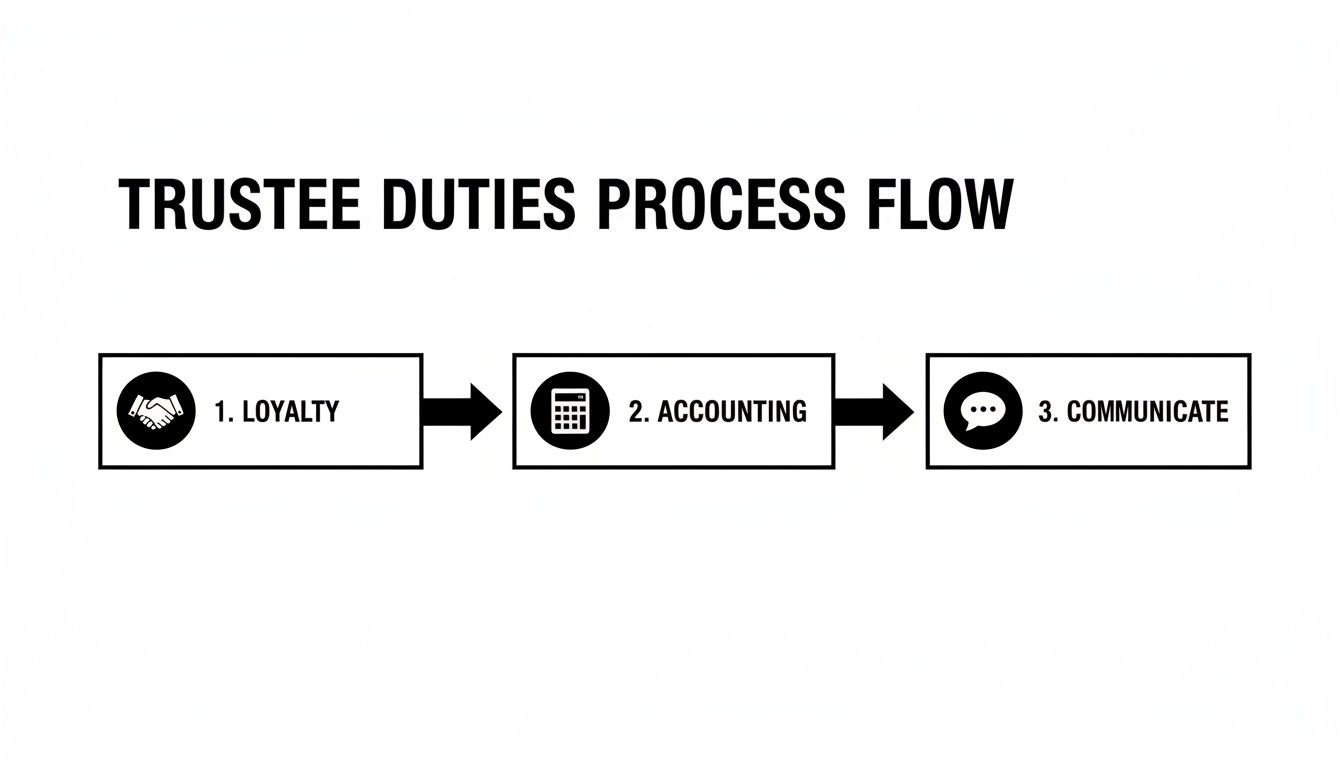
These principles—loyalty, accounting, and communication—are practical, everyday actions you must take to protect the beneficiaries and yourself. The sheer complexity of these duties is why Texas has become a hub for families seeking top-tier legal guidance. In fact, top law firms in Texas are consistently recognized for their deep expertise in private wealth law by outlets like Chambers and Partners, which shows how important this work is. Getting it right is crucial, especially when litigation costs for trust disputes can average between $50,000 to $200,000 per case.
Example in Action: Imagine a San Antonio family's trust owns a commercial building. The trustee, with their lawyer's guidance, would first secure the property, ensure rent is collected, and keep up with the mortgage and taxes. Next, they'd get a formal appraisal to determine its value for the trust's inventory. Only then would they decide whether to sell it or transfer it to a beneficiary, all while providing clear updates to the family.
Phase 3: Distributing Assets and Closing the Trust
The final phase is all about getting the remaining assets to the beneficiaries exactly as the trust document lays out. This could be a single lump-sum payment, smaller distributions over time, or the direct transfer of property.
Once every asset is distributed and all final tax returns have been filed, the trust can be officially terminated. You will prepare a final accounting for the beneficiaries to review and sign, which releases you from your duties. This final step concludes your responsibilities and officially closes this chapter. An attorney ensures every step is handled with legal precision, protecting family harmony and the legacy your loved one built.
Common Trust Administration Issues and How to Solve Them
Even the most carefully crafted trust can hit a few bumps in the road during administration. When you mix money, grief, and family dynamics, it’s not surprising that challenges arise. The key is knowing how to handle them calmly and strategically before they turn into a full-blown family feud.This is where a seasoned trust administration attorney in Texas becomes your most valuable player. They bring a clear, unbiased perspective and know the legal playbook for dispute resolution, protecting the trust and ensuring you’re following the Texas Trust Code to the letter.
Disagreements Among Beneficiaries
One of the most common hurdles is friction between beneficiaries. Maybe someone feels their inheritance is unfair, they're confused about why a payment is taking so long, or old sibling rivalries resurface.
If these disagreements fester, they can explode into costly legal battles that drain the trust and damage family relationships. The best first move is direct and honest communication. As trustee, you can often de-escalate the situation by explaining the process, pointing to specific language in the trust, and being transparent with your accounting. When talking it out isn't enough, mediation is an excellent next step. A neutral third party can help guide everyone to a resolution without the drama and expense of court.
Accusations of Fiduciary Misconduct
For a trustee, being accused of breaching your fiduciary duties in Texas is incredibly stressful. Beneficiaries might claim you’re mismanaging trust funds, playing favorites, or making risky investments.
The best defense is a good offense—meticulous, airtight record-keeping. Document every single decision, every transaction, and every piece of communication. A clean paper trail is your strongest shield, proving you acted in good faith and followed the trust's instructions.
If an accusation is made, your first call should be to a Texas trust administration lawyer. Don't wait. They can help you craft a formal response, gather the evidence needed to defend your actions, and stand by your side in any legal proceeding.
When to Modify or Terminate a Trust
Sometimes, the problem isn't the people—it's the trust document itself. Life changes. A beneficiary might develop a disability requiring a special needs trust, a new law could affect the trust's purpose, or an asset might become impractical to manage as planned. In these situations, you may need to learn how to modify a trust in Texas.
The law in Texas provides a few different routes:
- Judicial Modification: This involves petitioning a court to alter the trust. It's often used when the trust's original goal has become impossible or illegal, or if a change is in the best interest of the beneficiaries.
- Decanting: Think of it like pouring wine from an old bottle into a new one. A trustee with the right authority can "pour" the assets from an older, more rigid trust into a new one with updated, more functional terms.
- Non-Judicial Settlement Agreements: If all beneficiaries agree, they can sometimes sign a binding agreement to change a term or resolve an issue without ever stepping into a courtroom, provided the change doesn't violate a core purpose of the trust.
Tackling any of these modifications is serious legal business and not something you should ever attempt alone. An experienced attorney can pinpoint the best strategy for your unique situation, whether it's smoothing out administration or untangling a complex dispute related to the trust or even a guardianship.
Hiring a Texas Trust Administration Attorney: What to Expect

As a trustee, selecting the right legal partner is the most important decision you'll make. Hiring a trust administration attorney in Texas isn’t just about checking a box; it's about finding a guide who can navigate the complexities for you, bringing peace of mind while protecting the trust's assets—and your personal liability.
Think of it as an investment. You’re bringing in an expert to ensure family relationships stay intact and your loved one's final wishes are honored exactly as they intended. When you start looking, you'll see that attorneys have different ways of charging for their work. Understanding these fee structures will help you find a firm that fits both the trust's budget and its needs.
Understanding Attorney Fee Structures
A common billing method is the hourly fee, where you pay for the time the lawyer and their team actively spend on your case. This approach is typical for situations where the workload is unpredictable, like a heated trust dispute or a particularly complex administration.
Alternatively, you might find a flat fee arrangement. For more straightforward trust administrations, many firms offer a single, fixed price for a specific list of services. This provides cost certainty from the start, which is a major benefit for trustees managing trust expenses.
No matter the model, always request a clear, written fee agreement. This document should spell out exactly what services are covered, how fees are calculated, and when you can expect a bill. Transparency is key to a good working relationship.
The right attorney brings significant value. In a competitive market like Houston, that expertise comes at a premium. The average salary for a trust and estates attorney reached $129,963 per year as of March 2024. That figure reflects the immense value placed on professionals who can guide families through the world of wealth preservation, especially with major changes to the estate tax exemption on the horizon. You can see more on attorney compensation trends from ZipRecruiter.
Questions to Ask a Potential Attorney
Feeling confident in your choice comes down to asking the right questions. Think of your initial consultation as a two-way interview. You're not just there to get information; you're there to see if this is the right person to have in your corner.
Here’s a quick checklist to help guide that conversation:
- Experience: How many trusts like this have you administered? Do you have experience with our specific assets, like a family business, real estate, or complex investments?
- Process: Can you walk me through your firm's process for a typical trust administration? Who will be my day-to-day contact?
- Communication: How do you prefer to communicate, and how often can I expect to hear from you? How will you keep the beneficiaries informed?
- Fees: Could you provide a detailed breakdown of your fee structure? Based on what you know, what is the estimated total cost for an administration like this?
Choosing your legal partner is a crucial first step. For a more detailed look at the vetting process, you should read our guide on how to choose an estate planning attorney. The best Texas trust administration lawyer isn't just someone with a fancy degree. It’s someone who communicates clearly, has the right experience, and makes you feel secure and supported in your role as trustee.
Your Top Questions About Texas Trust Administration, Answered
When you're dealing with a trust, whether as the trustee or a beneficiary, many questions are bound to arise. It’s new territory for most people. Let's tackle some of the most common questions we hear, clearing up the confusion so you can move forward with confidence.
How Long Does It Take to Administer a Trust in Texas?
That's a bit like asking how long it takes to drive across Texas—it really depends on where you're starting and where you're going. A simple, well-organized trust with cooperative beneficiaries might be wrapped up in just a few months.
But if you’re dealing with a more complex situation—say, one involving a family business, several pieces of real estate, or disagreements among beneficiaries—you could easily be looking at a year or longer to get everything settled. An experienced trust administration attorney in Texas can review the trust and its assets to give you a much clearer map of the road ahead.
Can a Trustee Get Paid for Their Work in Texas?
Yes, they can. The Texas Trust Code states that trustees are entitled to "reasonable compensation" for their work. "Reasonable" is determined by factors like:
- The amount of work and time involved.
- The complexity of the trust's assets.
- The professional skills required to manage everything properly.
Sometimes the trust document itself will outline the fee structure. Regardless, it is absolutely critical for a trustee to keep meticulous records of their time and every task they handle. This isn't just good practice; it’s your best defense against potential disputes with beneficiaries.
What Happens If a Trustee Makes a Mistake?
Being a trustee comes with a high legal standard known as a fiduciary duty. This means you must always act in the best interests of the beneficiaries. An honest, minor mistake can often be corrected, but a major blunder from negligence or self-dealing can have serious consequences.
A trustee can be held personally liable for any financial losses the trust suffers. They could face lawsuits from beneficiaries demanding damages and can even be removed from their role by a court. This is exactly why having a legal expert in your corner is so important—it’s a crucial shield against potentially devastating errors.
Do All Trusts in Texas Automatically Avoid Probate?
Not necessarily. One of the biggest perks of a living trust is skipping the public and often slow probate process. However, that only works if the trust was properly "funded." This means the grantor successfully transferred the legal title of their assets into the trust before they passed away.
Any assets left out, whether by accident or oversight, may still have to go through probate. A special type of will called a "pour-over will" is often used to sweep these stray assets into the trust. A thorough review with a Texas estate planning attorney ensures your whole plan works together seamlessly, just as you intended.
If you’re managing a trust or planning your estate, contact The Law Office of Bryan Fagan, PLLC for a free consultation. Our attorneys provide trusted, Texas-based guidance for every step of the process. You can learn more by visiting us at https://www.texastrustadministration.com.