Skip to content
Managing a loved one’s trust can feel overwhelming, but with the right legal guidance, it doesn’t have to be. Administering a trust in Texas comes down to three core principles: always acting in the best interests of the beneficiaries, following the trust's instructions to the letter, and complying with Texas law. This important duty begins the moment you accept the role of trustee. Before you do anything else, you must obtain the trust document and gain a firm grasp of your legal responsibilities.
Your First Steps as a Texas Trustee
Being named a trustee is a significant responsibility, especially if you are also grieving the loss of the person who created the trust. The legal jargon and long list of duties can seem intimidating, but the process is manageable when taken one step at a time. The key is to start with the foundational tasks that pave the way for a smooth and successful administration.
Your journey doesn't begin with managing money or property. It starts with paperwork and a clear-eyed understanding of the role you've just stepped into.
Accepting the Role and Understanding the Trust Document
Before you can touch a single asset, you must formally accept the position of trustee. In Texas, you can do this by signing a formal "acceptance of trusteeship," but your acceptance can also be implied by simply starting to perform the trustee duties outlined in the trust. Once you've accepted, your very next move is to secure the original, signed trust agreement. This document is your map, your rulebook, and your legal mandate all in one.
Reading and truly understanding this document is non-negotiable. It spells out the grantor’s wishes, names the beneficiaries, and defines the scope of your powers and limitations. It will tell you exactly how and when to distribute assets, which is one of your most critical jobs.
Grasping Your Fiduciary Duties
As a trustee, you are a fiduciary. This isn't just a legal term; it's a profound legal and ethical obligation. It means you must act solely in the best interests of the trust beneficiaries. This principle is the absolute cornerstone of trust administration under the Texas Trust Code.
Your core fiduciary duties include:
- Duty of Loyalty: You cannot engage in self-dealing or have conflicts of interest. The beneficiaries’ financial needs must always come before your own.
- Duty of Prudence: You must manage the trust's assets with care, skill, and caution, just as a "prudent person" would when managing their own affairs. This includes making sound investment and financial choices.
- Duty of Impartiality: You cannot play favorites among beneficiaries unless the trust specifically directs you to do so. You must treat all beneficiaries fairly.
Real-world scenario: Imagine a daughter is the trustee of her father’s trust, which names her and her estranged brother as equal beneficiaries. Her personal feelings toward her brother are irrelevant. The duty of impartiality legally requires her to put those feelings aside and manage and distribute the trust assets equally and fairly. This legal framework ensures fairness and helps prevent family disputes. To get a more detailed breakdown, you can learn more about trustee duties and responsibilities in our detailed guide.
This flowchart illustrates the first critical actions you need to take.
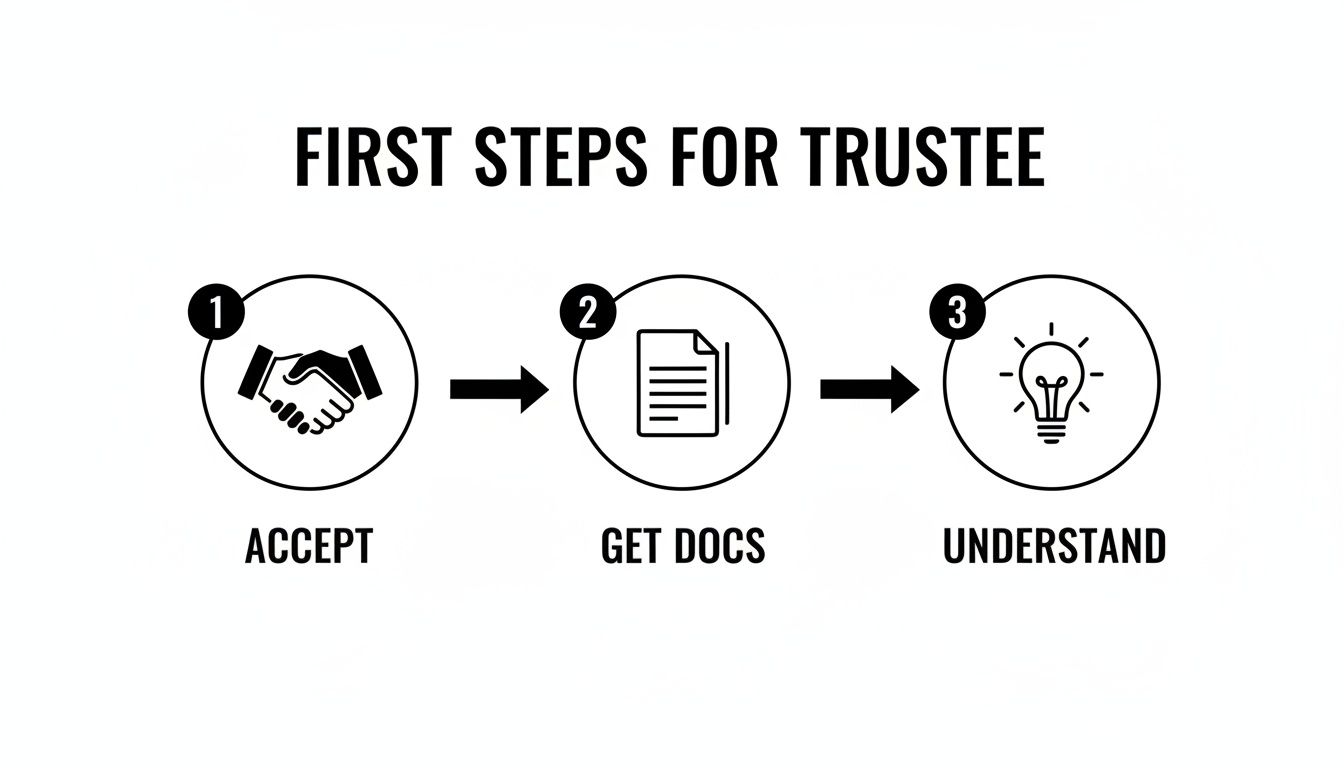
Mastering these initial steps—formally accepting the role, securing the legal paperwork, and fully absorbing your duties—builds the solid foundation you'll need for everything that follows.
Securing and Managing Trust Assets

After you've officially accepted your role as trustee, your first tangible task begins: you must identify, secure, and take legal control of all property the trust owns. This is where the paperwork turns into real-world responsibility. As a Texas Trustee, effectively overseeing the trust’s property is a core part of your duties, mirroring the best practices of general estate management.
Your initial job is to create a comprehensive inventory of every single asset. This isn’t just a quick list; it's a formal, detailed record that will serve as the foundation for all future accounting, tax filings, and distributions.
Creating the Trust Inventory
It's time to put on your detective hat. Your mission is to track down every bank account, investment portfolio, real estate deed, vehicle title, and piece of valuable personal property belonging to the trust. This often involves carefully reviewing the grantor's personal files, recent mail, and old tax returns.
For every asset you identify, you must document specific details:
- A clear description (e.g., "Wells Fargo checking account ending in #5678").
- Its fair market value as of the grantor's date of death. This may require a formal appraisal for assets like real estate, business interests, or art.
- Any debts tied to the asset, such as a mortgage on a home or a loan on a car.
This inventory isn't just for your own organization. It is a critical document that you will need to provide accurate accountings to the beneficiaries. Getting this right from the start can prevent a world of headaches and potential disputes later.
Retitling Assets Is a Non-Negotiable Step
This is one of the most common and costly mistakes that trustees—and even the grantors who set up the trusts—make. An asset is not truly part of the trust until it has been legally retitled into the trust's name. A brokerage account simply listed in the trust document but still owned by the grantor individually is not under your control as trustee.
Real-World Scenario: Imagine a father creates a living trust, intending for his family's lake house to pass to his children. He lists the house in the trust documents but never signs a new deed to transfer the property from his name into the trust's name. When he passes away, his daughter, the trustee, discovers this oversight. Now, the house is stranded outside the trust and must be dragged through the public, expensive, and time-consuming probate process.
This one error can completely derail what should have been a smooth administration. In fact, a significant number of trusts end up in probate court because a key asset, like the family home, was never properly "funded" into the trust. This can easily add thousands of dollars in court costs and attorney fees. Texas law also expects trustees to complete administration within a reasonable timeframe, typically 12 to 18 months, and retitling problems are a major cause of delays.
You must work with banks, investment companies, and county clerk's offices to get every relevant asset properly titled. We can help guide you, and you can also learn more in our guide on how to transfer property into a trust.
Following the Prudent Investor Rule
Once the assets are under your control, your job shifts to managing them responsibly. The Texas Trust Code holds you to a high standard known as the "prudent investor rule." This legally requires you to manage the trust's assets with the same skill and caution that a reasonably sensible person would use when managing their own financial affairs.
This doesn't mean you need to be a stock market expert. It means you are responsible for making sound decisions to preserve the trust’s value while avoiding reckless risks. Key duties under this rule include:
- Diversifying Investments: You generally cannot leave all the money in a single stock or one type of investment.
- Balancing Growth and Safety: The investment strategy needs to account for the needs of both current beneficiaries (who may need income) and future beneficiaries (who rely on the principal growing).
- Monitoring Performance: You cannot just "set it and forget it." You must periodically review investment performance and make adjustments when necessary.
Failing to follow the prudent investor rule can make you personally liable for investment losses. That's why many trustees hire a qualified financial advisor to manage the portfolio—a decision that is itself considered a prudent act. A Texas trust administration lawyer can help you fully understand these duties and connect you with the right professionals to protect the trust's legacy.
Navigating Fiduciary Accounting and Tax Duties

When you step into the role of a trustee, you essentially become the trust's chief financial officer. Your financial responsibilities are among the most critical—and scrutinized—duties you have. Every penny must be accounted for with absolute precision.
Think of it this way: meticulous record-keeping isn't just a good habit; it's a legal mandate under the Texas Trust Code. It is also your single best defense if a beneficiary ever questions how you have managed the funds. This level of transparency builds trust and keeps disputes at bay.
The Duty of Formal Accounting
Texas law is crystal clear on this point: you have a duty to account. This means keeping immaculate records of all trust income (like rent payments or stock dividends), every expense you pay (from property taxes to attorney fees), and each distribution made to the beneficiaries.
Beneficiaries have a legal right to demand a formal trust accounting. This isn't just a quick look at a spreadsheet. It’s a comprehensive financial report detailing every transaction, typically on an annual basis. Getting this wrong—or failing to provide it at all—can expose you to personal liability. A basic understanding of a double-entry bookkeeping system is invaluable for keeping the books straight from day one.
A proper accounting is your proof of performance. It must show all trust property, liabilities, receipts, and disbursements. Crucially, it must also disclose any compensation you've paid yourself as a trustee fee, demonstrating complete transparency and proving you've upheld your fiduciary duties.
If you’re new to this, our guide on what is trust accounting breaks down exactly what's required. Arming yourself with this knowledge will give you the confidence to manage the trust’s finances correctly and legally.
Handling the Trust’s Tax Obligations
Before you can file taxes, the trust needs its own identity in the eyes of the IRS. Your first step is to obtain a Taxpayer Identification Number (TIN), often called an Employer Identification Number (EIN), for the trust. This number will be used for all the trust’s financial accounts and tax documents.
With the TIN in hand, you're responsible for filing the trust's annual income tax return. This is done using IRS Form 1041, the U.S. Income Tax Return for Estates and Trusts. On this form, you will report the trust's income, any deductions it can claim, and the income distributed or "passed through" to beneficiaries.
The good news for trustees in Texas is that Texas has no state inheritance or estate tax. This removes a significant layer of complexity that trustees in other states face, allowing you to focus almost entirely on federal tax obligations.
Understanding Federal Estate Taxes
The federal government does impose an estate tax, but only on very large estates. For 2024, the federal estate tax exemption is over $13 million per individual. This means that if the total value of the grantor's estate is below this high threshold, no federal estate tax will be due.
However, a major change is on the horizon. This generous exemption is scheduled to be cut by about half at the end of 2025 unless Congress acts. This will pull many more estates into the taxable category, making proactive tax planning with a knowledgeable Texas estate planning attorney more important than ever.
To help you stay on track, here's a checklist of the core financial responsibilities you'll need to manage as a trustee.
Trustee's Financial Duty Checklist
| Task | Description | Key Deadline/Frequency | Relevant Texas Code/IRS Form |
|---|---|---|---|
| Obtain EIN/TIN | Secure a Taxpayer ID Number from the IRS to establish the trust as a legal financial entity. | Immediately after becoming trustee | IRS Form SS-4 |
| Open Trust Bank Account | Establish a dedicated bank account in the trust's name using its TIN to avoid commingling funds. | Immediately after receiving TIN | N/A |
| Prepare Formal Accounting | Create a detailed report of all receipts, disbursements, liabilities, and trust property. | Annually, or upon beneficiary request | Texas Property Code §113.152 |
| File Annual Income Tax | Report the trust's income, deductions, and distributions to the IRS. | Annually by April 15th | IRS Form 1041 |
| Issue Schedule K-1s | Provide beneficiaries with a Schedule K-1, which reports their share of the trust's income. | Annually by the Form 1041 deadline | IRS Schedule K-1 (Form 1041) |
| Pay Estimated Taxes | If the trust is expected to owe more than $1,000 in tax for the year, you must pay estimated taxes. | Quarterly | IRS Form 1041-ES |
Keeping these duties in mind will ensure you fulfill your obligations and protect the trust's assets. Failure to provide proper accountings is a factor in a significant percentage of trust litigation cases, often leading to personal liability for the trustee. Stay organized and seek professional help when you need it.
Communicating with Beneficiaries and Making Distributions
Beyond spreadsheets and legal filings, your most crucial role as a trustee is often that of a communicator. Proactive, clear, and empathetic communication is the single best tool you have to prevent misunderstandings, manage expectations, and keep the trust administration from devolving into a family feud.
This is the very bedrock of fulfilling your fiduciary duties in Texas.
A trustee’s silence is almost always filled with suspicion by the beneficiaries. When you keep them informed about your progress, explain any delays, and provide realistic timelines, you build goodwill and reinforce your role as a trustworthy steward of their loved one's legacy. This doesn't mean you need their permission for every decision, but it does mean keeping them in the loop.
Legal Notice Requirements Under Texas Law
The Texas Trust Code doesn't leave communication to chance; it mandates specific notices. Once a revocable trust becomes irrevocable (which usually happens when the grantor passes away), you have a duty to give formal notice to the beneficiaries. This notice officially confirms the trust’s existence and your identity as the trustee.
On top of that, beneficiaries have the right to request a formal accounting, as discussed earlier. You can often get ahead of these formal demands by being proactive. Regular, informal updates by email can go a surprisingly long way in making beneficiaries feel respected and included in the process.
Managing Expectations and Family Dynamics
A huge part of learning how to administer a trust in Texas is mastering the art of managing expectations. Beneficiaries are often grieving and may not understand why they cannot receive their inheritance immediately.
Real-World Scenario: A trustee, Sarah, is managing her late mother’s trust, which holds a family vacation home. Her siblings, the other beneficiaries, are anxious to sell it. The first appraisal, however, comes in much lower than expected. Sarah believes the right move is to get a second opinion and make minor repairs to boost the property's value, creating a two-month delay. Instead of letting silence breed resentment, Sarah sends a group email. She explains her reasoning, attaches the disappointing appraisal, and clearly outlines the steps she’s taking to maximize their shared inheritance.
This simple act of transparency defuses a potentially explosive conflict. Her siblings now understand the delay is for their benefit, not a result of incompetence or favoritism. This is a perfect example of a trustee upholding their duty to prudently manage assets while also preserving family harmony.
The Process of Making Distributions
Once all assets have been gathered, all debts and taxes have been settled, and a final accounting is prepared, you can finally begin the distribution process. The trust document is your absolute guide here—it must be followed to the letter.
Distributions can come in a few common forms:
- Outright Lump-Sum Payments: This is the most straightforward. Beneficiaries receive their share of the trust assets, either in cash or in-kind (like stocks or a piece of property), all at once.
- Staggered Distributions: The trust might direct you to pay a beneficiary in stages. A common example is one-third at age 25, one-third at age 30, and the remainder at 35. This is often used for younger beneficiaries to provide financial guidance.
- Discretionary Distributions: You may be given the discretion to distribute funds for a beneficiary's "health, education, maintenance, and support" (often called the HEMS standard). This requires you to use careful judgment and meticulously document the reason for every single payment you make.
Whether you're cutting a single check or managing complex, long-term payouts, every distribution must be flawlessly documented in your accounting records. This final stage is the culmination of all your hard work, and getting it right is non-negotiable.
For any complex distribution plans or if you find yourself struggling to interpret the trust's terms, consulting a Texas trust administration lawyer isn't just a good idea—it's a prudent and necessary step to ensure compliance and protect yourself from liability.
Modifying or Terminating a Trust in Texas

Life rarely goes according to plan. Even the most meticulously drafted trust can become outdated as family dynamics shift, tax laws change, and circumstances evolve. When a trust’s original terms no longer seem practical, it’s comforting to know that Texas law provides pathways for change.
A trust isn't necessarily set in stone. As a trustee, you may encounter situations where modifying—or even terminating—a trust is the best way to honor the grantor's true intentions. This is advanced territory, requiring a solid grasp of the Texas Trust Code and a firm commitment to your fiduciary duties.
When to Consider Changing a Trust
So, what situations might trigger the need for a change? It could be anything from a beneficiary developing special needs that require a different support structure to new tax laws rendering the original trust inefficient. In other cases, a trust with a small remaining balance can become uneconomical, with administrative costs slowly eroding the principal.
Sticking rigidly to outdated terms in these scenarios would go against the spirit of your role. The goal isn't just to follow instructions blindly; it's to secure the best outcome for the beneficiaries, just as the grantor would have wanted. This is exactly where knowing how to modify a trust in Texas becomes a critical skill.
Decanting Assets Into a New Trust
One of the most powerful tools a Texas trustee possesses is called decanting. Think of it as "pouring" assets from an old, rigid trust into a brand-new one with updated, more favorable terms. The best part? This can often be accomplished without the delay and expense of court involvement.
Decanting is a go-to strategy for a few key reasons:
- Modernizing administrative rules to make the trust easier and cheaper to manage.
- Fixing mistakes or unclear language in the original document.
- Adapting to a beneficiary's life changes, like adding spendthrift protections if they struggle with managing money.
- Improving tax efficiency in response to changes in federal or state laws.
Decanting has become a cornerstone of modern wealth management. As you can discover from further reading about private wealth trends, this flexibility gives trustees the power to better protect assets and stay true to the grantor’s vision.
Other Methods for Modification and Termination
While decanting is powerful, it's not your only option. The Texas Trust Code offers other paths forward, depending on the specific circumstances and the ability of all parties to cooperate.
Non-Judicial Settlement Agreements
If all beneficiaries agree, they can sign a binding settlement agreement to resolve an issue or make a specific change. This is a practical, common-sense way to avoid a court battle. However, it can only be used for changes that do not violate a material purpose of the trust. A skilled Texas estate planning attorney is absolutely vital for drafting and negotiating these agreements properly.
Court-Ordered Modification or Termination
When a unanimous agreement isn't possible, petitioning the court is the next step. A Texas court can approve a modification or even terminate a trust if unforeseen circumstances make the original terms impractical or defeat the trust's purpose.
A court can also step in to terminate a trust if its value is too low to justify the ongoing costs of administration. This is an essential safeguard to prevent a trust's assets from being completely eroded by fees.
Successfully navigating these complex legal waters demands a seasoned Texas trust administration lawyer. Whether you're exploring decanting, a settlement agreement, or court action, getting professional guidance is non-negotiable. It protects you, the beneficiaries, and is a critical component of any sound asset protection strategy.
Common Questions About Administering a Texas Trust
When you're named a trustee, questions are inevitable. For most people, this is new territory, and the legal landscape can feel like a maze. To provide clarity and confidence, we've compiled answers to some of the most frequent questions our firm receives from trustees and beneficiaries.
Our goal is to give you direct, understandable answers to help you move forward with confidence.
How Long Does It Take to Administer a Trust in Texas?
There's no single answer; the timeline for how to administer a trust in Texas depends on its complexity. A straightforward trust holding only cash or publicly traded stocks could potentially be wrapped up and distributed in just a few months.
However, a more typical trust administration takes between 12 and 18 months. This timeframe allows the trustee to correctly handle all legal requirements—locating and valuing assets, paying final debts and taxes, and sending all required notices before distributing funds to the beneficiaries.
Common reasons for delays include:
- Complex Assets: The trust may hold assets that are difficult to value or sell, like a family business, commercial real estate, or unique art collections.
- Beneficiary Disputes: When beneficiaries disagree, the process can slow significantly, sometimes requiring legal intervention to move forward.
- Titling Errors: A major pitfall occurs when a key asset, like the grantor's home, was never officially deeded into the trust. This can trigger a separate, time-consuming probate case just to get the asset under the trustee's control.
What Are the Most Common Mistakes a Trustee Can Make?
While being a trustee is a manageable role, a few common mistakes can lead to personal liability and fractured family relationships. Knowing these pitfalls is the first step to avoiding them.
The errors we see most often include:
- Sloppy Record-Keeping: Failing to meticulously track every dollar that comes in and goes out is a major red flag. Not providing clear, regular accountings to beneficiaries is one of the fastest ways to invite suspicion and lawsuits.
- Commingling Funds: This is a cardinal sin of trust administration. Mixing trust assets with your personal funds, even temporarily, is a serious breach of your fiduciary duty and is strictly forbidden.
- Ignoring the 'Prudent Investor' Rule: Making high-risk investments, failing to diversify the trust's portfolio, or letting cash sit idle without a sound strategy can make you personally liable for any resulting losses.
- Poor Communication or Favoritism: Keeping beneficiaries in the dark or treating one more favorably than another (unless the trust explicitly directs it) is a surefire recipe for family conflict and legal challenges.
- Unnecessary Delays in Distribution: Once all debts and taxes are settled, holding onto assets without a good reason is a breach of your duty to the beneficiaries.
Engaging a Texas trust administration lawyer from the start is the most reliable way to steer clear of these expensive and stressful mistakes.
Can a Trustee Be Paid for Their Work in Texas?
Yes, absolutely. The Texas Trust Code explicitly states that a trustee is entitled to "reasonable compensation" for their services. The law recognizes that this is a significant job that demands your time, skill, and attention.
What is considered "reasonable" depends on several factors:
- The size and complexity of the trust's assets.
- The amount of work and time required for proper administration.
- The level of skill and expertise the role demands.
If the trust document itself specifies a fee or a method for calculating it, those terms must be followed. If not, compensation is often a small percentage of the trust's total value (e.g., 1% to 2% annually) or an hourly rate for time spent on trust matters.
It is critical for the trustee to keep meticulous, detailed records of their time and the specific tasks they perform. This documentation not only justifies your fee but also provides essential transparency to the beneficiaries.
What Happens If a Beneficiary Disagrees with the Trustee?
Disagreements are not uncommon, and the Texas Trust Code provides a clear path for resolution. If a beneficiary is concerned about a trustee's actions—or inaction—their first step should be to send a formal, written request for information and a full accounting.
If that request is ignored or the accounting reveals potential issues, the beneficiary may need to take legal action. This often begins with a demand letter from the beneficiary's attorney, outlining the suspected breach of fiduciary duties in Texas and proposing a solution.
If the issue remains unresolved, the beneficiary can petition the court. A judge has the authority to:
- Compel the trustee to provide an accounting or take a specific action.
- Suspend the trustee's powers while the matter is investigated.
- Remove the trustee and appoint a successor.
- Hold the trustee personally liable for any financial harm caused to the trust.
A knowledgeable Texas estate planning attorney can represent either trustees or beneficiaries, ensuring their rights are protected while working toward an efficient and fair outcome.
If you’re managing a trust or planning your estate, contact The Law Office of Bryan Fagan, PLLC for a free consultation. Our attorneys provide trusted, Texas-based guidance for every step of the process. Visit us at https://texastrustadministration.com.