Planning your estate involves many important decisions, but choosing an executor for your will is one of the most critical. This person will be responsible for carrying out your final wishes, managing your assets, and navigating the legal process on behalf of your loved ones during an already emotional time. Making a thoughtful choice is a final act of care for your family.
This individual or institution acts as the legal representative of your estate, and under Texas law, they have a significant responsibility to ensure your legacy is honored and your beneficiaries are protected. This guide will provide clear, step-by-step guidance to help you select the right executor with confidence.
The Foundation of Your Texas Estate Plan

Selecting an executor for your will can feel like a monumental task, but with the right legal guidance, it doesn’t have to be. Your executor is the person or institution you entrust to carry out your final wishes, a role that comes with immense responsibility under the Texas Estates Code. They essentially step into your shoes to manage your final affairs.
Their primary role is to act as a fiduciary. This is a legal term that means they have a duty to act with the utmost good faith, loyalty, and integrity toward your estate and its beneficiaries. It's the highest standard of care recognized under Texas law, requiring them to put the estate's interests above their own.
Why This Decision Matters So Much
Making a thoughtful choice is crucial because the executor's actions directly impact how smoothly—and quickly—your assets get distributed. A capable executor can prevent unnecessary delays, minimize family conflict, and ensure every detail of your will is followed to the letter. An ill-suited executor, however, can lead to costly legal disputes, damaged family relationships, and a prolonged probate process.
For example, imagine an estate that includes a family business in Houston, retirement accounts with complex beneficiary designations, and real estate in multiple counties. The executor must be organized enough to manage these diverse assets, communicate clearly with financial institutions, and keep all beneficiaries informed. Their competence is key to a successful estate administration.
Your executor is the steward of your legacy. Their ability to manage logistical tasks and emotional dynamics is paramount to fulfilling your final wishes and providing peace of mind for your family.
This guide is designed to give you the clear, practical advice you need to make this decision with confidence. First, you have to understand what the role really entails. From here, we'll dig into the specific duties they'll take on, helping you build a clear picture of the ideal candidate for this vital role in your estate planning.
Unpacking the Role: What a Texas Executor Actually Does
Many people mistakenly believe that being an executor is an honorary title. In reality, it is a demanding management position. In Texas, the law defines an executor as a fiduciary, which legally obligates them to meet the highest standard of care. They are bound to act in the best interest of the estate and its beneficiaries, always putting those needs ahead of their own.
This fiduciary duty isn't just a suggestion; it's the bedrock of the entire role. They must be loyal, prudent with finances, and completely impartial as they navigate the complexities of your final affairs.
The Nitty-Gritty: An Executor's Core Responsibilities in Texas
An executor's job is a blend of project management, financial oversight, and delicate communication. While every estate is unique, the core responsibilities are outlined in the Texas Estates Code.
Here’s a step-by-step look at what your chosen executor will be handling:
- Locating the Will and Initiating Probate: The first step is to find your original will and file it with the appropriate Texas probate court. This action formally begins the legal process, validates the will, and grants the executor the legal authority to act on behalf of the estate.
- Inventorying and Securing Estate Assets: This is a significant undertaking. The executor must identify, inventory, and secure all of your assets—from bank accounts and real estate to vehicles, investments, and personal property. Their duty is to safeguard these assets until they can be distributed to the beneficiaries.
- Notifying Beneficiaries and Creditors: The executor is legally required to send formal notice to all beneficiaries named in your will. They must also publish a notice in a local newspaper to inform potential creditors, giving them an opportunity to file claims against the estate.
- Managing the Estate's Finances: This involves opening a dedicated bank account for the estate, paying final bills, settling any valid debts, and managing any income the estate earns during the administration process, such as rent from a property or investment dividends.
These responsibilities demand sharp attention to detail and a keen awareness of legal deadlines. To get a deeper sense of what this involves, you can learn more about navigating probate in Texas, as the two roles are tightly connected.
Beyond the Basics: The Financial and Legal Hurdles
An executor’s duties extend into complex financial territory. One of the most significant and often underestimated tasks is tax compliance. The executor is responsible for filing the deceased's final personal income tax return and, if the estate generates income, an estate income tax return (Form 1041). A knowledgeable Texas estate planning attorney can provide crucial guidance here.
It's a lot to handle, and many people named as executors are caught completely off guard. One study found that about 47% of executors had no idea they were responsible for figuring out and paying all the necessary taxes, like income tax or capital gains tax. On top of that, around 44% didn't know they needed to secure the deceased's property right away. These stats really drive home why choosing someone capable is so critical.
Think of an executor as the temporary CEO of your estate. They’re tasked with managing assets, dealing with liabilities, filing taxes, and keeping the stakeholders (your beneficiaries) in the loop until the “company” (your estate) is officially dissolved according to your business plan (your will).
Once all debts, bills, and taxes are settled, the executor's final major task is to distribute the remaining assets to the beneficiaries, following the will's instructions to the letter. This final step wraps up their duties and allows the estate to be formally closed. Getting a clear picture of these responsibilities is vital because it changes how you should think about your choice. It's not just about who you trust the most; it's about who is truly capable of seeing it through and understanding the broader scope of estate management.
Family Member vs. Professional Executor
One of the first decisions you'll face is whether to appoint a family member or hire a professional. There is no single correct answer; the best choice depends on your estate's complexity, your family's dynamics, and the importance of impartiality. It’s a balance between the comfort of a personal relationship and the efficiency of professional expertise.
It's natural to consider a spouse, adult child, or close friend. They know you, understand your family, and often serve without compensation, leaving more for your beneficiaries. However, this path is not always smooth. Placing this significant legal and financial burden on a grieving loved one can be incredibly stressful and can sometimes spark family conflicts, especially when difficult decisions must be made.
The Case for Choosing a Family Member
Naming a loved one as executor has clear advantages. Their inherent understanding of your family’s history and relationships allows them to handle personal matters with a sensitivity an outsider cannot replicate.
Furthermore, a family member is often deeply invested in ensuring your wishes are honored. They are also likely to waive the executor fee, which under the Texas Estates Code can be up to 5% of the estate's gross value. For a simple, straightforward estate with harmonious beneficiaries, a family member can be a practical and cost-effective choice.
When to Consider a Professional Executor
A professional executor—such as a probate attorney, bank, or trust company—brings a critical skill set, especially for complex estates. Their greatest strengths are complete impartiality and deep knowledge of Texas probate law and fiduciary principles. A professional Texas trust administration lawyer can be an invaluable asset.
A professional’s detachment from family drama enables objective decision-making, which is priceless if your beneficiaries are prone to disagreement. They are experts at navigating the legal system, from filing court documents to handling complex tax issues, ensuring everything is done correctly and efficiently. The trade-off, of course, is that they are compensated for their expertise.
This decision tree gives you a quick visual to think through the key criteria.
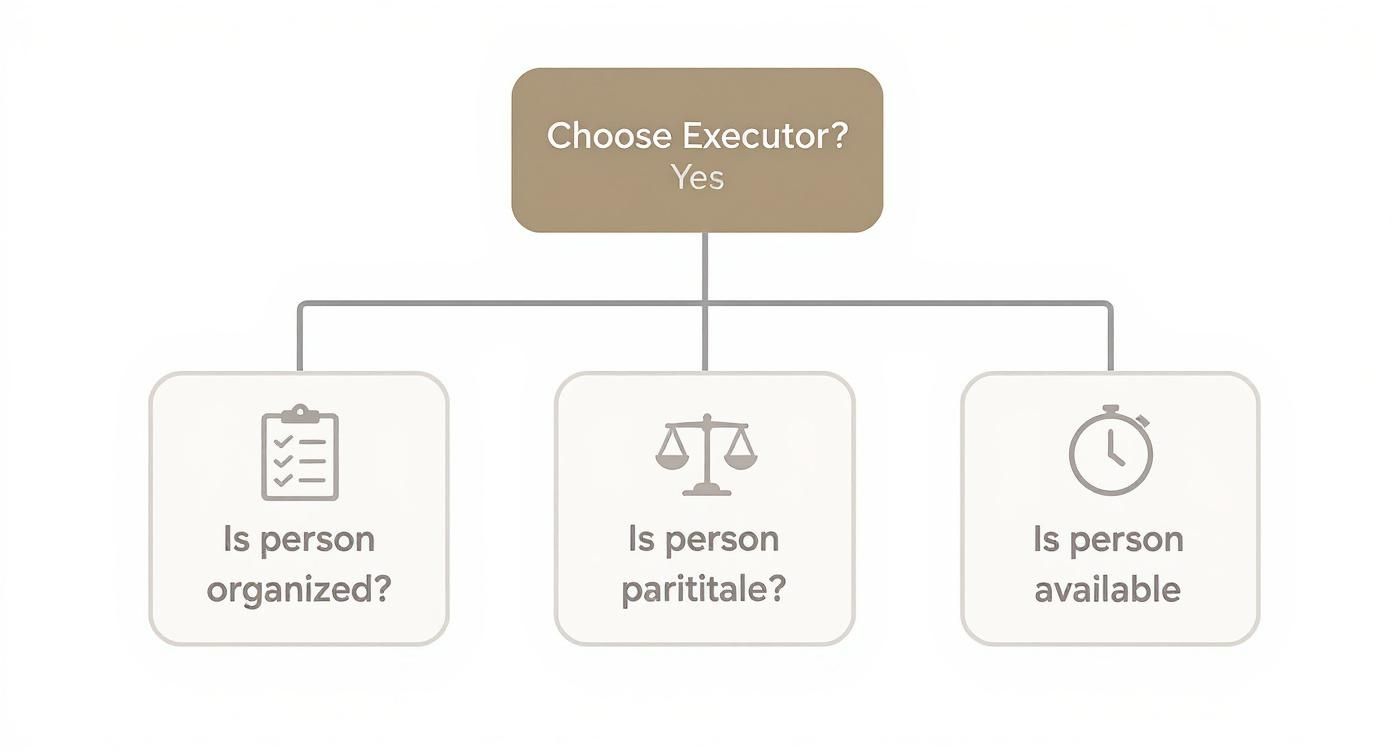
As the chart shows, the best executor isn't just someone you trust. They also need to be organized, impartial, and actually have the time to dedicate to the role.
Comparing a Family Member vs a Professional Executor
Sometimes, seeing the pros and cons side-by-side makes the decision much clearer. Here's a quick breakdown to help you weigh your options.
| Factor | Family Member or Friend | Professional Executor (Attorney, Bank, Trust Company) |
|---|---|---|
| Cost | Typically serves without a fee, preserving more of the estate for heirs. | Charges a fee for their services, usually a percentage of the estate's value. |
| Expertise | May not have the legal or financial background needed for the job. | Brings deep expertise in probate law, taxes, and estate administration. |
| Impartiality | Can be influenced by family history, emotions, and existing relationships. | Offers complete neutrality, which helps prevent or resolve family disputes. |
| Time Commitment | The role can be a huge burden on their personal and professional life. | Has dedicated staff and resources to manage the executor duties efficiently. |
| Personal Touch | Has intimate knowledge of your family dynamics and personal wishes. | Approaches the job from a purely professional and logistical standpoint. |
Ultimately, this choice comes down to the reality of your situation. If your estate is simple and your family gets along well, a loved one might be the perfect fit. But for estates with business assets, multiple properties, or the potential for conflict, the expertise of a professional can provide invaluable peace of mind. If you're leaning that way, it’s worth looking into how to find the best local Texas estate attorney to serve in this capacity.
If you’re struggling with this decision, you're not alone. A 2024 study of over 118,000 people found that 56.8% said picking an executor was their single biggest challenge in making a will—far more than any other concern.
No matter who you choose, the most important step is to have an honest conversation with them first. Make sure they understand the responsibilities and are genuinely willing and able to take on the role before you finalize your will.
What Makes a Great Executor?
Choosing an executor is built on trust, but trust alone isn't enough. A truly capable executor needs a combination of practical skills, legal eligibility, and strong character to manage the duties required by the Texas Estates Code.
Think of this person as your estate's project manager, financial watchdog, and diplomat—all rolled into one. They must perform these duties while your loved ones are grieving. Selecting the wrong person can lead to delays, costly mistakes, and family conflict. You must look beyond your personal relationship and honestly assess if this person has the necessary qualifications.
First Things First: The Legal Hurdles in Texas
Before considering personality traits, your candidate must meet the legal requirements set by Texas law. An individual is automatically disqualified from serving as an executor if they are:
- A minor (under 18 years old)
- Legally incapacitated or declared of unsound mind by a court
- A convicted felon (unless their civil rights have been restored)
- A person whom the court finds unsuitable
These are not mere suggestions; they are legal standards designed to protect your estate and ensure the person in charge is competent and accountable.
The Core Character Traits of a Standout Executor
Beyond the legal basics, the best executors share several key qualities. These traits distinguish someone who simply goes through the motions from someone who settles your estate with grace and efficiency.
Your ideal candidate should be:
- Trustworthy and Honest: This is paramount. They will have access to your entire financial life and personal information. You need absolute confidence that they will honor your wishes with integrity.
- Organized and Detail-Oriented: Estate administration is a paperwork-intensive process with strict deadlines and meticulous record-keeping requirements. A naturally organized person will manage these tasks effectively, whereas a disorganized person could create significant problems.
- Emotionally Resilient and Impartial: Your executor must remain calm under pressure. They will need the fortitude to handle difficult family dynamics and potential disagreements without playing favorites, even when emotions are running high.
Here's a good way to think about it: The executor is the steady hand when everyone else is reeling. Their ability to stay objective and stick to the legal script is what prevents family drama from derailing the entire process.
The Practical Stuff: Skills and Availability
Finally, consider the practical aspects of the role. Serving as an executor is a major time commitment, often lasting a year or more.
Ask yourself if your candidate possesses:
- Financial Acumen: They don’t need to be a CPA, but a solid understanding of basic finances is essential. They will be managing bank accounts, paying debts, and coordinating with tax professionals.
- Strong Communication Skills: Your executor is the central point of contact. They must communicate clearly and compassionately with beneficiaries, creditors, and legal professionals. Keeping everyone informed is a key component of their fiduciary duties in Texas.
- The Time and Willingness to Serve: This role is not a small favor; it's a serious commitment. Be upfront about the time involved and ensure the person you ask has the capacity in their own life to take on this responsibility.
When you speak with a potential executor, ask practical questions. For instance, "How would you handle a disagreement between two beneficiaries over a sentimental item?" or "This role could require several hours per week for over a year. Can you realistically commit to that?" Their answers will reveal a great deal about their suitability for this critical role in your asset protection and estate plan.
Why You Must Name a Successor Executor
When you draft a will, you are planning for the expected. However, a truly robust estate plan also prepares for the unexpected. You’ve put careful thought into selecting your primary executor, but what happens if they are unable to serve when the time comes? Your chosen person might pass away, become ill, move away, or simply find the job is more than they can handle.
This is not a remote possibility; it happens frequently. Life is unpredictable, and without a backup plan, your careful arrangements can be thrown into disarray. This is why naming a successor executor is not just a good idea—it's an essential safeguard for your legacy and your family’s peace of mind.
What Happens When There’s No Plan B?
If your primary executor cannot serve and you have not named a successor, your will is still valid. However, the probate court must intervene to appoint someone to administer your estate.
The court typically follows a statutory order of preference, often appointing a close family member, but there is no guarantee it will be the person you would have chosen. This can create significant problems:
- Loss of Control: The court-appointed administrator may not understand your family dynamics or fully appreciate your intentions for your assets.
- Potential for Family Disputes: If your beneficiaries cannot agree on who should be appointed, it can lead to expensive and emotionally damaging legal battles.
- Significant Delays: The court process to appoint an administrator takes time, leaving your estate in limbo and delaying the distribution of assets to your loved ones.
A Real-World Example of Seamless Succession
Consider this real-world scenario. Sarah names her brother, David, as her executor. He is financially savvy and knows her wishes perfectly. Tragically, David is in a serious car accident a year before Sarah passes away and is left incapacitated, unable to manage his own affairs, let alone her estate.
Fortunately, Sarah had worked with her estate planning attorney and named her organized and trustworthy cousin, Emily, as the successor executor. When Sarah’s will enters probate, the transition is seamless. Emily provides the court with documentation of David's incapacity and steps into the role without delay or family conflict, immediately beginning the work of carrying out Sarah’s wishes. That single act of foresight saved her family months of stress and thousands in potential legal fees.
Naming a successor executor is like having a backup generator for your estate plan. You hope you never need it, but if you do, it prevents a total shutdown and ensures everything keeps running smoothly.
You should apply the same thoughtful consideration to your successors as you did to your primary choice. Ideally, you should name a first and even a second successor to build in multiple layers of protection. It’s a simple action that provides a critical safety net, ensuring that no matter what life brings, your estate will be handled exactly as you intended.
Making Your Choice Official

You have done the hard work of weighing your options and have identified the right person for this crucial job. Now, it's time to make it legally binding. This involves more than just jotting down a name; it requires precise language within your will to ensure the Texas probate court will honor your decision.
Think of this step as a protective measure. By clearly naming your executor in your will, you prevent potential arguments among your loved ones about who should be in charge. Your will is your final directive, and this is one of its most important functions.
The Critical Conversation
Before you sign any documents, you must have an honest conversation with the person you have chosen. Never assign this responsibility without their full, informed consent. Imposing this duty on someone without their agreement is an incredible burden, especially while they are grieving.
During that conversation, be direct. Explain what the role entails, why you trust them, and confirm they are genuinely willing and able to take on the fiduciary duty that comes with being an executor in Texas.
Setting Your Executor Up for Success
Once they have agreed, your next job is to empower them to succeed. A well-prepared executor can navigate the process far more efficiently, saving your beneficiaries time, money, and stress.
I always recommend my clients create an "executor's file"—whether digital or physical—with key information:
- Location of the Will: Tell them exactly where the original signed copy is stored (e.g., a safe deposit box, your attorney’s office).
- Key Contacts: Provide the names and contact information for your estate planning attorney, CPA, and financial advisors.
- Asset Overview: Create a general list of your assets—bank accounts, real estate, investment portfolios, life insurance policies—to give them a roadmap for what to look for.
By discussing your choice and providing essential information upfront, you transform the role from a potential burden into a manageable responsibility. This simple act of preparation is a final gift to both your executor and your family.
Finally, remember that this decision is not set in stone. Life changes. People move, relationships evolve, and circumstances shift. It is wise to review your choice every few years, or after any major life event, to ensure it remains the right one. Keeping your will updated is a cornerstone of effective estate planning and is essential to meeting all formal will requirements in Texas.
Common Questions We Hear About Choosing an Executor
As you finalize this important decision, a few common questions often arise. Having clear, Texas-specific answers can provide the confidence you need to complete your estate plan.
Can I Name Co-Executors in Texas?
Yes, Texas law permits you to name more than one person to serve as co-executors. On the surface, this may seem like a fair way to involve multiple children or trusted friends.
However, this arrangement can create practical challenges. Co-executors must generally act jointly, meaning they need to agree on every decision, from selling property to paying bills. If they cannot reach an agreement, the probate process can stall, potentially requiring court intervention to resolve the deadlock.
Our advice? If you choose to name co-executors, ensure they have a proven history of effective collaboration. If there is any potential for friction, it is often better to name one primary executor and a successor.
What if I Don't Name an Executor in My Will?
If your will does not name an executor, or if your chosen executor is unable to serve and you have not named a backup, your estate will not be left without a manager.
In this situation, the probate court will appoint an administrator to handle the estate. The Texas Estates Code establishes a priority list for who can apply for this role, typically starting with the surviving spouse, then the principal beneficiaries.
While the court will appoint a suitable person, this process adds time and expense to the administration. Most importantly, it takes the decision out of your hands. This is precisely why naming an executor—and at least one successor—is such a critical part of your will.
Does My Executor Have to Live in Texas?
No, Texas law does not require your executor to be a resident of the state. You can appoint your trusted sibling who lives in another state.
However, choosing an out-of-state executor can create logistical hurdles. They may need to travel to Texas for court hearings, meet with local attorneys, and manage physical assets like your home or vehicle. This can be a significant commitment of time and resources.
Additionally, Texas law requires a non-resident executor to appoint a resident agent within the state to accept legal notices on their behalf. This adds another layer of administration. While it is certainly possible for an out-of-state executor to serve effectively, a local executor often makes the probate process smoother and more efficient.
If you’re managing a trust or planning your estate, contact The Law Office of Bryan Fagan, PLLC for a free consultation. Our attorneys provide trusted, Texas-based guidance for every step of the process.