Managing a loved one’s trust can feel overwhelming—but with the right legal guidance, it doesn’t have to be. When someone names you as their trustee, they’re handing you a significant responsibility built on trust. A trust administration lawyer in Texas is a professional guide, an attorney dedicated to helping you navigate the legal and financial duties of managing a trust after the person who created it (the grantor) has passed away or can no longer manage their affairs. We ensure every step you take aligns with the Texas Trust Code, protecting you from personal liability while ensuring the grantor's final wishes are carried out to the letter.
Your Role in Texas Trust Administration

Stepping into the role of a trustee for a loved one can feel like being handed a map to a complex territory you've never visited. It’s natural to feel overwhelmed, but you don’t have to walk this path alone. Trust administration is the process of following that map—the trust document—now that the original creator (the grantor) is no longer at the helm.
This guide is designed to demystify your responsibilities under Texas law. We'll break down what can seem like complex duties into clear, actionable steps, empowering you to handle everything from asset management to beneficiary communications with confidence.
Trustee Responsibilities Under Texas Law
As a trustee, you’ve been entrusted with a powerful role governed by a strict set of legal obligations known as fiduciary duties. These aren’t just suggestions; they are ironclad requirements under the Texas Trust Code designed to protect the trust and its beneficiaries.
Our goal is to see you succeed in this role, honoring your loved one’s legacy without the weight of unnecessary stress or confusion. A dedicated Texas trust administration lawyer brings compassionate expertise to the table for every step of your journey.
Think of your role like this: You are the temporary steward of your loved one's assets and the guardian of their legacy. Your entire mission is to act with prudence, loyalty, and complete transparency for the sake of the beneficiaries.
The process moves through several key stages, from the initial work of gathering assets all the way to making the final distributions. Each phase demands meticulous attention to detail and a firm commitment to being impartial.
A First Look at Your Duties
While the trust document itself is your ultimate guide, most trustees in Texas will find their tasks fall into several core categories. Getting a clear handle on these from the very beginning is the best way to prevent headaches and complications down the road. These duties form the bedrock of successful trust administration.
The table below summarizes the primary fiduciary duties you must uphold under the Texas Trust Code.
Core Trustee Responsibilities at a Glance
| Fiduciary Duty | What It Means for You | Practical Example |
|---|---|---|
| Duty of Loyalty | You must act solely in the best interests of the beneficiaries, never prioritizing your own. | Not selling a trust property to yourself for a below-market price, even if it seems convenient. |
| Duty of Prudence | You must manage the trust's assets as a reasonably careful person would manage their own. | Diversifying investments to balance risk and growth, rather than putting all funds into a single, high-risk stock. |
| Duty to Account | You are required to keep detailed, accurate records of all transactions and provide accountings to beneficiaries. | Maintaining a clear ledger of all income received and all expenses paid from the trust accounts. |
Understanding these principles is the first step, and with the right support, you can fulfill your duties faithfully and effectively.
Understanding Fiduciary Duties in Texas
When you agree to be a trustee, you’re taking on what’s known as a “fiduciary duty.” This isn't just legal jargon; it's a profound legal and ethical promise to always act in the absolute best interests of the trust's beneficiaries. It’s a responsibility cemented firmly in the Texas Trust Code, and failing to uphold it can lead to serious personal liability and painful family conflicts. Your personal financial goals and convenience take a backseat. Your sole focus is to carry out the wishes of the person who created the trust, managing their legacy with integrity.
The Duty of Loyalty
Your most sacred obligation is the duty of loyalty. This principle demands your complete, undivided allegiance to the beneficiaries. You simply cannot engage in any form of self-dealing or put your own interests in competition with the trust's.
For example, let's say the trust holds a valuable piece of commercial real estate in Houston. You might see it as a fantastic investment for your own portfolio. The duty of loyalty absolutely forbids you from selling that property to yourself, a relative, or your business partner, especially at a friendly, discounted price. Every transaction must be conducted at arm's length, for the exclusive benefit of the beneficiaries. Even a hint of a conflict of interest can spark disputes and legal battles down the road.
The Duty of Prudence
Next is the duty of prudence. This requires you to manage the trust's assets as any reasonably careful and skilled person would under the circumstances. The Texas Trust Code even has a specific standard known as the "prudent investor rule," which means you must make sound, sensible decisions about investments, property, and finances.
Key Takeaway: The duty of prudence isn't about being an investment wizard who hits a financial home run. It's about being diligent, diversifying assets, and managing risk responsibly. Throwing trust funds into a speculative venture would be a clear violation, while building a balanced portfolio is the very definition of prudent management.
This standard isn't just for stocks and bonds. If the trust owns a family home, your duty of prudence means making sure it's properly insured, maintained, and protected. Letting the property fall into disrepair or failing to pay property taxes would be a breach of this core responsibility.
The Duty to Account and Inform
In trust administration, transparency isn’t just good practice—it’s the law. As a trustee, you have a duty to account for every financial transaction and a duty to inform beneficiaries about the trust's health and status. This means keeping meticulous records of every penny that comes in and every penny that goes out. You're required by law to provide beneficiaries with regular accountings that detail all assets, liabilities, income, and expenses.
This proactive communication is your single best defense against suspicion and misunderstandings. A beneficiary left in the dark is far more likely to grow distrustful and consider legal action. Clear, consistent communication builds confidence and stops disputes before they ever have a chance to start. We cover how these duties connect with larger financial strategies in our guide to fiduciary duties of trustees, a must-read for anyone in this role. Working with a skilled trust administration lawyer in Texas can help you set up a bulletproof system for record-keeping and communication that not only satisfies Texas law but also shields you from personal liability.
The Trust Administration Process Step by Step
Being named a trustee can feel overwhelming. To cut through the confusion, it helps to have a roadmap. This step-by-step guidance breaks down the typical trust administration process here in Texas.
Imagine you’ve just been handed the keys to a family trust that holds a home in The Woodlands, a stock portfolio, and a small family business. This isn't just paperwork; it’s a real-world responsibility. Following these milestones will help you honor the trust creator's wishes and meet every one of your legal obligations.
Step 1: Obtain and Review the Trust Document
Your first move is to get the official trust agreement. This document is your North Star. Read it, and then read it again. You need to intimately understand the grantor's instructions, know who the beneficiaries are, and take note of any specific rules on your powers as trustee. This is where you’d find out who inherits the house and what to do with the investment portfolio. A trust administration lawyer in Texas can be your co-pilot here, reviewing the document with you to translate any dense legal language into plain English.
Step 2: Inventory and Secure All Trust Assets
Next, your job is to find, identify, and take legal control of everything the trust owns. This means creating a detailed inventory and getting a clear valuation for each asset.
- Real Estate: Secure the property. This means making sure it's insured, changing the locks if needed, and getting the deed retitled in your name as the trustee.
- Financial Accounts: You'll need to contact banks and brokerage firms to transfer the accounts into your control as trustee. This is when you'd consolidate that investment portfolio according to the trust's specific directions.
- Business Interests: For the small business, you must assess its operations, review financial records, and take the necessary steps to manage it as the trust dictates.
Step 3: Notify Beneficiaries and Creditors
Transparency is your best tool for preventing future disputes. The Texas Trust Code is very clear: you must formally notify all named beneficiaries that you are now the trustee. If they ask for a copy of the trust document, you must provide it. You also have to take proactive steps to find and notify any potential creditors of the deceased. This gives them a chance to submit claims against the estate in a timely manner.
This infographic lays out the core principles that must guide every decision you make as a trustee.
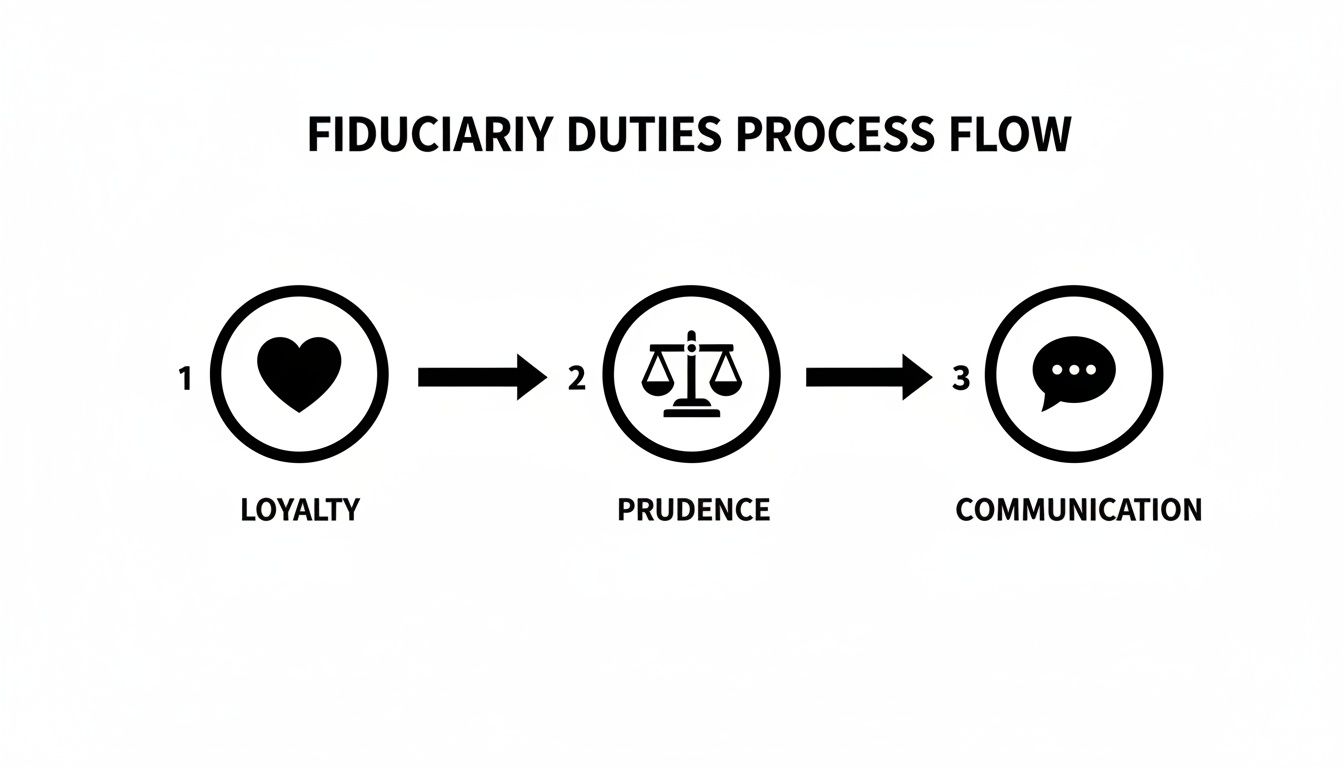
As you can see, your duties of loyalty, prudence, and communication all work together. They are the heart of this entire process.
Step 4: Manage Assets and Pay Debts
With the assets secured, your ongoing duty is to manage them wisely. This includes using the trust's funds to pay all legitimate debts, any taxes owed, and the expenses of administering the trust itself.
Important Note: You must keep absolutely meticulous records of every single transaction. This isn't just good practice—it's a legal requirement. These records are your best defense against any future claims of mismanagement.
In our example, this is the stage where you'd be paying the mortgage on the house, actively managing the investment portfolio to preserve its value, and settling any final bills or business debts.
Step 5: Handle Tax Filings
A trust is its own legal entity, and with that comes potential tax obligations. You will be responsible for filing the final personal income tax return for the deceased grantor. You'll also need to file annual fiduciary income tax returns (IRS Form 1041) for the trust itself. If the estate's value is high enough, a federal estate tax return might also be on your to-do list. A Texas estate planning attorney typically coordinates with a CPA to make sure everything is filed correctly and on time.
Step 6: Distribute Assets and Close the Trust
Finally, after all debts, expenses, and taxes have been paid, you can distribute the remaining assets to the beneficiaries exactly as the trust instructs. Once everything has been distributed and you've given a final accounting to the beneficiaries, you can take the legal steps to formally close the trust. At that point, your duties are complete.
For a more granular look at these responsibilities, you may find our comprehensive trust administration checklist helpful.
When You Should Hire a Trust Administration Lawyer
While the Texas Trust Code doesn't always mandate hiring a lawyer for trust administration, going it alone is a gamble you might not want to take. Bringing a trust administration lawyer in Texas on board isn't just about following rules; it's a strategic move to protect yourself and make sure the grantor's final wishes are honored to the letter. Think of it as a way to ensure you land the plane safely and avoid potential disaster. Recognizing these red flags early can save you from immense stress, personal liability, and ugly family fights.
When the Trust Document Is Complex or Unclear
Trust agreements are not light reading. If you're staring at a document filled with confusing legal jargon, complicated instructions for distributing assets, or unusual conditions, trying to interpret it yourself is asking for trouble. An experienced lawyer knows how to cut through the dense language to uncover the grantor's real intentions. They can map out a clear path forward, which is crucial for preventing misunderstandings that often ignite disputes between beneficiaries.
If Disputes Arise Among Beneficiaries
Even in the tightest-knit families, inheritances can create tension. The moment beneficiaries start questioning your actions, complaining about their share, or accusing you of being unfair, it's time to get a lawyer involved. Immediately. A Texas trust administration lawyer steps in as a neutral guide. They use the trust document and the Texas Trust Code as their roadmap to manage communications and resolve conflicts before they spiral out of control. This intervention can prevent a simple disagreement from becoming costly, painful litigation.
When the Trust Holds Complicated Assets
Managing a trust with simple assets like a checking account is one thing. But it's a whole different ballgame when you're dealing with more complex property. You should absolutely seek legal advice if the trust contains assets like:
- Business Interests: Properly valuing and managing a family business interest requires a very specific skill set.
- Real Estate Holdings: Multiple properties or commercial buildings add layers of legal and tax complexity.
- Unique Assets: Things like mineral rights, intellectual property, or valuable art collections demand expert handling to preserve their value.
The legal field for trust administration in Texas has grown, reflecting the complexity of modern estates. In fact, a recent analysis noted that 74 attorneys were named to the Texas Super Lawyers list and 56 were recognized as Rising Stars for 2023 in trust-related fields. This concentration of expertise highlights why Texans increasingly seek experienced counsel for these important matters, which you can read about in the latest Super Lawyers rankings.
A lawyer makes sure these specialized assets are valued, managed, and distributed correctly, protecting both the assets and you. This is especially true when creating a forward-thinking legacy with our estate planning services. We understand cost is a consideration, which is why we offer a free consultation to discuss your situation. You can learn more about general costs here: how much a lawyer consultation fee.
Navigating Complex Trust Issues and Disputes

Even the most carefully planned trust can hit rough patches. As a trustee, you're not just managing assets; you're navigating complex relationships and strict legal requirements. Two of the biggest hurdles are tax compliance and beneficiary disputes. With a steady hand and the right legal partner, these challenges don't have to derail the trust or create lasting family friction.
Managing Tax Obligations
One of your most critical responsibilities is handling the trust's tax obligations. Getting this wrong can lead to steep penalties that eat into the very assets you're supposed to protect. A trust administration lawyer in Texas will almost always work alongside tax professionals to ensure every detail is handled correctly. Your duties start with filing the final personal income tax return for the grantor. But the trust itself is its own taxable entity, meaning you'll need to file a fiduciary income tax return, IRS Form 1041, for every year the trust generates income.
Beyond that, you have to keep an eye on potential estate taxes. This is a moving target. With major changes to federal estate tax policy on the horizon, including an exemption set to drop significantly in 2026, many families are re-evaluating their trust structures. This high-stakes environment makes a specialized attorney indispensable, especially for high-net-worth Texans. You can learn more about these upcoming estate tax exemption changes.
Preventing and Resolving Beneficiary Disputes
Disputes are often the most emotionally draining part of being a trustee. They rarely start from a place of malice but grow from simple misunderstandings or a lack of clear communication. Your most powerful tool to prevent this is radical transparency.
As a trustee, you must always remember that you are managing assets for other people. Keeping beneficiaries informed about your decisions and providing clear accountings as required by the Texas Trust Code can prevent suspicion from taking root.
For example, imagine you sell a stock as part of a prudent diversification strategy. Later, that stock's value skyrockets. A beneficiary accuses you of mismanaging their inheritance. This is where a Texas trust administration lawyer proves their worth.
Your attorney can immediately step in to:
- Explain Your Actions: They will articulate that your decision was a prudent move to reduce risk, fulfilling your fiduciary duty.
- Provide Documentation: They'll produce the records to provide the clarity the beneficiary needs.
- Mediate the Conflict: By serving as a neutral buffer, the lawyer can de-escalate the tension and explain how your actions aligned with the trust and Texas law.
This kind of intervention can put out the fire before it turns into a full-blown legal battle. Our firm deals with these sensitive matters all the time, and you can see more about our approach in our guide to dispute resolution and litigation in Texas trusts. Sometimes, an issue arises because a beneficiary can't manage their own affairs due to age or disability. Our firm also assists with guardianship proceedings to ensure that incapacitated beneficiaries are properly cared for.
How to Modify or Terminate a Trust in Texas
Life is unpredictable. A trust that was a perfect fit a decade ago might not make sense today. Thankfully, trusts aren't necessarily carved in stone. The Texas Trust Code provides avenues for changing or even dissolving a trust when life throws a curveball. This flexibility is powerful, allowing a trust to adapt as your family’s circumstances change.
When to Modify or Terminate a Trust
Why would you need to alter a trust? Imagine a trust was set up to pay for a grandchild's college tuition, but she just won a full-ride scholarship. The original goal is now moot. Or, consider a more serious scenario: a beneficiary develops a disability. The trust might need a special needs provision added to allow them to keep eligibility for essential government benefits. A Texas trust administration lawyer can help you navigate the legal steps for how to modify a trust in Texas, ensuring it meets these new realities while staying true to the creator's original intent.
Methods for Modification or Termination
In Texas, there are two main paths to changing or ending a trust: getting everyone on the same page or asking a court to step in.
Consent of Beneficiaries: If every single beneficiary agrees to the change and it doesn’t fundamentally contradict a core purpose of the trust, the process can be fairly smooth. The catch? Getting unanimous agreement can be a real challenge.
Judicial Modification: When you can't get everyone to agree, a trustee or a beneficiary can petition a Texas court. A judge might greenlight a modification if unforeseen events make the original terms impractical or if keeping the trust as-is would simply be wasteful.
The guiding principle for any change is always honoring what the person who created the trust—the grantor—would have likely wanted. A court isn’t there to rewrite the trust but to adapt it in a way the grantor probably would have intended.
The world of trusts is constantly evolving. A savvy trust administration lawyer in Texas will respect state law while also having a grasp of broader strategies. You can see how different trust jurisdictions stack up in this in-depth video discussion on trust planning.
Frequently Asked Questions About Trust Administration
It's completely normal to have a flood of questions when you step into the role of a trustee. To help clear things up and give you some peace of mind, let's walk through some of the most common concerns we hear from Texas families.
How Much Does A Trust Administration Lawyer Cost In Texas?
The cost for a trust administration lawyer in Texas usually comes as either a single flat fee or a straightforward hourly rate. It's easy to see this as just another expense, but it’s much wiser to view it as an investment. Think of it as insurance against expensive legal missteps, tax slip-ups, and painful family arguments. The final cost depends on the complexity of the trust and its assets. The best way forward is to have a direct conversation with an attorney. We offer a free consultation for exactly this reason, with no obligation.
How Long Does Trust Administration Take In Texas?
A realistic timeline for trust administration in Texas is usually between six and 18 months. The exact duration hinges on a few key things:
- Asset Complexity: A trust holding a family business or several properties will take more time to manage than one with just bank accounts.
- Tax Issues: Handling final tax returns and potential estate tax matters requires careful coordination and can't be rushed.
- Beneficiary Cooperation: When beneficiaries are on the same page, things move smoothly. Disputes, however, can cause significant delays.
Can A Trustee Be Held Personally Liable?
Yes, absolutely. A trustee can be held personally liable for financial losses that happen because of a breach of their fiduciary duties in Texas. This is a concept called fiduciary liability, and it's the very reason why knowing and strictly following the Texas Trust Code is so critical.
Key Takeaway: If a trustee mismanages funds, gets involved in self-dealing, or fails to follow the trust's instructions, beneficiaries can sue them. A court could then force the trustee to cover any financial damages out of their own pocket. This personal risk is one of the biggest reasons why getting professional legal help is a smart, protective move.
Do All Trusts Avoid Probate In Texas?
This is a really common and important misconception. While one of the biggest perks of a revocable living trust is avoiding the time and expense of probate court, it’s not always a guarantee. For instance, if an asset was accidentally forgotten and not put into the trust, a separate probate proceeding might be needed just to transfer that one item. In other cases, disagreements among beneficiaries can escalate to where the court has to step in. An experienced Texas estate planning attorney can help you structure and fund a trust properly from the start to dramatically lower the odds of ever needing to go through probate.
If you’re managing a trust or planning your estate, contact The Law Office of Bryan Fagan, PLLC for a free consultation. Our attorneys provide trusted, Texas-based guidance for every step of the process.