Skip to content
Managing a loved one’s trust can feel overwhelming—but discovering that the person in charge might be misusing their power is a gut-wrenching experience. When you entrust your family's assets to a trustee, you expect them to act with honor and integrity. But when that trust is broken, it’s more than just poor management—it’s a direct violation of legally binding duties spelled out in the Texas Trust Code.
This guide will explain, in plain English, what trustee abuse of power looks like in Texas, what your rights are as a beneficiary, and the step-by-step actions you can take to protect your inheritance. We want you to feel informed and secure in your next steps.
Understanding Trustee Abuse of Power in Texas
At its heart, a trust is built on a fiduciary relationship. This is the highest standard of care recognized by law, built on absolute trust and confidence. The person managing the trust (the trustee) has a legal obligation—a set of fiduciary duties—to the people who benefit from it (the beneficiaries).
A trustee’s number one job is to act only in the best interest of the beneficiaries. This isn't a suggestion; it's the law under the Texas Trust Code. Their own needs must always come second. Any action that puts the trustee's personal interests first or goes against the trust's goals can be considered a breach of this sacred duty.
The Foundation of Trustee Responsibility Under Texas Law
Under the Texas Trust Code, a trustee is held to an incredibly high standard. They are legally and ethically sworn to manage trust assets with loyalty, prudence, and complete transparency. The trustee is the sworn protector of the trust's assets and purpose.
When that protection fails, we enter the territory of trustee abuse of power, legally known as a breach of fiduciary duty. This isn't a single act but can show up in several damaging ways:
- Self-Dealing: The trustee uses the trust like their personal piggy bank—perhaps borrowing money from it or selling trust property to themselves at a discount.
- Negligence: They fail to manage investments with reasonable care, causing the trust's value to plummet. This isn't just about a bad stock pick; it's about a pattern of poor, un-researched decisions.
- Favoritism (Breach of Impartiality): The trustee plays favorites, giving distributions to one beneficiary while ignoring the rights of others, which violates their duty to be impartial.
- Lack of Transparency: They refuse to show beneficiaries the books or provide a required accounting of what's been happening with the trust's money.
To help clarify, it's useful to see these duties side-by-side with actions that break them.
Trustee Duties vs. Actions Constituting Abuse
| Fiduciary Duty Under Texas Law | Example of Abuse (Breach of Duty) |
|---|---|
| Duty of Loyalty: To act solely in the beneficiaries' best interest. | Using trust funds to pay for a personal vacation or make a down payment on the trustee's own house (self-dealing). |
| Duty of Prudence: To manage trust assets as a prudent person would. | Investing all of the trust's money in a single, high-risk startup company without proper research or diversification. |
| Duty of Impartiality: To treat all beneficiaries fairly and according to the trust's terms. | Making large distributions to a favorite niece while denying legitimate requests from another beneficiary. |
| Duty to Inform and Account: To keep beneficiaries reasonably informed and provide accountings. | Refusing to provide annual financial statements or answer questions about why the trust's value has decreased. |
| Duty to Enforce and Defend Claims: To take reasonable steps to protect the trust's assets. | Failing to take legal action to collect a debt owed to the trust, allowing the statute of limitations to expire. |
This table highlights the clear line between a trustee's legal obligations and the actions that cross over into abuse.
Real-World Scenario: When a Mistake Becomes a Breach
Not every slip-up is an abuse of power. A trustee might make a simple administrative error or a reasonable investment choice that, in hindsight, didn't work out. These may not rise to the level of a legal breach.
However, a mistake crosses a serious line when it’s born from a violation of the trustee's core duties.
For example, imagine a trustee accidentally types the wrong year on an annual report. This is likely just a mistake. But what if the trustee intentionally falsifies the numbers on that report to hide investment losses or cover up personal withdrawals? That's a clear-cut abuse of power. Understanding this difference is your first step in defending your rights. If you have a bad feeling about a trustee's behavior, getting guidance from a Texas trust administration lawyer is a critical next move. They can help you determine if what you're seeing is a simple error or a serious breach of trust.
The Five Fiduciary Duties of a Texas Trustee
Every trustee in Texas has a set of responsibilities known as fiduciary duties. These aren't just suggestions; they're the hard-and-fast legal rules for managing a trust, laid out in the Texas Trust Code. If you're a beneficiary, understanding these duties is the first step to spotting potential trustee abuse.
A trustee is like the captain of a ship, and the beneficiaries are the passengers. That captain has one absolute priority—the safety and well-being of those passengers. They must follow a strict set of rules to get everyone to their destination safely. A trustee is held to that same high standard.
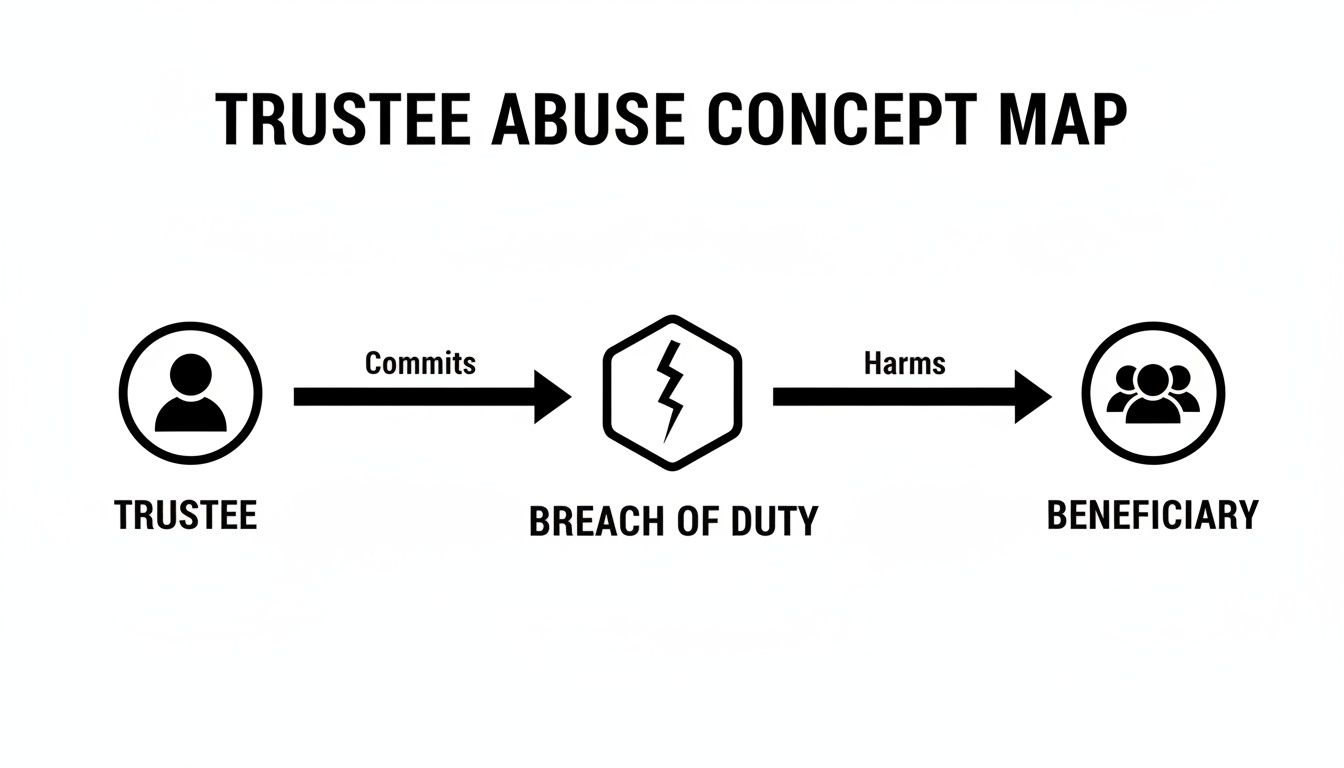
The entire relationship breaks down when a trustee commits a breach, causing direct harm to the very people they swore to protect. When a trustee fails in these duties, it can be a serious breach of fiduciary duty.
1. The Duty of Loyalty
This is the bedrock of a trustee's job. The duty of loyalty means the trustee must act solely in the best interest of the beneficiaries. Period. Their own personal interests must be left at the door.
- Real-World Scenario: Let's say a trustee owns a struggling construction company. The trust owns a rental property that needs a new roof. If the trustee hires their own company for the work and charges a price well above market rate, that’s a clear violation. They’ve put their own wallet ahead of the trust's health, a classic case of self-dealing. Our firm provides services in estate planning, probate, and asset protection to help families avoid these conflicts from the start.
2. The Duty of Prudence
The Texas Trust Code demands that a trustee manage the trust's property as a "reasonably prudent person" would manage their own. This isn’t about chasing risky ventures. It’s about making careful, well-researched, and diversified investment decisions to protect the trust's assets while trying to generate a reasonable return.
A prudent trustee isn’t a gambler. They are a careful steward, balancing risk to ensure the trust is secure for both current and future beneficiaries.
3. The Duty of Impartiality
Most trusts have more than one beneficiary—perhaps a group of siblings or a mix of a surviving spouse and children. The duty of impartiality means the trustee must treat all beneficiaries fairly, always following the specific rules written into the trust document. "Fairly" doesn't always mean "equally." A trust might prioritize the needs of a surviving spouse. The trustee must follow those instructions while acting in good faith toward everyone involved.
- Real-World Scenario: Imagine a trust for a brother and sister. The trustee is a good friend of the brother and consistently approves his requests for large cash distributions. Meanwhile, the sister makes similar, valid requests but is repeatedly denied without a good reason. That's not impartiality; it's favoritism, and it's a breach of duty.
4. The Duty to Inform and Account
A trustee cannot operate in secret. The duty to inform and account means they must keep beneficiaries reasonably updated about the trust and its management. This includes providing a formal accounting when requested—a detailed report showing every dollar that came in, went out, and was distributed. Secrecy is a huge red flag.
5. The Duty to Enforce and Defend the Trust
A trustee must be the trust's defender. It's their job to actively protect its assets. That means taking reasonable steps to collect money owed to the trust and to legally defend the trust if it's challenged. A passive trustee who sits back while assets are lost isn't doing their job. To dig deeper, you can explore our detailed guide on the fiduciary duties of trustees in Texas.
Common Warning Signs of Trustee Misconduct
How can you tell if a trustee is abusing their power? While you might imagine dramatic fraud, the reality is often quieter. The trouble usually starts with a nagging feeling that something isn’t right. As a beneficiary, your intuition is a powerful tool, but you need more than a gut feeling. Recognizing the early red flags of trustee abuse of power in Texas is the first step toward holding a trustee accountable.

Unreasonable Secrecy and Poor Communication
One of the biggest red flags is a trustee who operates in the shadows. A trustee's job is to be an open book. When they slam that book shut, you have to wonder what they're hiding.
This secrecy can manifest in a few ways:
- Ignoring Your Calls and Emails: A trustee who consistently ghosts you when you ask about the trust is neglecting their core duty to keep you informed.
- Refusing to Provide Documents: You have a legal right to see the trust document and get regular financial updates, called accountings. A trustee who stonewalls or makes endless excuses is a major cause for concern.
- Vague or Evasive Answers: A trustworthy fiduciary should have no problem clearly explaining their decisions and the trust's financial health.
Under the Texas Trust Code, transparency isn't optional. It's a fundamental duty.
Financial Irregularities and Delays
How a trustee handles the money reveals everything. Pay close attention to financial patterns that seem illogical or don’t align with the trust's purpose.
- Unexplained Delays in Distributions: If your regular payments suddenly become late or stop completely without a good explanation, something is wrong.
- Sudden Changes in Investment Strategy: Did the trustee abruptly shift a conservative portfolio into high-risk assets? This could be a sign they're gambling with your inheritance.
- Questionable Expenses: Are trust funds paying for things that clearly don't benefit the trust, like lavish "business" trips, personal cars, or excessive "administrative fees"?
A trustee’s sudden, extravagant new lifestyle—a new luxury car or expensive vacations—that doesn't align with their known income can be a serious warning sign. It could indicate they are dipping into trust funds for personal use.
Conflicts of Interest and Self-Dealing
A trustee’s loyalty must be undivided. They work for the beneficiaries, period. When their personal or financial interests get mixed up with the trust's business, it's a classic sign of trustee abuse of power in Texas.
Self-dealing often looks like this:
- Selling trust property to themselves or a relative for a price that’s clearly below market value.
- Hiring their own company or a family member’s business to do work for the trust, usually at inflated rates.
- Making loans from the trust to themselves or their other business ventures.
These actions are textbook examples of self-dealing. If you’re worried this might be happening, our firm has more detailed information on trustee self-dealing in Texas.
If you recognize any of these warning signs, start asking tougher questions. Document every call, save every email, and don't hesitate to seek legal advice. A skilled Texas estate planning attorney can help you understand your rights and protect the trust.
Step-by-Step Guidance: What to Do When a Trustee Stops Communicating
There’s nothing more frustrating than being met with total silence from a trustee. It can leave you feeling powerless and worried. Here in Texas, that isn't just bad manners—it’s a major red flag and a potential breach of their duties.

One of the most essential fiduciary duties in Texas is the duty to keep beneficiaries reasonably informed. A trustee cannot run the show in secret.
Your Right to an Accounting Under the Texas Trust Code
The Texas Trust Code gives you a powerful tool: the legal right to demand a formal accounting. This is a detailed, written report that lays out every financial detail of the trust over a specific period, including:
- All trust property the trustee has taken control of.
- All payments made from the trust.
- All money received by the trust.
- A complete inventory of all trust assets and liabilities.
This document is your window into the trust’s financial health and the trustee's performance.
Steps to Take When a Trustee Goes Silent
If a trustee is giving you the silent treatment, follow this methodical path to force them to open the books.
- Make a Formal Written Request: Send a formal request for an accounting by certified mail. This creates a paper trail and legally documents your demand.
- Set a Reasonable Deadline: In your letter, give the trustee a fair deadline, like 30 or 60 days.
- Hire a Lawyer for a Demand Letter: If the deadline passes without a response, it’s time to escalate. Having a Texas trust administration lawyer send a formal demand letter often gets a trustee’s immediate attention.
- Petition the Court to Compel an Accounting: If the trustee still won't comply, your lawyer can file a petition with the probate court. A judge can order the trustee to produce a full accounting and may even force them to personally pay your legal fees.
Texas Courts Take Communication Failures Seriously
Texas judges have little patience for trustees who hide information. Courts often see a failure to communicate as a giant red flag that points to more severe breaches.
A significant 2023 Texas appellate case drives this point home. A trustee stonewalled for months before providing improper documents. The court stated that family drama “does not lessen the fiduciary's duty of full and complete disclosure.” For this and other breaches, the court upheld an award for actual and punitive damages against the trustee. You can read more about this Texas court decision and its impact.
Your frustration is valid, and the law is on your side. With the right legal guidance, you can hold a silent trustee accountable.
Your Legal Remedies for Trustee Abuse in Texas
Finding out a trustee is misusing their power is unsettling, but Texas law doesn't leave you stranded. Once you understand the legal tools at your disposal, you can take clear, decisive action.
When a trustee breaks their fiduciary duties in Texas, the law provides beneficiaries with serious firepower to hold them accountable, recover lost funds, and put the trust back on track.
Petitioning the Court for Trustee Removal
One of the most decisive actions is to have the trustee removed. You must petition a Texas probate court and present clear evidence of their misconduct.
Under Section 113.082 of the Texas Trust Code, a court can remove a trustee if:
- The trustee seriously violated a term of the trust, causing a major financial loss.
- The trustee becomes incapacitated or insolvent.
- The court finds another good reason, like intense hostility between the trustee and beneficiaries that makes proper management impossible.
Getting a trustee removed requires compelling evidence, which is why documenting everything is critical. For a deeper dive, you can learn more about how to petition to remove a trustee in our article.
The Surcharge Action: Forcing the Trustee to Pay
If a trustee's bad decisions caused the trust to lose money, a "surcharge action" is your best remedy. A surcharge is a court order that forces the trustee to personally repay the trust for any financial damage they caused.
A surcharge action is the court's way of saying, "You broke it, you bought it." The trustee must use their own money to make the trust whole again, including not just the money they lost but also any profits the trust would have earned.
Denying Trustee Compensation and Recovering Legal Fees
A trustee who breaches their duties doesn't deserve to be paid. The court has the power to slash or eliminate their compensation. Better yet, if you win your case in court, the judge can order the trustee to personally cover your reasonable attorney's fees and court costs. This provision means you can fight for what's right without being bankrupted by legal bills.
Forcing a Formal Accounting with a Court Order
If a trustee is being secretive, you can ask the court to force their hand. A court-ordered accounting is a powerful spotlight that often reveals misconduct hidden in the shadows. This report can become the key piece of evidence you need for a surcharge action or removal petition. These remedies prove that beneficiaries have the power to fight back and ensure the trust is managed as intended. Our guardianship services also emphasize the importance of clear accounting and fiduciary responsibility.
The Four-Year Deadline to Protect Your Rights
When you suspect trustee abuse, it’s natural to hesitate. But in Texas, waiting is a luxury you can’t afford. The law sets a firm deadline, and missing it could mean losing your right to hold a bad trustee accountable forever.

Understanding this deadline is critical to getting justice for trustee abuse of power in Texas.
The Crucial Four-Year Window
Texas law generally gives you a four-year statute of limitations to file a lawsuit for a breach of trust. The tricky part is when that clock starts. The timer begins from the moment you either discovered the breach or reasonably should have discovered it. This "should have known" element is a tripwire for many beneficiaries.
The law assumes you are paying reasonable attention. If a trustee’s annual accounting clearly showed a suspicious transaction two years ago but you never read it, a court could rule your four-year clock started ticking back then—not when you finally opened the envelope.
When Does the Clock Actually Start Ticking?
This "discovery rule" puts the responsibility on you to be vigilant. You can't ignore red flags and later claim ignorance.
- A Hidden Breach: A trustee secretly sells trust property to himself. The clock likely starts ticking only when you uncover the deal.
- An Obvious Breach: A trustee tells you they're using trust funds for personal expenses. Your four-year countdown starts that day.
- A Negligent Breach: The trust's value has been dropping for years, but you never ask why. A court might rule that you should have known something was wrong long ago.
This is why you need to consult a Texas trust administration lawyer as soon as you feel something is off.
A Cautionary Tale: The Danger of Delay
Imagine a beneficiary, Sarah, notices a $20,000 "consulting fee" on an accounting statement. It feels wrong, but she doesn't want to cause trouble. Three years later, she finds out the fee was a sham. She spends another two years gathering evidence. By the time she contacts a lawyer, five years have passed since she first saw the suspicious fee. Her lawsuit would likely be dismissed because she waited too long.
The law gives you powerful tools to fight back, but only if you act in time. Remedies like damages and trustee removal vanish if you miss that critical window. You can discover more about how Texas defines and remedies a breach of trust to fully grasp your options. Don't let the clock run out on your rights.
Frequently Asked Questions About Trustee Abuse
When you're dealing with a trustee you don't trust, you likely have many questions. Here are answers to some of the most common concerns about trustee abuse of power in Texas.
Can a trustee be held personally liable for losses?
Yes, absolutely. If a trustee’s misconduct causes the trust to lose money, a Texas court can issue a "surcharge." This order requires the trustee to use their own personal funds to repay the trust for all losses, including any profits that should have been earned. They are held directly and personally accountable.
What if the trust document gives the trustee broad powers?
Many trust documents grant a trustee "sole and absolute discretion," but in Texas, no trustee’s power is truly absolute. Every trustee is still bound by the fundamental fiduciary duties in Texas, especially the duties of loyalty and good faith. A trustee cannot hide behind "discretion" to enrich themselves or act against the beneficiaries' best interests. Courts will step in when a trustee’s actions cross the line.
How much does it cost to sue a trustee in Texas?
The cost is a valid concern. However, the Texas Trust Code includes a powerful provision to help beneficiaries. If you sue a trustee for a material breach of duty and win, the court can order the trustee to personally pay your reasonable attorney's fees and court costs. This helps level the playing field, making it possible for you to seek justice without being crushed by legal bills.
If you’re managing a trust, planning your estate, or concerned about a trustee's actions, contact The Law Office of Bryan Fagan, PLLC for a free consultation. Our attorneys provide trusted, Texas-based guidance for every step of the process.