Managing a loved one’s trust can feel overwhelming — but when the person in charge isn't trustworthy, it adds a layer of stress and betrayal. You may feel powerless, but you're not. Texas law provides clear pathways for beneficiaries to hold a trustee accountable, and that includes removing them from their role.
While you can't fire a trustee over a simple disagreement, you have a strong case if you can prove they have engaged in misconduct, shown serious incompetence, or created such hostility that the trust can no longer be properly managed. This guide explains the process in plain English, empowering you with the knowledge to protect your interests.
Understanding When You Can Remove a Trustee

You placed your faith in a trustee to manage assets and honor the trust's instructions. But now, something feels off. Perhaps payments to beneficiaries are consistently late, or your requests for basic financial information are met with silence or excuses.
This scenario is far more common than people realize. Fortunately, the Texas Trust Code was written to protect beneficiaries in these situations. It provides you with the legal standing to intervene when a trustee fails to perform their duties correctly.
Fiduciary Duty: The Cornerstone of Texas Trust Law
The entire issue boils down to one critical legal concept: fiduciary duty. A trustee in Texas is held to the highest legal and ethical standard to act solely in the best interests of the trust's beneficiaries. This is not a suggestion; it is a strict legal obligation.
This duty means the trustee absolutely cannot place their own needs or interests ahead of yours. A breach of this fundamental duty is the most common reason for removing a trustee in Texas. This isn't just about outright theft; it can also involve serious incompetence, negligence, or favoritism. To build a strong case, you first need to understand these obligations. You can get a deeper look into the specific fiduciary duties of trustees in Texas and see exactly how they apply to your situation.
Common Scenarios That Justify Trustee Removal
Every case is unique, but certain red flags are difficult for a court to ignore. A minor disagreement over a small decision likely won't be enough. What truly gets a court's attention is a pattern of behavior that actively harms the trust or directly violates its written terms.
Here are some of the most compelling reasons for removing a trustee:
- Self-Dealing: This occurs when a trustee uses trust assets for their personal benefit. Examples include "borrowing" money from the trust, selling trust property to themselves at a below-market price, or investing trust funds in their own business.
- Gross Mismanagement: A trustee doesn’t have to be a crook to cause harm. Making reckless investments that decimate the trust's value or simply failing to maintain trust property (like a house or building) can demonstrate incompetence and justify removal.
- Withholding Distributions: If the trust document mandates payments to beneficiaries and the trustee refuses to make them without a legitimate reason, they are directly violating the trust's terms.
- Failure to Account: Trustees are required to keep clear, detailed records and provide beneficiaries with a regular accounting of the trust’s finances. Stonewalling or refusing to provide this information is a major red flag.
A trustee’s refusal to provide a transparent accounting is often the first sign of deeper problems. Under the Texas Trust Code, beneficiaries have a right to this information, and a trustee’s stonewalling can itself be a reason for a court to intervene.
Feeling empowered begins with knowing your rights. The idea of confronting a trustee can feel daunting, but remember, the law is designed to protect you when there's clear evidence of misconduct. A skilled Texas trust administration lawyer can help you evaluate the situation, gather the necessary evidence, and guide you through the legal process with confidence.
Legal Grounds for Trustee Removal Under the Texas Trust Code

When you suspect a trustee is not upholding their responsibilities, it's easy to feel frustrated and powerless. However, in Texas, you cannot remove a trustee based on a gut feeling alone. Courts require solid, provable reasons to take such a significant step.
Fortunately, Texas law provides clarity. The entire process hinges on a key piece of legislation: Texas Trust Code Section 113.082. This statute grants a Texas court the authority to remove a trustee and serves as the foundation for the vast majority of trustee removal cases in the state. Understanding this rulebook is your first step toward action.
Common Grounds for Trustee Removal in Texas
The Texas Trust Code outlines several specific situations that justify removing a trustee. Here is a practical overview of the most common legal grounds.
| Legal Ground | Description | Example Scenario |
|---|---|---|
| Material Breach of Trust | The trustee has significantly violated the specific instructions in the trust document, causing harm to the trust or its beneficiaries. | A trust directs the trustee to sell a family home and divide the proceeds, but the trustee decides to rent it out instead, against the beneficiaries' wishes. |
| Incapacity or Insolvency | The trustee becomes unable to manage the trust due to personal issues like a severe illness, bankruptcy, or other circumstances making them unsuitable. | The trustee develops a gambling problem and files for personal bankruptcy, putting trust assets at risk due to their financial instability. |
| Extreme Hostility | Animosity between the trustee and beneficiaries has become so severe that it prevents the trust from being administered properly and impartially. | The trustee refuses to speak with a beneficiary or consistently makes biased, spiteful decisions that undermine the trust's purpose. |
| "Other Cause" | A catch-all provision allowing a judge to remove a trustee for any other justifiable reason that harms the trust, even if it doesn't fit a specific category. | A trustee is convicted of a felony for financial fraud, making them fundamentally untrustworthy to manage the trust's assets. |
Ultimately, a judge will examine the specific facts of your case to determine if the trustee’s actions (or inaction) warrant removal.
Material Violation of the Trust's Terms
This is one of the most straightforward grounds for removal. Think of the trust document as the trustee’s instruction manual. If they intentionally ignore or defy a significant directive, that constitutes a material violation.
Real-World Scenario: A trust established for two siblings clearly states the trustee must pay for their college education. One sibling enrolls and provides the tuition bill, but the trustee refuses to pay the full amount because they personally believe the university is too expensive. This isn't just a disagreement—it's a direct breach of the trust's terms and a powerful reason for a court to intervene.
A small, accidental error that is quickly corrected probably won't be sufficient. The violation must be "material," meaning it is significant and undermines the trust's purpose or harms the beneficiaries.
Trustee Incapacity or Insolvency
A trustee doesn't have to be a bad person to be a bad trustee. Sometimes, life circumstances render them unfit for the job. The Texas Trust Code recognizes this, allowing for removal when a trustee becomes incapacitated, insolvent, or is otherwise unsuitable.
- Incapacity: This could occur if a trustee suffers a debilitating stroke or develops dementia, leaving them unable to manage their own affairs, let alone a complex trust.
- Insolvency: If a trustee files for bankruptcy, courts become concerned. An individual who cannot manage their own finances is often seen as a poor risk for managing someone else's.
- Unsuitability: This is a broader category. It might cover a trustee who develops a substance abuse problem or is convicted of a crime like embezzlement, which clearly speaks to their character and fitness for the role.
The core principle here is that a trustee's personal situation can directly threaten the trust. The court’s primary priority is always protecting the trust assets for the beneficiaries.
Hostility and Other Justifiable Causes
What happens when the relationship between the trustee and beneficiaries completely breaks down? While some friction is normal, the law provides a remedy for extreme cases. A court can remove a trustee for “other cause,” which often includes severe, irreconcilable hostility.
This isn't about petty arguments. It’s for situations where the animosity is so toxic that the trustee cannot administer the trust properly. If they refuse to communicate, play favorites out of spite, or allow personal feelings to cloud their judgment, it's a serious problem.
When conflict becomes so damaging that it poisons the trust's administration, it can be considered a breach of their fiduciary duty to act impartially. The court won’t focus on who started the conflict; it will assess whether the breakdown is preventing the trust from functioning as intended.
Step-by-Step Guidance for Gathering Evidence of Trustee Misconduct
Removing a trustee in Texas isn't about what you think they did wrong—it's about what you can prove. A judge will not act on suspicion or gut feelings. They require cold, hard facts that clearly demonstrate the trustee has failed in their duties.
Your first task is to become a detective. You must methodically gather every piece of information that tells the story of the trustee's misconduct. When you eventually sit down with a Texas trust administration lawyer, arriving with an organized file of evidence will make their job—and your life—much easier. It allows them to get a clear picture of your case from the start.
Create Your Evidence File
Think of this as building your case from the ground up. Every email, bank statement, and piece of correspondence can be a critical part of the puzzle. Start by collecting the core documents that form the foundation of the trust relationship.
Here's a practical checklist to start:
- The Trust Document: This is the playbook. Obtain a full, complete copy. The trust agreement spells out exactly what the trustee is supposed to do, and it’s the standard against which their performance will be judged.
- Written Communications: Gather every email, text message, and letter you have sent to or received from the trustee. This paper trail can reveal patterns of evasiveness, outright hostility, or a refusal to answer legitimate questions.
- Financial Records: Collect any bank statements, brokerage reports, or other financial summaries the trustee has provided. Even if they are incomplete, they are a starting point. Also, gather your own records of distributions you were supposed to receive versus what you actually received.
Practical Advice: Stop having important conversations on the phone. Whenever you need to communicate with the trustee, do so in writing. An email or a certified letter creates an undeniable record that can be used in court.
Documenting a Breach of Trust
Under the Texas Property Code, a breach of trust occurs anytime a trustee violates a duty they owe to a beneficiary. This is a broad definition, covering everything from blatant theft to sloppy, negligent management. The key is to connect the evidence you've gathered to a specific failure.
For instance, if the trust specifies quarterly payments and the trustee is consistently late—or fails to pay at all—your bank statements showing the missing deposits serve as direct proof. If you suspect the trustee is making risky investments with trust funds, the brokerage statements showing those trades are your smoking gun.
It's absolutely critical to act promptly once you suspect something is wrong. In Texas, there is generally a four-year statute of limitations to bring a claim for breach of trust, and the clock starts ticking the moment you knew—or should have known—about the misconduct. This deadline is strict and applies to many issues, including self-dealing, negligent management, and misappropriation of funds.
Formally Requesting an Accounting
What happens if the trustee simply stonewalls you and refuses to hand over any financial information? This is not just frustrating; it's a massive red flag. In fact, a refusal to provide information can be grounds for removal in itself.
The Texas Trust Code gives beneficiaries a powerful tool: the right to demand a formal accounting. This isn't just a simple bank statement. It's a comprehensive, detailed report showing every penny that has come into and gone out of the trust, along with all assets and liabilities.
If the trustee is ignoring your informal requests, your lawyer can send a formal demand letter. If they ignore that, your attorney can petition the court to compel them to produce it.
A court-ordered accounting forces the trustee to reveal their actions. It is often this single step that uncovers the definitive proof of mismanagement needed to successfully petition for removing a trustee in Texas. To get a better sense of what this involves, see our guide on what trust accounting entails in Texas. By taking these deliberate, organized steps, you transition from being a victim to taking back control.
Navigating the Court Process in Texas
Once you've gathered your evidence, the next step is taking your case to court. This can sound daunting, but a seasoned Texas trust administration lawyer handles all the legal heavy lifting. Your job is to stay focused on the main goal: protecting the trust and its assets.
The legal journey officially kicks off when your attorney files a Petition for Removal of Trustee with the appropriate Texas court. This document is a formal request that meticulously lays out your case, identifying everyone involved, explaining the legal grounds for removal under the Texas Trust Code, and detailing the trustee's specific missteps.
After filing, the lawsuit must be formally delivered to the trustee. This is called service of process, and it is a non-negotiable step that ensures the trustee is officially notified of the lawsuit and has an opportunity to respond.
The Discovery Phase: Uncovering the Truth
With the initial paperwork filed, the case moves into the discovery phase. This is where both sides are legally required to exchange information, and it's often where the full story comes to light. If a trustee has been hiding something, discovery is designed to expose it.
During discovery, your attorney will use key legal tools to build on the evidence you've already collected:
- Requests for Production: We will formally demand the trustee hand over all relevant documents, including bank statements, investment records, receipts, and even private emails or text messages they may have withheld.
- Interrogatories: These are written questions that the trustee is required to answer under oath. They are used to pin down their decisions and actions.
- Depositions: This is an opportunity to question the trustee and other witnesses face-to-face, under oath, outside the courtroom. A court reporter creates a transcript that can be used to build a powerful case.
The information uncovered during discovery is the bedrock of a successful removal action.
Here is a visual overview of the evidence-gathering process.
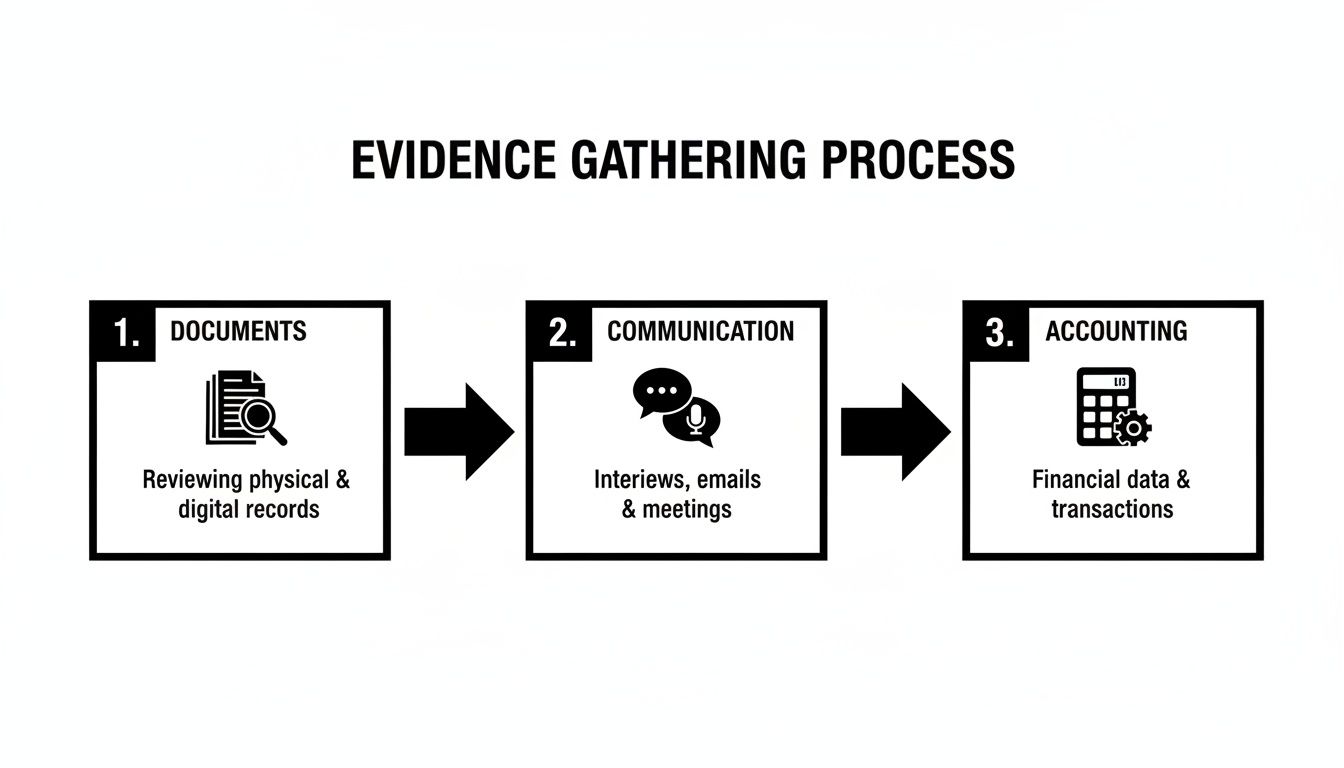
As you can see, a strong case starts with solid documents, clear communication records, and a thorough financial review.
Quicker Paths: Alternatives to a Full Trial
Not every case to remove a trustee in Texas needs to end in a dramatic courtroom battle. Many are resolved long before a judge bangs a gavel, often through mediation or a negotiated settlement.
Mediation is a mandatory step in most Texas civil cases. It is a structured settlement conference where a neutral third-party mediator helps both sides find common ground. The process is confidential, allowing for frank discussions that can lead to creative solutions and save everyone significant time, money, and stress.
Practical Advice: A negotiated settlement is often the most efficient path forward. In many cases, once a trustee is faced with compelling evidence of their misconduct, they may agree to resign voluntarily to avoid the cost and publicity of a trial.
A typical settlement might involve the trustee's resignation, the appointment of a new successor trustee, and the provision of a final, verified accounting. This achieves the primary goal—removing a bad trustee and protecting the trust—without a prolonged fight. A skilled lawyer can negotiate terms to ensure the trust is made whole and the transition is as smooth as possible.
Life After a Trustee Is Removed
Successfully removing a bad trustee is a major victory, but it is not the final step. While it is a critical turning point that stops further damage, the real work of securing the trust’s future is just beginning. Think of it as the start of a new, more promising chapter.
The court order removing the trustee is your green light. The focus now shifts from removal to recovery. This involves appointing a trustworthy successor, compelling the former trustee to hand over all assets and records, and, if necessary, taking legal action to recover any money they lost or misappropriated.
Appointing a Successor Trustee
A trust cannot function without a trustee, so appointing a new one is the immediate priority. There is a clear order of operations for this process.
The trust document itself is the starting point. A well-drafted trust will almost always name one or more successor trustees. If the first person on that list is willing and qualified, the transition can be quite smooth. If they are unable or unwilling to serve, you simply move down the list.
If the trust is silent on successors or the list is exhausted, the power to choose often falls to the beneficiaries or the court. Some trusts permit adult beneficiaries to vote on a replacement. If they cannot agree, or if the trust does not provide for a vote, a judge will intervene. In such cases, the court may appoint a professional, like a bank's trust department or an independent Texas trust administration lawyer, to take over.
Compelling a Final Accounting and Turnover of Assets
A removed trustee does not get to simply walk away. They have one last critical duty: preparing a complete and accurate final accounting. This report must detail every transaction from their last reporting period and list every asset being handed over to the new trustee.
Your attorney will ensure the judge's removal order includes a firm deadline for both the accounting and the turnover of all trust property. This is not optional. The turnover must include:
- Financial Assets: Transferring control of all bank accounts, brokerage accounts, and investments to the new trustee.
- Real Property: Executing and recording new deeds to transfer any real estate out of their name and into the new trustee's name.
- Tangible Property: Handing over keys to properties, vehicles, collectibles, and any other physical items the trust owns.
- All Records: Turning over all original trust documents, past tax returns, bank statements, and financial records.
This step is vital. It draws a clear line, defining exactly what the new trustee is receiving and will be responsible for from their first day.
A former trustee who stalls, provides an incomplete accounting, or refuses to turn over assets can be held in contempt of court. This gives the judge significant leverage, including fines or even jail time, to force compliance.
Pursuing a Surcharge Action for Damages
What happens when the final accounting reveals that the ex-trustee's poor decisions cost the trust money? If they gambled on reckless investments, sold property for far less than its value, or paid themselves excessive fees, simply removing them doesn't make the trust whole again.
This is where you can take further action by filing a surcharge action. In plain English, this is a lawsuit against the removed trustee personally. The goal is to obtain a court judgment forcing them to use their own funds to repay the trust for the damages caused by their breach of duty.
The evidence you gathered for the removal case, combined with the details from their own final accounting, often provides a clear roadmap for calculating the financial harm. Beneficiaries now have more tools than ever to adapt trusts, thanks in part to modernized laws. You can read more about how legislative changes expanded court authority over Texas trusts.
Common Questions About Removing a Texas Trustee
When you're dealing with a trustee who isn't doing their job, questions can pile up quickly. The situation can feel overwhelming, but getting clear answers is the first step toward regaining control. Let's address some of the most common concerns we hear from beneficiaries looking to remove a trustee in Texas.
How long does the trustee removal process take?
This is often the first question people ask, and the honest answer is: it depends. The timeline for removing a trustee can range from a few months to over a year. It all comes down to the specifics of your case and whether the trustee chooses to cooperate or fight.
In a best-case scenario, your attorney sends a strong demand letter, the trustee sees the writing on the wall, and agrees to resign. That’s the fast track. But if the trustee digs in their heels, you’re looking at a formal lawsuit, a discovery process to gather evidence, and a court hearing, all of which takes time.
Factors that influence the timeline include:
- Negotiation vs. Litigation: A negotiated resignation is always the quickest path. A full-blown court battle will take much longer.
- The Court’s Schedule: A court's caseload can directly impact how soon you can get a hearing.
- Complexity of the Case: If you’re tracing complex financial transactions or hidden assets, the evidence-gathering phase alone can add months to the process.
What are the potential costs of a trust lawsuit?
Worrying about legal fees is completely understandable. Trust litigation is typically handled on an hourly basis, so the final cost is directly tied to the amount of work required to resolve the issue.
However, a critical provision in the Texas Trust Code can work in your favor. If a court finds that the trustee breached their fiduciary duty, it can order them to pay your attorney’s fees out of their own pocket. Alternatively, if the lawsuit is seen as benefiting the trust itself, the court can order the fees to be paid from trust assets. This is a significant protection for beneficiaries, ensuring you don't have to foot the bill just to protect what's rightfully yours.
Can a trustee be removed without going to court?
Yes, and this is often the most desirable outcome. In many cases, you can remove a trustee without ever stepping into a courtroom, which saves everyone time, money, and stress.
This typically happens in one of two ways:
- Following the Trust’s Own Rules: Many modern trusts contain clauses that allow beneficiaries to remove and replace a trustee with a majority or unanimous vote. No need to prove fault; you just follow the procedure laid out in the document.
- Negotiating a Resignation: This is the more common route. A trustee often agrees to step down once faced with indisputable evidence of their misconduct. When a Texas estate planning attorney presents a well-documented case showing self-dealing or serious mismanagement, most trustees choose to resign rather than face a public lawsuit they are likely to lose.
A strong, well-drafted demand letter from a law firm—one that clearly details the breaches of duty and the evidence you have—is often all it takes to convince a trustee that stepping down is their only sensible option.
What should I do if the trustee refuses to communicate?
A trustee who goes silent is a massive red flag. Under Texas law, trustees have a fiduciary duty to keep beneficiaries reasonably informed. Ignoring you is not just rude; it is a direct breach of their legal obligations.
If your calls, emails, and letters are met with silence, it’s time to take formal action. The first step is to have an attorney send a formal demand for a full trust accounting. This isn't just a polite request; it's a legal demand backed by the full weight of the Texas Trust Code.
If the trustee still ignores this formal demand, your attorney can then file a motion with the court to compel the accounting. A judge will order the trustee to hand over the records. Failure to comply with a court order can lead to serious consequences for the trustee, including being held in contempt of court and, ultimately, being removed.
If you’re managing a trust or planning your estate, contact The Law Office of Bryan Fagan, PLLC for a free consultation. Our attorneys provide trusted, Texas-based guidance for every step of the process.