Managing a loved one’s trust can feel overwhelming, especially when you suspect something isn't right. But with the right legal guidance, it doesn’t have to be. If you’re worried about how a trust is being handled, understanding trustee negligence in Texas is the first step toward protecting what’s rightfully yours and securing your family's legacy.
This isn't always about a villain trying to steal the family fortune. More often, it’s about carelessness, a misunderstanding of the law, or simply a trustee who is in over their head and failing to act. This guide will walk you through your rights, explain a trustee's duties under Texas law, and provide clear steps you can take.
What Is Trustee Negligence in Texas?

In simple terms, trustee negligence is what happens when a trustee fails to live up to the legal standards of care required by Texas law, causing harm to the trust or its beneficiaries. This failure is a breach of what’s known as a fiduciary duty—a trustee’s absolute obligation to act solely in the best interests of the beneficiaries.
Think of the trustee as the captain of a ship. The trust's assets are the precious cargo, and the beneficiaries are the passengers counting on a safe voyage. The captain's one and only job is to guide that ship to its destination, navigating responsibly. A negligent captain might get distracted, ignore the weather forecast, or make reckless choices—and suddenly, everyone is in jeopardy.
The High Standard of Care Under the Texas Trust Code
Here in Texas, the law holds trustees to an incredibly high standard. A trustee is legally required to manage the trust with the care, skill, and prudence that a sensible person would use to manage their own financial affairs. This is a mandate, not a suggestion, spelled out in the Texas Trust Code.
Under Texas Property Code §111.004(25), a breach of trust occurs anytime a trustee violates a duty owed to the beneficiaries. Crucially, negligence is a breach, even if the trustee had good intentions.
A trustee’s duty is not just to avoid intentional wrongdoing but to actively and prudently manage the trust. Good intentions are not a defense against a claim of negligence if the trustee's actions or inactions cause harm.
For example, if a trustee gambles a trust's assets on a single, high-risk startup without diversifying, it’s not just a bad call—it could be a classic case of trustee negligence.
Common Red Flags of Trustee Negligence
Knowing what to look for can help you spot trouble early. While every situation is unique, certain warning signs tend to pop up again and again.
| Warning Sign | What It Could Mean |
|---|---|
| Radio Silence | The trustee won't return calls, ignores emails, or fails to provide regular updates. This could mean they're hiding something or are simply not doing their job. |
| Mysterious Investment Losses | The trust's value is dropping steadily, and it can't be explained by a general market downturn. This might point to reckless or unsuitable investments. |
| Delayed or Missing Payments | You're not receiving distributions that are clearly outlined in the trust document. This is a major red flag that the trustee isn't following instructions. |
| No Financial Transparency | The trustee is evasive or refuses to provide a clear, detailed accounting of the trust's finances. You have a right to know how the trust's assets are being managed. |
| Playing Favorites | The trustee seems to be favoring one beneficiary over others, or even themselves, in a way that seems unfair or goes against the trust's terms. |
Recognizing these patterns is the first step. If any of this sounds uncomfortably familiar, know that you have rights and legal options. The best first move is to consult with an experienced Texas trust administration lawyer. They can help you make sense of your situation, understand your rights, and figure out the smartest way forward. Whether you're a beneficiary worried about your inheritance or a trustee who needs help with proper asset protection, getting professional guidance is key.
A Trustee's Fiduciary Duties in Texas Explained
When someone agrees to be a trustee in Texas, they are bound by a strict set of legal promises known as fiduciary duties. This isn't a casual guideline—it's a legal mandate under the Texas Trust Code and the Texas Estates Code. It means the trustee must always put the beneficiaries' interests first, even before their own.
Ignoring these rules isn't just a mistake; it can be considered trustee negligence in Texas, with serious legal consequences.
The Duty of Loyalty and No Self-Dealing
At the heart of a trustee’s role is the duty of loyalty. It demands absolute, undivided loyalty to the beneficiaries. This means a trustee cannot use their position for personal gain or engage in what's known as self-dealing.
Real-World Scenario: Imagine a trust owns a family lake house. The trustee can't sell that house to themselves for a bargain-bin price. Likewise, they can't take money from the trust to fund their own startup or use trust property as collateral for a personal loan. These are classic conflicts of interest.
The duty of loyalty is ironclad. The law starts with the assumption that any deal a trustee makes with the trust is unfair. The trustee then has the tough job of proving it wasn't. This high bar is there to protect beneficiaries.
The Duty of Prudence and Skillful Management
Being a trustee isn't just about being honest; it's also about being competent. Texas law requires a trustee to manage the trust's assets as a "prudent person" would manage their own. This is called the duty of prudence.
The Texas Uniform Prudent Investor Act gives us more specifics on what this means. A prudent trustee must:
- Diversify Investments: You can't put all the trust's eggs in one basket. Spreading investments across different types of assets is key to managing risk.
- Investigate and Monitor: Trustees have to do their homework. They need to make informed investment choices based on research and then keep an eye on how those investments are doing.
- Act with Skill: If a trustee isn't an expert in managing a complex business or a sophisticated stock portfolio, they have a duty to hire someone who is.
A trustee who hears a "hot tip" from a friend and sinks the entire trust into a single, risky stock has likely violated this duty.
The Duty to Account and Inform
A trustee can't operate in a black box. Transparency is a legal requirement, not a choice. The duty to account means trustees must keep meticulous, accurate records of every single transaction. Beneficiaries have a legal right to ask for and receive a formal accounting of the trust.
This duty also means keeping beneficiaries in the loop about the trust’s administration and any major events that could affect their interests. A trustee who goes silent or ignores questions is failing one of their most critical responsibilities. For an in-depth look, you can learn more about the specific fiduciary duties of trustees and the high standards they must meet.
Real-World Examples of Trustee Negligence

Legal duties can feel abstract, but when a trustee fails to meet them, the consequences for Texas families are all too real. Trustee negligence in Texas often isn't a single dramatic event; it's a slow leak—a series of bad decisions or inaction that drains the trust's value. These examples show how fiduciary duties apply in practice.
Failure to Make Trust Property Productive
Let's say a trust holds a rental house in a desirable Austin neighborhood. A prudent trustee would have that property leased to good tenants, generating a steady income for the beneficiaries. A negligent one might let it sit empty for years. This is a direct violation of their duty to make the trust's assets productive. Every month that house sits empty is money out of the beneficiaries' pockets. Worse, the property can fall into disrepair, causing the trust's overall value to plummet.
Improper Investments and the Prudent Investor Rule
The Texas Uniform Prudent Investor Act is the rulebook for how trustees must handle investments. It’s shocking how often this rule is broken.
- Putting All Eggs in One Basket: A trustee hears a "sure thing" tip and sinks 100% of the trust's money into a single, high-risk startup. When that company fails, the trust is wiped out. A prudent investor would have diversified.
- Playing Expert Without the Experience: The trustee, perhaps an accountant with no investment background, decides to manage a complex portfolio themselves to "save" on fees. Their DIY approach leads to heavy losses that a qualified financial advisor could have easily avoided.
- Chasing High-Risk Gambles: The trustee invests in speculative ventures that are entirely inappropriate for the trust's purpose, such as preserving money for a grandchild's education.
In all these scenarios, the trustee failed to use the care and skill required, and the beneficiaries paid the price.
A trustee's job is not to be a stock market genius but to be a prudent manager. This means prioritizing the safety and growth of the trust's assets over taking unnecessary risks.
Self-Dealing and Conflicts of Interest
Self-dealing is a profound betrayal where a trustee uses their position to line their own pockets, breaching their duty of loyalty.
Real-World Scenario: A trustee who owns a construction company needs to have a trust property re-roofed. The trustee hires their own company for the job and charges the trust an inflated price, well above the market rate. This is a textbook conflict of interest. An even more blatant example is when a trustee loans trust funds to themselves or their business. A savvy Texas estate planning attorney can help structure trusts to minimize these risks from the start.
Failure to Distribute Assets or Pay Bills
A trust is a set of instructions. A trustee's primary job is to follow them. If the trust says to pay a beneficiary a certain amount each month for living expenses, and the trustee simply… doesn't… that's a straightforward breach. The same is true when a trustee neglects to pay the trust's bills, like property taxes or insurance premiums, which can lead to foreclosure or a lapse in coverage. If you're dealing with a trustee who can't handle these basic tasks, it’s time to talk to a Texas trust administration lawyer.
The Trustee's Duty to Inform and Account

When it comes to trust administration, secrecy is a massive red flag. A trustee who dodges questions or operates in the shadows isn't just being difficult—they are likely breaching their fiduciary duty under Texas law. Transparency isn’t a favor; it’s a fundamental obligation. These duties give you, the beneficiary, the power to hold the trustee accountable and protect what’s rightfully yours.
Your Right to a Formal Trust Accounting
Under the Texas Trust Code, beneficiaries have a legal right to demand a formal accounting. This isn't just a quick email with the trust's current balance. It’s a comprehensive financial report that must detail:
- All property that has entered the trust.
- A complete breakdown of all income, expenses, and other transactions.
- The source and exact amount of the trustee’s compensation.
- A current list of all trust assets and their market values.
This document is your window into the trust’s financial health. If a trustee refuses to provide one when asked, they are in serious breach of their duties.
The Duty to Keep You Reasonably Informed
Beyond formal accountings, trustees have an ongoing responsibility to keep beneficiaries in the loop about the trust's administration and any significant events that could affect their inheritance. A good trustee should proactively communicate about major decisions, like selling a major asset or changing the investment strategy. When a trustee goes silent, it breeds suspicion and doubt.
In trust law, a trustee’s silence is not golden. It’s a warning sign. The law demands open communication to ensure beneficiaries aren’t left in the dark about assets that belong to them.
Failing to inform beneficiaries isn't just bad form; it’s a breach of fiduciary duty that can be very costly for the trustee. Disputes over accountings are a common source of trust litigation in Texas, often resulting in significant damage awards.
What to Do When a Trustee Goes Dark
If your trustee is keeping you in the dark, you have clear options. The first step is to send a formal, written demand for an accounting by certified mail. This action creates an official paper trail and formally notifies the trustee of their obligation.
If they still don't cooperate or send a report that’s confusing or incomplete, you have a strong signal of potential trustee negligence. At this stage, it’s time to speak with a Texas trust administration lawyer. They can help you decipher the financial data—or lack thereof—and, if needed, file a petition with the court to force the trustee to comply. You can learn more by reading our guide on the essentials of trust accounting. This is about enforcing your rights and protecting the trust’s legacy.
Legal Remedies for a Breach of Trust in Texas
Discovering that a trustee has been negligent or acted in bad faith can leave you feeling betrayed and worried about your inheritance. The good news is that Texas law provides a powerful toolkit designed to make things right. When trustee negligence in Texas causes financial damage, the court's main goal is to restore the trust to the financial position it would have been in if the breach never occurred. A Texas trust administration lawyer is an essential partner in securing these remedies.
Ordering a Surcharge to Repay Losses
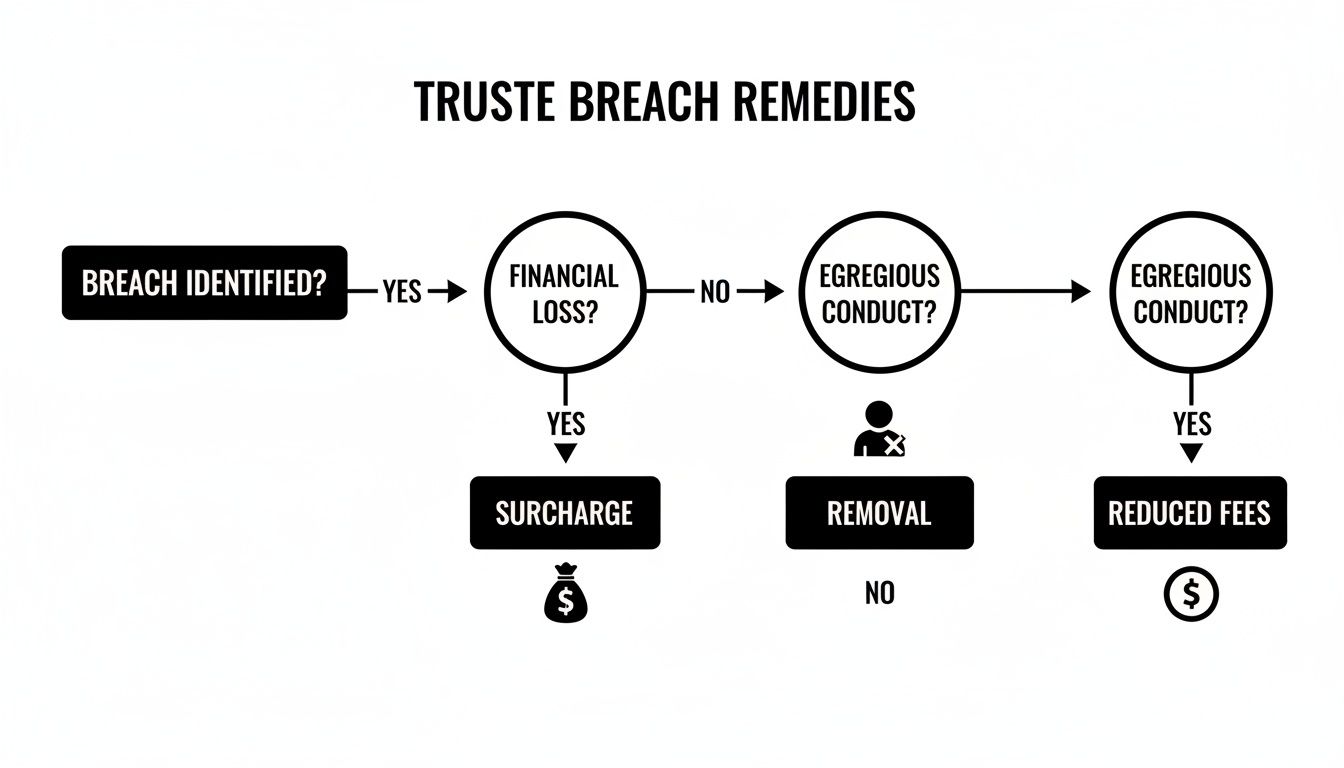
One of the most direct tools a Texas court has is ordering a surcharge. This is a court-ordered judgment that forces the trustee to personally repay every dollar the trust lost because of their negligence. It's not a fine paid to the state; it's a direct reimbursement to make the trust whole again.
Real-World Scenario: If a trustee made a reckless investment that lost $100,000 of the trust’s money, a surcharge would compel them to pay that $100,000 right back into the trust's account from their own funds.
Forcing the Removal of a Negligent Trustee
Sometimes, just getting the money back isn't enough. If a trustee has shown a pattern of bad decisions, engaged in self-dealing, or created so much conflict that they can no longer effectively serve, a court can remove them.
A trustee’s removal is a serious step, but it is often necessary to prevent future harm. Texas law allows a court to remove a trustee who has materially violated the trust's terms or has otherwise become unsuitable to continue serving.
Once the trustee is out, the court will appoint a successor—often a professional corporate trustee or another qualified individual—to manage the trust properly.
Other Powerful Court-Ordered Actions
Beyond surcharges and removal, Texas courts have a wide range of powers to remedy a breach of trust, including:
- Reducing or Denying Trustee Compensation: If a trustee did a poor job, the court can slash their fees or deny payment entirely.
- Compelling the Trustee to Act: A judge can issue a direct order forcing the trustee to make a distribution they've been withholding or perform any other neglected duty.
- Voiding a Trustee's Actions: If a trustee made an improper deal, like selling trust property to a relative for below market value, the court can cancel the transaction.
For a more detailed look at the legal process, our guide on how to sue a trustee in Texas offers a great deal of helpful information.
The Statute of Limitations and the Discovery Rule
It’s critical to act quickly. In Texas, you generally have a four-year statute of limitations to bring a claim for a breach of fiduciary duty. However, this clock doesn't always start ticking the moment the bad act occurs. Texas law includes a "discovery rule," which says the four-year period only begins when the beneficiary knew, or reasonably should have known, about the breach. But you cannot afford to sit on your rights. The moment you suspect a problem, it's time to investigate.
What to Do if You Suspect Trustee Negligence: A Step-by-Step Guide
Having a gut feeling that a trustee isn't doing their job right is stressful. It can feel like a betrayal, leaving you uncertain and powerless. But you are not powerless. Under Texas law, beneficiaries have clear, concrete ways to take action. Knowing what to do next can turn that anxiety into a clear plan.
Step 1: Formally Request Information
Before pursuing legal action, your first move should be to create a paper trail. Send a formal, written request for a full accounting of the trust via certified mail. This isn't the time for a casual email. A certified letter creates a legal record, proving that you made the demand and when the trustee received it. This simple act puts them on official notice and shows you’re serious about your rights under the Texas Trust Code.
Step 2: Document Everything
While you wait for a response, get organized. Start gathering every document and digital file related to the trust:
- The trust document itself (this is your rulebook).
- All past emails, letters, and text messages with the trustee.
- Records of any payments you were supposed to receive but didn't.
- Your own notes about specific actions (or inactions) that worried you, including dates.
This collection of documents is invaluable if you need to involve an attorney.
A Word for Trustees: How to Stay Out of Trouble
If you are a trustee, your best defenses are transparency and diligence. Keep meticulous records of every transaction. Communicate with beneficiaries proactively. And never be afraid to get professional advice on complex matters. Proper estate planning and diligent administration are what separate a great trustee from one who ends up in court.
Step 3: Consult a Texas Trust Administration Lawyer
What happens if the trustee ignores your certified letter? Or if they send back an accounting that’s confusing, incomplete, or reveals obvious problems? That’s your cue to call in the professionals. Don't wait. The longer a negligent trustee has control, the more your inheritance is at risk.
This flowchart lays out the primary remedies a Texas court can use for a breach of trust.
An experienced Texas trust administration lawyer can evaluate your situation and map out the best legal path forward. This might mean filing a lawsuit to force an accounting, seeking a surcharge for lost funds, or petitioning to have the trustee removed. With a four-year statute of limitations on these claims, moving quickly is key.
Dealing with complex trust issues, such as those involving guardianship or asset protection, is tough. You don't have to go it alone.
If you’re a beneficiary with concerns or a trustee trying to do things right, contact The Law Office of Bryan Fagan, PLLC for a free consultation. Our attorneys are here to provide trusted, Texas-based guidance every step of the way.
Frequently Asked Questions About Texas Trust Disputes
When you’re dealing with a Texas trust, questions and worries can pile up fast. It’s a complex landscape, and finding straight answers can feel like a tall order. We’ve gathered some of the most common questions we hear about trustee negligence in Texas to give you the clarity you need to move forward with confidence.
Can a Trustee Be Negligent Without Bad Intentions?
Yes, and it happens more often than you’d think. In Texas, a trustee’s good intentions don’t get them off the hook. Negligence isn’t about malice; it’s about actions and outcomes. A breach of duty can stem from simple carelessness, a misunderstanding of the Texas Trust Code, or just plain bad judgment.
The law asks a simple question: Did the trustee act as a “prudent person” would have in the same situation? A trustee might pour money into a high-risk investment with the best of intentions, but if that investment tanks and violates the Prudent Investor Rule, it’s still negligence.
What Is the First Thing to Do if a Trustee Ignores My Request for an Accounting?
Your first move should be to send a formal, written demand for an accounting by certified mail. This isn’t just a suggestion; it’s a critical step that creates an official paper trail, proving you’ve lawfully requested the information you're entitled to.
A trustee’s failure to respond to a formal request for an accounting is not just poor communication; it is a significant red flag and a breach of their fiduciary duty to inform.
If the certified letter gets no response or you receive a report that’s vague and full of holes, it's time to call a Texas trust attorney. Their stonewalling only strengthens your case and signals to a court that you’ve done everything you can before needing legal help.
Can a Trustee Be Forced to Personally Repay Trust Losses?
Absolutely. This is one of the most powerful tools beneficiaries have in Texas. If a court finds that a trustee’s negligence or outright misconduct caused the trust to lose money, it can issue a surcharge.
A surcharge is a court order that forces the trustee to dig into their own pockets and use their personal funds to repay the trust for any losses, missed profits, or other financial damage. It’s the primary way to make the trust whole again after it’s been mismanaged.
How Much Does It Cost to Hire an Attorney for a Trust Dispute?
The cost of hiring a lawyer varies, depending on how complicated your situation is and whether you’re in for a fight. But here’s something to keep in mind: the cost of not acting—of letting a negligent trustee continue to drain your rightful inheritance—is almost always far higher.
Many firms, including The Law Office of Bryan Fagan, PLLC, offer a free consultation. It’s a chance for you to get a handle on your legal standing, map out potential strategies, and understand the costs involved, all without spending a dime upfront.
If you’re managing a trust or planning your estate, contact The Law Office of Bryan Fagan, PLLC for a free consultation. Our attorneys provide trusted, Texas-based guidance for every step of the process.