Skip to content
Managing a loved one’s trust can feel overwhelming, especially when you suspect something is wrong. Discovering that a trustee—the person entrusted with managing the trust—is using its assets for their own benefit is an unsettling and often painful experience. This misconduct is called trustee self-dealing, and in Texas, it's not just a minor misstep; it's a profound breach of their most sacred promise: the duty of loyalty.
This guide explains in plain English what self-dealing is, how to spot it, and what steps you can take to protect your rights. With the right legal guidance, you can navigate this complex situation with clarity and confidence.
What is Trustee Self-Dealing in Texas?

When someone creates a trust, they place immense faith in their chosen trustee. This individual holds a powerful position, but it comes with a strict legal obligation under the Texas Trust Code to manage the trust's assets only for the good of the beneficiaries. This core obligation is known as a fiduciary duty.
Self-dealing is one of the most severe ways a trustee can breach this duty. It is a glaring conflict of interest where the trustee prioritizes their own financial gain over the well-being of the very people they promised to protect.
The Foundation of Texas Trust Law
To understand why self-dealing is such a serious offense, it helps to first understand what a trust is and how it functions. The central principle is simple: the trust’s assets do not belong to the trustee. They are held “in trust” for others, the beneficiaries.
The Texas Trust Code provides a strong legal framework to prevent abuse. These rules aren't just suggestions; they are firm prohibitions designed to shield the trust and the financial security of its beneficiaries. Knowing the difference between proper trust administration and forbidden self-dealing is absolutely critical for both trustees and beneficiaries.
To clarify this line, let's look at some real-world scenarios. The table below shows how the same type of action can be either a legitimate act of administration or a blatant case of self-dealing, depending entirely on who benefits.
Permissible Trustee Actions vs. Prohibited Self-Dealing
| Action | Permissible (When Done for the Trust) | Prohibited Self-Dealing Example |
|---|---|---|
| Selling Property | Selling a trust-owned house on the open market for a fair price to maximize proceeds for the beneficiaries. | Selling a trust-owned house to themselves or a family member for less than its market value. |
| Making a Loan | Making a properly secured loan from the trust to a third party with a reasonable interest rate, as a trust investment. | Loaning trust money to their own struggling business or to themselves at a zero or low-interest rate. |
| Hiring Services | Hiring a qualified, independent accountant to prepare the trust’s tax returns and paying them a reasonable fee from trust assets. | Hiring their own accounting firm (or their spouse's) and paying an inflated fee for the work. |
| Making Investments | Investing trust funds in a diversified portfolio of stocks and bonds that aligns with the trust's goals and risk tolerance. | Investing trust funds into a private company where the trustee is a founder or has a significant personal stake. |
As you can see, the trustee's motive and the ultimate beneficiary of the transaction are what matter. Any action that puts the trustee's personal interests ahead of the trust's is a massive red flag.
What the Texas Trust Code Says
Texas law does not mince words on this issue. Texas Property Code §113.053(a) is crystal clear: it bars a trustee from entering into any transaction where they have a personal interest. This statute is the legal muscle behind the duty of loyalty, which is the absolute cornerstone of a trustee's role.
Under Texas law, a trustee owes an undivided duty of loyalty to the trust and its beneficiaries. The trustee is forbidden from using their position to obtain any personal advantage or to engage in transactions that create a conflict between their personal interests and their duties to the beneficiaries.
This high legal standard means that even if a self-dealing transaction seems "fair" or doesn't cause immediate financial harm, it is still a breach of trust. The law is designed to prevent the potential for abuse, not just to clean up the mess afterward. Whether you're a beneficiary concerned about misconduct or a trustee striving to act ethically, understanding these foundational rules is the first step toward responsible trust management.
Fiduciary Duties Every Texas Trustee Must Uphold
Think of a trustee as the captain of a ship. Their sole mission is to navigate for the exclusive benefit of their passengers—the beneficiaries. To keep them on course, Texas law provides a legal "compass" known as fiduciary duties. These are not suggestions; they are strict, enforceable rules that form the bedrock of a trustee's role.
Grasping these duties is essential because trustee self dealing in Texas is, at its core, a profound violation of them. Let's break down the essential duties every Texas trustee must follow, as defined by the Texas Trust Code and reinforced by decades of court decisions.
The Duty of Loyalty
This is the most fundamental obligation a trustee has. The duty of loyalty demands that the trustee act solely and exclusively in the best interest of the beneficiaries. There is absolutely no room for divided loyalties. The trustee's personal interests must never enter the equation when making decisions for the trust.
This duty is absolute. The Texas Trust Code is clear: a trustee cannot use their position for personal gain or get involved in any transaction that creates a conflict between their personal interests and their duties to the beneficiaries.
In practical terms, this means a trustee cannot borrow from the trust, sell trust property to themselves, or use trust assets to support their own business, even with a promise to repay it. The mere potential for a conflict of interest is enough to be considered a breach.
The Duty of Prudence
Next is the duty of prudence, which governs how a trustee manages and invests the trust's assets. The law requires a trustee to manage the property with the same care, skill, and caution that a sensible person would use in managing their own affairs.
This is an active, not passive, role. A prudent trustee must:
- Invest wisely: They must manage investments according to the Uniform Prudent Investor Act, considering the trust's specific goals, timeline, and risk tolerance.
- Protect assets: It is their job to ensure property is properly insured, maintained, and secured from loss.
- Act decisively: A trustee cannot let assets wither or allow good opportunities to pass due to inaction.
A trustee who invests trust funds into a high-risk, speculative business where they have a personal stake has committed a double foul: they've violated the duty of prudence with a reckless investment and the duty of loyalty through self-dealing. For a deeper dive, you can explore the specific fiduciary duties of trustees in our guide.
The Duty to Disclose and Account
Finally, transparency is non-negotiable. The duty to disclose and account means the trustee must keep the beneficiaries reasonably informed about the trust and its administration. Much like a CEO reporting to shareholders, the trustee works for the beneficiaries, not the other way around.
This includes:
- Providing a full and accurate accounting of all trust assets, income, and expenses when a beneficiary reasonably requests it.
- Responding to beneficiary questions and requests for information in a timely manner.
- Disclosing all important facts about the trust's administration, especially anything that hints at a potential conflict of interest.
When a trustee becomes secretive, refuses to provide financial records, or gets defensive about their actions, it is a major red flag. Often, it means they are trying to hide something—and that something is frequently an act of self-dealing. Honoring these duties is the only way for a trustee to live up to the trust placed in them and stay on the right side of Texas law.
Red Flags and Common Examples of Self-Dealing
How do you spot self-dealing in the real world? It often comes down to recognizing specific warning signs. A trustee’s job is to grow and protect the trust, but a self-dealing trustee’s actions usually leave a trail. If you know what to look for, you are in a much better position to protect your inheritance.
The three core duties of a trustee—Loyalty, Prudence, and Disclosure—are the guardrails that keep them on the right path.
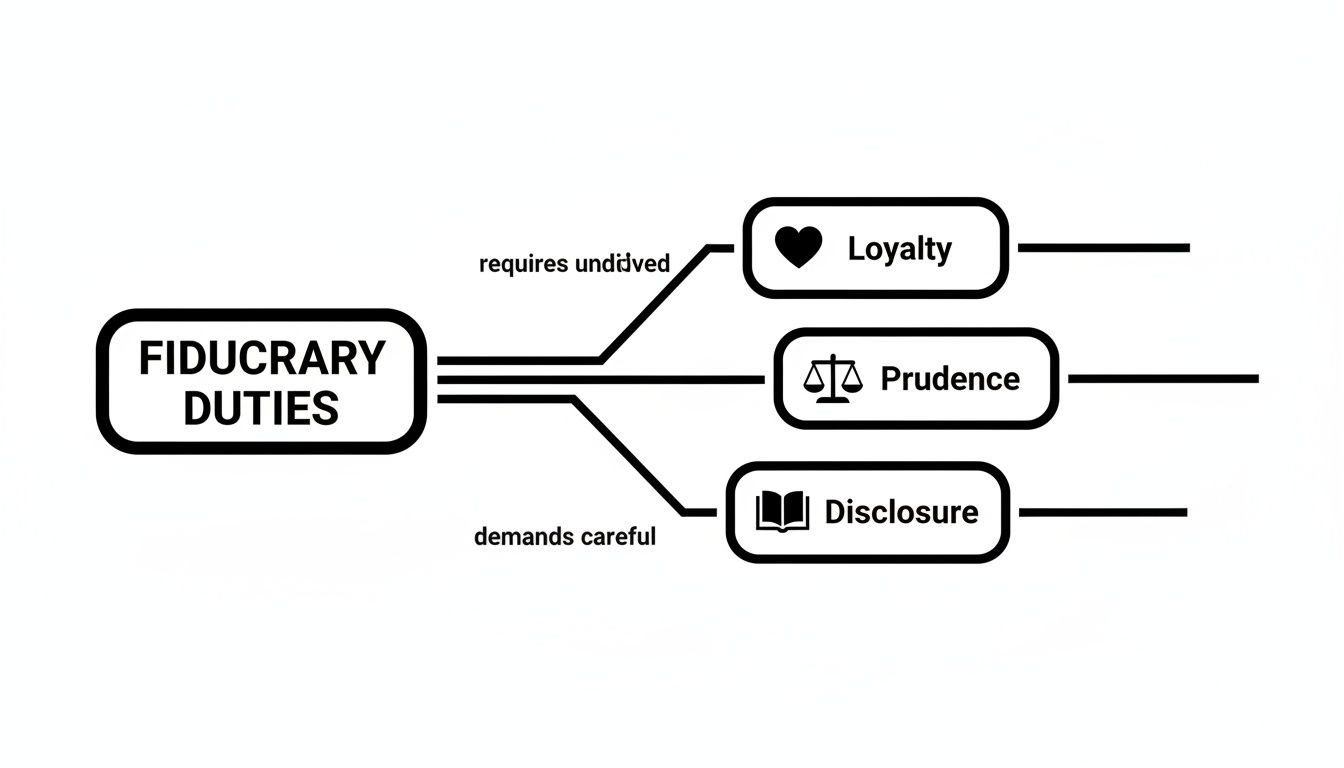
When a trustee engages in self-dealing, they have crashed right through all three. They have been disloyal to the beneficiaries, acted imprudently with trust assets, and failed to disclose the glaring conflict.
Obvious Breaches of Trust
Some forms of trustee self dealing in Texas are so blatant they’re hard to miss if you know what you’re looking for. These actions are almost always a breach of fiduciary duty and demand immediate attention.
Keep an eye out for these clear-cut examples:
- Selling trust property to oneself: The trustee sells a house, car, or valuable painting owned by the trust to themselves, their spouse, or a close relative, especially if the sale price is below market value.
- Investing trust funds into a personal business: The trustee uses trust money to fund their own startup, bail out a struggling company they own, or buy into a private business where they have a significant personal stake.
- Charging excessive fees: While trustees are entitled to reasonable compensation, charging outrageous fees for simple tasks is a common way to siphon money from the trust.
These actions directly line the trustee’s pockets at the expense of the beneficiaries. That is the very definition of a prohibited transaction under the Texas Trust Code.
Subtle Warning Signs to Watch For
Not all self-dealing is as obvious as a trustee cutting themselves a check from the trust account. Sometimes, the misconduct is more subtle, hiding behind a wall of silence or complex transactions. Behavioral changes can be just as telling as financial ones.
Pay close attention to these red flags:
- Sudden Secrecy: A once-open trustee suddenly goes silent. They stop returning calls, ignore emails, or refuse to answer basic questions about the trust’s finances.
- Defensiveness: When you ask for simple information or a formal accounting, the trustee gets hostile or evasive. This is a huge warning sign.
- Unexplained Transactions: You notice large withdrawals or asset sales that do not appear to benefit the trust or its beneficiaries.
- Commingling Funds: The trustee starts mixing trust assets with their personal money. Once funds are jumbled together, it becomes nearly impossible to tell what belongs to whom.
When a trustee refuses to provide financial documents, it’s one of the most significant indicators of trouble. The duty to account isn’t optional, and a refusal often means there’s something to hide. To see what a trustee is required to provide, you might be interested in reviewing our guide on trust accounting requirements.
These behaviors often point to deeper problems. Recognizing these red flags is the first critical step toward holding a trustee accountable and protecting the assets that are rightfully yours.
Your Legal Remedies When Self-Dealing Occurs

Discovering that a trustee may be helping themselves to trust assets is a deep betrayal that can leave you feeling angry, confused, and powerless. However, you are not helpless. Texas law gives beneficiaries powerful tools to fight back, hold a rogue trustee accountable, and protect what's rightfully yours.
When a trustee violates their duties, the Texas Trust Code provides a clear path to justice. These legal options are designed to make the trust whole again and restore its integrity.
Step-by-Step Guidance: Taking Legal Action
Before you can take another step, you need evidence. The single most powerful tool for getting it is demanding a formal accounting. This is a legal demand forcing the trustee to provide a detailed, sworn report of every dollar in and every dollar out.
A proper accounting must include:
- All property held by the trust at the start of the period.
- Every receipt, disbursement, and distribution made.
- Any liabilities, whether paid or still owed.
- A complete inventory of all remaining trust property.
If a trustee refuses to provide an accounting, that refusal alone can be grounds for their removal. More often, the accounting itself provides the black-and-white proof of trustee self dealing in Texas you need to take further action. Once you have evidence, you can pursue several remedies.
Legal Remedies for Trustee Self-Dealing in Texas
| Legal Remedy | What It Achieves | When It Is Used |
|---|---|---|
| Surcharge | Forces the trustee to personally repay the trust for any financial losses or improper profits they gained. | When self-dealing has caused a measurable financial loss or the trustee personally profited from a transaction. |
| Trustee Removal | Removes the current trustee and allows the court to appoint a new, independent one to manage the trust. | When the trustee's breach of duty is serious, creating a conflict of interest that makes them unfit to serve. |
| Voiding Transaction | Legally undoes a prohibited self-dealing transaction, forcing the return of the property to the trust. | For improper sales of unique or significant assets (like real estate or family heirlooms) back to the trust. |
| Equitable Tracing | Follows misappropriated funds or assets into a new form, allowing the beneficiary to claim the new asset. | When a trustee uses trust money to buy something for themselves, like a car or another property. |
Each of these remedies serves a distinct purpose, from direct financial recovery to protecting the trust’s future. An experienced Texas estate planning attorney can help you determine which actions are most appropriate for your specific situation.
Surcharge: Taking the Money Back
If the accounting shows the trustee’s misconduct cost the trust money, your lawyer will likely seek a "surcharge." This is a court order compelling the trustee to personally dig into their own pocket and repay the trust for any and all losses.
A surcharge isn't a slap on the wrist; it's a dollar-for-dollar repayment. If a trustee’s bad deal lost the trust $50,000, the court can order them to write a personal check for $50,000 directly back to the trust.
This remedy also covers any profits the trustee pocketed through their breach. For instance, if a trustee bought a trust property for a lowball price of $100,000 and flipped it for $200,000, the court can force them to hand over that $100,000 profit to the trust.
Removing the Trustee
A trustee who engages in self-dealing has fundamentally broken their promise. The Texas Trust Code gives you the right to go to court and ask a judge to remove the trustee.
Courts do not hesitate to remove a trustee who has:
- Committed a material breach of the trust's terms.
- Become insolvent or is otherwise unfit.
- Created so much hostility and friction that they can no longer administer the trust effectively.
Getting the bad actor out is the most critical step to stop the bleeding and secure the trust's future. The court can then appoint a successor—often a professional or corporate trustee—who understands their fiduciary duties. If you're facing this, it's worth learning about the specific steps involved in how to sue a trustee in Texas to fully protect your rights.
Voiding the Transaction
In some situations, you can completely reverse the damage. If a trustee made a prohibited self-dealing transaction, like selling a one-of-a-kind family home to themselves, a court has the power to declare that transaction void.
Think of it as hitting the rewind button. The court can rescind the sale, forcing the asset to be returned to the trust. This is especially vital for irreplaceable assets. However, you must act fast—the statute of limitations on these claims is unforgiving, so you must move quickly once you discover the breach.
Practical Advice for Trustees: How to Avoid Self-Dealing Allegations
For trustees acting in good faith, managing a loved one's trust is an act of service, not a chance for personal enrichment. Yet, the maze of the Texas Trust Code can feel like a legal minefield. Even the best intentions can be misinterpreted.
The good news is that Texas law offers a clear map for trustees who want to fulfill their duty with confidence and protect themselves from claims of trustee self dealing in Texas. The key is to operate with absolute transparency and meticulously follow the rules. A trustee who works in the open, keeps beneficiaries informed, and documents every decision builds a fortress against future disputes.
Embrace Radical Transparency and Disclosure
Your strongest defense will always be complete disclosure. Nothing raises red flags for beneficiaries faster than secrecy. The best way to protect yourself is to pull back the curtain on everything you do, especially on actions that have even a hint of a conflict of interest.
Before making a move that could be questioned, you must arm the beneficiaries with comprehensive information. This is more than a quick email; it’s a formal disclosure laying out all relevant facts, potential risks, and benefits to the trust.
The goal is to put the beneficiaries in the same informed position as the trustee. This commitment to transparency is a hallmark of a diligent Texas trust administration lawyer and a principle we emphasize with every client.
The Power of Informed Consent
After you've laid all your cards on the table, the next step is to get written, informed consent from every beneficiary. This is one of the most powerful "safe harbors" a trustee can use.
For consent to be valid in court, it must be:
- In Writing: A handshake or verbal agreement won't suffice. You need a signed document from each person.
- Informed: Beneficiaries must have all the important facts before they sign anything.
- Voluntary: The consent cannot be the result of pressure, threats, or manipulation.
For example, if a trustee wants to buy a car owned by the trust, the right way to do it is to first hire an independent, certified appraiser to value the vehicle. Then, the trustee shares that appraisal with all beneficiaries, clearly states their intent to buy the car for that exact price, and asks for their signed consent. This process can turn a prohibited act into a permissible one.
Seeking the Court's Blessing in Advance
What if a situation is especially complicated, or the beneficiaries will not agree? A trustee has another powerful tool: asking a court for prior approval. You can file a petition explaining the proposed transaction in detail and ask a judge to sign off on it before you proceed.
This judicial review acts as a shield, protecting the trustee from being sued later for that specific action. If the court agrees the deal is fair and in the trust's best interest, beneficiaries are generally stopped from challenging it as self-dealing down the road. You can learn more about how to navigate these duties by exploring insights on irrevocable trust administration. By using these defensive strategies, a trustee can navigate their duties with integrity and peace of mind.
How a Texas Trust Litigation Attorney Can Help
When a dispute over trustee self-dealing in Texas erupts, it feels like more than just a legal problem—it’s a breach of faith. Whether you're a beneficiary watching your inheritance disappear or a trustee blindsided by accusations, the situation is intensely stressful. This is precisely where a seasoned Texas trust litigation attorney steps in, not just as a lawyer, but as your compassionate guide.
At The Law Office of Bryan Fagan, PLLC, we understand these disputes are tangled with family history and emotion. Our job is to cut through the complexity, lay out a clear strategy, and fight to protect the trust creator's true wishes while defending your rights.
For Beneficiaries Protecting Their Inheritance
When you suspect a trustee is putting their own interests first, you cannot afford to wait. Taking swift, informed action is everything. Our attorneys are here to provide the legal muscle needed to uncover the truth and make things right.
Here’s how we help beneficiaries:
- Demanding Formal Accountings: We leverage the Texas Trust Code to force the trustee to open the books and provide a detailed accounting of every transaction.
- Investigating Suspected Self-Dealing: Our team digs deep into financial records, traces suspicious transactions, and analyzes communications to build a strong case.
- Filing Lawsuits: We take decisive legal action to recover mismanaged assets, demand a surcharge against the trustee, and petition the court for their removal.
We become your dedicated partners, committed to restoring the integrity of the trust and protecting the assets your loved one intended for you.
For Trustees Needing Guidance and Defense
Being a trustee is a heavy responsibility. Even the most honest fiduciaries can find themselves facing baseless accusations. We provide proactive counsel to help trustees do the job right and mount a powerful defense when their integrity is questioned.
A Texas trust administration lawyer from our firm can support trustees by:
- Ensuring Compliance: We provide straightforward advice on the Texas Trust Code, helping you steer clear of accidental missteps and potential conflicts of interest.
- Mounting a Strong Defense: If you are wrongly accused of self-dealing, we'll build a formidable defense to safeguard your reputation and prove you’ve administered the trust properly.
- Resolving Disputes: We work to find the most strategic path to resolution, whether through sharp negotiation or, when necessary, vigorous litigation.
Facing a trust dispute can feel overwhelming, but you are not alone. Our firm provides trusted, Texas-based legal guidance for all your trust and estate needs, including estate planning, probate, guardianship, and asset protection.
Frequently Asked Questions About Trustee Self-Dealing
When you're dealing with a trust, especially if you think something is wrong, questions pop up fast. Here are some straight answers to the most common ones we hear from our clients about trustee self-dealing in Texas.
What Is the First Step if I Suspect Trustee Self-Dealing?
Your first move is to request a trust accounting in writing. This isn't about starting a fight; it's about getting the facts. A formal accounting forces the trustee to provide a detailed record of every asset, all income, and every expense.
If the trustee refuses or the numbers don't add up, that's your cue. Your next call should be to a Texas trust litigation attorney who can review your case and explain your legal options.
Can a Trust Document in Texas Allow Self-Dealing?
This is a critical question. While a trust can modify some trustee duties, it generally cannot eliminate the core duty of loyalty. Texas law is incredibly protective of beneficiaries and frowns on any situation where a trustee might profit from their role.
Any clause that seems to authorize trustee self-dealing in Texas will be strictly scrutinized by a judge and may be voided for violating public policy. Never take such language at face value; always have an experienced lawyer review it.
The Texas Trust Code sets a very high standard. A trustee's most basic job is to act solely for the beneficiaries' benefit, and that's not a rule you can easily write away, even with specific words in the trust document itself.
How Long Do I Have to Sue a Trustee for Self-Dealing in Texas?
Time is not on your side. Generally, Texas has a four-year statute of limitations to file a lawsuit against a trustee for a breach of fiduciary duty, which includes self-dealing.
The tricky part is that the clock usually starts ticking when the beneficiary either knew or should have reasonably known about the misconduct. Determining that exact start date is often a major point of contention in court, so it’s critical to act quickly. The moment you suspect a problem is the moment you should seek legal advice to ensure you don't lose your rights.
Can a Trustee Also Be a Beneficiary and Avoid Self-Dealing Claims?
Yes, and it is very common for a trustee to also be one of the beneficiaries. However, this dual role demands extreme care and transparency.
The trustee must treat every beneficiary—including themselves—impartially and exactly as the trust document dictates. They cannot make a decision that benefits them more than others, such as giving themselves a larger distribution than what’s authorized. To avoid trouble, flawless record-keeping and open communication with the other beneficiaries are non-negotiable.
If you’re managing a trust or planning your estate, contact The Law Office of Bryan Fagan, PLLC for a free consultation. Our attorneys provide trusted, Texas-based guidance for every step of the process.