Skip to content
Planning for your family's future can feel overwhelming, but with the right legal guidance, it doesn’t have to be. So, what exactly is a family trust? Think of it as a private instruction manual for your assets. It’s a legal tool that allows you to manage everything you’ve worked for and ensure it is passed down exactly the way you want—both during your lifetime and long after.
A key difference from a will is that a trust keeps your family's affairs out of the public probate court system, providing significant privacy and control. It’s a cornerstone of a thoughtful Texas estate plan.
Understanding the Purpose of a Family Trust

When you look to the future, it's natural to feel a bit overwhelmed by the details of protecting your legacy. Having the right legal framework in place can bring incredible peace of mind. A family trust is a legal arrangement where you (the Grantor) place your property and assets into the care of a trusted person or institution (the Trustee) for the benefit of the people you care about most (the Beneficiaries).
At its heart, a trust is a legally binding roadmap for your wealth, governed by the Texas Trust Code. It’s designed to ensure your wishes are carried out precisely and your loved ones are cared for, even if you’re no longer able to make decisions. A well-designed trust is a vital piece of any solid estate planning strategy.
The Three Key Roles in a Trust
Every trust is built on three essential roles. Understanding who does what is the first step to grasping how a family trust works, especially under Texas law.
- The Grantor (or Settlor): This is you—the person who creates the trust and transfers your assets into it. As the Grantor, you are the architect, setting the rules for how the trust operates and how beneficiaries will receive their inheritance.
- The Trustee: Think of the Trustee as the manager. This is the person or institution you appoint to administer the trust and safeguard its assets. They have a strict legal responsibility, known as a fiduciary duty, to always act in the beneficiaries' best interests.
- The Beneficiary: This is who the trust is for. It can be an individual, a group of people, or even a charity that will ultimately benefit from the assets held in the trust. You can name multiple beneficiaries and establish different rules for each one.
Why Privacy and Control Matter
One of the primary reasons Texas families choose trusts is to avoid the public probate process. When an estate goes through probate with only a will, it becomes public record. This means anyone can look up the details of your assets, your debts, and who inherited what.
A family trust, however, is a completely private document. Its administration occurs outside of court, protecting your family’s privacy and typically allowing assets to be distributed to your heirs much faster. For families who value discretion, this privacy is invaluable.
By establishing a trust, you’re not just transferring assets; you’re building a secure foundation for your legacy. It’s a proactive step toward asset protection and creating security that can last for generations, all on your terms.
How a Family Trust Actually Works
To fully grasp what a family trust can accomplish, it helps to understand its mechanics. A simple way to explain it is to think of a trust as a secure treasure chest you build to protect your family's assets. It's your personal vault, designed and controlled by you.

As the Grantor, you are the architect of this chest, writing the rulebook for how its contents should be managed. The Trustee is the trusted keyholder you appoint to follow those rules precisely. And the Beneficiaries are your loved ones—the people who will receive the treasures from the chest according to your exact instructions.
Understanding how these three roles interact under Texas law is the first step toward building a lasting legacy.
The Grantor: The Architect of the Trust
Everything begins with you, the Grantor (also called the Settlor or Trustor). You are the one who creates the trust, defines its purpose, and transfers assets into it. In Texas, the Grantor holds significant power to shape how their legacy will unfold for years to come.
Your role as the Grantor is to create the trust document—the official rulebook for the entire arrangement. This legal instrument details who gets what, how much they receive, and when. You also appoint the trustee who will be tasked with carrying out your wishes. Consulting with a Texas estate planning attorney is crucial to ensure this foundational document is legally sound and comprehensive.
The Trustee: The Fiduciary and Keyholder
The Trustee is the person or institution you place in charge of managing the trust's assets. This is not a casual appointment; it comes with profound responsibilities governed by strict fiduciary duties in Texas. A trustee is legally obligated to act in the best interests of the beneficiaries. This is a core principle of the Texas Trust Code.
A trustee’s day-to-day responsibilities include:
- Managing and investing the trust assets prudently.
- Making distributions to beneficiaries as specified in the trust document.
- Keeping meticulous records and providing regular reports or "accountings."
- Filing tax returns for the trust annually.
Choosing your trustee is one of the most important decisions you will make. You can name a family member, a trusted friend, or a professional corporate trustee. The most critical qualities are unwavering integrity and the competence to manage the assets responsibly.
The Beneficiary: The Recipient of Your Legacy
The Beneficiaries are the reason the trust exists. They are the individuals or charities for whom the trust was created. As the Grantor, you can name your children, grandchildren, spouse, or a favorite non-profit organization.
The trust document dictates the terms of their inheritance. For example, instead of a lump-sum distribution, you might structure the trust to provide a child their share in stages—perhaps at ages 25, 30, and 35. This structure provides a powerful layer of protection, helping to ensure the assets are used wisely over time. It is a common strategy in guardianship planning to support minors or young adults who may not be ready to manage a significant inheritance.
Real-World Scenario: Consider a Dallas-area couple with two young children. They create a family trust and name a trusted sibling as the successor trustee. The trust instructs the trustee to use the funds for the children's health, education, and general support. Once each child reaches age 30, the trustee will distribute their remaining share of the trust. This plan avoids probate and ensures a responsible adult manages the inheritance until the children are mature enough to handle it themselves.
Revocable vs. Irrevocable Trusts
In Texas, family trusts generally come in two primary forms. The distinction between them is significant.
-
Revocable Living Trust: This is the most common type. As the Grantor, you maintain complete control. You can amend it, add or remove assets, or even dissolve it entirely. Its flexibility makes it an ideal tool for avoiding probate and managing your affairs if you become incapacitated.
-
Irrevocable Trust: Once you create and fund this type of trust, it is generally permanent. You relinquish control, but in return, you gain significant advantages. These can include powerful asset protection from creditors and potential estate tax benefits. While modifying one is difficult, a Texas trust administration lawyer can explain the specific circumstances under Texas law where changes are permitted.
The Real Benefits of a Texas Family Trust
Many Texas families ask why they should consider a trust when they can simply write a will. The answer lies in the lasting security, privacy, and control a trust provides. While a will is essential, a family trust offers powerful advantages that go far beyond what a will can accomplish alone. It is not just another legal document; it is the cornerstone for protecting your legacy.
The most significant benefit for most people is avoiding probate. Probate is the court-supervised process of validating a will and distributing assets. In Texas, this process can be lengthy, expensive, and public. A properly funded trust allows your assets to pass to your loved ones privately and efficiently, completely outside the court system.
Privacy and Asset Protection
In today's world, financial privacy is more valuable than ever. When a will goes through probate, it becomes a public document. This means anyone, from a curious neighbor to a potential creditor, can see what you owned and who inherited it. A family trust keeps these sensitive details private, shared only between your trustee and your beneficiaries.
Beyond privacy, certain trusts can serve as a powerful shield for your assets. An irrevocable trust, for instance, legally separates the assets from your personal ownership. This can protect that wealth from future creditors, lawsuits, or other financial claims, ensuring what you've built remains safe for your family. Our firm offers specialized guidance on these types of asset protection strategies.
Seamless Management During Incapacity
Life is unpredictable. If an illness or injury leaves you unable to manage your financial affairs, your family could face a stressful and costly court process to establish a guardianship. A family trust elegantly solves this problem before it begins.
In your trust document, you will name a successor trustee—someone you have hand-picked—who can step in immediately to manage your assets for your benefit if you become incapacitated. This seamless transition ensures your bills are paid and your financial life continues without interruption, all without needing a judge’s approval. It provides peace of mind, knowing you and your family are protected during a difficult time.
A trust isn't just about what happens after you're gone; it's a vital tool for protecting you and your assets during your lifetime. It prepares your family for the unexpected, ensuring continuity and stability when it’s needed most.
Preserving a Growing Legacy
Proper wealth management is more critical than ever. We are witnessing an unprecedented accumulation of family wealth. The total estimated wealth for families with family offices has reached $5.5 trillion—a stunning 67% increase since 2019. This growth makes sophisticated structures like trusts essential for preserving and managing these legacies for future generations. You can learn more about this trend in the full Deloitte report.
Ultimately, a family trust offers a level of control, privacy, and protection that a will cannot match. It ensures your wishes are executed precisely, shields your family from public scrutiny and legal hurdles, and provides a clear roadmap for life’s uncertainties. A Texas estate planning attorney can help you design a trust that aligns with your family’s unique circumstances and long-term goals.
If you’re managing a trust or planning your estate, contact The Law Office of Bryan Fagan, PLLC for a free consultation. Our attorneys provide trusted, Texas-based guidance for every step of the process.
Trustee Responsibilities Under Texas Law
Choosing the person or institution to manage your family trust is one of the most critical decisions in your estate plan. This individual, the trustee, holds the keys to your legacy. Their role is not just administrative; it is a profound responsibility bound by strict legal and ethical duties under the Texas Trust Code.
A trustee is a fiduciary—someone legally obligated to act with the highest level of loyalty and care for the trust’s beneficiaries. This duty is the foundation of the trust relationship and ensures your instructions are followed and your loved ones are protected.
Whether you are selecting a trustee or have been asked to serve as one, understanding these duties is essential for the trust to function as intended and for maintaining family harmony.
Core Fiduciary Duties Under the Texas Trust Code
In Texas, a trustee's responsibilities are clearly defined by law. These are enforceable standards, and failure to meet them can lead to serious legal consequences. The trustee's primary role is their fiduciary duty to the beneficiaries, and understanding what constitutes a breach of fiduciary duty is vital for all parties involved.
Key fiduciary duties include:
- Duty of Loyalty: This is the paramount duty. The trustee must act solely in the best interests of the beneficiaries. This means no self-dealing, no conflicts of interest, and always prioritizing the beneficiaries' needs above their own.
- Duty of Prudence: The trustee must manage the trust's assets as a "prudent" person would manage their own affairs. This involves making sound, well-researched investment decisions and avoiding overly risky or speculative ventures.
- Duty of Impartiality: If a trust has multiple beneficiaries, the trustee must not favor one over another. They must balance competing interests fairly—for example, providing income for a surviving spouse while preserving the principal for children who will inherit later.
These are just the core principles. For a more detailed explanation, our guide on trustee duties and responsibilities breaks down these obligations in plain English.
A Real-World Trustee Scenario
Let’s put this into practice. Imagine a grandmother in Fort Worth establishes a family trust for her two grandchildren. One is 22 and starting a business, while the other is 14 and in high school. The trustee, a trusted family friend with financial expertise, is responsible for managing a portfolio of stocks and real estate.
The duty of impartiality requires the trustee to balance the needs of both beneficiaries. They cannot pursue an aggressive growth strategy that might benefit the 14-year-old in the long term but would be too volatile for the 22-year-old who needs access to funds now. Adhering to the duty of prudence, the trustee would create a balanced investment strategy, allocating some funds to stable, income-producing assets for the older grandchild while keeping another portion in growth-oriented investments for the younger one's future education.
A critical part of the trustee's job is clear communication. They must provide regular statements and accountings to both beneficiaries (or the younger one's legal guardian). This transparency fulfills their duty to keep beneficiaries informed and, just as importantly, builds trust and prevents future disputes.
When choosing a trustee, you have options: a family member, a close friend, or a corporate trustee (like a bank’s trust department). A family member offers a personal connection, while a corporate trustee provides professional expertise and impartiality. There is no single correct answer—it depends on your family's dynamics. A Texas trust administration lawyer can help you weigh the pros and cons to find the best fit for your legacy.
A Step-by-Step Guide to Creating Your Family Trust
A family trust is an exceptional tool for protecting your legacy, but it is only effective if it is created and funded correctly. Think of it like building a fortress; a poorly drafted or empty trust offers no protection. Making your trust effective requires two essential stages: creation and funding.
Here is a step-by-step guide to ensure the structure you build is strong enough to support your family for generations.
Stage One: Drafting the Trust Document
The first step is to work with an experienced Texas estate planning attorney to draft the trust document. This document is the legal blueprint that governs everything, and getting it right is non-negotiable. This is not the time for a DIY online form; the complexities of the Texas Trust Code require professional guidance.
During this stage, you will make several key decisions:
- Naming Your Trustee and Successor Trustee: Who will manage the trust now? And who is the backup if you are no longer able?
- Identifying Beneficiaries: You will clearly name the people or organizations who will benefit from the trust assets.
- Defining Distribution Terms: You set the rules. You will specify exactly how and when assets are distributed. For instance, you could stipulate that funds are only for education or that a beneficiary receives their inheritance in installments at ages 25, 30, and 35.
To help manage the paperwork involved in setting up a family trust, it can be helpful to see what legal document automation software can do to keep things organized. Your attorney will ensure the final document is legally sound, accurately reflects your wishes, and complies with all Texas laws.
Stage Two: Funding Your Trust
Once the trust document is signed and notarized, you must complete the next critical step: funding it. This means legally transferring ownership of your assets from your name into the name of the trust. An unfunded trust is merely a set of instructions with no assets to manage.
Crucial Takeaway: Incomplete funding is one of the most common and costly mistakes in estate planning. If an asset is not properly transferred to the trust, it will likely have to go through the public probate process, defeating a primary reason for creating the trust.
Funding involves changing the legal title on your property. The process varies depending on the asset:
- Real Estate: You will sign a new deed transferring your home or other properties from your name to the trust's name.
- Bank Accounts: You will work with your bank to retitle your checking, savings, and money market accounts into the name of the trust.
- Investment Accounts: Your brokerage firm will have specific paperwork to change the ownership of your non-retirement investment accounts to the trust.
For a more detailed walkthrough, see our guide on how to transfer property to a trust.
This infographic illustrates the core duties a trustee must follow when managing the trust you have created and funded.
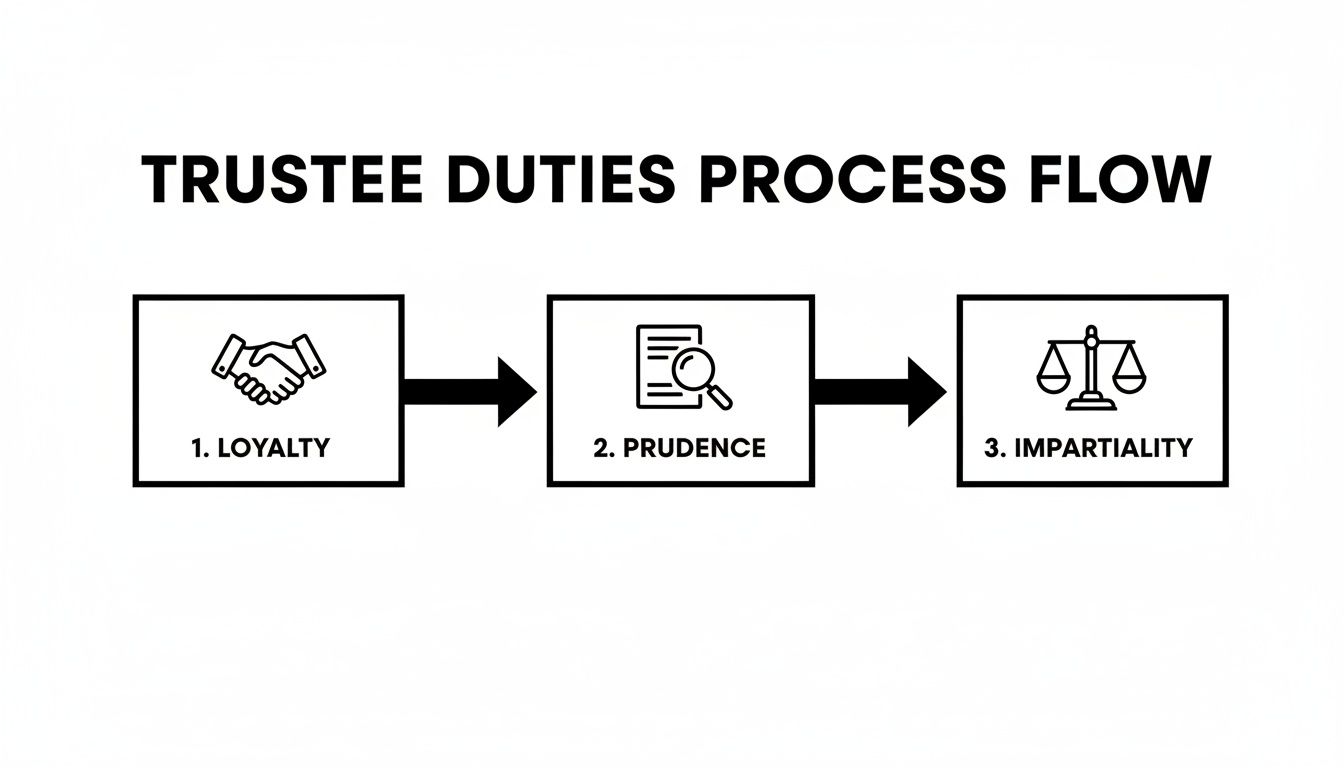
These duties—loyalty, prudence, and impartiality—are the legal and ethical pillars of trust administration. They ensure your assets are always managed in the best interests of your beneficiaries. Every step in creating and funding your trust is designed to empower your chosen trustee to fulfill these obligations.
Family Trusts for Business Owners and Asset Protection
For Texas entrepreneurs, a family trust is more than just an estate planning document—it's a strategic tool for business succession and robust asset protection. After dedicating your life to building a company, you want to ensure its future is as secure as its present.
Integrating your business interests into a well-designed family trust accomplishes this by providing the stability needed for long-term growth and helping to avoid disruptive ownership disputes that can tear families and businesses apart. A trust creates a clear, private roadmap for leadership transition, ensuring the business you built continues to thrive for generations.
Ensuring Business Continuity and Stability
A family trust provides a formal governance structure that is critical for maintaining smooth business operations. By placing company shares or ownership interests into the trust, you can appoint a trustee—someone with business acumen—to manage those assets. This keeps your business out of the public probate process and prevents it from becoming a source of family conflict.
This establishes a clear chain of command and decision-making authority, which is invaluable during a transition. The business can continue to operate without interruption, preserving its value and reassuring employees, clients, and partners.
Recent data highlights this point. One survey found that 43% of family businesses experienced double-digit sales growth last year, a significant increase from 21% in 2021. The study revealed a direct correlation: businesses with strong governance structures, such as an active board, were far more likely to achieve these results. You can learn more about how strong governance drives financial performance in family-owned companies. A trust provides the ideal foundation for implementing these best practices.
Building a Shield for Your Assets
Beyond succession planning, certain trusts create a powerful shield around your wealth. As a business owner, you know that the lines between personal and business liabilities can become blurred. An irrevocable trust helps establish a firm boundary, protecting your business assets from personal creditors and, equally important, shielding your personal wealth from business debts.
This strategic separation is a cornerstone of effective financial planning. By moving assets into an irrevocable trust, you legally remove them from your personal estate, placing them beyond the reach of many future claims.
This is a key component of a comprehensive financial fortress. Our firm provides detailed guidance on safeguarding your wealth with asset protection in Texas, helping business owners like you build a secure future for both your company and your family. An experienced Texas estate planning attorney can help you determine the right structure to protect the business you’ve worked so hard to build.
If you’re managing a trust or planning your estate, contact The Law Office of Bryan Fagan, PLLC for a free consultation. Our attorneys provide trusted, Texas-based guidance for every step of the process.
Common Questions About Family Trusts in Texas
As you delve into the details of family trusts, it's natural for questions to arise. Gaining clarity is a crucial part of the estate planning journey and a step you shouldn't overlook. To help you feel more informed, here are straightforward answers to the questions we hear most often from Texas families.
Does a Family Trust Avoid All Taxes?
This is a common question, and the answer is: it depends. A standard revocable living trust—the type most people use—will not eliminate your estate tax obligations. Because you retain control over the assets, the IRS still considers them part of your taxable estate.
However, specific types of irrevocable trusts are designed for tax planning. These can be structured to help reduce potential estate taxes or capital gains taxes for your heirs. This is a complex area of law that requires professional guidance. You should work with a seasoned Texas estate planning attorney to develop a strategy that fits your financial situation.
What Is the Difference Between a Trust and a Will?
Think of it this way: a will is a letter to the court, while a trust is a private rulebook for your assets. Both are essential estate planning tools, but they function differently.
- A will is a document that only takes effect after your death. It instructs a judge on how to distribute your property, but it must first go through a public court process called probate.
- A family trust, on the other hand, is a private legal entity that holds and manages your assets during your lifetime and after you pass away. Because the trust—not you—legally owns the assets, they can bypass probate entirely. This allows for a private, faster, and less stressful transfer to your beneficiaries.
In short, a trust provides far more control, privacy, and flexibility than a will alone.
Can I Be the Trustee of My Own Revocable Trust?
Yes, absolutely. In Texas, it is common for the person creating a revocable living trust (the grantor) to also serve as its initial trustee. This arrangement allows you to manage your assets just as you always have, with no loss of control.
Your trust document will also name a successor trustee—the person or institution you choose to take over if you become unable to manage your affairs or when you pass away. This ensures a seamless transition of control without court intervention, which is a critical component of any effective guardianship plan.
The ability to manage your own assets while having a clear plan for incapacity is one of the most powerful benefits of a revocable living trust. It protects you during your lifetime, not just your beneficiaries after you're gone.
How Much Does It Cost to Set Up a Family Trust?
The cost of creating a family trust depends on the complexity of your finances and your specific goals. While setting up a trust involves a greater upfront investment than drafting a simple will, it is important to consider the long-term value.
By avoiding the court costs, legal fees, and lengthy delays associated with probate, a well-drafted trust almost always saves your family significant money and stress in the long run. We offer a free consultation to discuss your unique situation and provide a clear understanding of the investment required to protect everything you've worked for.
If you’re managing a trust or planning your estate, contact The Law Office of Bryan Fagan, PLLC for a free consultation. Our attorneys provide trusted, Texas-based guidance for every step of the process at https://texastrustadministration.com.