Skip to content
Managing a trust for a loved one, or planning for your own future, is a significant responsibility—but with the right legal guidance, it doesn’t have to feel overwhelming. An amendment to a trust is a formal legal document that allows you to make specific changes to your trust agreement. Think of it as a targeted update—you might add or remove a beneficiary, for instance—without having to tear up the whole plan and start from scratch. It's an essential tool for keeping your estate plan relevant, effective, and aligned with your life.
Why Your Texas Trust Might Need a Tune-Up
Creating a trust is a foundational step in securing your legacy. However, a trust is not a "set it and forget it" document. The most effective estate plans are living blueprints, designed to evolve as your life changes. Making an update isn't a sign that the original plan was flawed; it's a sign of smart, proactive planning that protects your family from confusion or potential disputes down the road.
Life has a way of happening, and these events are the number one reason to pull your trust documents out for a review. A regular check-in ensures your final wishes are crystal clear, reflecting your current circumstances and intentions.
Common Triggers for a Trust Amendment
Major life changes are usually the signal that it's time to speak with your Texas estate planning attorney. These milestones can alter your original intentions for how your assets should be handled and distributed.
Consider if any of these situations sound familiar:
- Family Changes: This is a major one. We're talking about marriage, divorce, the wonderful arrival of a child or grandchild, or the sad passing of a beneficiary or trustee.
- Financial Shifts: Your financial picture can change dramatically. Selling a business, receiving a large inheritance, or buying a significant new property are all reasons to re-evaluate your trust.
- Changes in Relationships: Sometimes, relationships simply change. You might decide to name a different beneficiary or appoint a new trustee if the person you originally chose is no longer the right fit for that important role.
- Legal and Tax Updates: Federal and state laws governing estates and trusts are regularly updated. These changes could impact the tax efficiency and legal validity of your current plan.
The Texas Trust Code provides specific rules for modifying trust documents. Ensuring your amendment complies with these regulations is crucial—if it doesn't follow the letter of the law, it could be challenged and invalidated. This is where an experienced Texas trust administration lawyer becomes invaluable; they will ensure your changes are legally sound and properly executed.
Keeping your plan current is one of the most important things you can do. To dive deeper into this, you can learn more about updating your Texas estate plan and why it matters in our comprehensive guide. Ultimately, an amendment ensures your trust continues to do what you created it to do: protect your legacy and care for the people you love.
Understanding Your Options for Changing a Trust
Life is full of twists and turns, and your estate plan needs the flexibility to keep up. When circumstances change, you need the right tool to update your trust. An amendment to a trust serves as a precise, surgical update to your financial blueprint, allowing you to alter specific parts without overhauling the entire document.
This formal legal document is perfect for targeted changes, like adding a new grandchild as a beneficiary or adjusting a specific instruction for your trustee.
But what happens when the changes are more significant? A simple amendment might not be enough for a major overhaul. It's crucial to understand the difference between your options to ensure your changes are legally effective and achieve your goals under the Texas Trust Code.
This handy visual can help you determine if a recent life event—like a change in your family, assets, or the law—signals that it’s time to review your trust document.
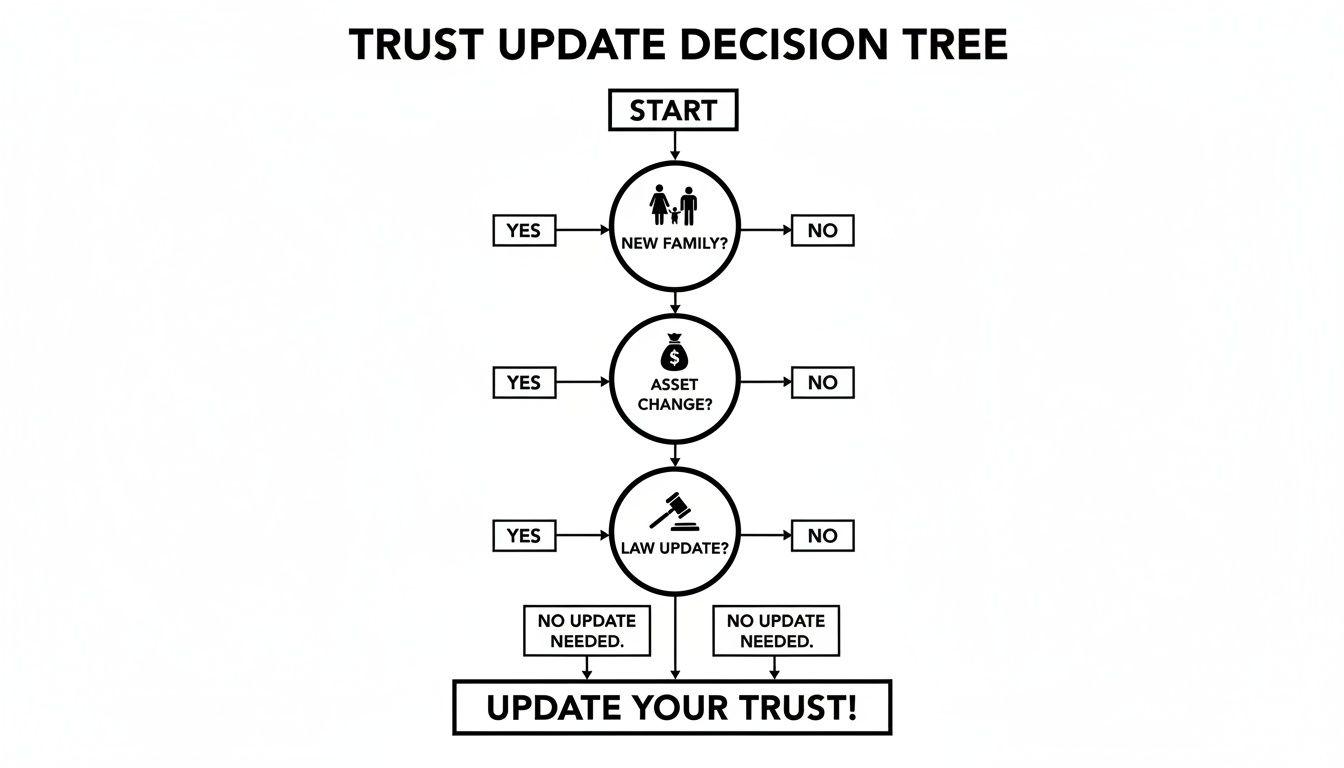
As you can see, life's big moments are often clear signs that your estate plan needs a check-up to remain effective.
Amendment vs. Restatement vs. Modification
When it comes to changing your trust, you will generally hear three terms: amendment, restatement, and modification. They might sound similar, but they serve very different purposes, especially under Texas law. Knowing which one to use depends entirely on the scope of the changes you want to make.
Here's a quick rundown to help you distinguish them:
Amendment vs Restatement vs Modification Key Differences
| Method | What It Is | When to Use It | Key Consideration |
|---|---|---|---|
| Amendment | A separate document that changes specific, minor parts of the original trust. | For small, targeted updates like changing a trustee or adjusting a single distribution amount. | Simple and cost-effective for minor revisions. Multiple amendments can become confusing. |
| Restatement | A complete rewrite of the original trust agreement, replacing it with a new one. | For major overhauls, like redesigning your entire distribution scheme or when you have many prior amendments. | Keeps the original trust's name and funding intact, avoiding the hassle of retitling assets. |
| Judicial Modification | A court-ordered change, typically required for irrevocable trusts. | When the trust’s purpose becomes impossible to fulfill or unforeseen events require a change to honor the creator's intent. | Involves the court system and is necessary when the trust's terms don't allow for easy changes. |
Choosing the right path ensures your trust accurately reflects your wishes without creating a legal mess for your loved ones.
A trust amendment is your go-to for simple fixes. It is a separate document that references the original trust and clearly states what is changing. It's clean and efficient.
A trust restatement, on the other hand, is like getting a fresh start. It completely replaces the old trust document with a new one that includes all your updates. This is the best choice for a major overhaul because it consolidates all previous changes into a single, current document, which makes administration much easier for your successor trustee.
The key benefit of a restatement is that it maintains the original trust's name and legal existence. This means you don't have to go through the headache of retitling all your assets—a huge time-saver compared to revoking the old trust and creating a new one.
When You Have to Go to Court: Judicial Modification
Making changes becomes more complex for certain trusts, especially irrevocable ones. While a revocable trust is designed for flexibility, irrevocable trusts are, by design, intended to be permanent. But "permanent" doesn't always mean unchangeable. Texas law provides pathways to modify them, but it almost always requires court involvement.
This process is called a judicial modification. It is used when the trust's original purpose has become illegal, impossible, or impractical to carry out, or when unforeseen circumstances require a change to fulfill the settlor's original intentions.
For example, imagine a trust was created to fund a specific local animal shelter that has since closed. A court could modify the trust to name a similar local charity as the new beneficiary, thereby honoring the settlor's charitable intent. This option highlights why having a skilled Texas trust lawyer is so important—they understand how to navigate the courts and the Texas Trust Code on your behalf.
Amending a trust is a routine part of modern estate management. In fact, legal trends show that over 65% of revocable living trusts created in the past decade required at least one amendment within five years due to major life events, underscoring the need to keep your plan current.
Meeting the Legal Requirements in Texas
Changing a trust is not as simple as jotting down new wishes on a piece of paper. In Texas, the process is governed by the Texas Trust Code, and following its rules is essential to ensure any change is legally binding. These regulations are not just bureaucratic red tape; they exist to protect the integrity of the trust, honor the settlor's intent, and prevent disputes.
The correct procedure often depends on the type of trust. For a revocable trust, the person who created it (the settlor) usually retains the right to make changes at any time, making the process fairly straightforward. However, for an irrevocable trust, the path to modification is much narrower and more complex.
Formalities for a Valid Amendment
To ensure a trust amendment is valid in Texas, precision is key. The change must be in writing and signed by the settlor. While not always required by law, having the document notarized and signed by two disinterested witnesses is a highly recommended best practice. Think of it as adding a layer of legal armor, making it much more difficult for anyone to challenge the amendment’s validity later.
Proper execution is critical. For a deeper dive into the legal requirements for e-signatures in a legal context, this guide is a fantastic resource. Executing the amendment correctly is the key to ensuring your wishes are honored and can withstand any legal challenge.
Navigating Changes to Irrevocable Trusts
By their very nature, irrevocable trusts are meant to be set in stone. However, "permanent" does not always mean unchangeable. The Texas Trust Code provides specific avenues for modifying these trusts, though they require a skilled legal hand to navigate.
The main ways to modify an irrevocable trust in Texas include:
- Beneficiary Consent: If all beneficiaries agree on a proposed change and it does not violate a material purpose of the trust, it can often be accomplished without court intervention. This is known as a non-judicial modification.
- Decanting: This technique allows a trustee to essentially "pour" the assets from an old trust into a new one with more favorable terms. The trustee must have the specific authority to do this, and the process is governed by strict statutory rules.
- Court Order: When unanimous consent is not possible or decanting is not an option, the next step is the courthouse. A judge can modify a trust if its original purpose has become impossible, illegal, or wasteful due to unforeseen circumstances.
Amid economic shifts, trust amendments have become a vital tool for Texas trustees. Recent data shows that 58% of trust administrations in major hubs like Austin and San Antonio involved modifications between 2021 and 2025, often to react to market changes and new tax laws. In Texas, Section 112.054 of the Trust Code allows for judicial modifications—a necessary step that helps avert the kind of disputes that plague 41% of unamended trusts nationwide.
A Real-World Scenario: When the Court Steps In
Imagine a Houston family created an irrevocable trust to fund their son’s college education. The trust document was very specific: the money could only be used for tuition at one particular university. A well-intentioned plan, until their son earns a full academic scholarship to that same university. Suddenly, the trust's specific purpose is obsolete.
The family now wants to use the funds for other essential educational expenses, like housing, books, or graduate school. However, a distant cousin, who is a remainder beneficiary, refuses to consent to any changes. Since they cannot get unanimous consent, the family’s only option is to petition the court.
A Texas estate planning attorney would file a petition with the court, arguing that due to an unforeseen event—the scholarship—enforcing the trust's rigid terms would defeat the settlor's broader intent of supporting their son's education. A court would likely recognize this and approve the modification, allowing the funds to be used more flexibly while still honoring the spirit of the original trust.
This example shows just how critical it is to follow the legal process. A single misstep could have left those funds locked up and unusable. Whether you’re tweaking a revocable trust or navigating the complexities of an irrevocable one, professional legal guidance ensures your changes are valid, effective, and built to last.
The Step-by-Step Trust Amendment Process
When you are ready to update your trust, it is important to follow a methodical process where every detail matters. This ensures your wishes are legally sound and can withstand future challenges. Think of it as a checklist for protecting your legacy.
Following this step-by-step guide will give you the confidence that your changes are being made correctly.

Each step builds on the last, moving you from the initial decision to a final, legally durable document that accurately reflects your intentions.
Step 1: Review Your Original Trust Document
Before you can change the rules, you must understand them. Start by thoroughly reading your original trust document. Look for a specific provision, often titled "Amendment and Revocation," which outlines the exact procedure the settlor (the creator) must follow to make changes.
Some trusts are very specific, perhaps requiring amendments to be delivered to the trustee in a particular way. Ignoring these built-in instructions could invalidate the very changes you are trying to make. This initial review is an essential first step.
Step 2: Consult With a Texas Estate Planning Attorney
While a DIY approach may seem tempting, amending a trust is a time when professional guidance is invaluable. An experienced Texas estate planning attorney does more than just fill out forms; they serve as your strategic advisor. They will help you understand the ripple effects of your proposed changes across your entire estate plan, from tax implications to the impact on beneficiaries.
This consultation ensures your amendment not only complies with Texas law but also achieves your goals without creating unintended consequences, heading off potential family disputes before they can begin.
Step 3: Draft the Amendment Document
With a clear plan, the next step is to draft the formal amendment. This is a legal document, and the language must be precise and unambiguous to avoid confusion.
A properly drafted amendment to a trust should always include these key elements:
- Clear Identification: State the full name of the trust and the date it was originally created to specify which document you are amending.
- Statement of Intent: Include a straightforward sentence declaring the intent to amend the original trust.
- The Specific Changes: This is the core of the document. It should quote the exact part of the trust being changed and then provide the new language.
- Confirmation Clause: A final statement confirming that all other provisions of the original trust not affected by the amendment remain in full force and effect.
Precision here is everything. It prevents confusion and potential arguments among trustees and beneficiaries in the future.
The goal of drafting is to leave no room for doubt. Vague language is a primary cause of future trust litigation. Every word must be chosen carefully to ensure your instructions are carried out exactly as you intend.
Step 4: Properly Execute the Amendment
Once drafted, the amendment must be signed and formalized—or "executed"—with the same legal seriousness as the original trust. In Texas, this means the settlor must sign the document. While not always legally mandatory, it is highly recommended that you sign it in the presence of two witnesses and a notary public.
This formality adds a significant layer of legal protection, making it much harder for anyone to later challenge the amendment on grounds of fraud, incapacity, or undue influence.
Step 5: Notify the Trustee and Beneficiaries
The final step is communication. Your current trustee must be formally notified of the changes and provided with a copy of the signed amendment. This is crucial for proper trust administration, as the trustee is legally obligated to manage the trust according to its most current terms.
While you are not always required to inform beneficiaries about every change to a revocable trust, doing so can promote transparency and prevent surprises later. Your attorney can help you develop the best communication strategy for your family's unique situation.
Common Reasons for a Trust Amendment
Think of your trust not as a static legal document, but as a living blueprint of your life—your relationships, finances, and goals. Life is anything but static. When things change, your trust needs to keep pace. An amendment to a trust is the tool you use to keep your estate plan perfectly aligned with your current reality, ensuring it works exactly as you intend.
Recognizing the life events that should trigger a review of your trust is key to proactive planning. These moments are not signs that your original plan was flawed; they are opportunities to refine it, ensuring your legacy is protected and your loved ones are cared for precisely as you wish.
Family and Relationship Changes
Often, the most compelling reasons to amend a trust come from the heart—our families. The shape of our families is always evolving, and a well-crafted estate plan must be flexible enough to evolve right along with it.
Here are some of the most common family milestones that call for an amendment:
- Marriage or Divorce: Marriage means you will likely want to include your new spouse in your plan. A divorce, conversely, usually requires an ex-spouse to be formally removed. An amendment can handle both.
- Births or Adoptions: Welcoming a new child or grandchild is a joyous event and a clear signal that it's time to update your trust to include them as a beneficiary.
- Death of a Loved One: If a beneficiary, trustee, or successor trustee passes away, your trust must be amended to reflect that change and, if necessary, name a replacement.
- Shifting Relationships: The person you chose as your trustee years ago might not be the best fit today. Perhaps their health has declined, they've moved, or your relationship has changed. An amendment allows you to appoint someone better suited for the role.
Financial and Asset Adjustments
Just like your family, your financial world is rarely static. A significant change in your assets can alter how your estate plan needs to operate, making an amendment essential to match your new financial reality.
Keep an eye out for these kinds of financial shifts:
- Acquiring or Selling Major Assets: Buying a new home, selling a family business, or making a major investment can impact your trust’s distribution plan. An amendment brings everything back into balance.
- Receiving an Inheritance: If you receive a significant inheritance, you may want to adjust your own trust for enhanced tax planning and asset protection.
- Changes in Business Ownership: For those whose trusts hold business interests, any change in that company's structure or valuation is a good reason to review your trust documents.
Your trust is the container that holds your assets. If the size or composition of those assets changes, you must adjust the container to ensure everything is managed and distributed correctly.
Legal and Strategic Updates
Beyond your personal life, the legal and tax landscapes are constantly shifting. Staying on top of these changes with proactive amendments can shield your estate from unexpected taxes and keep your plan compliant with current laws.
A prime example was the major shift in Texas trust law when the Trust Code was adopted in 2005. This change prioritized the settlor's intent over rigid, outdated language, leading to a 45% increase in modification approvals by 2015. Today, Texas courts handle over 1,200 modification petitions annually, demonstrating the importance of keeping plans current. For guardianships, amendments have been transformative; 69% of cases now include conservatorship clauses that have cut probate delays by an average of 33%. To better understand these evolving legal standards, you can discover more insights about the global trust governance outlook.
This legal flexibility allows for smart, strategic updates, such as:
- Updating Fiduciary Powers: You might decide your trustee needs more specific authority to manage modern assets, like digital accounts or a family business.
- Adjusting Distribution Terms: Perhaps you've decided a beneficiary would be better served receiving their inheritance in staggered payments over time for asset protection, rather than all at once. An amendment can implement that change.
- Responding to Tax Law Changes: Estate tax laws at both federal and state levels can and do change. A timely amendment can help you take advantage of new exemptions or structure distributions to minimize the tax burden on your beneficiaries.
Avoiding Common Pitfalls in the Amendment Process

When executing an amendment to a trust, precision is paramount. While the process can be straightforward with the right guidance, even a small mistake can create major headaches, leading to invalidated changes or costly family disputes.
Knowing the common pitfalls is the first step toward protecting your legacy.
One of the most frequent blunders is the "do-it-yourself" amendment. While it's tempting to use an online template, these generic documents often fail to meet the specific legal requirements of the Texas Trust Code. An amendment that is not drafted or executed properly will not hold up under legal scrutiny.
Another significant risk is using ambiguous language. Stating you want to "leave a little something for my niece" is a recipe for conflict. What does "a little something" mean? Every instruction must be crystal clear to ensure your trustee can follow your exact intentions without guesswork.
Overlooking Ripple Effects and Communication
Amending a trust does not happen in a vacuum. Your estate plan is an interconnected web—tugging on one thread can affect the entire structure. A seemingly minor tweak could have unforeseen tax consequences or disrupt the balance of how your assets are distributed among beneficiaries.
Forgetting to properly fund the trust after an update is another classic error. If your amendment adds a new property to the trust, you must follow through by legally transferring the title into the trust's name. If you need a refresher on that crucial step, you can learn more about how to transfer property into a trust.
Finally, failing to keep the right people informed can cause serious administrative problems. Your trustee must have a copy of the new amendment to carry out their fiduciary duties in Texas correctly. Proper notification is essential for a smooth administration. Thinking about the process with an eye toward solid contract management best practices can help keep everything organized and compliant.
The most effective way to avoid these pitfalls is to work with an experienced Texas trust administration lawyer. Professional legal guidance is not just an expense—it is a vital safeguard that ensures your amendment is precise, legally sound, and strategically aligned with your long-term goals.
Common Errors to Avoid
- Ignoring the Original Trust's Rules: Your original trust document likely specifies how it can be amended. Disregarding those instructions is a surefire way to invalidate your changes.
- Improper Execution: Forgetting to sign, witness, or notarize the amendment according to Texas law can render the entire document legally ineffective.
- Creating Contradictions: Drafting an update that conflicts with other sections of the trust creates confusion and opens the door to legal challenges.
Each of these mistakes is entirely preventable with careful planning and professional oversight.
A Few Common Questions We Hear About Trust Amendments
When dealing with trusts, it is natural for questions to arise. This section addresses some of the most common inquiries we receive from Texas families about amending their estate plans.
Can I Just Amend My Trust Myself, Without an Attorney in Texas?
While you technically can attempt to draft an amendment to a trust on your own, it is highly risky. The Texas Trust Code has specific requirements, and a simple mistake in wording or a missed procedural step can invalidate the entire amendment. Such an error could force your family into a costly and stressful legal battle later on.
Engaging an experienced Texas trust administration lawyer is the most prudent approach. They ensure your changes are legally sound, accurately reflect your intentions, and integrate seamlessly with the rest of your estate plan, thereby protecting your legacy.
How Often Should I Be Looking Over My Trust for Potential Changes?
A good practice is to review your estate plan every three to five years. More importantly, you should always review it after a major life event. These are the most critical triggers for an update.
You should definitely consider an amendment after events such as:
- Getting married or divorced.
- The birth or adoption of a child or grandchild.
- The death of a beneficiary or trustee.
- A significant change in your financial situation, whether an increase or decrease.
- Changes to state or federal tax laws.
Keeping your trust current ensures it will function as you intend when the time comes.
What's the Difference Between a Settlor and a Trustee?
These two roles are the foundation of any trust, but they have distinct responsibilities.
The settlor is the person who creates the trust and transfers assets into it. They are the architect of the plan.
The trustee is the manager. This is the person or institution responsible for managing the trust's assets according to the settlor's instructions. The trustee has a serious legal obligation, known as a fiduciary duty, to always act in the best interests of the beneficiaries. In a revocable trust, the settlor typically retains the power to amend it, while the trustee's job is to follow the rules as written.
Do I Have to File a Trust Amendment with the Court?
For a revocable living trust, the answer is generally no. Amending this type of trust is a private matter. In Texas, you do not need to file the amendment with a court to make it official. You simply keep the signed, witnessed, and notarized document with your other estate planning papers.
However, if you are trying to change an irrevocable trust, the situation is different. These changes often require a judge's approval, especially if you cannot obtain unanimous consent from all beneficiaries. A qualified Texas estate planning attorney can advise you on what the law requires for your specific situation.
If you’re managing a trust or planning your estate, contact The Law Office of Bryan Fagan, PLLC for a free consultation. Our attorneys provide trusted, Texas-based guidance for every step of the process. Learn more at https://texastrustadministration.com.