Skip to content
Managing a loved one’s trust can feel overwhelming, but when a Texas trustee misuses their power, it's more than just a mistake—it's a breach of fiduciary duty. This happens when the person entrusted with managing a trust breaks their solemn legal promise to act only in the best interests of the beneficiaries. It can take many forms, from outright self-dealing and negligence to simply ignoring the trust's instructions, and it often leaves the people the trust was meant to protect facing financial harm. With the right legal guidance, however, it doesn’t have to be a crisis.
Understanding a Trustee's Fiduciary Duty in Texas

Taking on the role of a trustee for a loved one's trust can feel like navigating a legal minefield. But understanding the rules of the road brings clarity and confidence. In Texas, a trustee is a fiduciary, a position that carries the highest standard of loyalty and care recognized by law.
Think of it this way: a trustee is like the captain of a ship, charged with safely steering the family's assets to their intended destination—the beneficiaries. This isn't just a friendly suggestion; it's a profound legal responsibility baked directly into the Texas Trust Code. Understanding these principles is key for trustees, executors, and beneficiaries alike.
Core Duties Under Texas Law
The law doesn't leave things to guesswork. The Texas Estates Code and Trust Code set out very clear and strict expectations for every trustee. At the heart of it all is one simple principle: the beneficiaries' interests must always, without exception, come before the trustee's own.
These core fiduciary duties are the pillars of Texas trust administration:
- Duty of Loyalty: A trustee must manage the trust exclusively for the beneficiaries. This means no self-dealing, like selling a trust property to themselves or a friend at a discounted price. For example, a trustee cannot use trust funds to make a loan to their own business.
- Duty of Prudence: A trustee must manage the trust's assets with the same care and skill a sensible person would use for their own affairs. This involves making thoughtful investment choices and avoiding overly risky ventures that could jeopardize the trust's value.
- Duty of Impartiality: When a trust has multiple beneficiaries, the trustee cannot play favorites. They are required to treat everyone fairly according to the specific terms laid out in the trust document.
- Duty to Inform and Account: Transparency is non-negotiable. Trustees must keep beneficiaries reasonably informed about the trust's financial health and management, providing a complete and honest accounting of all transactions when required.
Managing Trust Assets Responsibly
A significant part of a trustee's job is managing, and sometimes selling, the assets held within the trust. For those overseeing an estate that includes real estate, knowing the ins and outs of Navigating Probate Property Sales is absolutely critical to meeting those fiduciary duties and avoiding a breach.
A trustee’s relationship to the beneficiaries is like that of a guardian to a ward. It is one of the most intensive duties recognized by law and requires the trustee to act with undivided loyalty and in the utmost good faith.
Our goal is to provide you with a solid foundation, empowering you with the knowledge to understand your rights and responsibilities. By recognizing what proper trust management looks like, you can spot red flags before they become major problems.
For a more thorough breakdown of these specific responsibilities, we've put together a comprehensive resource. You can learn more about the fiduciary duties of trustees in our detailed guide to get even more clarity on these vital legal obligations.
What a Breach of Fiduciary Duty Looks Like
When you hear “breach of fiduciary duty,” it’s easy to picture someone intentionally plundering a trust. The reality is often far less dramatic. A breach can stem from simple carelessness, a conflict of interest, or a misunderstanding of a trustee's legal obligations.
For beneficiaries, knowing these red flags is the first step to protecting your inheritance. For trustees, it's about avoiding costly and emotionally draining legal battles.
A breach occurs anytime a trustee violates one of the many fiduciary duties in Texas owed to the beneficiaries. It can be as blatant as stealing from the trust or as subtle as neglecting to manage its assets properly. At its core, a breach means the trustee’s actions—or their failure to act—do not meet the very high standards required under Texas law.
Common Examples of Trustee Breaches
While every trust situation is unique, some actions consistently raise red flags. These are the kinds of behaviors that often violate the core duties of loyalty, prudence, and fairness that a trustee must uphold.
Here are some of the most frequent breaches we see in our practice:
- Self-Dealing: This is a cardinal sin in trust administration. It happens when a trustee uses their power for personal gain. A real-world scenario would be a trustee selling a trust-owned vacation home to themselves for less than its appraised market value.
- Misappropriation of Assets: This is a legal term for theft. It can be as straightforward as using the trust’s bank account for personal expenses or taking trust property, like a vehicle or artwork, for one's own use.
- Failing to Account: Trustees have a non-negotiable duty to keep beneficiaries informed. If a trustee is avoiding your calls, providing vague financial reports, or refusing to answer reasonable questions about the trust's finances, that's a major warning sign.
- Imprudent Investments: A trustee must invest trust funds as a reasonably careful person would. A common example is concentrating all the trust's funds in one high-risk stock instead of creating a diversified portfolio, leading to significant losses.
These examples highlight a critical point: a breach doesn't require malicious intent. An honest mistake can still lead to liability if that mistake was the result of negligence or a failure to follow the rules of the Texas Trust Code.
The Line Between a Mistake and a Breach
Not every error a trustee makes constitutes a full-blown legal breach. A minor accounting error that is quickly corrected is likely just a mistake. However, a pattern of sloppy bookkeeping or significant, unexplained losses crosses the line into negligence and a potential breach.
The Texas Property Code is broad on this. Under §111.004(25), a breach is simply any violation of a duty a trustee owes a beneficiary. This means even well-intentioned actions can lead to liability if they aren’t legally sound.
The deciding factor often comes down to the standard of care. A trustee who makes a poor decision after relying on bad professional advice they reasonably trusted might be excused. But a trustee who makes that same bad decision without doing any research or seeking expert help has likely breached their duty of prudence.
Recent changes to Texas law have made it clear that these high standards are not to be taken lightly. Trustees are more exposed than ever to liability for simple negligence, poor investment choices, or communication breakdowns. You can read more about how Texas law defines a breach of trust to get into the finer details.
If you’re a beneficiary spotting these red flags, or a trustee worried you might have made a misstep, getting legal clarity is essential. Understanding what constitutes a breach of fiduciary duty in Texas is the best way to protect everyone involved and ensure the trust functions as intended.
How to Prove a Breach of Fiduciary Duty Claim
Feeling that a trustee has broken their promises is more than just stressful—it’s a deeply emotional experience. But in the eyes of the law, a suspicion isn't enough. Turning that suspicion into a successful legal claim requires solid proof and a clear legal strategy.
Knowing what it takes to hold a trustee accountable can bring order to a chaotic situation. Let’s walk through the step-by-step process of what Texas courts need to see to rule in your favor.
The Three Essential Elements of a Claim
To successfully sue a trustee for breach of fiduciary duty in Texas, you must prove three specific things. Think of it like a three-legged stool: if any one leg is missing, the entire claim can fail.
A Fiduciary Duty Existed: First, you must show a legal fiduciary relationship existed. The trust document itself is your cornerstone here, as it names the trustee and legally binds them to their duties under the Texas Trust Code.
The Trustee Breached That Duty: Next, you must point to a specific duty the trustee violated. Did they put their own interests first (a breach of loyalty)? Did they make irresponsible investments (a breach of prudence)? Or did they refuse to provide information (a breach of the duty to inform)?
The Breach Caused Harm: Finally, you must connect the trustee’s misconduct directly to a financial loss for the trust or its beneficiaries. This link is called causation, and it’s critical. You must prove the damage wasn't just bad luck or a market downturn, but a direct result of the trustee's actions.
Proving Your Case: A Table of Evidence
Building a strong claim means lining up your facts and backing them with concrete evidence. It's not just about what happened, but what you can prove happened. Here's a look at the legal elements you'll need to establish and the kind of evidence that helps get you there.
| Legal Element | What You Need to Prove | Examples of Evidence |
|---|---|---|
| Existence of a Fiduciary Duty | A legal relationship existed where the trustee was obligated to act in the beneficiary's best interest. | The signed trust document, Letters of Trusteeship issued by a court, trustee's formal acceptance of the role. |
| Breach of That Duty | The trustee failed to meet one or more of their specific duties (e.g., loyalty, prudence, impartiality). | Bank statements showing self-dealing, emails refusing to provide an accounting, expert testimony on poor investment choices. |
| Causation and Damages | The trustee's specific breach directly caused a quantifiable financial loss to the trust. | Property appraisals showing a sale below market value, accounting reports detailing missing funds, investment records showing avoidable losses. |
As you can see, winning a breach of fiduciary duty claim is all about documentation. The more verifiable facts you have, the stronger your position becomes.
The Shifting Burden of Proof
In most lawsuits, the person bringing the claim carries the "burden of proof" from start to finish. Trust litigation in Texas, however, has a unique and powerful twist. Once a beneficiary presents credible evidence that suggests misconduct—like a trustee selling a trust asset to their own company—the legal burden can actually shift.
This is a game-changer for beneficiaries. It forces the trustee out of the shadows. They can no longer just sit back and deny wrongdoing; they must actively prove that their actions were, in fact, fair, honest, and in the absolute best interest of the trust.
This shift can be triggered by various types of breaches, not just outright theft.
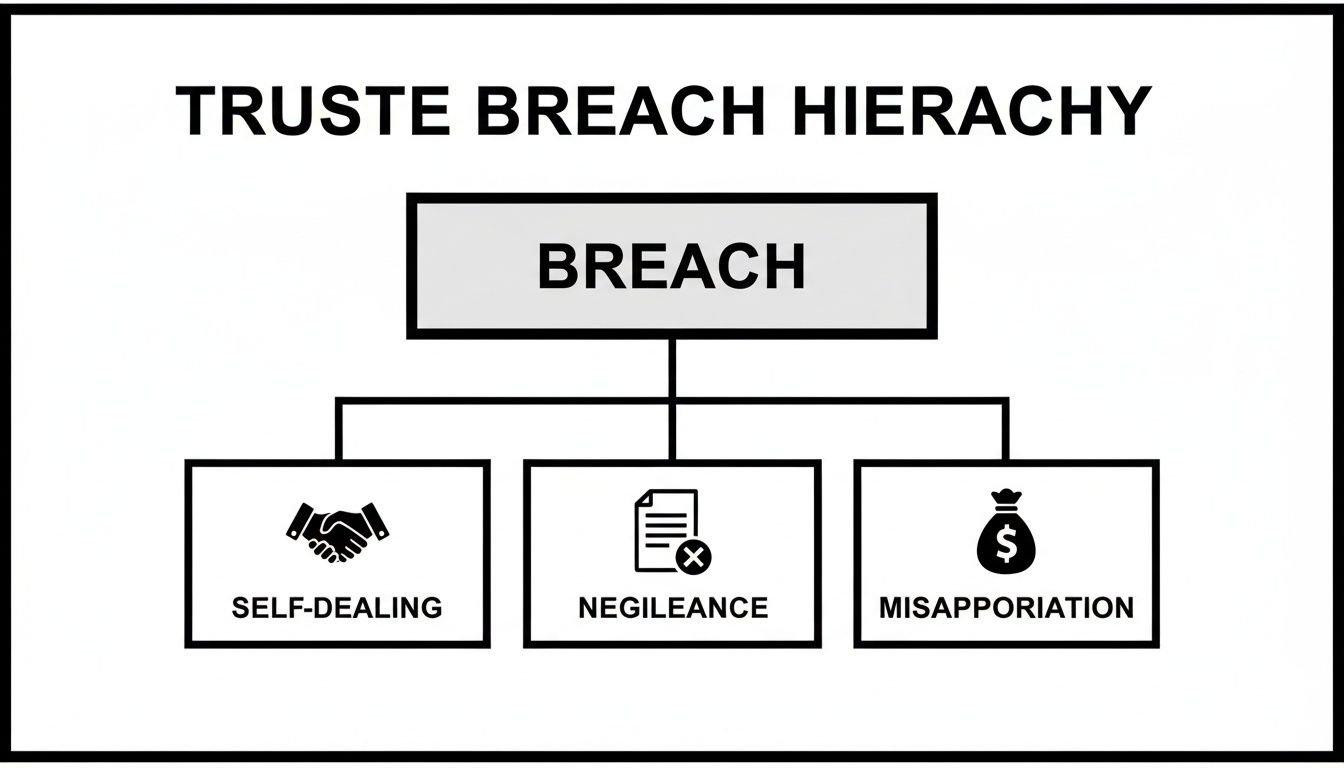
As the diagram shows, a breach can range from intentional self-dealing to simple, but costly, negligence. All of these can open the door for a beneficiary to challenge a trustee's actions.
Gathering Your Arsenal of Evidence
A convincing case is built on a mountain of evidence. Some of the most powerful pieces of proof you can gather include:
- The Trust Document: This is the constitution of the trust. It lays down the rules and is the foundation of your entire claim.
- Financial Records: Bank statements, investment reports, and ledgers tell the story of the money. They can reveal suspicious payments, unauthorized withdrawals, or reckless investment strategies. For a deeper dive, check out our guide on what trust accounting entails.
- Communications: A paper trail of emails, letters, or even text messages can be incredibly revealing, showing a trustee's refusal to share information or contradicting their later claims.
- Property Appraisals: If you suspect a trust-owned property was sold for a low price, an independent appraisal can establish its true market value and put a hard number on the financial loss.
Putting these pieces together to tell a compelling story to a judge requires legal skill and a strategic approach. It’s about building an undeniable case, one verifiable fact at a time.
Legal Remedies and Damages for Beneficiaries

When a Texas court confirms a trustee has breached their fiduciary duty, it’s a major turning point. The next step is making the trust whole again. The law gives judges a powerful toolkit of legal remedies to fix the damage and hold a rogue trustee accountable.
For beneficiaries who’ve been wronged, this is where the work of restoration begins. The Texas Trust Code gives courts wide latitude to craft a solution that fits the wrongdoing. The goal isn't necessarily to punish, but to put the trust back in the financial position it would have been in if the breach never happened.
Financial Recovery to Make the Trust Whole
The most direct remedy is hitting the trustee where it hurts: their wallet. A court can order the trustee to undo the financial harm they’ve caused, forcing them to repay losses and give up any profits they pocketed along the way.
Here are the primary financial remedies a Texas court might use:
- Surcharge: Think of this as a direct repayment order. If a trustee’s reckless investment decision costs the trust $100,000, the court can force them to personally pay that $100,000 back to the trust.
- Disgorgement of Profits: A trustee can never profit from their role. If they engage in self-dealing—like making a profitable investment with trust funds for their own benefit—the court can order them to "disgorge," or surrender, every penny of profit back to the trust.
- Voiding Transactions: If a trustee improperly sells a valuable trust asset, like the family ranch, for a suspiciously low price, a judge can cancel the sale. This is a critical tool for recovering unique or sentimental property.
Beyond Money: Restoring Trust and Control
Sometimes the damage isn't just financial; it’s a complete loss of faith in the person managing the trust. Texas law understands this and provides remedies that go straight to the heart of the trust's management and integrity.
Under Texas Property Code §114.008, a court has the power to do whatever is necessary to protect the trust and its beneficiaries. This includes removing a trustee, demanding a full accounting, or even appointing a temporary receiver to take control of trust assets during a lawsuit. This gives judges the flexibility to create a truly tailored solution for dispute resolution.
This broad authority allows a court to take firm action to protect a family's legacy. For beneficiaries, these remedies are often as vital as recovering money, as they help with long-term asset protection.
Let’s look at a real-world scenario. A trustee sells a commercial property from the trust to their own business for well below its market value. A beneficiary discovers the transaction and files a lawsuit. A Texas court could deliver a powerful combination of remedies:
- Void the Sale: The court could undo the transaction, returning the property to the trust.
- Order a Surcharge: If the property lost value while under the trustee’s control, they could be ordered to pay the difference.
- Disgorge Profits: Any income the trustee’s business made from the property would have to be paid to the trust.
- Remove the Trustee: Given the blatant conflict of interest, the court would almost certainly remove the trustee from their position.
- Award Attorney's Fees: The court could order the trustee to pay the beneficiary’s legal fees, so the cost of justice doesn't drain the trust further.
These remedies don't just fix the past—they secure the trust's future. Understanding these powerful legal tools is your first step toward resolution.
Common Trustee Defenses and Legal Deadlines
Just because a breach of fiduciary duty seems obvious doesn't mean a lawsuit is an easy win. A trustee has the right to mount a defense, and understanding these common arguments is vital for both beneficiaries considering action and trustees seeking to perform their duties correctly.
A trustee’s defense often boils down to legal technicalities, the specific instructions in the trust document, or even the beneficiary's own actions. Knowing these defenses provides a clearer picture of the legal battlefield and is a key part of responsible trust administration.
The Statute of Limitations
One of the strongest shields a trustee has is the statute of limitations. In Texas, a beneficiary typically has just four years to file a lawsuit for a breach of fiduciary duty. The clock starts ticking the moment the beneficiary knew, or reasonably should have known, that something was wrong.
However, there's a crucial exception: the “discovery rule.” If a trustee actively concealed their wrongdoing or the breach was inherently difficult to spot, the four-year clock doesn't start until the beneficiary actually discovers the harm. This prevents a trustee from simply running out the clock on their misconduct.
Other Common Trustee Defenses
Beyond legal deadlines, a trustee can argue their actions were legal or that the beneficiaries gave them the green light.
- Consent or Ratification: A trustee can argue, "You can't sue me for something you agreed to." If a beneficiary was fully informed about a specific action and either consented beforehand or knowingly accepted the benefits without protest, they may lose their right to complain later.
- Exculpatory Clauses: Many modern trusts contain an "exculpatory clause." This is a provision shielding a trustee from liability for certain mistakes, like simple negligence. However, Texas courts draw a firm line—these clauses will not protect a trustee from gross negligence, bad faith, or intentional misconduct. Thinking about how to modify a trust in Texas to add or remove such a clause is a matter for a skilled Texas estate planning attorney.
- Reliance on Professional Advice: A trustee can also defend their decisions by showing they acted on the advice of a qualified professional, like an attorney, CPA, or financial advisor. If they relied on that expert guidance in good faith, a court may find their actions were reasonable.
Informal Fiduciary Relationships and the Anti-Fracturing Rule
Texas courts are becoming more critical about how fiduciary relationships are defined, especially informal ones that arise from long-standing trust. The Texas Supreme Court has applied the 'anti-fracturing rule,' which prevents a plaintiff from re-labeling a simple negligence claim as a more serious breach of fiduciary duty just to gain a legal advantage.
This raises the bar for proving that a casual or professional relationship automatically created a fiduciary one. You can read more about how courts are scrutinizing informal fiduciary duties and what it means for these complex cases.
Understanding these defenses isn’t about making excuses for a trustee’s bad behavior. It's about recognizing the real-world legal landscape. This knowledge helps beneficiaries build a stronger case and allows trustees to avoid costly, unintentional mistakes. The best defense any trustee can have is a consistent history of transparency, diligence, and unwavering loyalty.
Your Action Plan for a Suspected Breach
Discovering a trustee might be failing in their duties brings a storm of emotions—anger, betrayal, and helplessness. The key is to channel that energy into calm, strategic action. This step-by-step guidance will help you regain your footing and protect your family’s legacy with confidence.
Your first move should be a non-confrontational one. Before escalating, send a formal, written request for a full trust accounting and any other relevant information. Under Texas law, you have a right to this as a beneficiary. This simple step puts the trustee on notice and creates a paper trail that could prove invaluable.
When to Engage a Texas Trust Litigation Lawyer
If the trustee ignores your request, sends a confusing or incomplete accounting, or if the numbers confirm your fears, it's time to bring in a legal professional. Hiring a Texas trust administration lawyer isn't about picking a fight; it's about understanding your power and your options.
A lawyer’s involvement can shift the entire dynamic. Often, a single, strongly worded demand letter from an attorney is all it takes to make a trustee correct their course, hand over documents, or even agree to step down. It sends a clear signal: you know your rights under the Texas Trust Code, and you're prepared to enforce them.
The high-stakes world of Texas trusts is seeing more legal battles. For example, a recent case in Bexar County Probate Court involved a father suing a trustee for alleged breaches in managing his children's trusts. This is part of a larger trend of families holding fiduciaries accountable. You can learn more about these trends by exploring this quarterly legal update.
Preparing for Your Initial Consultation
To get the most out of your first meeting with an attorney, come prepared. Gathering your documents beforehand empowers your legal team to give you sharp, effective advice right from the start.
Bring these items to your consultation:
- The Trust Document: This is the playbook. It outlines the trustee’s specific powers, duties, and limitations.
- Any Accountings or Financial Reports: Bring whatever the trustee has provided, no matter how sparse or confusing.
- All Written Correspondence: This includes every email, letter, and text message between you and the trustee.
- Evidence of Harm: If you have concrete proof of financial loss—like property appraisals showing a sale below market value—bring that as well.
Taking legal action against a trustee, who is often a family member, is an emotionally draining experience. Our firm is built to shoulder that legal burden for you, giving you clear, actionable guidance that reduces anxiety and helps you feel confident in the path ahead. We can also provide assistance with other family law matters, such as guardianship.
Confronting a trustee is never easy, but you absolutely do not have to walk this path alone. When you're ready to explore your next steps, our guide on how to sue a trustee in Texas offers even more detail on the process.
Frequently Asked Questions About Trustee Duties
Trust administration can feel like navigating a maze, raising many questions for everyone involved. We’ve gathered some of the most common questions we hear to give you clear, direct answers and practical advice. Think of this as your starting point for understanding your rights and responsibilities.
Can I Sue a Trustee for Poor Investment Decisions?
Not always. In Texas, the standard isn't about perfect market timing; it's about a sound process. We follow the "prudent investor" rule, which looks at how a trustee made their decisions, not just the outcome.
A trustee isn't liable for every market dip, especially if they acted with care as part of a diversified strategy. However, if their decisions were reckless, ignored the trust’s specific goals (like needing steady income vs. long-term growth), or were clouded by a conflict of interest, you may have a solid claim for a breach of fiduciary duty in Texas. A court will want to see that the trustee did their homework, not that they had a crystal ball.
What Does It Cost to Hire a Trust Litigation Lawyer?
Concerns about legal fees should never be a barrier to getting answers. That’s why at The Law Office of Bryan Fagan, PLLC, we offer a free initial consultation. It’s a no-pressure way for you to understand your legal position and options.
The fee structure for a trust lawsuit can vary. Some attorneys work on an hourly basis. In other cases, especially when a clear wrong has occurred and there are significant damages, we might take a case on a contingency fee basis. This means the attorney only gets paid a percentage of what you recover if you win.
It's also important to know that the Texas Trust Code allows courts to order the losing party—or even the trust itself—to pay the winner's attorney's fees. This powerful provision often makes it possible for beneficiaries to seek justice.
How Can a Trustee Avoid a Breach of Fiduciary Duty Lawsuit?
For a trustee, the best defense is a good offense: proactive, transparent, and detailed management. Here is some practical advice for avoiding a lawsuit:
- Know the Trust Document Inside and Out: This is your roadmap. Follow its instructions to the letter.
- Keep Trust Assets Strictly Separate: Never mix personal money with trust funds. Open a dedicated bank account for the trust immediately.
- Provide Clear and Regular Accountings: Keep beneficiaries in the loop with detailed financial statements. Transparency builds trust.
- Document Every Major Decision: Keep a written log explaining the "why" behind any significant move, like selling property or shifting an investment strategy.
- Avoid All Conflicts of Interest: Even the appearance of self-dealing can trigger a lawsuit. If a transaction might benefit you personally, either avoid it or get court approval first.
- Lean on Professionals: When unsure about legal, tax, or investment issues, hire qualified experts like a Texas estate planning attorney or CPA. Documenting your reliance on their advice is a powerful shield.
Following these steps creates an undeniable record of loyalty and diligence, which is a trustee’s strongest protection against a lawsuit.
If you’re managing a trust or planning your estate, contact The Law Office of Bryan Fagan, PLLC for a free consultation. Our attorneys provide trusted, Texas-based guidance for every step of the process.