Skip to content
Managing a loved one’s trust can feel overwhelming—but with the right legal guidance, it doesn’t have to be. In Texas, a trustee is more than just a title; it's a profound legal responsibility. You have been legally appointed as a fiduciary to manage trust assets, not for yourself, but for the benefit of others, a role governed by the Texas Trust Code and Texas Estates Code.
Understanding Your Role as a Texas Trustee
Being asked to manage a loved one’s trust can feel like a heavy weight, but it doesn't have to be a crushing one. With the right perspective and guidance, you can navigate this role successfully. Your main job is to carry out the specific instructions of the trust, always—and this is critical—acting in the best interests of the beneficiaries. This isn't just a suggestion; it's a serious duty governed by the Texas Trust Code.

Core Functions of a Trustee
Your duties extend far beyond just holding onto property. As a trustee, you're expected to dive into a range of financial and administrative tasks, all with meticulous care and absolute integrity. These responsibilities include:
- Asset Management: Your first step is to take control of, inventory, and prudently manage every single asset held within the trust. This can range from real estate and bank accounts to complex investment portfolios.
- Following Instructions: You are legally required to follow the exact instructions written in the trust document, from how funds are invested to when and how assets are distributed to beneficiaries.
- Communication: A key part of your role is keeping the beneficiaries reasonably informed about the trust and how it's being administered. Transparency is essential to building trust and preventing disputes.
A trustee’s power isn't unlimited. It's strictly defined and constrained by the trust agreement itself and by Texas law. Your role is one of service and stewardship, ensuring the wishes of the person who created the trust are honored precisely.
Working with an experienced Texas estate planning attorney can give you the confidence to handle these duties, protecting both the trust's assets and yourself from personal liability. For anyone stepping into the role of a trustee for the first time, this professional guidance is truly invaluable.
Understanding Your Core Fiduciary Duties
When you agree to become a trustee in Texas, you are stepping into a role with serious legal weight. These responsibilities are called fiduciary duties, and they are strict, enforceable standards under the Texas Trust Code meant to protect the trust's creator (the grantor) and its recipients (the beneficiaries).
Think of these duties as the fundamental rules of the game. They are the bedrock of your trusteeship, governing every single decision you’ll make. Mastering these obligations isn't just a good idea; it's the most critical first step you can take toward successfully managing a Texas trust.
The Four Pillars of Fiduciary Responsibility
Your every action as a trustee will be judged against four core duties. If you breach them, you could face personal liability and even be removed from your role. Grasping what each one demands of you is absolutely essential.
Duty of Loyalty: This one is simple: you must act only in the best interests of the beneficiaries. You cannot use your position for personal gain or engage in self-dealing. For instance, you cannot sell a trust property to yourself for a below-market price, as this is a clear conflict of interest.
Duty of Care: You are expected to manage the trust's assets with the same skill and caution that a prudent person would. This isn’t a passive role. It means making sound investment choices, properly maintaining property, and actively working to grow the trust's value while keeping risk in check.
Duty of Obedience: Your job is to follow the exact instructions laid out in the trust document, period. Your personal feelings about a beneficiary’s life choices or spending habits are completely irrelevant. Your duty is to carry out the grantor's written wishes to the letter.
Duty of Good Faith: Every move you make must be transparent and honest. This duty binds you to deal fairly with every beneficiary and operate with complete integrity from start to finish.
These fiduciary duties in Texas are the legal and ethical foundation of your position. The Texas Trust Code makes it clear that these duties are non-negotiable. Failing to uphold them can lead to severe consequences, including being held personally liable for any financial losses the trust incurs. To get a more detailed look at the legal standards, you can explore the specifics of a trustee's fiduciary duties under Texas law.
A Practical Guide to Trust Administration
Once you formally agree to serve as trustee, the theory of fiduciary duty gives way to a list of real, hands-on tasks. This is the heart of Texas trust administration—the practical work of managing the trust in line with the law and the wishes of the person who created it. It can feel like a lot, but if you break it down into a clear roadmap, it becomes a series of manageable steps.
Your first job is to establish legal control and get a complete picture of the trust. This starts with getting a certified copy of the trust document itself and formally letting all beneficiaries know you've been appointed. At the same time, you'll need to build a detailed inventory of every single asset, from real estate and bank accounts to investments and personal items. This inventory becomes the bedrock for everything you do next.
The duties that guide every decision you make are surprisingly straightforward, as this chart shows.
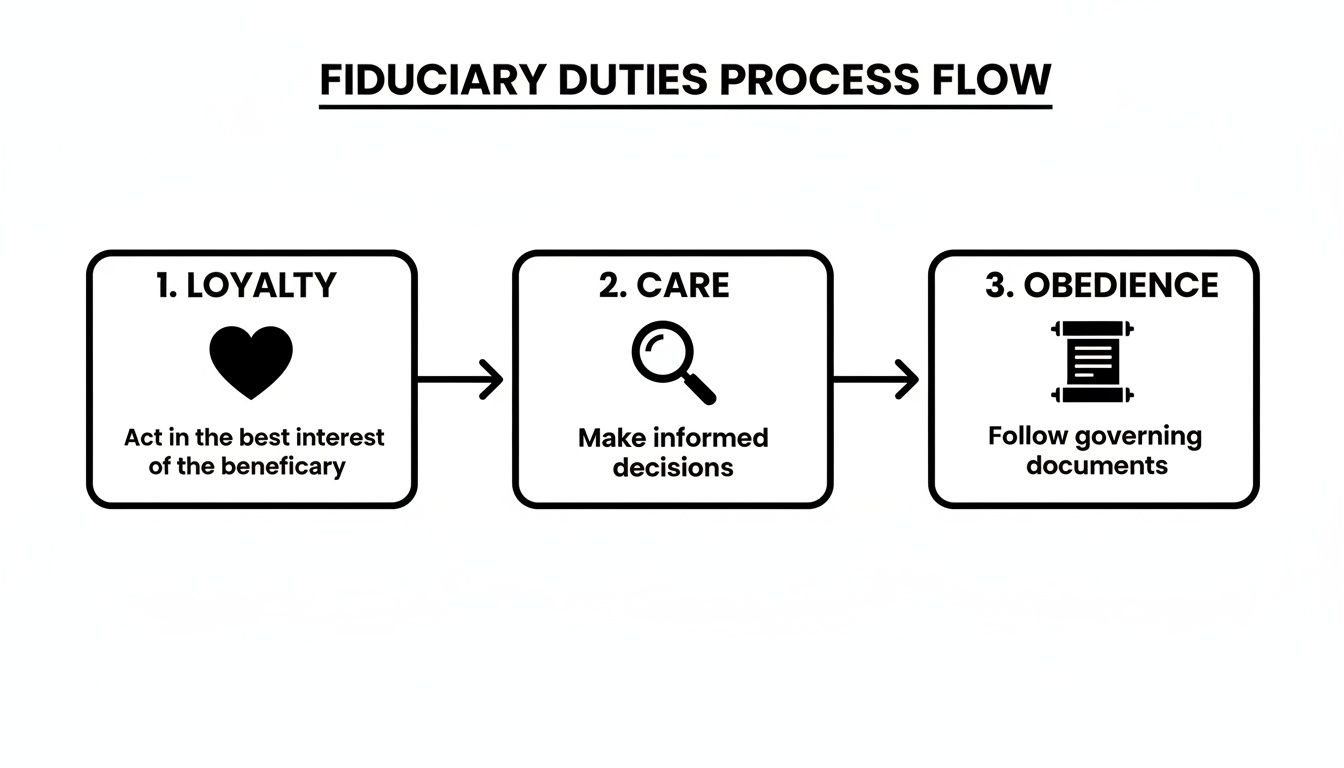
This visual guide is a constant reminder: your actions must always be loyal to the beneficiaries, handled with professional care, and obedient to the rules laid out in the trust.
A Texas Trustee's Administrative Checklist
To bring these duties to life, here is step-by-step guidance for trust administration:
| Phase | Key Task | Why It's Important |
|---|---|---|
| 1. Getting Started | Obtain the trust document and formally accept the trustee role. | This is your legal playbook and the official start of your responsibilities. |
| 2. Inventory | Create a detailed list of all trust assets and their values. | Forms the baseline for all accounting and protects you by establishing what you started with. |
| 3. Communication | Notify all beneficiaries of your appointment. | Transparency from day one builds trust and meets your legal notification requirements. |
| 4. Financials | Pay all legitimate debts, taxes, and ongoing expenses of the trust. | Settles the trust’s obligations and keeps it in good financial standing. |
| 5. Management | Invest and manage assets according to the prudent investor rule. | Protects and grows the trust's principal, balancing risk and return for the beneficiaries. |
| 6. Record-Keeping | Document every transaction, decision, and communication. | Your best defense against disputes and proof that you've fulfilled your duties. |
Following this checklist doesn't just keep you organized; it provides a clear record that demonstrates you're acting in good faith and fulfilling your fiduciary duties at every turn.
Managing and Safeguarding Trust Assets
With your initial inventory in hand, your focus will pivot to active management. This phase requires a sharp eye for detail and a steady hand.
You are now responsible for paying all legitimate debts, expenses, and taxes the trust owes. This demands disciplined record-keeping for every dollar in and out. At the same time, you must make smart investment choices that follow the prudent investor rule under Texas law, which means balancing the need for growth with the duty to preserve the trust's capital. If you need a more detailed walkthrough, our guide on the trust administration process in Texas can provide extra support.
A trustee’s most important tool is documentation. Maintaining meticulous, organized records of every single financial transaction, decision, and communication is not just good practice—it is your best defense against potential disputes and liability.
Ultimately, your goal is to handle these tasks efficiently while always protecting the value of the trust. This might even lead you to explore strategies for asset protection to shield the wealth for future generations, just as the grantor intended.
Keeping Beneficiaries Informed and Providing Accountings
Transparency isn't just a good idea for a trustee; it's the bedrock of a successful relationship with your beneficiaries. In Texas, the law demands it. Your duty to keep beneficiaries in the loop is a legal mandate, not a friendly suggestion. Dropping the ball here can quickly sour relationships and land you in serious legal trouble.

Think of this duty as a continuous, open conversation. It’s about much more than mailing out an annual report. It means being ready to answer reasonable questions and explaining major decisions that affect the trust's bottom line.
Imagine a beneficiary gets nervous about the trust's investment performance. A good trustee doesn't wait for a formal demand for information. They step in with a clear, easy-to-understand update that calms fears, builds confidence, and stops small worries from escalating into big problems.
The Formal Duty to Account
Beyond just keeping in touch, Texas law has a more formal requirement. It's found in the Texas Trust Code Section 113.151 and it’s called an “accounting.”
An accounting isn't a simple summary. It’s a detailed, sworn report that lays out all the trust's activities over a set period. Beneficiaries have a legal right to demand one, and as a trustee, you are legally obligated to provide it.
A proper accounting has to show everything:
- All trust property, including every receipt, disbursement, and distribution made.
- Any liabilities or debts the trust currently holds.
- The compensation paid to you, the trustee.
This is exactly why keeping immaculate records of every single transaction is non-negotiable. While this duty ensures total transparency, Texas law does offer trustees some protection from constant demands. Once you provide a formal accounting, beneficiaries can't legally force you to produce another one for at least 12 months.
However, if a trustee fails to deliver a complete and accurate report when one is demanded, a beneficiary can take you to court. They can ask a probate judge to compel the accounting and even petition to have you removed as trustee.
Managing these communications is a huge part of what a trustee does in Texas. Clear, compliant reporting isn't just about fulfilling your legal obligations—it's your best defense against disputes before they ever begin.
Navigating these communication duties can feel complicated. If you're looking for a deeper dive, check out our guide on what trust accounting entails.
How to Handle Conflicts and Remain Impartial
When you agree to be a trustee in Texas, you're often stepping right into the middle of delicate, and sometimes tense, family dynamics. One of your most challenging roles is upholding the duty of impartiality. This simply means you have to treat every single beneficiary fairly, without playing favorites.
This sounds straightforward, but it gets complicated fast. A common scenario involves a trust that names the surviving spouse as the "income beneficiary"—they get money to live on—while the kids are the "remainder beneficiaries" who inherit whatever is left. Your job is to balance the spouse’s immediate needs with the long-term goal of growing the trust for the children. This requires objective, legally sound decisions, not choices based on emotion.
The Legal Standard of Impartiality
The duty of impartiality isn't just a good idea; it's a fundamental requirement under the Texas Trust Code. Unless the trust document explicitly tells you to favor one person over another, you must balance their competing interests with an even hand.
Trustees who slip up and make decisions that unfairly benefit one family member over another open themselves up to serious legal trouble, including being removed from their role. Beneficiaries have a legal right to information to make sure you're managing things correctly, and you absolutely must honor those requests.
Even unintentional favoritism can ignite bitter family fights and land you in court. Making decisions that are not only fair but also legally defensible is the key to stopping conflicts before they even start.
The mere perception of unfairness is often all it takes to trigger a legal battle. If a beneficiary even feels like you're not being impartial, they can accuse you of failing in your duties. To understand the gravity of this, you can read also: what constitutes a trustee breach of fiduciary duty.
Common Questions About Trustee Duties in Texas
If you've been named a trustee, you likely have many questions. It’s a serious role with real responsibilities, and it's only natural to have concerns. Getting a handle on the fundamentals can make all the difference, so let's walk through some of the most common questions we hear from new trustees in Texas.
Can a Trustee Be Paid in Texas?
Yes. The Texas Trust Code recognizes that serving as a trustee requires significant work and allows trustees to receive reasonable compensation from the trust for their services.
What is considered "reasonable"? This often depends on the trust's complexity, the work performed, and the skills required for management. Sometimes, the trust document itself will specify the compensation.
If it does not, Texas law defaults to a reasonable fee. The best practice is to keep meticulous records of your time and the tasks you perform. This provides a clear justification if a beneficiary ever questions your compensation.
What Happens If a Trustee Makes a Mistake?
Everyone makes mistakes, but when you're a trustee, those mistakes can carry a heavy price. If an error, an act of negligence, or a breach of your duties causes a "material financial loss" to the trust, you could be held personally liable for that damage.
Imagine making a risky, unapproved investment that fails. You might be legally required to use your own funds to make the trust whole again. This is precisely why having a Texas trust administration lawyer in your corner is so critical—it’s not just about getting advice, it’s about protecting yourself from costly missteps.
How Can a Trustee Resign or Be Removed?
A trustee can resign from their position. The process is typically outlined in the trust agreement but can also be accomplished with court approval. Conversely, a court can remove a trustee who is not fulfilling their duties.
Under Texas law, grounds for removing a trustee include:
- Violating the terms of the trust agreement.
- Mismanaging trust funds and causing financial harm.
- Failing to provide a legally required accounting to beneficiaries.
- Becoming incapacitated and unable to manage the trust's affairs.
- Having a major conflict of interest that harms the beneficiaries.
Whether you're a beneficiary who believes a trustee needs to be removed, or you're a trustee looking to resign, the first step is to consult an experienced Texas estate planning attorney. They can provide practical advice and guide you through the necessary legal steps for a smooth transition.
If you’re managing a trust or planning your estate, contact The Law Office of Bryan Fagan, PLLC for a free consultation. Our attorneys provide trusted, Texas-based guidance for every step of the process.