Managing a loved one’s trust can feel overwhelming—but with the right legal guidance, it doesn’t have to be. The trust administration process in Texas is the formal act of carrying out the instructions left in a trust, ensuring assets are managed and distributed exactly as intended. This process is governed by the Texas Trust Code, and understanding your role is the first step toward fulfilling your duties with confidence.
Navigating Trust Administration in Texas
Taking on the role of a trustee is a significant responsibility, but you don't have to navigate it alone. This guide is your roadmap to understanding the complexities of the Texas trust administration process. We're here to explain your duties in plain English and give you the confidence to move forward.
From formally accepting your role to the final distribution of assets, we will walk you through each stage. Our goal is to transform what may seem like a daunting legal task into a clear, manageable path, allowing you to honor the grantor's legacy with precision and compassion.
The Three Core Phases of Trust Administration
At its heart, the trust administration process breaks down into three fundamental phases: reviewing the trust document, managing the trust's assets, and finally, distributing those assets to the rightful beneficiaries.
This simple flowchart illustrates the journey ahead.
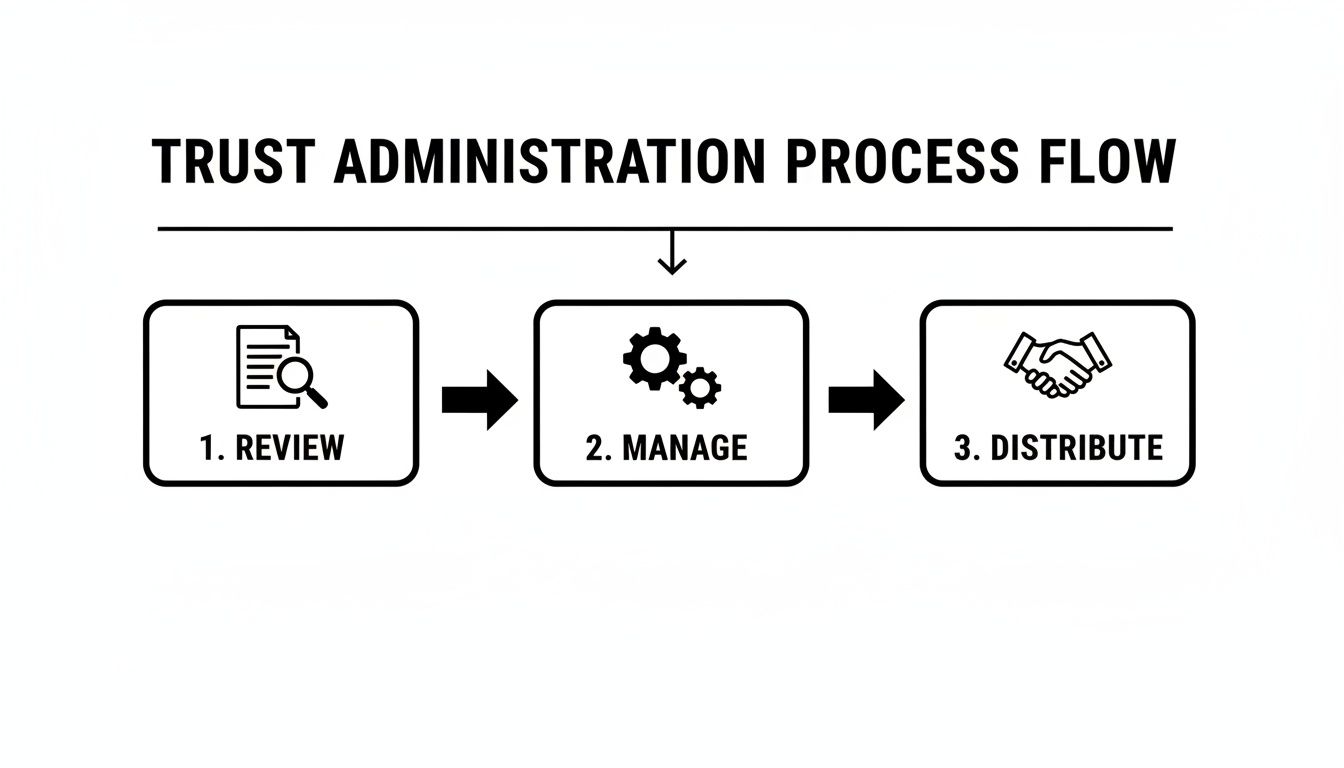
Each of these steps—Review, Manage, and Distribute—comes with specific legal obligations. Adhering to Texas law requires careful attention to detail at every turn.
Think of yourself as the captain of a ship. First, you must study the map to understand the voyage and the destination (Review). Next, you sail the seas, protecting the ship and its cargo from any storms (Manage). Finally, you arrive safely at port and deliver the cargo to its intended recipients (Distribute).
A well-administered trust is more than just a legal task; it is the final act of fulfilling a loved one's legacy. Clarity, transparency, and adherence to fiduciary duties are the cornerstones of this responsibility.
What The Process Involves
The Texas Trust Code establishes the legal framework for every trustee. While each trust is unique, the journey generally involves a predictable set of responsibilities. As a trustee, you are a fiduciary, which is a legal term meaning you have a strict duty to act solely in the best interests of the beneficiaries. This is a core fiduciary principle that guides every decision you make.
The table below provides a high-level overview of what you can expect during the trust administration process.
The Texas Trust Administration Process At-a-Glance
| Phase | Key Action | Primary Goal |
|---|---|---|
| 1. Acceptance & Review | Formally accept the trustee role and thoroughly analyze the trust document. | Understand the grantor's wishes, identify beneficiaries, and map out legal duties. |
| 2. Asset Management | Inventory, value, and secure all trust assets. Pay all debts, taxes, and expenses. | Protect and prudently manage trust property while settling the estate's obligations. |
| 3. Distribution & Termination | Provide a final accounting to beneficiaries and distribute assets as instructed. | Fulfill the trust's purpose by transferring property to the heirs and closing the trust. |
These phases ensure a structured approach, helping you meet your legal obligations methodically and transparently.
Key responsibilities you'll encounter include:
- Accepting the Role: You must formally accept your position as trustee in writing.
- Inventorying Assets: This involves locating, creating a detailed list, and taking legal control of all property held in the trust.
- Notifying Beneficiaries: You are required by law to inform all beneficiaries that the trust is being administered and what their interest in it is.
- Managing Finances: This means paying the trust’s final bills, ongoing expenses, and any required taxes.
- Distributing Property: The final step is transferring the assets to the beneficiaries according to the exact terms laid out in the trust document.
This process demands diligence and a firm grasp of your duties. Whether you're a first-time trustee or a beneficiary trying to understand your rights, this foundational knowledge is your first and most important tool. For those just beginning to think about their own legacy, a well-drafted trust is the cornerstone of successful estate planning.
Understanding Your Role as a Trustee
When you agree to serve as a trustee, you are stepping into a fiduciary role—a profound legal and ethical commitment. This binds you to act solely in the best interests of the trust's beneficiaries. Think of yourself as the chosen guardian of a loved one's financial legacy, entrusted to manage and protect it exactly as they intended.
It’s a role with significant legal weight, and understanding your responsibilities is the first step toward a successful trust administration. The roadmap for these duties is detailed in the Texas Trust Code, and while it may seem complex, its principles are grounded in loyalty, prudence, and transparency.

Core Fiduciary Duties Under Texas Law
At the heart of the trustee’s role are three core duties. Every decision you make, from investing funds to communicating with family members, must flow from these fundamental obligations.
Duty of Loyalty: This is paramount. Your actions must be exclusively for the benefit of the beneficiaries. You cannot use your position for personal gain, which means avoiding any conflicts of interest. For example, selling trust property to yourself or investing trust funds in your own business are clear violations of this duty.
Duty of Prudence: The law requires you to manage the trust’s assets as a "prudent investor" would. This isn’t about chasing speculative, high-risk returns. It's about making careful, informed decisions to preserve the trust's value while aiming for reasonable growth. This involves diversification and sound judgment, not taking unnecessary risks.
Duty to Inform and Account: You cannot operate in secret. You have a legal duty to keep beneficiaries reasonably informed about the trust and its administration. This includes providing detailed accountings of all assets, income, expenses, and distributions when beneficiaries are entitled to them.
These fiduciary duties in Texas are not mere suggestions; they are legally enforceable requirements under the Texas Trust Code. Ignoring them can lead to devastating financial losses for beneficiaries and personal liability for you. The law provides a four-year statute of limitations for breach of trust claims, but this period often begins only when the breach is discovered. This "discovery rule" can be a significant risk, especially if a trustee fails to provide timely accountings, allowing issues like self-dealing to go unnoticed for years. You can learn more about the specific trustee duties and responsibilities under Texas law.
A Real-World Scenario: Two Approaches to Trusteeship
Let's illustrate this with a practical example. Imagine a trust established for the benefit of two minor children, holding a $1 million portfolio.
The Prudent Trustee: This trustee acts like a professional portfolio manager. She diversifies the investments across stocks, bonds, and real estate to balance risk and growth. She keeps immaculate records, sends annual accountings to the children's guardian, and maintains open lines of communication. Her focus is on steady, long-term growth to fund the children's future education—a perfect execution of her fiduciary duties.
The Negligent Trustee: This trustee, believing he can outperform the market, invests the entire $1 million into a single, high-risk tech startup. He fails to provide accountings and avoids requests for information from the family. When the startup fails, the trust becomes worthless. This is a catastrophic breach of both the duty of prudence and the duty to inform, and he would likely be held personally liable for the loss.
The contrast is clear. The prudent trustee honored her duties and protected the legacy. The negligent trustee’s recklessness destroyed it. Understanding your legal obligations is non-negotiable, both for honoring the grantor's wishes and for protecting yourself from serious personal liability.
A First 90 Days Checklist for New Trustees
Stepping into the role of a trustee can feel like being handed a complex puzzle with no picture on the box. The first three months are critical, setting the tone for the entire trust administration process in Texas. This period can feel overwhelming, but breaking it down into clear, manageable tasks can make all the difference.
This step-by-step checklist will guide you through those crucial first steps, emphasizing organization, clear communication, and precise record-keeping from day one.

1. Formally Accept Your Role and Review the Trust Document
Your first official act is to formally accept the trusteeship in writing. This is a legal step that establishes your authority and initiates your duties. Once you've accepted, obtain the original trust document and read it from cover to cover—then read it again. This document is your rulebook. It contains the grantor's specific wishes, identifies the beneficiaries, and outlines what you can and cannot do. If any part is unclear, now is the time to consult a Texas trust administration lawyer. Early clarity prevents major problems later.
2. Gather Essential Documents
Next, you'll need to collect the documents required to act on behalf of the trust. Start by ordering multiple certified copies of the grantor's death certificate. You’ll need them for nearly every transaction, from communicating with banks to transferring property titles. At the same time, apply for a Taxpayer Identification Number (TIN), also known as an Employer Identification Number (EIN), for the trust from the IRS. This number is essential for opening a dedicated bank account and filing taxes, as it officially establishes the trust as a separate legal entity.
3. Take Control and Inventory All Trust Assets
A primary fiduciary duty is to locate, secure, and take control of all property the trust owns. This requires diligent detective work and meticulous organization. You must create a detailed inventory of all trust assets, valued as of the grantor's date of death.
Your inventory should be comprehensive and include:
- Real Estate: All property addresses, deeds, and recent appraisals.
- Financial Accounts: Bank and investment account numbers, institution details, and the exact balance on the date of death.
- Personal Property: Valuables like jewelry, art, or collectibles, which may require professional appraisal.
- Business Interests: Any documents showing ownership, which may require a formal business valuation.
- Digital Assets: Log-in information for online accounts, cryptocurrency wallets, and other digital property.
This initial inventory serves as the baseline for all future accounting and is your best defense against any claims of mismanagement. We offer a helpful trust administration checklist to guide you through this critical task.
A complete and accurate inventory is not just a list; it is a foundational record that ensures transparency and demonstrates your commitment to your fiduciary duties from day one.
4. Notify Beneficiaries and Creditors
Transparency is your greatest asset for a smooth administration. The Texas Trust Code requires you to provide formal, written notice to every beneficiary named in the trust. This notice should inform them about the trust, identify you as the trustee, and confirm their status. Sending this notice via certified mail provides proof of delivery. You also need to identify and address the grantor's outstanding debts. As trustee, you are responsible for paying the trust’s legitimate debts and expenses.
5. Open a Dedicated Bank Account for the Trust
This is an absolute rule: never commingle trust funds with your personal money. One of your first financial tasks is to open a new checking account in the name of the trust, using its new TIN. All of the trust's cash and liquid assets should be consolidated into this single account. This account will be your operational hub for paying all trust expenses—such as legal fees, appraisal costs, and property maintenance—and eventually for making distributions to beneficiaries. Keeping the finances completely separate creates a clean, clear record for your accounting.
To help you stay organized, here’s a summary of those critical first steps.
Essential First Steps for a New Trustee
| Task | Why It's Important | Pro Tip |
|---|---|---|
| Accept Trusteeship | Officially starts your legal authority and duties. | Do it in writing and keep a copy for your records. |
| Get Death Certificates | Needed to access accounts and transfer assets. | Order at least 10-15 certified copies. You’ll use them everywhere. |
| Obtain Trust EIN | Required to open a trust bank account and file taxes. | Apply online with the IRS for the fastest turnaround. |
| Read the Trust Doc | This is your instruction manual. You must follow it. | Highlight key dates, duties, and beneficiary names. |
| Create an Asset Inventory | Establishes a baseline value and protects you from liability. | Use a spreadsheet to track assets, values, and account numbers. |
| Notify Beneficiaries | Required by Texas law and builds trust. | Send a formal letter via certified mail for proof of receipt. |
| Open Trust Bank Account | Prevents commingling funds and simplifies accounting. | Consolidate all liquid assets into this single, dedicated account. |
Completing these tasks within the first 90 days will build a strong foundation for the rest of the administration. Sometimes, you may discover a beneficiary’s needs are so complex that a guardianship is necessary, or you might find assets outside the trust that require a separate probate process. A diligent start prepares you for any eventuality.
Managing Trust Assets and Tax Obligations
After you’ve completed the initial 90-day sprint of gathering assets and sending notices, your role as trustee transitions to long-term stewardship. This is where the core work of managing the trust’s assets and finances begins, all while adhering to the strict duties outlined in Texas law.
This phase is about diligent management and prudent decision-making. It’s less about collecting what the grantor left behind and more about making those assets work for the beneficiaries, all while following the strict rules of a fiduciary.
Adhering to the Prudent Investor Rule
The Texas Trust Code requires trustees to follow the prudent investor rule. This is a legal standard that demands you manage the trust’s assets with the same skill and caution that a reasonable investor would. This is not the time for speculative gambles. It’s about striking a careful balance between protecting the trust’s principal and achieving reasonable growth.
Imagine you are managing a retirement portfolio. Your goal is not to bet everything on a high-risk stock. It is to build a stable, diversified portfolio that can withstand market fluctuations and ensure funds are available when a beneficiary needs them for college, a down payment, or retirement.
To meet this duty, a trustee should:
- Diversify Investments: Avoid putting all the trust's eggs in one basket. Spreading investments across different asset classes, industries, or properties is key to mitigating risk.
- Consider Beneficiary Needs: You must balance the needs of different beneficiaries. Some may require current income, while others need long-term growth for the future.
- Document Your Decisions: Keep meticulous records explaining why you chose specific investments. This paper trail is your best defense if your choices are ever challenged.
Paying Debts and Managing Expenses
Before any assets can be distributed to beneficiaries, you must settle the trust's debts and cover its ongoing expenses. This is a non-negotiable step in the trust administration process Texas mandates. You have a legal responsibility to use trust funds to pay all legitimate obligations.
This includes paying off the grantor’s final medical bills, settling credit card debts, and handling the administrative costs of managing the trust, which often include:
- Legal and accounting fees
- Property taxes and insurance on trust real estate
- Maintenance costs for properties
- Your own reasonable fee as trustee
Keeping perfect records is critical. Every penny spent must be accounted for to maintain transparency with beneficiaries and fulfill your fiduciary duties.
As a trustee, you stand between the grantor’s assets and the outside world. Paying debts diligently not only honors their obligations but also protects the remaining principal for the beneficiaries.
Navigating Trust Tax Obligations
One of your most complex duties will be managing the trust's tax obligations. A trust is a separate taxable entity and must file an annual income tax return with the IRS using Form 1041, the U.S. Income Tax Return for Estates and Trusts. This is a critical step in tax planning and compliance.
This form reports all income the trust earns—such as interest, dividends, or capital gains—and also tracks distributions made to beneficiaries. Beneficiaries will receive a Schedule K-1 from the trust, which they will need to report their share of the trust's income on their personal tax returns. Because this process can be complex, most trustees wisely partner with a Texas estate planning attorney and a CPA to ensure all filings are accurate and timely.
For high-net-worth families, the complexity often warrants professional involvement. The use of corporate fiduciaries is common in Texas, with many financial institutions offering specialized trustee services. This trend is one reason why Texas has become a hub for private trust companies (PTCs), which wealthy families use to centralize their financial management.
Managing assets and taxes is a marathon, not a sprint. By staying organized, following the prudent investor rule, and seeking professional help when needed, you can successfully navigate this phase and honor the legacy placed in your care. For those also thinking about their own legacy, seeing these complexities firsthand can inform your own estate planning strategies.
Distributing Assets and Closing the Trust
After navigating the complexities of managing the trust, you have reached the final stage: distributing the remaining assets and officially closing the trust. This is where the grantor's ultimate wishes come to fruition and your fiduciary duties conclude, bringing closure to everyone involved.

Interpreting the Rules of Distribution
Before any assets are transferred, you must carefully interpret the trust document’s instructions. Not all distributions are simple or immediate.
The trust might instruct you to:
- Make Outright Distributions: This is the most straightforward approach. Beneficiaries receive their share of the assets directly, with no strings attached.
- Hold Assets in Trust: Some trusts are designed for long-term management. You may be required to continue holding assets for a beneficiary until they reach a certain age or a life milestone, such as graduating from college.
- Create New Trusts: The original trust document may direct you to divide the remaining property into new, separate trusts for each beneficiary, each with its own unique rules and duration.
Executing these instructions precisely is non-negotiable. A mistake at this stage can lead to significant legal consequences and undermine the grantor's intent.
Preparing the Final Accounting and Getting Approval
Before making final distributions, you must prepare a final accounting. This is a comprehensive report detailing all financial activity during your tenure as trustee—from the initial inventory to all income earned, expenses paid, and proposed distributions.
You will present this accounting to all beneficiaries for their review and approval. This step is your most important protective measure. Once the beneficiaries approve the accounting and sign a receipt and release form, they generally waive their right to sue you for your management of the trust.
A formal, final accounting isn't just about being transparent; it's your legal shield. Securing beneficiary approval before distributing assets protects you from future claims and confirms you've fulfilled your fiduciary duties.
The Mechanics of Transferring Assets
With the final accounting approved, you can begin transferring property to the beneficiaries. This process involves more than just writing checks.
Depending on the asset, the transfer may involve:
- Deeding Real Estate: Preparing and recording new deeds to officially transfer property ownership from the trust to the beneficiaries.
- Retitling Accounts: Working with banks and investment firms to update the ownership on financial accounts.
- Transferring Personal Property: Physically delivering items like jewelry, art, or vehicles and obtaining a written receipt as proof of transfer.
Every transfer must be meticulously documented. Obtaining a signed receipt from each beneficiary confirming they have received their specific distribution is crucial for your records.
Recent and potential changes to Texas law underscore the need for careful handling in these final steps. For example, legislative discussions often involve updates to the Texas Trust Code and Texas Estates Code that could impact fiduciary compliance. These laws include strict time limits, like a 4-year statute of limitations for pursuing a breach of trust claim. To stay informed about your responsibilities, you can explore detailed insights about Texas trust law updates on cfp.net.
Once all assets have been distributed and all final tax returns have been filed, you can officially terminate the trust. Sometimes, minor issues require small adjustments to the trust's terms to finalize the process cleanly. A Texas estate planning attorney can advise on how to modify a trust in Texas if it becomes necessary to complete the administration.
Common Trust Administration Disputes and How to Avoid Them
Even with a well-drafted trust, the human element can create friction. During the trust administration process in Texas, family dynamics, financial pressures, and old grievances can surface. It is a delicate time for everyone involved.
Fortunately, most disputes are avoidable with proactive communication and a firm commitment to transparency. Recognizing common pitfalls is the first step toward preventing them.
Communication Breakdowns
More often than not, trust administration disputes begin with a lack of communication. When beneficiaries are left in the dark, they may begin to suspect mismanagement. They might worry that assets are being sold for less than they are worth, that the trustee is showing favoritism, or that their inheritance is disappearing. This uncertainty is a breeding ground for suspicion and conflict.
A trustee can prevent this by establishing a clear communication plan from the start.
- Set a Regular Update Schedule: Inform beneficiaries that you will provide written updates quarterly or semi-annually, and then stick to that schedule.
- Be Responsive: Answer questions promptly and professionally. A clear, timely response is always better than silence.
- Document Everything: Keep a detailed record of all communications. This protects you and ensures everyone is on the same page.
Disagreements Over Trust Assets
Conflicts also arise over how trust assets are managed, valued, and distributed. One beneficiary may feel the family home was sold for too little, while another questions an investment decision. Dividing personal items with sentimental value can be another common source of conflict.
A formal Investment Policy Statement (IPS) can be a powerful tool for preventing disputes. This document outlines the trust's investment goals, risk tolerance, and strategy, creating a transparent framework for all investment decisions.
To minimize these conflicts, obtain professional appraisals for major assets like real estate or valuable collections. An objective, third-party valuation is difficult to dispute. When managing investments, creating an IPS demonstrates that you are following a clear, prudent strategy based on fiduciary principles.
Sometimes, despite a trustee's best efforts, a conflict becomes unavoidable. At that point, a Texas trust administration lawyer can provide a path forward, whether through mediation or, if necessary, representation in court. If you find yourself in a complex disagreement, you can explore your options for dispute resolution and litigation in Texas trusts. Proactive legal guidance can often de-escalate a situation and lead to a resolution that honors the grantor's wishes while preserving family relationships.
Frequently Asked Questions About Texas Trust Administration
When you're dealing with a trust, whether as a trustee or a beneficiary, questions are inevitable. It's a complex area of the law. Here are some of the most common questions we hear, with straight-to-the-point answers.
How Long Does Trust Administration Take in Texas?
This is a very common question, but there is no one-size-fits-all answer. The timeline for trust administration depends heavily on the complexity of the trust and its assets.
A simple trust holding easily accessible assets like cash or stocks might be fully administered and closed within six to twelve months.
However, if the trust contains a family business, real estate that needs to be sold, or has instructions for long-term beneficiary payments, the process can stretch on for years. The key is diligent and transparent management, but a fixed timeline is rarely possible.
Can a Trustee Get Paid for Their Work in Texas?
Yes, absolutely. The Texas Trust Code states that trustees are entitled to "reasonable compensation" for their services, unless the trust document specifies otherwise.
What is considered "reasonable"? This is determined by several factors, including:
- The overall value and complexity of the trust’s assets.
- The skills and time required to properly manage the trust.
- The specific duties assigned to the trustee in the trust document.
It is crucial for the trustee to keep meticulous records of their time and the tasks they perform. This documentation justifies the fee, which is paid from the trust's assets and is a key part of fulfilling their fiduciary duties in Texas.
What if a Beneficiary Disagrees With a Trustee?
Disputes can and do happen. When a beneficiary believes a trustee is not fulfilling their duties—perhaps by not communicating, mismanaging funds, or showing favoritism—they have legal options.
The first step should always be a formal, written request for information and a detailed accounting of the trust's activities. This can often clear up misunderstandings.
If that does not resolve the issue, the beneficiary can take the matter to court. A judge has the authority to order the trustee to provide an accounting, review their decisions, and even remove them from their role. If a breach of duty caused financial harm, the court can hold the trustee personally liable for the damages. This is where guidance from a Texas trust administration lawyer becomes indispensable for both beneficiaries and trustees.
If you’re managing a trust or planning your estate, contact The Law Office of Bryan Fagan, PLLC for a free consultation. Our attorneys provide trusted, Texas-based guidance for every step of the process.