Planning for a time when you’re no longer here can feel overwhelming—but with the right legal guidance, it doesn’t have to be. For many Texans, "estate planning" sounds like something reserved for the wealthy. The truth is, if you have a family, own property, or simply want a say in your future, you need an estate plan. It is the process of deciding how your assets will be managed during your life and distributed after you pass, ensuring your wishes are honored and your loved ones are protected.
A thoughtful plan, built with key documents like wills and trusts, ensures your intentions are followed precisely, all under the framework of the Texas Estates Code. This guide is here to walk you through estate planning in Texas with clarity and confidence, replacing legal jargon with practical, step-by-step advice.
Why Every Texan Needs an Estate Plan
Thinking about the future without you in it is a difficult but essential task. It is one of the most profound acts of love you can undertake for your family. Without an estate plan, you aren't just leaving things to chance—you're leaving critical decisions in the hands of the state. The government's plan for your assets and your family’s care will almost certainly not align with your own.
A well-structured estate plan empowers you to take control.
Secure Your Family's Future and Provide Peace of Mind
The most persistent myth about estate planning is that it’s only for the rich. This could not be further from the truth. If you own a home, have minor children, or want to make your own medical care decisions, you need a plan. It’s less about the size of your assets and more about providing a clear, compassionate roadmap for your loved ones, sparing them from conflict and confusion during an already difficult time.
A well-thought-out estate plan lets you:
- Name your beneficiaries to ensure your assets are distributed to the people and causes you care about.
- Appoint a guardian for your minor children, which is arguably the most critical decision a parent can make.
- Minimize potential taxes and legal fees, preserving the legacy you've worked so hard to build.
- Avoid the public and often lengthy probate process through strategic tools like trusts.
A well-structured estate plan is more than just a stack of legal papers—it is your final act of care, giving your family the security and peace of mind they’ll need most.
Our mission is to help you feel informed and secure in your next steps. Once you understand your options for estate planning, you can make smart choices that protect what matters most. A dedicated Texas estate planning attorney can be your trusted guide through every one of these critical decisions.
Understanding Your Core Estate Planning Tools
When you begin your estate planning journey in Texas, you'll encounter a set of foundational documents. Think of these as the essential tools in your legal toolkit. Each serves a specific, vital purpose, and understanding how they work together is the first step toward achieving genuine peace of mind for you and your family.
A Last Will and Testament is your personal instruction manual for what happens after you pass away. It clearly states who should receive your property, names an executor to manage your affairs, and—most importantly for parents—designates a guardian for minor children. If you die without a will, a Texas court will make these critical decisions for you.
A Revocable Living Trust acts as a private container you create to hold and manage assets for your beneficiaries. During your lifetime, you typically act as the trustee, maintaining full control. You will also name a successor trustee to take over when you are no longer able to. The primary benefit of a trust is that it helps your estate avoid the public probate process.
The Critical Role of Powers of Attorney and Medical Directives
A comprehensive estate plan doesn't just cover what happens after you die; it also protects you during your lifetime in case of incapacity. This is where powers of attorney and medical directives become indispensable.
- A Durable Power of Attorney allows you to appoint a trusted agent to manage your financial affairs if you become unable to do so.
- A Medical Power of Attorney designates an agent to make healthcare decisions on your behalf.
- A Directive to Physicians (often called a Living Will) outlines your wishes for end-of-life medical care, removing the burden of difficult decisions from your family.
These documents ensure your personal and financial matters are managed by someone you trust, according to your specific instructions. We take a closer look at these essential estate planning documents in a separate guide.
Recent data reveals a concerning trend: many people are postponing this crucial planning. A 2025 study found that only 24% of Americans have a will, a significant drop from 33% in 2022. Even fewer—just 13%—have a living trust. This hesitation is particularly risky for Texas families due to our unique community property laws.
This flowchart below simplifies the decision-making process.
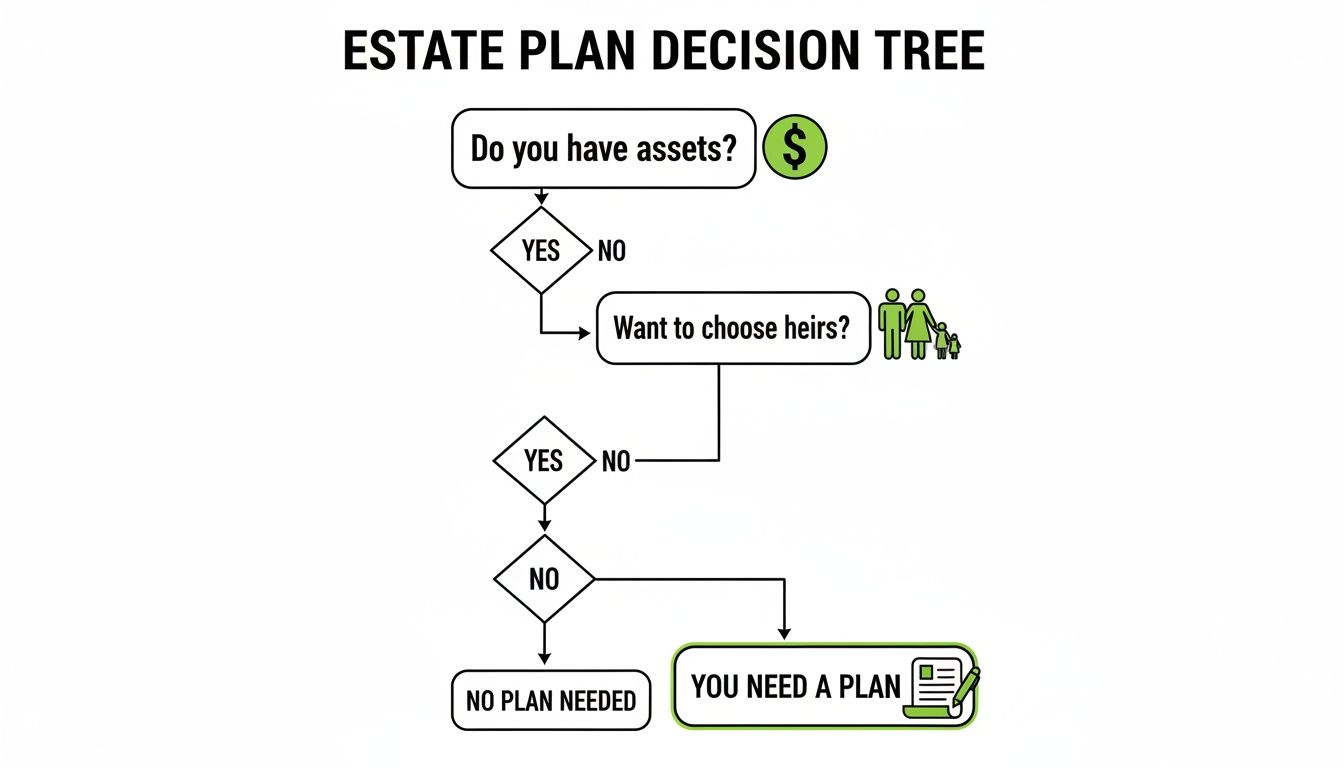
As you can see, if you have assets and want to control their distribution, the conclusion is clear—you need an estate plan.
Wills Versus Trusts: Which Is Right for You?
For many Texans, the key decision is whether to build their plan around a will or a trust. The choice often hinges on how each instrument interacts with the Texas probate process—the court-supervised procedure for validating a will and distributing assets.
A will must go through probate. While Texas offers a relatively streamlined process known as "independent administration," it remains a public proceeding. Court filings, an inventory of your assets, and the names of your beneficiaries all become part of the public record. For families who value privacy and efficiency, this can be a significant drawback.
Here’s a simple breakdown to help you compare the two.
Comparing Wills and Living Trusts in Texas
| Feature | Last Will and Testament | Revocable Living Trust |
|---|---|---|
| Probate Process | Required. Must be validated through the court system. | Avoids Probate. Assets are distributed privately by the successor trustee. |
| Privacy | Public Record. All documents and asset inventories are filed with the court. | Private. The trust's terms and your assets remain confidential. |
| Incapacity Management | Limited. Requires a separate Durable Power of Attorney. Guardianship may become necessary. | Seamless. The successor trustee can manage assets immediately if you're incapacitated. |
| Upfront Cost | Lower. Generally less expensive to create initially. | Higher. More complex and costly to establish and fund properly. |
| Asset Control | You control assets directly until death. | You control assets as the trustee during your lifetime. |
| Effectiveness | Becomes effective only upon your death and after probate. | Effective as soon as it is created and funded. |
A trust, by contrast, is a private document. Assets held within the trust bypass probate entirely, allowing your successor trustee to manage and distribute them directly to your beneficiaries according to your instructions. This privacy is a vital consideration for many families.
Ultimately, a trust offers a built-in plan for incapacity. If you become unable to manage your own affairs, your chosen successor trustee can step in seamlessly without court involvement, which would be necessary if you only had a will and a power of attorney proved insufficient.
Deciding between these powerful tools isn't always straightforward. A knowledgeable Texas trust administration lawyer can review your goals for privacy, asset management, and family protection to help you determine which instrument makes the most sense for your circumstances.
How the Texas Probate Process Actually Works
The word "probate" often evokes images of families stuck in court for years, entangled in legal red tape. While probate can become complicated, understanding the process helps demystify it and remove the fear.
In Texas, probate is the formal legal process where a court validates a will, pays off debts, and ensures assets are transferred to the correct beneficiaries.

Think of it as the official transfer of a person’s property after death. The court confirms the will is valid, officially appoints the executor (the person named in the will to manage the estate), and oversees the settlement process. This ensures all final bills are paid and beneficiaries receive what is rightfully theirs according to Texas law.
Step-by-Step Guidance Through a Texas Probate Case
Navigating the probate system can feel daunting, but it follows a predictable path. Knowing the basic steps can provide families with clarity during an emotional time.
- Filing the Will: The process begins when the executor files an application for probate, along with the original will, in the county court where the decedent resided.
- Posting and Hearing: A public notice is posted, giving interested parties an opportunity to contest the will. After a waiting period, a hearing is scheduled where a judge validates the will and formally appoints the executor.
- Inventory of Assets: The executor must gather, appraise, and create a detailed inventory of all estate assets. This list is filed with the court and becomes a public document.
- Notifying Creditors and Paying Debts: The executor must notify known creditors and publish a general notice for unknown ones. All legitimate debts, final expenses, and taxes must be paid from estate funds before any assets can be distributed to heirs. The executor has a fiduciary duty to manage this process responsibly.
- Distributing Assets to Heirs: Once all obligations are settled, the executor distributes the remaining assets to the beneficiaries as directed in the will.
This process typically takes several months, but it can extend to over a year if the estate is complex or disputes arise. For a deeper look, see our guide to the probate process in Texas.
Can You Avoid Probate in Texas?
Yes, in many cases, you can. Texas law offers a simplified probate option called independent administration. If requested in the will or agreed upon by all beneficiaries, the executor can manage the estate with minimal court supervision, saving significant time and money.
However, even with independent administration, the probate process remains public. The will, a list of your assets, and the identities of your beneficiaries all become part of the public record. For families who value privacy, this is a major concern.
This is why proactive estate planning in Texas is so crucial. A strategic plan, often centered around a revocable living trust, allows your family to bypass the probate system entirely. Assets held in a trust are managed privately by your chosen successor trustee, ensuring the transfer of your legacy is quiet, efficient, and confidential. It keeps your family’s affairs out of the courthouse and firmly within their control.
Advanced Strategies for Business Owners and High-Net-Worth Families
For Texas business owners and families with substantial assets, a simple will is often insufficient. Your legacy may include a family business, real estate holdings, or a complex investment portfolio. Protecting this level of wealth requires advanced tax planning and business succession strategies.
Effective estate planning in Texas for high-net-worth individuals focuses on shielding wealth from taxes, disputes, and liabilities, ensuring a smooth, tax-efficient transition to the next generation. These powerful strategies require the guidance of a skilled Texas estate planning attorney to implement correctly.
Tax Planning with Advanced Trusts
A primary concern for affluent families is the federal estate tax. While Texas has no state-level estate or inheritance tax, the federal tax can claim a significant portion of your legacy without proper planning. Advanced trusts are indispensable tools for tax minimization.
- Irrevocable Life Insurance Trust (ILIT): An ILIT is a special trust designed to hold a life insurance policy. When structured correctly, the death benefit is paid to the trust, not your estate. This removes the entire payout from your taxable estate and provides immediate liquidity for your heirs to cover expenses.
- Charitable Trusts: If you are philanthropically inclined, trusts like a Charitable Remainder Trust (CRT) or a Charitable Lead Trust (CLT) allow you to support causes you care about while receiving significant tax benefits, such as income tax deductions and a reduced taxable estate.
These are not one-size-fits-all solutions. Each trust must be meticulously drafted to comply with the Texas Trust Code and federal tax laws, tailored to your unique financial goals.
The right trust structure does more than save on taxes; it creates a lasting legacy. It can fund a grandchild’s education, support a favorite charity for decades, or ensure a family business continues to thrive.
Federal estate tax exemptions are subject to change. The current exemption of $13.61 million per person is scheduled to decrease significantly in the near future, making proactive planning more critical than ever. One report showed that while 57% of high-net-worth individuals consider tax minimization 'very important,' less than half have taken action. This gap can be especially costly in a state with a booming real estate market like Texas.
Ensuring a Smooth Business Succession
For entrepreneurs, the family business is often their most valuable asset and the core of their legacy. Without a solid succession plan, its future is at risk. The cornerstone of a multi-owner business is a buy-sell agreement.
This legally binding contract dictates what happens if an owner leaves due to retirement, disability, or death. It establishes a predetermined valuation formula, preventing costly disputes and allowing remaining owners to maintain control. Our firm provides detailed guidance on estate planning for high-net-worth individuals and the unique challenges business owners face. A comprehensive succession plan also identifies future leaders and outlines how ownership will be transferred, often using trusts to protect business interests from divorce or creditors.
Juggling the Complexities of Blended Families and Unique Texas Assets
Modern families are often complex, and your estate plan must reflect that reality. For blended families in Texas, our community property laws can create significant challenges. It is shockingly easy to unintentionally disinherit children from a previous marriage without a carefully crafted plan. With thoughtful conversation and the right legal strategy, you can ensure everyone you love is cared for exactly as you intend.
One of the most sensitive but important tasks is navigating the specific challenges of estate planning for blended families. The goal is to provide for your current spouse while preserving the legacy you wish to leave for your children from all relationships.
Protecting Your Children in a Blended Family
Consider this common real-world scenario: a widower with two adult children remarries a woman who also has her own children. They build a life together and purchase a home. If he were to pass away without a specific estate plan, Texas community property laws could result in his new wife inheriting the majority of their assets, potentially leaving his own children with far less than he intended.
This is where specialized tools like a Qualified Terminable Interest Property (QTIP) trust become essential.
Here is a step-by-step explanation of how it works:
- You fund the trust with specific assets.
- Your surviving spouse receives all income the trust generates for the rest of their life, ensuring their financial security.
- Upon your spouse’s passing, the remaining trust assets are distributed directly to your children, as you specified.
A QTIP trust strikes a perfect balance. It cares for your spouse’s needs while guaranteeing your children receive their intended inheritance. It is a compassionate way to prevent future disputes and honor your commitments to everyone you love.
Planning for Ranches, Royalties, and Other Unique Assets
Beyond family dynamics, many Texans own assets that cannot be easily divided, such as mineral rights, a family ranch, or a vacation home. Without clear instructions, these unique assets can become a source of bitter family disputes.
A skilled Texas estate planning attorney can help you use legal structures to manage these properties. For a family ranch, a trust can establish rules for its use and management, preventing it from being sold against your wishes. Mineral rights can be placed in a trust or an LLC to streamline royalty payments and simplify distribution among multiple heirs.
Due to our community property system, blended families in Texas face a higher risk of inheritance conflicts. National data shows 90% of people worry that taxes will diminish their legacy, a fear amplified when separate and community property are mixed. Vanilla's 2025 State of Estate Planning Report reveals that while 93% of people believe family conversations about estate plans are vital, 48% worry their heirs do not share their core values.
These conversations can be difficult, but they are essential to creating a plan that reflects what is important to you and protects the people you care about most.
How to Create and Maintain Your Estate Plan
Establishing an estate plan is a monumental step toward protecting your family’s future. But it is not a one-time event. Think of your plan as a living document that must adapt as your life changes. This section provides a roadmap for not only building your plan but also keeping it strong and effective for years to come.

The process begins with organization and honest conversations, followed by periodic reviews to ensure your plan remains aligned with your life.
The Foundational Steps to Building Your Plan
Breaking the process into manageable steps makes it feel less overwhelming. Thoughtfully working through each one will result in a plan that truly reflects your wishes.
- Gather Your Information: Start by creating a comprehensive list of your assets (bank accounts, retirement funds, real estate, life insurance) and debts (mortgages, loans, etc.).
- Define Your Goals: What do you want to achieve? Your goals might include providing for a spouse, naming a guardian for children, minimizing taxes, or supporting a charity.
- Choose Your Fiduciaries: This is a crucial step. You must select trustworthy and responsible individuals to serve as your executor (to manage your will), trustee (if you have a trust), and agents for your powers of attorney. These roles demand integrity and good judgment, as fiduciaries have a legal duty to act in the best interests of your estate and beneficiaries.
Once you have this information, a Texas estate planning attorney can help you draft the legal documents that bring your vision to life, ensuring every detail complies with the Texas Estates Code and fiduciary principles.
Why Regular Reviews Are Non-Negotiable
Life is dynamic, and your estate plan should be too. A plan that was perfect five years ago may be inadequate today. Failing to review and update your documents can lead to unintended consequences, leaving your family with an outdated plan that no longer fits your reality.
An estate plan is not a "set it and forget it" document. It is a dynamic tool that must be revisited regularly to ensure it continues to serve its purpose of protecting you and your family as your circumstances change.
Treat your estate plan like an annual check-up. A quick review ensures everything remains on track and reflects your current wishes.
Key Life Events That Trigger a Review
Certain life events are clear signals that it’s time to review your estate plan with your attorney.
Schedule a review when you experience:
- Marriage or Divorce: A change in marital status dramatically impacts how your assets would be distributed under Texas law.
- Birth or Adoption of a Child: You will need to name guardians and include the new child as a beneficiary.
- Significant Change in Assets: Buying a home, selling a business, or receiving a large inheritance requires an update.
- Death of a Beneficiary or Fiduciary: It is critical to name replacements for anyone who has passed away.
- Relocating to Another State: Estate planning laws vary significantly between states.
- Changes in the Law: Evolving tax laws and state statutes can affect the effectiveness of your plan.
Keeping your plan current is the best way to provide your family with a clear, actionable guide that honors your legacy and prevents future conflict.
If you’re managing a trust or planning your estate, contact The Law Office of Bryan Fagan, PLLC for a free consultation. Our attorneys provide trusted, Texas-based guidance for every step of the process.
Your Top Estate Planning Questions Answered
As you delve into estate planning, questions will naturally arise. This section addresses some of the most common concerns we hear from Texas families.
What's This Going to Cost Me?
The cost of an estate plan in Texas depends on your specific needs. A simple will may cost a few hundred dollars, while a more complex plan involving trusts for tax planning or asset protection represents a larger investment.
Think of it not as an expense but as an investment in your family's security. The cost of planning now is almost always less than the potential expenses of probate court, family disputes, or unforeseen taxes that your loved ones might face later.
What Happens If I Die Without a Will in Texas?
Dying without a will is known as dying "intestate." In this case, the State of Texas uses the rules in the Texas Estates Code to determine who inherits your property. The state's rigid formulas may not align with your wishes, especially in blended families. The court will also appoint an administrator for your estate, and the entire process becomes a public record, often leading to delays and additional costs for your family.
I Have a Will. Do I Really Need a Trust, Too?
A will is a foundational document, but a trust offers powerful advantages that a will cannot.
The most significant benefit is that a trust allows your estate to avoid the probate process. This saves your family time and money while keeping your financial affairs private. Trusts also provide for the seamless management of your assets if you become incapacitated, a feature a will does not offer. A seasoned Texas estate planning attorney can help you determine if a trust is right for your family's goals.
For beneficiaries, understanding what to do with an inheritance is a major responsibility. Learning how to invest an inheritance wisely is a great next step in making that legacy last.
If you’re managing a trust or planning your estate, contact The Law Office of Bryan Fagan, PLLC for a free consultation. Our attorneys provide trusted, Texas-based guidance for every step of the process. Learn more at https://texastrustadministration.com.