
Managing a loved one’s guardianship can feel overwhelming — but with clear legal guidance from a Texas trust administration lawyer, you can protect your parent’s well-being and assets under Texas law. The process begins when you file a petition under the Texas Estates Code. From gathering a medical evaluation under Chapter 102 to serving required notices, each step ensures you meet your fiduciary duties in Texas. Ultimately, the court grants you authority over your parent’s personal care and estate management.
Below is a high-level overview of the journey. In the sections that follow, you’ll find step-by-step guidance, practical tips, and real-world examples that show how guardianship works across Texas counties.
Steps To Secure Guardianship In Texas
- File a guardianship petition in the local probate court to initiate official proceedings.
- Obtain a detailed medical evaluation under Texas Estates Code Chapter 102 confirming incapacity.
- Serve required notices on close relatives and interested parties, following court rules.
- Coordinate a hearing date where the judge reviews evidence and considers appointing a guardian.
- Fulfill post-appointment duties, such as securing a bond, filing annual reports, and managing assets.
Summary Of Guardianship Steps
| Key Step | Timeframe | Purpose |
|---|---|---|
| Petition | 2–4 weeks | Initiates the court process |
| Medical Evaluation | 1–2 weeks | Establishes incapacity |
| Notice | 1 week | Notifies relatives |
| Hearing | 4–8 weeks | Confirms or appoints a guardian |
| Appointment | Immediate | Grants official guardian powers |
Visual Guide To The Process
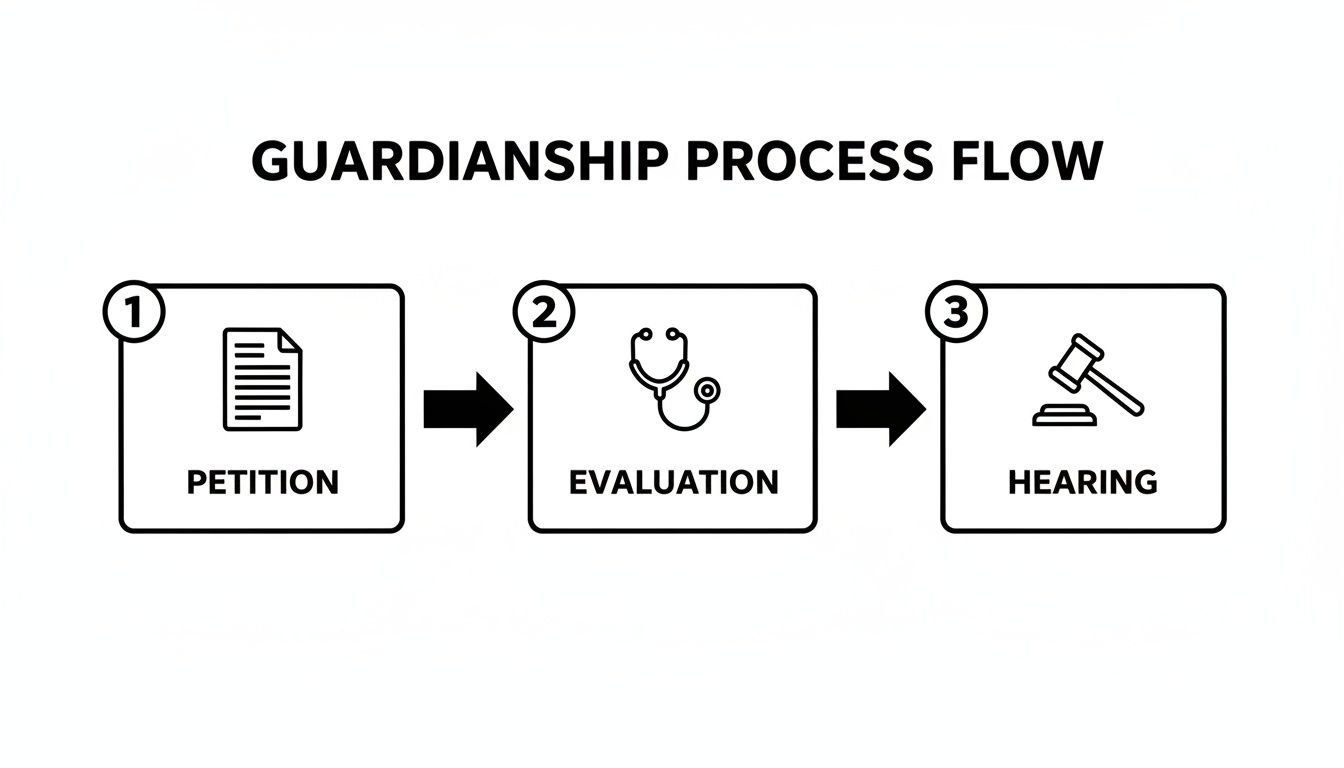
The flowchart highlights each critical checkpoint—petition, evaluation, hearing—so you can see the full sequence at a glance.
Key takeaway: Early medical documentation and prompt, proper notice are your strongest allies in meeting Texas Estates Code requirements.
Ongoing Duties And Local Variations
After appointment, you’ll file annual reports, manage assets under court supervision, and comply with county-specific procedures. Reviewing local probate court rules in advance can help you honor your fiduciary duties in Texas and avoid delays.
When To Consider Alternatives
Full guardianship isn’t always the most fitting solution. Less restrictive tools may preserve your parent’s autonomy:
- Durable Power of Attorney under Texas Estates Code Chapter 751 for financial matters.
- Advance Medical Directive under Chapter 166 for health care decisions.
- Supported Decision-Making agreements to assist without removing control.
Explore the difference between guardianship and power of attorney to see which path aligns with your family’s needs.
Evaluating Eligibility for Parent Guardianship
Eligibility under the Texas Estates Code rests on three core requirements:
- 18 Or Older: You must be at least 18 when you file.
- Texas Connection: You or your parent must reside in Texas, or you qualify as a next friend.
- No Conflicting Interests: You can’t have competing claims that affect unbiased decision-making.
Decide whether you need guardianship of the person (daily care and medical decisions), guardianship of the estate (financial management), or both. Each comes with clear fiduciary duties governed by the Texas Trust Code.
Exploring Less Restrictive Alternatives
Before asking a judge to step in, consider these less restrictive options courts often prefer:
- Durable Powers of Attorney for financial decisions.
- Advance Medical Directives for health care wishes.
- Supported Decision-Making Agreements for collaborative support.
Key Insight
Approximately 1.3 million adults in the U.S. live under guardianship or conservatorship, overseeing about $50 billion in assets. Actual figures may be higher due to reporting gaps. Read the full study for details.
Real Family Scenarios
In Houston, a daughter used a valid POA under Chapter 751 to avoid full guardianship and make timely medical decisions. In San Antonio, a father signed a supported decision-making agreement with his son and a social worker, maintaining control while sharing responsibilities.
Learn more in our guardianship vs conservatorship resource.
Choosing Your Best Path
Every situation is unique. Talk early with medical professionals and loved ones, gather records, and weigh how much court oversight is right. When you’re ready to file, clearly state your parent’s incapacity under Chapter 102, outline the guardianship sought, and demonstrate your fitness as a guardian.
If questions arise, our Texas estate planning attorney can help you consider all options and build a persuasive case.
Gathering Evidence and Preparing Your Guardianship Petition

You’ll need clear, convincing evidence to support your petition. Start by collecting:
- Licensed Medical Evaluation under Estates Code Chapter 102
- Affidavits from caregivers, family, and therapists under Texas Trust Code guidelines
- Home Study Documents if ordered by the court
Licensed Medical Evaluation
The physician’s report should detail cognitive and physical limitations, prognosis, and care needs. Include the doctor’s signature, date, and Texas medical license number for admissibility.
Affidavits From Caregivers and Witnesses
Personal accounts of daily challenges can sway a judge. Have witnesses describe specific incidents in plain language, notarize statements, and provide contact information.
Home and Care Study
If required, submit consent for a home study under Estates Code § 1054. Provide care plans, living condition details, and witness names promptly.
| Form Name | Purpose | Code Reference |
|---|---|---|
| Application for Guardianship | Initiates petition filing | Estates Code § 1051 |
| Medical Report Authorization | Allows access to medical records | Estates Code § 1052 |
| Home Study Consent Form | Approves investigator home visit | Estates Code § 1054 |
Building Your Evidence Packet
Organize your evidence chronologically, include a cover sheet referencing relevant Texas Estates Code sections, and use tabs or digital bookmarks for quick access.
Drafting a Persuasive Petition
Frame your narrative: who you are, your parent’s condition, and why guardianship is necessary. Cite Chapter 102 and show you explored alternatives.
Timeline and Submission Tips
Plan 2–3 weeks for evidence collection and 1 week for attorney review. File the petition and evidence together to speed up clerk review. Serve notices by certified mail as required.
After filing, learn more about our probate services and asset protection guidance to safeguard your parent’s interests.
Example Case Study
In Travis County, a daughter combined a doctor’s report with five affidavits to show her father’s Parkinson’s affected bill-paying. Using our evidence packet template, she secured guardianship in six weeks.
Navigating Court Hearings For Guardianship

Preparation is key to a smooth hearing. Ensure you have:
- Proof of Notice filed under Texas Estates Code
- Recent Medical Evaluations confirming incapacity
- Witness Testimony from family and caregivers
Courtroom Etiquette And Preparation
Arrive early, dress professionally, and know local procedures. Judges appreciate concise, fact-driven statements that address daily care and financial risks.
“Clear, calm testimony focusing on daily care needs often convinces judges.”
— Probate Judge, Dallas County
Bring extra petition copies, highlight key exhibits, and open with a brief statement citing Estates Code § 1054.
Managing Contested Testimony
If objections arise, simplify medical details and use real examples. For instance, describe missed medications and financial errors to illustrate daily risks.
| Hearing Type | Key Feature | Strategy |
|---|---|---|
| Uncontested Hearing | No formal objections | Submit evaluations and affidavits |
| Contested Hearing | Witness disputes evidence | Emphasize daily care records |
For urgent risks, request temporary guardianship:
- File an Application for Temporary Guardianship
- Attach the template motion
- Include affidavits documenting current incapacity
- Attend an expedited hearing (often within 5 business days)
Key takeaway: Temporary guardianship can secure authority fast when a parent’s health hangs in the balance.
Understanding Guardianship Costs And Common Challenges
Guardianship involves court fees, professional reports, and potential disputes. Typical costs:
| Cost Item | Estimated Range | Per Texas Estates Code Reference |
|---|---|---|
| Court Filing Fee | $300–$500 | Estates Code § 1022 |
| Medical Evaluation | $800–$1,500 | Estates Code § 1024 |
| Investigator Report | $200–$1,500 | Estates Code § 1054 |
| Attorney Charges | $2,000–$10,000+ | Fiduciary duty to manage costs |
Real-World Cost Challenges
In Dallas, a son spent $150 on rushed medical records to avoid a continuance. In Houston, mediation for $1,200 cut lawyer bills by 30%.
Strategies To Manage Costs
- Bundle expert evaluations to negotiate flat rates
- Request all-in-one pricing from physicians
- Track expenses in a spreadsheet for early alerts
- Explore pro bono or sliding-scale elder law clinics
Key Takeaway
Early, detailed budgeting cuts delays and eases the financial burden on your family.
Dealing With Delays And Disputes
Monitor deadlines under Estates Code § 1057. If objections arise, file a motion to modify or vacate citing new evidence, serve parties, and prepare for a hearing.
For bond waivers or reduced fees, petition under Estates Code § 1056. Document each negotiation to support your fiduciary reporting.
Guardian Responsibilities After Approval
Once appointed, guardians must follow Texas Trust Code and Texas Estates Code requirements for transparency and accountability.
Key responsibilities include:
- Filing annual Personal Care Reports under Estates Code § 108.002
- Submitting Financial Accountings under Texas Trust Code guidelines
- Seeking court approval via Transaction Motions for major asset changes
| Report Type | Deadline | Purpose |
|---|---|---|
| Personal Care | 12 months after | Update health and living status |
| Financial Account | 12 months after | Document assets and expenditures |
| Transaction Motion | Before sale or gift | Obtain court approval |
Maintain open communication with family: host quarterly meetings, share monthly snapshots, and promptly file address changes via GC-05 Form.
For more tips, see our guide on guardianship for elderly parents.
Frequently Asked Questions

We address common questions about eligibility, timelines, family objections, and alternatives.
What Are the Eligibility Requirements for Parent Guardianship in Texas?
You must be at least 18, without conflicts of interest, and have a medical evaluation under Chapter 102 confirming incapacity.
How Long Does the Guardianship Process Usually Take?
Expect 8–12 weeks from filing to final order in straightforward cases. Temporary guardianship can be granted in days if urgent.
What Alternatives Exist to Full Guardianship?
Consider durable powers of attorney, advance medical directives, or supported decision-making agreements. These less restrictive options often preserve dignity and speed decisions.
How Do I Handle Family Objections?
Arrange mediation or an informal family meeting before filing. Keep meticulous service records to meet all notice requirements.
If you’re managing a trust or planning your estate, contact The Law Office of Bryan Fagan, PLLC for a free consultation. Our Texas estate planning attorney and guardianship experts provide trusted, Texas-based guidance for every step of the process.