Being named the executor of a loved one’s estate is a tremendous honor, but managing their final affairs can feel overwhelming — but with the right legal guidance, it doesn’t have to be. Put simply, the executor is the person named in a will to handle the deceased's final affairs in Texas.
You're the one trusted to see everything through, from securing their property and paying final bills to making sure the people they named in the will receive their inheritance. This guide is designed to walk you through that process, step by step, providing practical advice grounded in Texas law.
Your Guide to Serving as an Executor
When you agree to be an executor, you’re stepping into a role of immense trust. You're the one responsible for carrying out the final wishes your loved one carefully documented in their will. It's a big job, mixing legal, financial, and administrative tasks, all overseen by a Texas probate court.
Think of yourself as the project manager for the estate. Your main job is to protect the assets, settle all affairs honestly, and then distribute what's left to the people who are supposed to inherit it. It takes diligence, clear communication, and above all, a commitment to acting in the estate's best interest.
The Foundation of Your Responsibilities
In Texas, your duties are legally outlined in the Texas Estates Code. This statute provides the roadmap for everything from submitting the will to the court (known as probating the will) to filing the final paperwork that closes the estate.
At the heart of it all, you are acting as a fiduciary. That’s a legal term for someone who is ethically and legally required to manage assets for the benefit of others. This is one of the most important fiduciary principles in Texas law. To get a better sense of what this means in practice, an estate planning lawyer offers a detailed understanding of an executor's role in property sales and other asset management tasks.
Your core responsibilities boil down to these four key areas:
- Gathering the Assets: Your first job is to find, inventory, and secure everything the person owned. This includes everything from bank accounts and investment portfolios to real estate, vehicles, and personal belongings.
- Paying Debts and Taxes: You'll need to formally notify creditors, review any claims they make, and use estate funds to pay all valid debts and final income taxes.
- Distributing the Inheritance: Once all the bills and taxes are paid, you will transfer the remaining assets to the beneficiaries exactly as laid out in the will.
- Communicating with Everyone: Keeping the beneficiaries in the loop about your progress is crucial. Clear, regular updates build trust and can help prevent misunderstandings or dispute resolution down the road.
Our goal here is to replace any anxiety you might feel with a clear sense of direction. With the right information, you absolutely can navigate this role successfully and honor your loved one's final wishes with confidence and care.
The Executor's Journey: A Step-by-Step Timeline
Being named an executor can feel overwhelming, like you've been handed a complex project with no instruction manual. But it's not an endless maze. The process has a clear beginning, a middle, and an end, with specific legal and financial milestones along the way.
Understanding this timeline helps you see the road ahead, stay organized, and handle your duties with confidence. Let's break down the journey into five practical stages, each one building on the last, all guided by the Texas Estates Code.
This visual gives you a great high-level overview, breaking the entire process into three core phases.
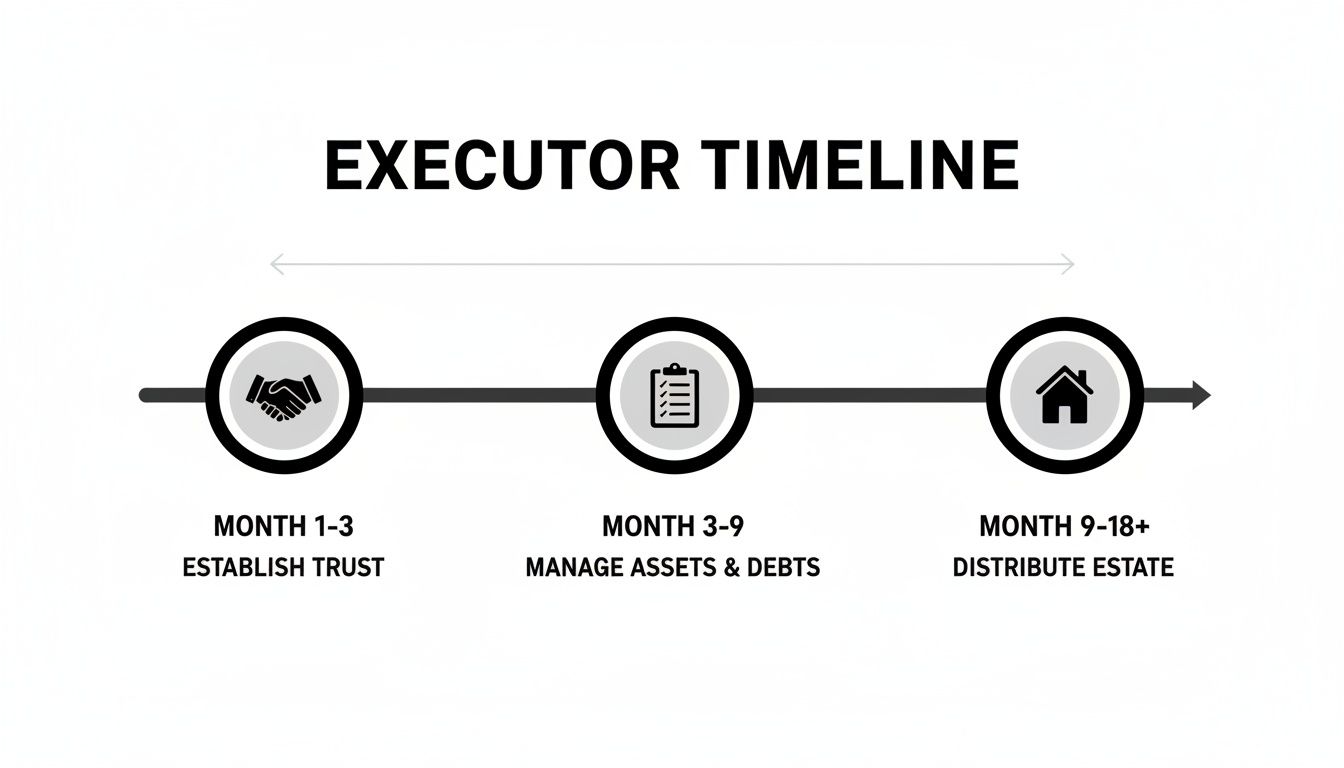
As you can see, settling an estate isn't an overnight job. It's a marathon, not a sprint. But it follows a logical path: establish your authority, manage everything the person owned, and then distribute it according to their wishes.
Stage 1: Taking Initial Action
The first few days and weeks after a loved one passes are critical. The steps you take now lay the groundwork for a smooth and orderly process later on.
Your number one priority is to locate the original will. Check places like a safe deposit box, a fireproof safe at home, or with the deceased’s estate planning attorney. This document is the legal bedrock for everything that follows.
At the same time, you'll need to obtain multiple certified copies of the death certificate. You'll be surprised how many you need—for closing bank accounts, claiming insurance benefits, and dozens of other tasks.
Another immediate job is to secure tangible assets. This is all about protecting the deceased’s property. Change the locks on the house, make sure the car is safely parked, and safeguard any valuable personal items from theft or damage.
Real-World Scenario:
Imagine a family in Houston whose father passes away. The named executor, his eldest daughter, immediately contacts his attorney to get the original will. She then orders ten copies of the death certificate and works with a locksmith to secure her father’s home, preventing unauthorized access and protecting the heirlooms inside. This is a crucial step in asset protection.
Stage 2: Navigating the Probate Process
With the will in hand, your next stop is the Texas court system. This is where you officially begin probate, the legal process that validates the will and gives you the authority to act as executor.
Here's what this stage looks like:
- Filing the Will: Your attorney will file an Application for Probate with the court in the county where the person lived. In Texas, you generally have four years from the date of death to do this.
- Attending the Hearing: After a required waiting period, the court schedules a short, formal hearing. A judge reviews the will, confirms it's valid, and officially appoints you as the executor. It's usually a straightforward proceeding.
- Receiving Letters Testamentary: Once appointed, the court clerk issues a document called Letters Testamentary. This piece of paper is your golden ticket. It's the legal proof you need to show banks, financial institutions, and others that you have the authority to manage the estate's affairs.
This stage is what transforms you from the person named in the will to the person legally empowered to carry it out.
Stage 3: Managing Estate Assets
Once you have your Letters Testamentary, the real work begins. Now you can start gathering, managing, and protecting all the estate's assets. This phase demands meticulous organization and a deep respect for your fiduciary duty.
Your first major task is to create a detailed inventory of all estate assets. This means cataloging everything: real estate, bank accounts, stocks, bonds, cars, jewelry, and other valuable property. This inventory must be filed with the court, typically within 90 days of your appointment.
Next, you need to open a dedicated bank account for the estate. This is non-negotiable. Keeping estate funds completely separate from your personal money is crucial to avoid any hint of mismanagement. All income the estate receives (like a final paycheck or investment dividends) goes into this account, and all bills are paid from it. This creates a crystal-clear financial trail.
Stage 4: Settling Debts and Taxes
Before you can give anything to the beneficiaries, you have to settle the estate's financial obligations. This means finding and paying all legitimate debts and taxes, which can be a key part of tax planning for the estate.
Under Texas law, you’re required to publish a Notice to Creditors in a local newspaper. This is a formal announcement of the death, and it starts a clock for anyone owed money to come forward and make a claim.
You'll also need to tackle taxes. This usually involves:
- Filing the deceased’s final personal income tax return (Form 1040).
- Filing an income tax return for the estate itself (Form 1041) if it earned any income while being administered.
- Figuring out if a federal estate tax return (Form 706) is needed. Don't worry, this only applies to very large estates.
Stage 5: Distributing Assets and Closing the Estate
This is the final, and most rewarding, stage. After all assets are accounted for and all debts and taxes are paid, you can finally distribute the remaining property to the beneficiaries, just as the will directs.
It's a best practice to have each beneficiary sign a receipt confirming they've received their inheritance. This simple step protects you by providing proof that you've done your job correctly.
Finally, you’ll file a final accounting or other necessary paperwork with the probate court to formally close the estate. This last step officially releases you from your duties. The timeline for this entire process can vary, but probate is often started within 30-90 days, while creditor notices and tax filings can push the full administration out to several months or, in complex cases, even years. For more details on an administrator's duties, you can get information directly from the IRS website.
To help you visualize the flow, here's a quick summary of the key phases and their typical timelines in Texas.
Executor Duties and Typical Timeline in Texas
This table breaks down the main stages of administering an estate, outlining your core responsibilities and how long you can expect each phase to take.
| Phase | Key Executor Actions | Typical Texas Timeline |
|---|---|---|
| 1. Immediate Actions | Locate original will. Obtain death certificates. Secure all tangible property. | 1-4 Weeks |
| 2. Probate Filing | Hire an attorney. File the will with the probate court. Attend the court hearing. | 30-90 Days |
| 3. Asset Management | Obtain Letters Testamentary. Open an estate bank account. Inventory and appraise assets. | 2-4 Months |
| 4. Debt & Tax Settlement | Publish Notice to Creditors. Pay valid debts. File final personal and estate tax returns. | 6-12+ Months |
| 5. Distribution & Closing | Distribute assets to beneficiaries. Get receipts from beneficiaries. File to formally close the estate. | 9-18+ Months |
Keep in mind, these timeframes are estimates. A simple, well-organized estate might move faster, while a complex one with business interests or disputes could take significantly longer.
Understanding Your Fiduciary Duty in Texas
When you're named an executor, you’re handed more than just a to-do list; you’re entrusted with a profound legal responsibility known as a fiduciary duty. This isn't a casual guideline—it’s the highest standard of care recognized under Texas law. Accepting the role means you are legally required to act solely in the best interests of the estate and its beneficiaries, setting your own needs completely aside.
Think of yourself as the trusted guardian of your loved one's legacy. Every decision, from paying bills to managing investments, must be filtered through this lens. The Texas Estates Code is very clear about these obligations, and any misstep could leave you personally on the hook financially. Understanding what this means isn't just about following rules; it's about protecting the estate, the beneficiaries, and ultimately, yourself.
Your duties as executor are both formal and fiduciary. You're tasked with identifying and securing all of the decedent's assets, paying off creditors and debts, filing necessary tax returns, and finally, distributing what's left to the beneficiaries exactly as the will dictates. This makes you a fiduciary with strict duties of care, loyalty, and impartiality. As many have unfortunately learned, Texas courts can hold executors personally liable for breaching this trust.
The Three Pillars of Fiduciary Duty
Your responsibilities really boil down to three core principles. If you can get a firm grasp on these, you’ll have a solid framework to guide every action you take for the estate.
- The Duty of Loyalty: This is the big one. It demands your complete and undivided loyalty to the estate. You simply cannot engage in self-dealing—like selling an estate asset to yourself at a bargain or hiring your own business to do work for the estate without the court’s explicit permission. Even the appearance of a conflict of interest is something to be avoided at all costs.
- The Duty of Prudence: This means you have to manage the estate’s assets with the same care and skill a reasonably sensible person would use for their own affairs. It’s about making smart decisions with investments, protecting property from damage, and steering clear of unnecessarily risky financial moves.
- The Duty of Impartiality: You owe a duty to all beneficiaries equally, not just the ones you like or are related to. You can't play favorites or make a call that benefits one heir at another's expense. Your job is to treat everyone fairly and keep them in the loop.
Texas-Based Scenario: Selling the Family Ranch
Imagine an estate in the Texas Hill Country that includes a valuable family ranch. One beneficiary is pushing to sell it fast for quick cash, while another wants to hold on, convinced its value will skyrocket. As executor, your fiduciary duty demands you act prudently and impartially. You'd need to get a professional appraisal to nail down its true market value. From there, you'd have to weigh the will's instructions and the estate's financial needs to chart a course that serves all beneficiaries, not just the one with the loudest voice.
Putting Your Fiduciary Duties into Practice
Living up to these duties requires careful attention to detail, especially when money is involved. The foundation of this responsibility is keeping crystal-clear, accurate records of every single transaction. Getting familiar with the principles of double-entry bookkeeping can be a lifesaver here, ensuring you have the transparency needed for the formal accountings you'll eventually provide to the court and beneficiaries.
Here’s how these duties play out in the real world:
- Asset Management: You have to actively manage and protect everything the estate owns. That could mean keeping the insurance paid up on a house, continuing to run a family business, or prudently overseeing an investment portfolio to prevent losses.
- Record Keeping: You must maintain flawless records of every dollar that comes in and every dollar that goes out. Each expense needs a receipt and a clear justification for how it benefited the estate.
- Communication: Part of your job is keeping the beneficiaries reasonably informed about how the administration is progressing. A simple, regular update can prevent a world of misunderstandings and build crucial trust.
Juggling these duties, especially when you’re dealing with grieving family members, is a tough balancing act. This is where partnering with a skilled Texas probate attorney can make all the difference. An expert can provide the guidance you need to make sound decisions, stay compliant with the law, and honorably fulfill the immense trust that’s been placed in you.
Navigating Common Executor Challenges
Stepping into the role of an executor means you'll be juggling legal procedures, financial details, and sometimes, very delicate family dynamics. Even with the best intentions, things can get complicated. When emotions are already running high after a loss, a small misunderstanding can easily spiral. The best defense is a good offense: knowing the common hurdles ahead of time can help you navigate them smoothly.
Think of it like this: being aware of the potential pitfalls is like having a map of the tricky terrain you're about to cross. It helps you steer clear of trouble, protect the estate, and honor your responsibilities without unnecessary stress.

Poor Communication with Beneficiaries
More often than not, conflict starts with silence. When beneficiaries don’t hear from you, their minds can start to wander, and they might assume the worst—that funds are being mismanaged or that something is being hidden. This is where suspicion takes root, often leading to disputes that could have been easily avoided.
The fix is simple: set a pattern of regular, honest updates from day one. You don't need to write a novel. A quick email every few weeks explaining what you've done and what's coming up next can work wonders for building trust. Keeping everyone in the loop is a huge part of your executor's role in resolving estate disputes, and we cover that in much more detail in our guide.
Commingling Estate and Personal Funds
This is a big one. An executor absolutely cannot mix their own money with the estate's funds. It’s a serious mistake known as commingling, and under the Texas Estates Code, it’s a major breach of your fiduciary duty. Doing so creates a messy financial trail that can open you up to accusations of mismanagement or even theft.
The rule is simple and non-negotiable: the estate needs its own dedicated bank account. Every single dollar that comes in and every expense that goes out must pass through this account. This ensures you have the clean, clear records needed for the court and the beneficiaries.
Missing Critical Deadlines
The probate process runs on a strict schedule. Missing a key deadline isn't like being a few minutes late to a meeting; it can result in financial penalties or even put the entire probate in jeopardy.
You’ll want to keep a close eye on several important dates:
- Filing the will with the probate court (Texas law generally gives you four years from the date of death).
- Publishing the official Notice to Creditors in a local newspaper.
- Filing the estate's complete inventory with the court (this is usually due within 90 days of your appointment).
- Filing the decedent's final income tax returns.
A calendar is your best friend here. Working with a probate attorney is an even better way to make sure nothing slips through the cracks.
Distributing Assets Too Early
Beneficiaries will naturally be anxious to receive their inheritance, and it can be tempting to start writing checks as soon as money comes in. But moving too quickly is a recipe for disaster. Your first and most important job is to settle all of the estate’s legitimate debts, taxes, and administrative costs.
If you distribute assets to the heirs and then a big tax bill or an unexpected creditor claim pops up, you could be held personally liable to pay it. The golden rule is to wait until you are 100% certain all financial obligations have been met before you make those final distributions.
It’s easy to see how these challenges can overlap in a real-world scenario. Picture two siblings in Dallas who inherit their father’s small business. The sibling named as executor determines the business must be sold to pay off estate debts, but the other wants to keep it in the family. Poor communication could make the second sibling feel ignored, while the pressure from creditors could push the executor to act too quickly. This is where a skilled attorney can step in to mediate, ensure all actions are legally sound, and help find a path forward that respects the will and protects the executor. This is a common situation where guardianship of an estate may come into play if not handled properly.
When to Partner with a Texas Probate Attorney
While you can legally go it alone as an executor in Texas, most people are surprised to learn just how demanding the role really is. Bringing a probate attorney on board isn't a luxury; it's a smart move to protect the estate, the beneficiaries, and most importantly, yourself from personal liability.
An attorney does a lot more than just file papers. They’re your legal guide, making sure every step you take is in lockstep with the Texas Estates Code. This advice is absolutely crucial for getting through the legal maze and making sure you honor your fiduciary duties to the letter.
Beyond Paperwork: Strategic Legal Counsel
Think of a good probate attorney as your professional guide, helping you sidestep common and expensive pitfalls. Their support is especially valuable in a few key areas.
- Valuing Complex Assets: How do you put a price on a family business, a piece of commercial real estate, or mineral rights? These aren't simple valuations. An attorney has a network of qualified appraisers and makes sure the estate’s inventory is spot-on.
- Mediating Family Disputes: It's common for disagreements to pop up between beneficiaries. An attorney can step in as a neutral third party, helping to keep conversations productive and stopping small arguments from blowing up into full-blown lawsuits.
- Ensuring Fiduciary Compliance: A lawyer will walk you through every single one of your fiduciary responsibilities. From keeping perfect records to communicating clearly with heirs, they'll help you do everything by the book and shield you from potential legal trouble.
The amount of work can be staggering. On average, an executor spends roughly 570 hours handling an estate. That's the equivalent of a full-time job for over three months, covering everything from hunting down assets to filing tax returns.
An Investment in Peace of Mind
At the end of the day, hiring a lawyer saves you an incredible amount of stress and guesswork. Instead of trying to make sense of dense legal codes by yourself, you can lean on a professional who deals with this stuff every single day. Their support ensures your loved one's final wishes are handled correctly and without unnecessary delays.
Taking on the role of executor is a huge responsibility, but you don’t have to do it alone. If you're considering your options, our guide on finding your ideal probate attorney in Texas offers some practical advice for choosing the right person for the job. Having that expert partnership lets you focus on what really matters—supporting your family—while knowing all the legal details are being managed properly.
Your Essential Executor Checklist
Being an executor can feel overwhelming, especially when you're also grieving. To give you a clear path forward, I've put together a practical checklist that walks you through your core duties. Think of it as your roadmap, broken down chronologically so you can tackle one stage at a time—from the first few days to the final closing of the estate.
A good checklist turns a complex legal process into a series of manageable, bite-sized tasks. It helps ensure you don't miss a critical step and can move forward with confidence, knowing you're fulfilling your duties correctly under the Texas Estates Code.
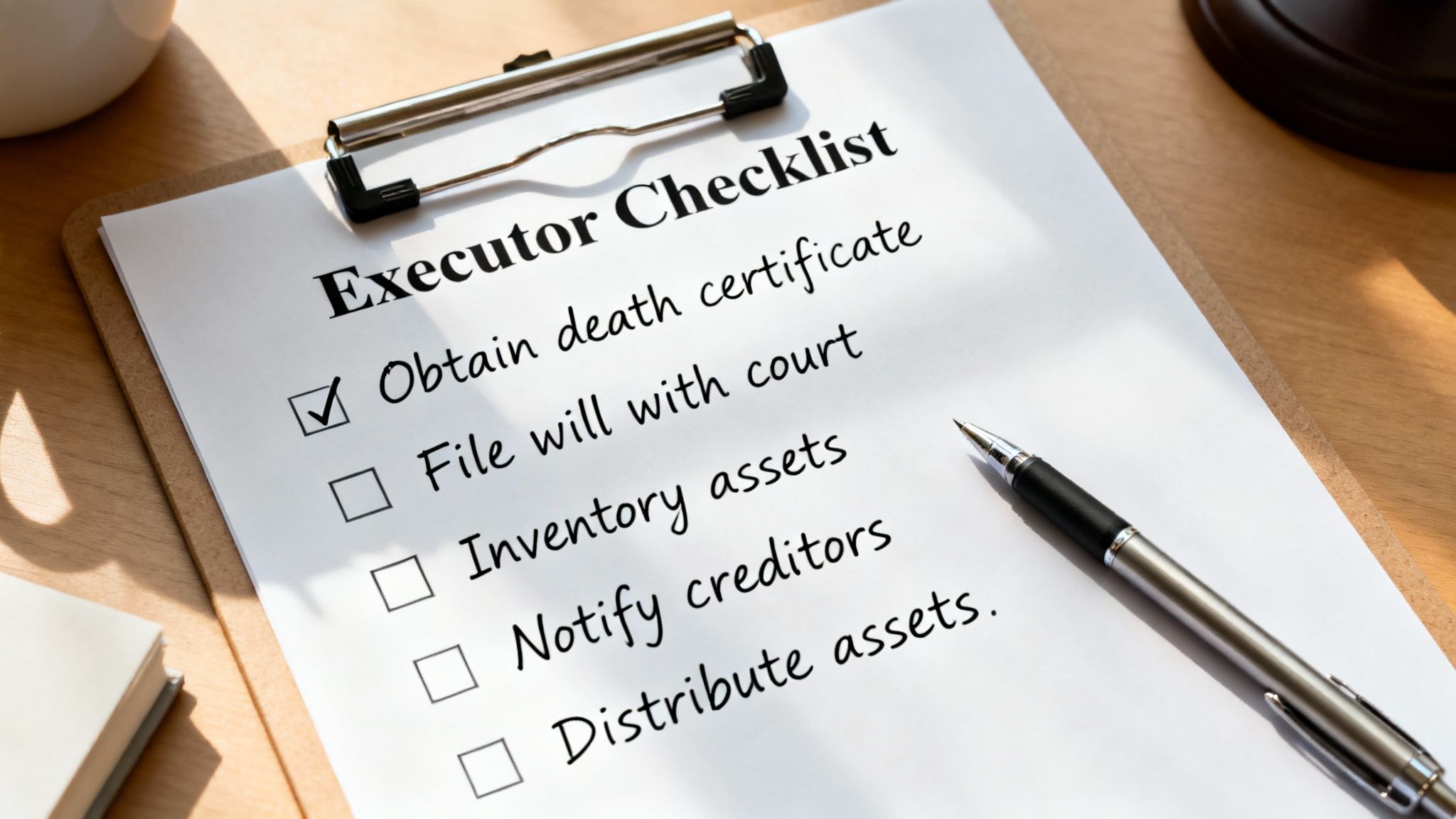
Here's a step-by-step breakdown of what you'll need to do.
Essential Executor Task Checklist
| Stage | Task | Completed (Checkbox) |
|---|---|---|
| Initial Tasks | Obtain 5-10 certified copies of the death certificate. | ☐ |
| Initial Tasks | Locate the original will and file it with the probate court. | ☐ |
| Initial Tasks | Notify Social Security, banks, and credit card companies. | ☐ |
| Initial Tasks | Secure all physical assets (home, vehicles, valuables). | ☐ |
| Middle Stage | Petition the court for probate and get Letters Testamentary. | ☐ |
| Middle Stage | Open a dedicated estate bank account. | ☐ |
| Middle Stage | Inventory and appraise all estate assets. | ☐ |
| Middle Stage | Publish a formal "Notice to Creditors." | ☐ |
| Middle Stage | Identify and pay all legitimate debts and final expenses. | ☐ |
| Middle Stage | File the decedent's final income tax returns. | ☐ |
| Final Stage | Prepare a final accounting for all beneficiaries. | ☐ |
| Final Stage | Distribute remaining assets according to the will. | ☐ |
| Final Stage | Get signed receipts from beneficiaries for their inheritance. | ☐ |
| Final Stage | File closing documents with the court to be discharged. | ☐ |
This checklist covers the major milestones, but let's dive into the details of each phase so you know exactly what to expect.
The First Steps: Laying the Groundwork
This initial phase is all about getting the ball rolling and securing the estate. The actions you take here are critical and set the foundation for everything that follows.
- Get Certified Copies of the Death Certificate: You'll need more than you think—at least 5 to 10 copies. Banks, government agencies, and life insurance companies will all require an official, certified copy.
- Find the Will and File It: Locate the original will. A copy won't do. Filing this document with the proper Texas probate court is the first official step to beginning the probate process.
- Notify Key Parties: Start making calls. You'll need to inform the Social Security Administration, financial institutions, pension providers, and credit card companies of the death.
The Middle Stretch: Administering the Estate
Once the court grants you legal authority (called Letters Testamentary), you'll move into the core administrative work. This is where meticulous record-keeping is non-negotiable.
- Open an Estate Bank Account: This is a must. All estate funds must be kept separate from your personal money to avoid any hint of commingling funds. This keeps all transactions clean and transparent.
- Inventory and Value All Assets: You need to create a detailed list of everything the decedent owned. This includes both probate and non-probate assets, each of which must be valued as of the date of death and reported to the court.
- Post the "Notice to Creditors": Texas law requires you to publish a notice in a local newspaper. This formally notifies potential creditors that they have a limited time to submit claims against the estate.
The Final Lap: Distribution and Closing
You're almost there! Once all the debts and taxes are handled, you can finally carry out the decedent's wishes and officially close the estate.
- Pay All Valid Debts and Final Expenses: Use the estate account to settle all legitimate creditor claims, final medical bills, funeral costs, and any taxes owed.
- Distribute Assets to Beneficiaries: This is the moment everyone has been waiting for. You will distribute the remaining property to the beneficiaries exactly as outlined in the will.
- Get Signed Receipts: Before you close anything, get a signed receipt from every single beneficiary confirming they received their inheritance. This is your proof of a job well done.
- Close the Estate: File the final paperwork with the court to formally close the estate. This final step officially releases you from your role and its responsibilities.
Common Questions We Hear About Being an Executor
When you're named an executor, it's natural to have a lot of questions. It's a significant role with real responsibilities. Here are some of the most common questions we get from clients, along with straightforward answers to help you understand what's ahead.
How Much Do I Get Paid for Being an Executor in Texas?
In Texas, executors are paid for their work. The person who wrote the will might have specified a certain payment, but if they didn't, the law steps in. The Texas Estates Code sets a standard commission.
Typically, that commission is 5% of the money that comes into the estate and 5% of the money that goes out. It’s important to know this doesn't apply to every single dollar, like cash the person already had or the final inheritance payments to beneficiaries. This fee comes directly out of the estate's assets before anyone gets their inheritance.
Can I Say No to Being an Executor?
Yes, absolutely. Just because you were named in a will doesn't mean you're forced to serve. If you know you don't have the time, the right skills, or simply don't want the responsibility, you can turn it down.
To do this, you’ll file a formal document with the probate court—a process called renunciation—officially stating your refusal. After you step aside, the court will look to the alternate executor named in the will. If there isn't one, the court will appoint someone else to manage the estate according to Texas law.
What Happens If an Executor Messes Up?
Mistakes can be a big deal, and they can have serious financial consequences. As an executor, you have a fiduciary duty, which is a legal obligation to act in the best interest of the estate at all times. Big mistakes—like mixing your personal money with the estate's funds or missing tax deadlines—are seen as a breach of that duty.
If you breach your duty and it costs the estate money, you could be held personally liable for the losses. That means beneficiaries could sue you, and you might have to use your own money to make things right. This is one of the biggest reasons why getting good legal advice from the start is so critical.
Do I Really Need a Lawyer to Be an Executor?
While Texas law doesn't force you to hire an attorney, trying to go it alone is a risky move. The probate process is a maze of legal deadlines, court filings, and tax obligations that are incredibly easy to get wrong if you don't know what you're doing.
Think of a good Texas estate planning attorney as your professional guide. They make sure every form is filed correctly and on time, help you understand your legal duties to avoid personal risk, and can even help manage difficult conversations with beneficiaries. Working with an experienced lawyer protects the estate, protects you, and makes sure the entire process is handled the right way. Our firm offers full legal support for probate and all the details that come with it.
If you’re managing an estate or planning your own, contact The Law Office of Bryan Fagan, PLLC for a free consultation. Our attorneys provide trusted, Texas-based guidance for every step of the process.