Skip to content
Managing a loved one’s trust can feel overwhelming—but with the right legal guidance, it doesn’t have to be. When a loved one passes away, being named the trustee of their trust is a significant responsibility, and you may suddenly be faced with a mountain of legal duties and financial paperwork. It’s natural to feel overwhelmed.
The good news is that Texas trust administration is a structured process, not an impossible puzzle. Think of yourself as a dedicated steward, tasked with protecting the assets and carefully following the instructions your loved one left behind. With a clear roadmap and professional support, you can fulfill these obligations with confidence and honor your loved one’s final wishes.
Your First Steps In Texas Trust Administration
The role of a trustee is significant, carrying specific duties grounded in the Texas Trust Code. Your first job is to get your bearings, understand what's expected of you, and start organizing the estate in a methodical way.

With a clear roadmap and the right guidance, you can absolutely fulfill these obligations. Let's break down where you need to start.
The Immediate Priorities For A New Trustee
Once you officially accept the role of trustee, a few initial actions are crucial. Getting these first steps right will set the stage for a smooth administration process, securing the trust's assets and establishing your legal authority to act on its behalf.
Your immediate to-do list should look something like this:
Locate and Secure the Trust Document: This is your instruction manual. You need the original document. Read it from start to finish to understand the grantor’s wishes, who the beneficiaries are, and any specific rules you must follow.
Formally Accept the Trustee Role: In Texas, you must officially accept the position. This is usually done by signing a formal acceptance document, but it can also be accomplished by simply starting to perform your trustee duties.
Obtain a Tax Identification Number (TIN): For tax purposes, the trust is its own legal entity. You'll need to apply for a TIN from the IRS, which is necessary for opening trust bank accounts and filing tax returns.
Identify and Notify Beneficiaries: The Texas Trust Code mandates that you provide notice to the trust's beneficiaries. This is a critical step for transparency and keeps everyone in the loop right from the beginning.
A common scenario we see involves a newly appointed trustee feeling buried under a disorganized pile of financial documents. For example, a daughter named as trustee for her mother's estate may find bank statements, property deeds, and investment paperwork scattered across different locations. By methodically working through these initial steps, she can create a clear inventory and a plan of action, transforming chaos into an orderly process.
These first tasks are the bedrock of the entire administration. Getting them right not only prevents future headaches but also shows you're committed to your fiduciary duties in Texas.
To help you get started on the right foot, here is a simple checklist that outlines these initial responsibilities.
Initial Trustee Checklist For Texas Trust Administration
This table summarizes the immediate actions a new trustee should take to properly begin the trust administration process under Texas law.
| Action Item | Description & Purpose | Governing Principle |
|---|---|---|
| Locate the Trust Document | Find the original, signed trust agreement. It's your primary guide for all actions. | Follow the Grantor's Intent: Your main duty is to carry out the specific instructions in the trust. |
| Formally Accept Trusteeship | Sign an acceptance form or begin acting as trustee. This legally confirms your role and responsibilities. | Duty to Act: Once you accept, you have a legal obligation to manage the trust. |
| Secure a Tax ID Number (TIN) | Apply for a TIN from the IRS. This allows you to open a trust bank account and file taxes. | Separate Entity: The trust is a distinct legal and tax entity from the grantor and trustee. |
| Inventory Trust Assets | Identify, locate, and take control of all property owned by the trust (e.g., bank accounts, real estate). | Duty to Protect Assets: You must secure and manage the trust property prudently. |
| Notify All Beneficiaries | Send a formal, written notice to every beneficiary named in the trust, as required by law. | Duty to Inform: Beneficiaries have a right to know about the trust and their interest in it. |
Following this checklist helps ensure you are covering your bases from day one.
A knowledgeable Texas estate planning attorney can be an invaluable partner in this process. From helping you interpret complex trust language to preparing the necessary legal notices, professional guidance can make all the difference and give you the confidence to move forward.
Trustee Responsibilities Under Texas Law
Taking on the role of a trustee is a serious commitment. You are stepping into a role with profound legal and ethical obligations to act solely in the best interests of the trust's beneficiaries. This is what the law calls a fiduciary duty, and in Texas, it’s the absolute bedrock of trust administration. Understanding these duties is critical for protecting the trust, the beneficiaries, and yourself from legal complications.
The Texas Trust Code provides clear principles to guide your decisions. These rules aren't designed to trip you up, but to give you a map for acting honorably and effectively.
The Pillar of Loyalty
First and foremost, you have a duty of loyalty. This means you must manage the trust exclusively for the benefit of the beneficiaries—no exceptions. You absolutely cannot engage in self-dealing or place your own financial interests ahead of theirs.
For example, a trustee cannot sell a trust-owned property to themselves for less than its fair market value or use trust funds to secure a personal loan. Every decision must be for the beneficiaries' gain.
The Pillar of Prudence
Next is the duty of prudence. The Texas Trust Code mandates that you manage trust assets as a "prudent person" would. This is a legal standard that requires you to use reasonable care, skill, and caution in your investment and management choices.
This doesn't mean you need to be an investment wizard, but it does mean you can't be a gambler with the beneficiaries' money. A prudent trustee diversifies investments to manage risk, avoids overly speculative ventures, and regularly monitors the trust’s performance. Our detailed guide offers more information on the specific duties and responsibilities of a trustee.
The Pillar of Accountability
Finally, you have a solid duty of accountability. This duty is all about keeping meticulously clear and accurate records of every transaction and keeping the beneficiaries informed. You must be ready and able to provide a formal accounting that shows all income, expenses, and distributions.
"A trustee has a duty to make a full disclosure of all material facts known to the trustee that might affect the beneficiaries' rights." – Texas Trust Code § 113.151
This level of transparency builds trust and prevents potential disputes. It is the evidence that shows beneficiaries you are upholding your duties of loyalty and prudence.
At the end of the day, these fiduciary duties in Texas are designed to work together, ensuring the person who created the trust has their wishes honored and the beneficiaries' financial futures are kept safe. An experienced Texas trust administration lawyer can be an invaluable partner, helping you navigate these duties in your specific situation and giving you the confidence that every step you take is the right one.
A Practical Timeline for Administering a Trust
Stepping into the role of a trustee can feel like being handed a complex project with no clear deadline. The good news is that Texas trust administration follows a logical, step-by-step sequence. By breaking the process down, you can confidently navigate your duties and honor your loved one's wishes.
A simple trust with only cash and stocks might wrap up in a few months. However, a trust involving real estate, a family business, or other complex assets could take a year or longer to fully administer.
This timeline gives you a bird's-eye view of the first major milestones: reviewing the trust, taking stock of the assets, and getting the word out to beneficiaries.
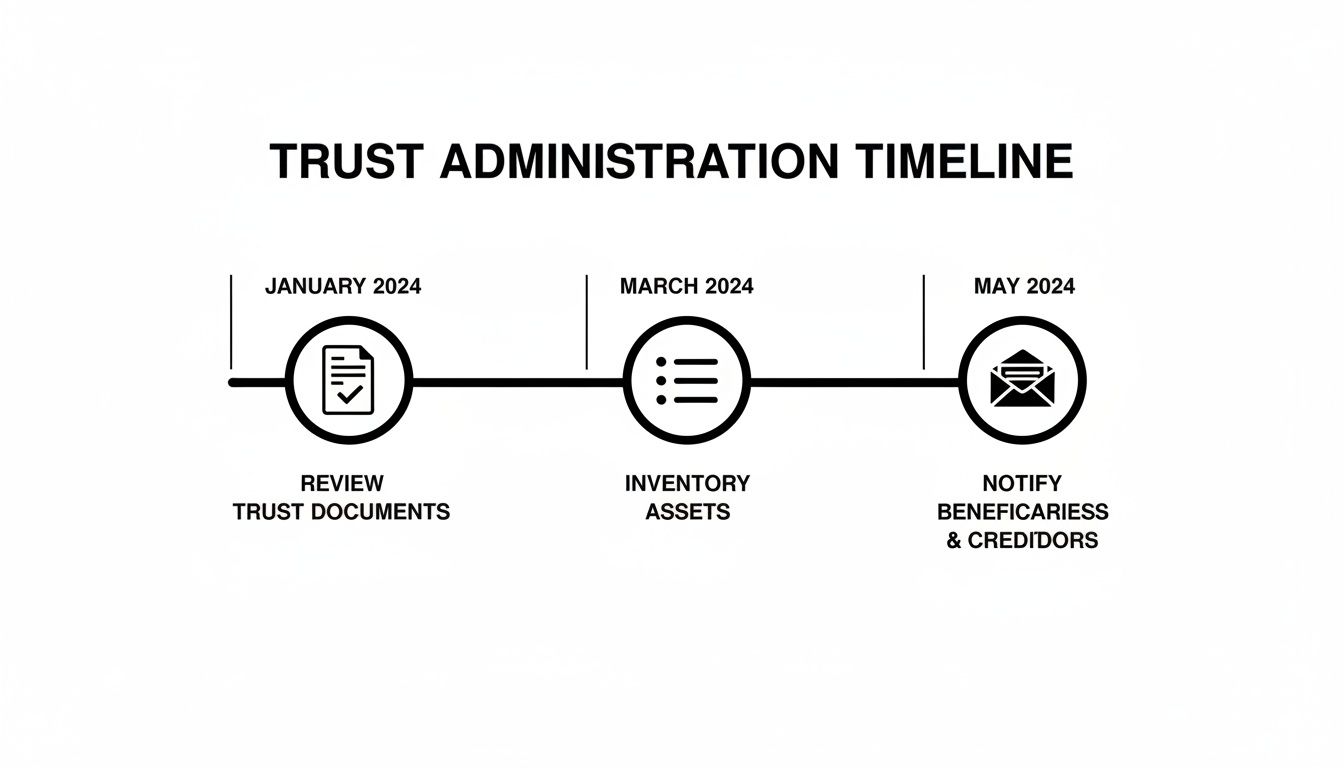
Seeing it laid out chronologically helps you realize that what seems like a mountain of work is really just a series of manageable steps.
The First 90 Days: What to Accomplish
This initial window is all about getting organized and laying a solid foundation.
Locate and Read the Trust Document: This document is your roadmap. You need to fully grasp the grantor's intent, know who all the beneficiaries are, and understand any special instructions.
Formally Accept Your Role and Secure the Assets: You'll need to formally accept your position in writing. Then, your priority is to take control of all trust property. This means retitling bank accounts into the trust's name, securing physical property like a house, and ensuring everything is properly insured.
Create a Detailed Inventory: Create a complete list of every asset the trust holds. For assets like a home or a business, you’ll need a professional appraisal to determine the fair market value as of the date the grantor passed away. This step is non-negotiable for tax purposes and ensuring a fair distribution.
Mid-Process Responsibilities: Six to Nine Months In
Once you have the lay of the land, your role shifts to active management and clear communication. A huge part of this phase is tackling debts and liabilities. You must provide a formal legal notice to any known or potential creditors, which protects the trust from surprise claims.
At the same time, you’re managing the trust’s day-to-day financial life. This includes:
- Paying ongoing bills like property taxes, insurance, and maintenance costs.
- Making prudent investment decisions to protect and grow the trust's assets.
- Keeping meticulous records of every single transaction.
A common issue arises when some assets are in the trust, but others are not. For instance, the family home may be titled in the trust's name, but a vacation condo was not. Property left outside the trust might have to go through probate, a separate court process. A Texas estate planning attorney can help you understand how these two processes work together and ensure every asset is handled correctly. This may also require a related service, like a guardianship for a minor inheriting assets outside the trust.
This period demands careful bookkeeping and proactive management. Keeping beneficiaries informed with regular updates is a key part of your duty to be accountable and helps prevent misunderstandings.
Tax Planning for Trust Administration
Handling a trust’s money during Texas trust administration isn't just about managing assets; it's about making sure every tax obligation is met with precision and on time. You'll primarily be dealing with the trust's income taxes and potential federal estate taxes.
Filing the Trust's Income Tax Return
A trust can earn its own income from investments, rent, or business profits. This income must be reported to the IRS annually on Form 1041, the U.S. Income Tax Return for Estates and Trusts.
On Form 1041, you’ll report all income the trust received and subtract any eligible expenses, such as:
- Trustee fees
- Legal and accounting fees
- Property taxes and maintenance costs
- Income distributed to beneficiaries
Keeping flawless records of every dollar in and out is essential for a smooth tax process. For a deeper look into this, we have a guide dedicated to developing effective tax strategies for Texas trusts.
Understanding the 2026 Estate Tax Exemption Changes
A major shift in federal tax law occurred at the beginning of 2026, impacting many Texas families and their estate plans. On January 1, 2026, parts of the 2017 Tax Cuts and Jobs Act expired, causing the federal estate and gift tax exemptions to decrease significantly. Many Texas families who set up trusts when exemptions were high now find their old assumptions may not hold up, making this a critical time to review and possibly adjust their plans for long-term asset protection. You can read more about how these changes may affect your planning and discover insights about preparing for the 2026 estate tax changes on tawlawtx.com.
What this means is that estates once considered safely under the exemption limit might now face a significant tax bill. As a trustee, your duty of prudence demands that you stay aware of this and work with a Texas trust administration lawyer to see how it affects the trust you manage.
Think about it this way: a trust created in 2020, when the exemption was over $11 million, might have seemed bulletproof. Today, with a much lower exemption, those same assets could trigger a massive tax liability if not managed proactively. A thorough review now is key to protecting what was meant for the next generation.
This new tax reality makes professional guidance more important than ever. An experienced attorney can help you analyze the trust's assets, find strategies to lessen the tax burden, and ensure compliance with current laws.
Managing Final Distributions and Trust Accounting
You've reached the final leg of the journey in Texas trust administration. This is where you honor the grantor's wishes by distributing the remaining assets to the beneficiaries. This last phase requires a sharp eye for detail to wrap things up smoothly, transparently, and legally.

Completing this final step not only does right by your loved one’s legacy but also shields you from potential liability.
The Importance of a Final Accounting
Before any assets can be distributed, the Texas Trust Code mandates that you provide a final accounting to every beneficiary. This is a fundamental part of your fiduciary duty. This accounting is a complete financial story of the trust from start to finish.
A proper final accounting must include:
- Beginning Inventory: A list of all trust assets and their values when you took over.
- All Income and Receipts: Every cent that came into the trust.
- All Expenses and Disbursements: A detailed log of every dollar paid out for debts, taxes, and administrative costs.
- Distributions to Beneficiaries: A record of any partial payments already made.
- Ending Inventory: A final list of the assets left in the trust, ready for distribution.
Getting a handle on core trust accounting principles is essential. Providing a thorough report creates transparency and is your best protection against future disputes. For a deeper dive, check out our guide on what trust accounting entails.
Distributing Assets and Obtaining Releases
Once the beneficiaries have reviewed and approved the final accounting, you can begin distributing the remaining assets. You must follow the trust document’s instructions precisely, whether that means cutting checks, deeding property, or retitling investment accounts.
After everything is distributed, there's one last crucial piece of paperwork: you must ask each beneficiary to sign a receipt and release form.
By signing a release, the beneficiary confirms they have received their full inheritance and officially frees you, the trustee, from any future claims or liability over your management of the trust. It’s the legal handshake that signals your job is officially done.
This document is your shield. Without it, a beneficiary could bring legal action years later. A Texas trust administration lawyer can ensure all final steps are completed correctly, giving you the peace of mind you deserve.
When to Partner with a Texas Trust Administration Lawyer
Even with a good map, sometimes you need a local guide. This guide provides the map for many of your duties as a trustee, but certain situations call for professional legal help. Partnering with a lawyer isn’t admitting defeat; it’s a smart move to keep the process smooth and protect yourself from personal liability.
Recognizing when you’re in over your head is a critical part of your fiduciary duties in Texas. A Texas trust administration lawyer is a specialist you call when the situation gets more complicated than managing a checking account.
Navigating Ambiguity and Disputes
One of the most common red flags is a trust document with vague wording about who gets what or when. This can be a recipe for family arguments. An experienced attorney can interpret the grantor's intent based on Texas law, giving you a clear path forward.
If beneficiaries are questioning your decisions, a lawyer can step in to mediate, explain your responsibilities, and defend your actions. This can be the difference between a resolved misunderstanding and an expensive court battle.
For example, if two siblings disagree on whether the family vacation home should be sold or kept, a lawyer can mediate the dispute by referring back to the trust document and Texas law, helping them reach a resolution that honors their parent's intent without damaging family relationships.
When Legal or Financial Complexity Arises
Some situations are inherently complex. It’s time to bring in a lawyer when:
- The Trust Holds Complex Assets: If the trust includes a family business, multiple real estate properties, or oil and gas rights, you're dealing with unique legal and financial challenges.
- Tax Issues Are Complicated: If the estate is large enough to trigger federal estate taxes or involves complex income tax situations, a lawyer's guidance is essential.
- You Need to Modify or Terminate a Trust: Changing an irrevocable trust is a formal legal process governed by the Texas Trust Code. An attorney is your guide for understanding how to modify a trust in Texas, whether through beneficiary agreement or a court order.
Ultimately, teaming up with a Texas estate planning attorney buys you peace of mind. It’s an investment that ensures you're doing your job correctly and honoring the responsibility your loved one placed in your hands.
Frequently Asked Questions About Texas Trust Administration
When you're dealing with a trust in Texas, many questions naturally arise. Here are answers to some of the most common questions we hear.
How Long Does Trust Administration Take in Texas?
The timeline depends on the trust's complexity. A simple trust holding only cash or stocks might be settled in a few months. However, a trust with real estate, business interests, or tax complications can easily take a year or longer to administer properly. A Texas trust administration lawyer can help map out a realistic timeline and keep the process on track.
Can a Trustee Be Paid for Their Services in Texas?
Yes, they can and should be. The Texas Trust Code allows trustees to receive "reasonable compensation" for their work, unless the trust document states otherwise.
"Reasonable" is based on factors like:
- The actual time and work involved.
- The complexity of the trust's assets and duties.
- The level of skill required to manage everything correctly.
Keeping meticulous records of your hours and tasks is the best way to justify your fee if a beneficiary questions it.
What Happens if a Beneficiary Disagrees with the Trustee?
When a beneficiary feels a trustee isn't living up to their fiduciary duties in Texas, they have options. The first step is often to request a formal accounting, which provides a detailed financial report of the trust. If this doesn't resolve the issue, a beneficiary can petition the court. This could lead to mediation, a court order compelling an action, or, in serious cases, the removal of the trustee. An experienced attorney can guide both sides toward a productive solution.
How to Modify a Trust in Texas
Yes, a trust can be changed or even terminated, but it’s not always simple, especially if it's an irrevocable trust. The Texas Trust Code provides specific pathways for making modifications. For example, if all beneficiaries agree and the change doesn't undermine the trust's original purpose, modification is often possible. Other times, a court order is required due to changes in tax law or family circumstances. Since the rules on how to modify a trust in Texas are so specific, you should always seek qualified legal advice.
If you’re managing a trust or planning your estate, contact The Law Office of Bryan Fagan, PLLC for a free consultation. Our attorneys provide trusted, Texas-based guidance for every step of the process.
Learn more at https://texastrustadministration.com.