Owning Texas real estate is a dream come true, but managing it can feel overwhelming, especially with concerns about privacy and legal exposure. A land trust attorney helps you build a legal fortress around your property. This structure, known as a land trust, holds the title to your real estate, creating a powerful privacy shield and streamlining how your property is passed on to the next generation. With the right legal guidance, securing your legacy doesn't have to be complicated.
How a Land Trust Secures Your Texas Property

Whether you're managing a family home or a portfolio of investment properties, you know it can feel like you're navigating a maze of public records and potential lawsuits. A Texas land trust offers a clearer path to security and peace of mind. It’s a simple, effective legal agreement that changes one crucial thing: how your property's ownership is recorded for the public to see.
Instead of your name appearing on the deed, the title is transferred to a trustee. This trustee—who can be a trusted individual, a dedicated company, or even your lawyer—manages the property based on a set of private instructions found in a document called the Trust Agreement. As the beneficiary, you keep all the power and perks of ownership without your name being displayed across public databases.
Key Roles in a Land Trust Under Texas Law
To understand how a land trust works, you just need to know the three key players involved:
- The Grantor: That's you—the original property owner who decides to create the trust.
- The Trustee: This party holds the legal title to the property. Their role is administrative, and they act only on the instructions you provide in the trust agreement, following strict fiduciary principles.
- The Beneficiary: This is the "true" owner who calls the shots. You maintain full control, with the right to manage, rent out, or sell the property. You can, and often do, name yourself as the beneficiary.
This split between public title and private control is the real magic of a land trust. It keeps your real estate holdings off the radar of nosy neighbors, aggressive marketers, and people looking to see what you own before filing a lawsuit. Because these trust agreements aren't filed in the public record, it's a remarkably effective privacy tool. If you're curious, you can learn more about whether trusts are public record in Texas in our detailed guide.
Bringing an experienced Texas trust administration lawyer on board is essential. They ensure your trust agreement is ironclad, fully compliant with the Texas Trust Code, and perfectly aligned with your goals, whether you're protecting a single-family home or a growing real estate empire.
To see the difference clearly, let's compare holding property the old-fashioned way versus using a land trust.
Texas Property Ownership: In Your Name vs. A Land Trust
The table below breaks down the key distinctions. It’s easy to see how a land trust shifts the dynamic in your favor when it comes to privacy and control.
| Feature | Holding Property in Your Name | Holding Property in a Texas Land Trust |
|---|---|---|
| Privacy | Your name and address are public record, easily searchable. | The trustee's name appears on public records, keeping your ownership private. |
| Liability Exposure | Your personal assets could be at risk from lawsuits related to the property. | Creates a layer of separation, potentially shielding personal assets from property-related claims. |
| Estate Transfer | Property must go through the public, often costly and lengthy, probate process. | Property passes directly to successor beneficiaries outside of probate, saving time and money. |
| Ease of Transfer | Transferring ownership requires a new, publicly recorded deed. | The beneficial interest can be transferred privately by a simple assignment. |
As you can see, the benefits go far beyond privacy. A land trust simplifies transfers, bypasses the headaches of probate, and can even offer a degree of asset protection, making it a cornerstone of smart Texas real estate ownership.
The Core Benefits of a Texas Land Trust

When people think about a land trust, privacy is usually the first thing that comes to mind. While that’s a huge draw, the true power of a Texas land trust runs much deeper, touching the very core of your estate planning and how you protect your assets.
A well-structured trust simplifies your life, secures your family’s future, and protects your legacy in ways that just holding property in your own name can't match. These advantages are real, practical, and designed for the real world.
One of the most powerful benefits? The ability to completely bypass the Texas probate process. Probate is the court-supervised ordeal of validating a will and distributing assets under the Texas Estates Code. It's public, notoriously slow, and can be an expensive nightmare for a family that’s already grieving.
With a land trust, your property isn't part of your personal estate when you pass away. Instead, it moves seamlessly and privately to the successor beneficiaries you’ve already named. This direct hand-off keeps the courts out of it, saving your loved ones from months of legal stress and fees.
Strengthened Asset Protection
A land trust also acts as a critical line of defense in your asset protection strategy. While it’s not a magic shield, it creates a serious barrier between your personal affairs and the liabilities that can come with owning property.
This structure helps insulate your real estate from personal judgments that have nothing to do with the property itself. Because the public title is in the trustee's name, a creditor running a standard asset search on you won't immediately connect you to the property. This small step can be enough to deter frivolous lawsuits from the very beginning.
A land trust makes it much harder for someone to see you as a "deep pocket" target. By taking your name off the public title, you lower your profile and add a layer of legal complexity that can make a potential litigant think twice.
Real-World Scenario: Think about a real estate investor with several rental properties. Placing each one in a separate land trust can isolate liability. If a slip-and-fall lawsuit happens at one location, the other properties held in different trusts are generally shielded from that specific claim.
Simplified Management and Transfers
Beyond the legal armor and privacy, a land trust offers practical perks. It can streamline the day-to-day management of rental properties, making it easier to use tools like free rental agreement templates while keeping the true ownership confidential. For investors, this is a game-changer.
Transferring ownership also becomes remarkably straightforward. Instead of filing and recording a new deed—a public and sometimes costly process—you can simply assign your beneficial interest to someone else privately. This is incredibly useful for:
- Gifting property to your kids or family without public record.
- Selling ownership shares to investment partners.
- Planning for succession in a family-owned business that holds real estate.
This flexibility allows you to manage and move your real estate assets with an efficiency and discretion that traditional property sales just can't offer.
The demand for these protective legal structures is surging. The trusts and estates legal services market, where a land trust attorney provides this crucial guidance, was valued at $25.1 billion in 2024. It’s projected to nearly double to almost $49.8 billion by 2030. This isn't surprising, given an aging population and growing wealth complexity, highlighting the urgent need for an experienced Texas estate planning attorney.
At the end of the day, a Texas land trust is more than a legal document—it's a strategic tool. It gives you a solid framework for protecting your privacy, dodging probate, and managing your real estate with greater control and, most importantly, peace of mind.
Trustee Responsibilities Under Texas Law
When you're thinking about setting up a trust for your property, it can feel like a massive project. It’s tempting to grab one of those generic, one-size-fits-all templates online, but when it comes to protecting your valuable Texas real estate, a simple downloaded document won't cut it. It can't offer the specific, solid protection that the Texas Trust Code demands.
This is exactly where an experienced land trust attorney becomes more than just a good idea—they become essential. Their job goes way beyond just filling in blanks on a form. Think of them as your strategic partner, ensuring every detail of your land trust is built to stand up to legal challenges and accomplish exactly what you want it to. Their professional eye is an investment in preventing future family fights, expensive lawsuits, and irreversible mistakes.
Crafting a Compliant and Resilient Trust Agreement
The heart and soul of any land trust is the Trust Agreement, and this is where an attorney's skill really shines. A sharp land trust attorney will draft a document that is built from the ground up for your specific situation. This isn't just about listing beneficiaries; it’s about carefully defining powers, laying out responsibilities, and creating a clear line of succession.
A well-drafted agreement will:
- Clearly spell out the fiduciary duties in Texas your trustee must follow.
- Detail a straightforward process for how the property can be managed, sold, or even refinanced.
- Set up a seamless plan to transfer the beneficial interest to your heirs, keeping the property out of probate court.
- Guarantee full compliance with the Texas Trust Code, protecting the trust from being challenged in court down the road.
This customized approach is absolutely critical. For instance, a family looking to protect a sprawling ranch with mineral rights needs a completely different agreement than a real estate investor juggling multiple rental properties in Houston. An attorney makes sure those important details are handled correctly.
Guiding Trustee Selection and Property Funding
Picking the right trustee is one of the biggest decisions you'll face. An attorney can provide calm, knowledgeable advice, helping you weigh the pros and cons of naming a family member, a professional, or even a corporate trustee. They'll explain how that choice can affect the privacy and asset protection features of your trust.
Once the trust document is signed, it must be "funded." This is the legal step where you actually transfer your property's title into the trust's name.
Funding is not just a suggestion—it is a mandatory step. Failing to correctly deed the property into the trust is a common and devastating mistake that renders the entire structure useless.
An attorney takes care of this whole process for you, from drafting the new deed to ensuring it’s properly filed with the county clerk. This one step can save you from immense legal headaches later on. You can get a better sense of how this works from our guide on attorneys who specialize in trusts in Texas.
Integrating the Land Trust Into Your Overall Estate Plan
Finally, a land trust doesn't operate in a silo. It needs to work hand-in-glove with your will, powers of attorney, and all other pieces of your complete estate plan. A land trust attorney makes sure all these documents are perfectly aligned, creating a cohesive strategy that protects your assets and takes care of your loved ones exactly as you intended. This integrated approach prevents conflicts and ensures your legacy is secure.
Building Your Texas Land Trust Step by Step
Putting together a Texas land trust might seem like you’re assembling a complicated legal puzzle, but it’s a straightforward path when you have the right guide. A seasoned land trust attorney doesn't just hand you a stack of papers; they walk with you through every single step, making sure you feel confident and in control of your own asset protection strategy.
Think of that first meeting as laying the foundation. It’s where you and your attorney sit down to map out exactly what you want to achieve. We listen, we ask questions, and we figure out how a land trust can fit into the bigger picture of your financial life and family goals.
Step 1: Drafting the Custom Trust Agreement
Once we have a clear picture of your objectives, the real work begins: drafting the Trust Agreement. This isn't some fill-in-the-blank template you can download online. It's the core legal document that acts as the rulebook for your trust, and it’s built from the ground up to meet your specific needs while following the Texas Trust Code to the letter.
This private document clearly spells out all the key players and their roles:
- The Beneficiary: That’s you. You keep the control and get to enjoy all the benefits of the property, just like before.
- The Trustee: This is the person or company that holds the legal title to the property on your behalf.
- The Successor Beneficiary: The person you’ve chosen to inherit the property when you pass away, allowing them to completely sidestep the often long and public probate process.
Step 2: Selecting the Right Trustee
Picking your trustee is a surprisingly critical decision. You could name a trusted friend or a family member, but it's vital to understand the potential downsides of that choice. An experienced attorney will help you weigh all your options. Is a professional fiduciary better for your situation? What about a corporate trustee? The goal is to choose the option that gives you the maximum privacy and protection.
A good attorney also looks at your entire situation. While a land trust is fantastic for privacy, we might also talk about understanding how to set up an LLC for rental property. Sometimes, combining strategies offers the most bulletproof protection for your investments.
This kind of detailed legal strategy is in high demand. The U.S. Estate Lawyers & Attorneys industry ballooned to a market size of $17.8 billion in 2023. And with more than 73 million Americans expected to be over 65 by 2030, the need for rock-solid estate planning tools like land trusts is only going to grow.
Step 3: Executing and Funding the Trust
After the Trust Agreement is tailored to your satisfaction and signed, there's one more crucial step: "funding" the trust. This is the official legal process of moving the property's title out of your personal name and into the name of the trustee.
A land trust is only effective if it is properly funded. An unfunded trust provides zero protection because it doesn't legally hold the asset.
Your land trust attorney takes care of this for you. We prepare a new deed and file it with the correct county clerk’s office, making sure every 'i' is dotted and 't' is crossed. Getting this wrong can lead to costly mistakes that could even invalidate the trust down the road. If you’d like to see more of the nuts and bolts, you can learn more about how to transfer property to a trust in our detailed guide.
The diagram below shows you exactly how we handle this from start to finish.
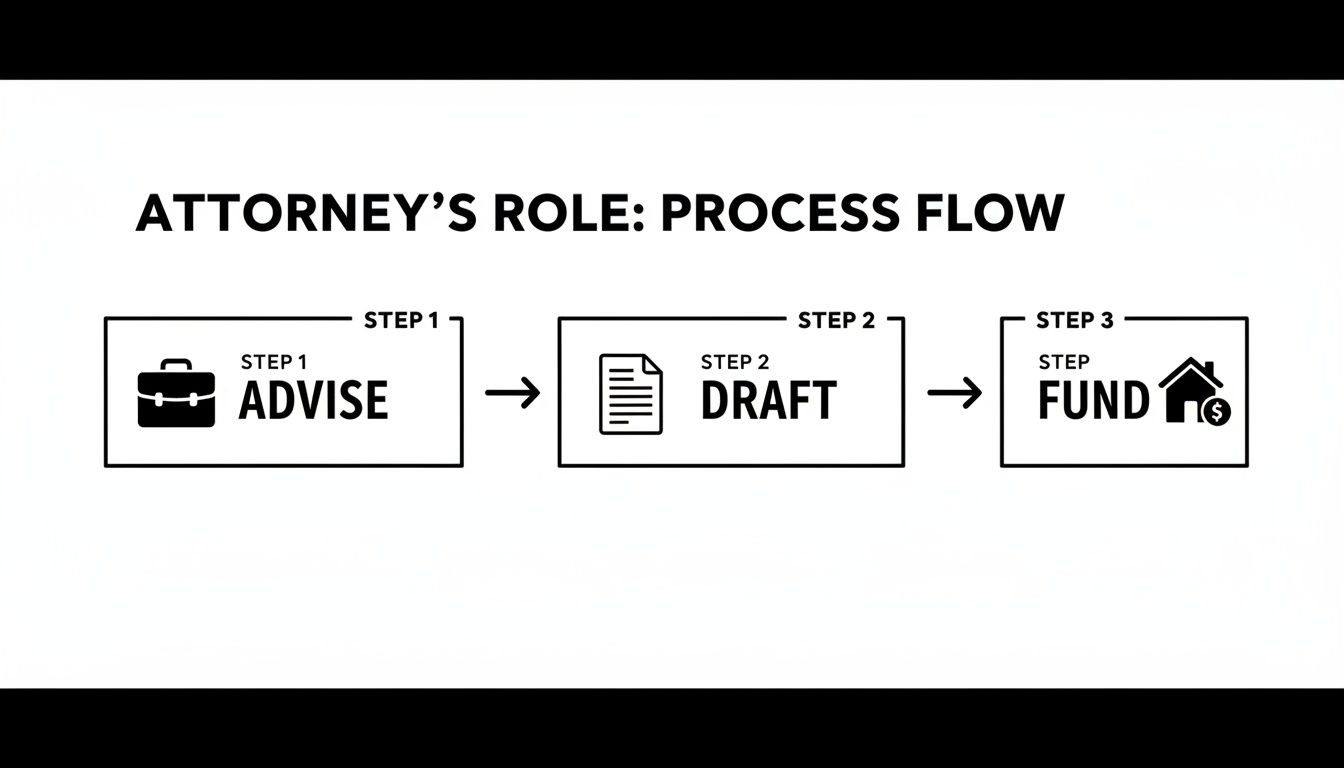
As you can see, your attorney's role flows seamlessly from strategic advice to meticulous drafting and, finally, to the critical funding that brings the trust to life. It’s a complete service designed to give you peace of mind, knowing your property is truly secure.
If you’re ready to protect your Texas real estate, contact The Law Office of Bryan Fagan, PLLC for a free consultation. Our attorneys provide trusted, hands-on guidance for every step of the journey.
Avoiding Common Land Trust Mistakes
Setting up a Texas land trust is a brilliant move toward protecting your property and your privacy. But it's surprisingly easy for a well-laid plan to go sideways because of a few common, and often expensive, missteps.
With the right legal insight, these pitfalls are completely avoidable. It’s all about making sure your trust does exactly what you need it to do. Knowing what can go wrong is the first step in getting it right, and it underscores why having a skilled land trust attorney isn't a luxury—it's your best defense.
Failing to Fund the Trust Properly
If there's one mistake we see time and again, it's this: failing to actually "fund" the trust. Think of your trust agreement as a perfectly built safe. It’s useless until you put your valuables inside. The same goes for your trust; if you don't legally transfer the property into it, the trust is just an empty box.
This means executing and recording a new deed that moves the title from your name to the trustee's name. Skip this step, and the whole structure is pointless. Your property stays in your name, wide open to public searches, creditors, and the headaches of probate. Your attorney handles this critical transfer to ensure your asset is truly protected.
Mishandling the Due-on-Sale Clause
Many homeowners with a mortgage get nervous about the "due-on-sale" clause. This is the part of your loan agreement that lets the lender call the entire loan due if you transfer the property. And yes, moving property into a land trust is a transfer.
But here’s the good news: federal law, specifically the Garn-St. Germain Act, often has your back. It creates an important exception for transfers into a living trust as long as you remain the beneficiary.
Still, this isn't something to handle casually. A Texas trust administration lawyer will dig into your mortgage documents and structure the transfer correctly. This protects your good relationship with your lender and prevents that dreaded clause from being triggered.
Appointing an Unsuitable Trustee
Choosing your trustee is a decision that carries serious legal weight. It might seem easy to appoint a friend or family member, but this can quickly lead to conflicts of interest or simple mismanagement. A trustee has specific fiduciary duties in Texas—a legal mandate to act only in the beneficiary's best interest.
An inexperienced trustee might not grasp these obligations, which can lead to big problems, including legal fights down the road. Your attorney can offer clear-eyed guidance on choosing a trustee—whether it's a trusted individual, a professional, or a corporate entity—that fits your goals for privacy and solid asset protection.
Real-World Scenario: Imagine a family in West Texas owns a large property with complex mineral rights. They place it in a land trust to pass it down but fail to properly address the mineral rights in the trust agreement. This oversight creates a legal nightmare for their heirs, leading to disputes over royalty payments and ownership. A qualified attorney would have identified and planned for this specific asset, preventing future conflict.
The demand for this kind of expertise is growing. The global Estate Planning Service Market, where a land trust attorney is a central figure, is expected to jump from $3.7 million in 2024 to $8.8 million by 2034. This is driven by a growing number of high-net-worth individuals—more than 22 million across the globe—looking for better privacy and security for their real estate.
In hot Texas markets like Houston, where commercial land values can climb 15% a year, professional legal strategy is more crucial than ever. You can learn more about this trend and its effect on estate planning services.
Steering clear of these common mistakes is all about being proactive. Working with a sharp attorney ensures your land trust isn't just a stack of paper, but a real, working shield for your most important assets.
If you’re managing a trust or planning your estate, contact The Law Office of Bryan Fagan, PLLC for a free consultation. Our attorneys provide trusted, Texas-based guidance for every step of the process.
Answering Your Texas Land Trust Questions
Once you start seriously considering a land trust, the practical questions start bubbling to the surface. It's only natural. You're thinking about your Texas property, your legacy, and you want straightforward answers. We've heard these questions from countless clients, so we’ve put them all in one place to give you the clarity you need to move forward.
Making big decisions about your property doesn't have to be intimidating. With the right information, it's actually an empowering process. Think of these answers as the next step in our conversation, designed to tackle the real-world concerns on your mind.
How Much Does a Texas Land Trust Cost?
There's no single price tag for a Texas land trust, and for good reason. The cost is tied directly to what you need it to do. A trust for one single-family home is a different animal entirely from a complex structure built to manage several investment properties, each with its own set of rules for beneficiaries.
Here at The Law Office of Bryan Fagan, PLLC, we always begin with a free consultation. This is where we listen, learn about your properties, and give you a clear, flat-fee quote. It helps to think of this not as a cost, but as an investment in your peace of mind. The price of drafting a solid trust is just a fraction of what your family could face in probate fees, future legal battles, or the financial hit from an asset that wasn't properly shielded.
Can I Be My Own Trustee in Texas?
Yes, Texas law allows you to be your own trustee. But this is a classic case of "just because you can, doesn't mean you should." Appointing yourself to the role can sometimes dilute the biggest advantages of the trust in the first place, especially when it comes to privacy and liability protection.
When you're the trustee, your name can still be publicly linked to the property, which is often exactly what you’re trying to avoid. A seasoned land trust attorney will help you weigh the pros and cons. They’ll advise you on whether a trusted family member, an independent professional, or even a corporate entity would be a better fit to truly maximize the security of your trust.
Your choice of trustee directly impacts the effectiveness of your land trust. The goal is to create as much legal separation as possible between you and the property to bolster its protective features.
A sharp Texas estate planning attorney makes sure your trustee choice serves your goals while meeting the strict standards of the Texas Trust Code. Getting this part right is fundamental to building a plan that holds up.
Will a Land Trust Affect My Mortgage?
This is a big one, and we hear it all the time. In theory, moving any property with a mortgage into a trust could set off the "due-on-sale" clause in your loan agreement. That clause gives your lender the power to call your entire loan due the moment ownership changes hands.
Thankfully, there’s a powerful federal law on your side: the Garn-St. Germain Depository Institutions Act of 1982. This act creates a crucial exception, preventing lenders from calling the loan when an owner transfers their home into a living trust, provided the owner is still a beneficiary and lives in the home.
But you have to do it by the book. An experienced attorney will carefully go through your mortgage paperwork and structure the transfer to be in full compliance with federal law and your lender's rules. It’s a proactive measure that lets you sidestep any nasty surprises and keep your mortgage in good standing.
How Does a Land Trust Simplify Inheritance?
This is where a land trust truly shines. One of its most compassionate benefits is that it lets your property completely sidestep probate court. When you pass away, assets held inside a properly constructed land trust aren't part of your probate estate. That means they don't get dragged through the public, lengthy, and often costly probate process.
Instead, the real ownership—the "beneficial interest"—passes silently and automatically to the successor beneficiaries you named in the trust document.
- No Court Involvement: The transfer follows your private instructions, no judge required.
- Immediate Transition: Your heirs get control right away, without the months-long wait for court approval.
- Reduced Costs: You completely avoid the probate-related legal fees, court costs, and administrative headaches.
- Complete Privacy: Your family's affairs stay out of the public record.
This smooth handoff saves your loved ones an incredible amount of stress, time, and money during what is already a painful time. It’s one of the most thoughtful things you can do to ensure your legacy is a help, not a hardship.
If you’re managing a trust or planning your estate, contact The Law Office of Bryan Fagan, PLLC for a free consultation. Our attorneys provide trusted, Texas-based guidance for every step of the process.