The general rule is almost always no. In Texas, whether a trustee can change a trust beneficiary depends on the type of trust, the wording of the trust itself, and a few narrow legal pathways that may allow change under specific circumstances.
Managing a loved one's trust can feel overwhelming, especially when a family member says something that sounds simple, like, “Can't you just update the beneficiary?” If you've just stepped into the trustee role, that request can put you in a hard spot. You want to help. You want to keep peace in the family. But you also don't want to make a legal mistake that causes trouble later.
That tension is common. Trustees, beneficiaries, adult children, and surviving spouses often come to this question from very different angles. One person is thinking about fairness. Another is thinking about the trust creator's wishes. Someone else is worried about taxes, probate, or a family conflict that didn't exist when the trust was signed.
Texas law gives a clear starting point. A trustee is there to carry out the trust, not rewrite it. But the full answer is more nuanced than a flat no. Some trusts contain built-in flexibility. Texas law also recognizes limited tools such as judicial modification and decanting in the right circumstances.
If you're searching for a Texas trust administration lawyer, or you're trying to understand your own fiduciary duties in Texas, the key is to slow down and separate three different questions:
- Who created the trust
- What type of trust it is
- Whether Texas law provides a legal path to modify it
Those details matter. They often make the difference between a prohibited shortcut and a valid legal process.
An Empathetic Introduction to Trustee Powers
A common Texas scenario goes like this. A parent dies, and their son or daughter becomes successor trustee of the family trust. A few weeks later, another relative calls and says the trust should be “updated” because one beneficiary is now estranged, one grandchild has special needs, or someone thinks the original plan no longer makes sense.
The new trustee is stuck in the middle.
They may have the trust binder on the kitchen table, a stack of financial statements, and a dozen unanswered questions. They're trying to be responsible. At the same time, they may feel pressure from family members who assume the trustee has broad control over everything.

Why this question causes so much confusion
Part of the confusion comes from the word “trustee.” It sounds powerful. People hear it and think the trustee can make whatever decisions seem best at the time. But that's not how Texas trust law works.
A trustee has authority, yes. They may manage investments, pay expenses, keep records, communicate with beneficiaries, and make distributions when the trust allows. But authority to manage trust property is not the same as authority to change the trust's basic design.
Practical rule: If the requested change would rewrite who benefits from the trust, the trustee should assume they need legal authority before doing anything.
This is especially important after the trust creator has died. At that point, many families discover the trust is far less flexible than they expected. What looked like a simple family adjustment may require court involvement, formal notice, or a close reading of the trust document.
The pressure trustees often feel
Trustees don't just deal with paperwork. They deal with relationships.
One beneficiary may say, “Dad would have wanted this changed.” Another may argue that a sibling shouldn't inherit anymore. A trustee might even feel tempted to “fix” an old document that now seems outdated. That instinct is understandable, but it can lead straight into a fiduciary problem if the trustee acts without authority.
If you're in that position, the safest first step isn't guessing. It's reading the trust carefully, identifying whether it is revocable or irrevocable, and getting advice before making any move that affects beneficiaries. That same careful approach helps families avoid probate disputes, guardianship issues involving incapacitated beneficiaries, and asset protection problems that can grow from one bad decision.
A Trustee's Core Responsibility Your North Star
A trustee's power makes more sense once you start with the job itself. The trustee is there to carry out the grantor's plan written in the trust, protect the trust property, and follow Texas law while doing it. That sounds simple, but it answers a big part of the beneficiary question. If the trust says who benefits, the trustee usually has to honor that instruction, not rewrite it.
One easy way to test a decision is to ask, “Am I administering the trust, or am I changing the estate plan?” Paying bills, investing assets, keeping records, and making distributions the document allows are administration. Swapping out beneficiaries is usually a change to the plan itself.
That distinction matters because a trustee is a fiduciary. In plain English, that means the trustee must put the trust's purposes and the beneficiaries' interests ahead of personal preferences, family pressure, or a sense that the document should be “updated.” If you want a fuller explanation, The Fiduciary Duties of a Texas Trustee covers the duties of loyalty, prudence, and impartiality in more detail.
The duties that keep a trustee on course
Those three duties show up in everyday decisions.
- Loyalty means the trustee acts for the trust and its beneficiaries, not for the trustee's own benefit.
- Prudence means slowing down, getting the facts, and making careful decisions with trust property.
- Impartiality means following the trust fairly when there are multiple beneficiaries, even if one person is louder, needier, or more persuasive.
A quick example helps. Suppose a trustee has three children as beneficiaries and decides one child should receive more because she “needs it more,” even though the trust does not allow that change. That may feel compassionate in the moment. In trust law, it can be a breach.
The same problem comes up when a trustee tries to solve a family dispute by changing who will inherit later, changing when someone receives funds, or steering assets away from a beneficiary the trustee does not like. Those choices are not ordinary management decisions. They reach into the grantor's instructions.
Why this matters before anyone talks about changing a trust
Many trustees hear “you manage the trust” and assume that means broad discretion. It usually does not. Management authority is real, but it has edges. A trustee can hold the wheel within the lane the trust creates. The trustee usually cannot move the lane markers.
That is why the first practical step is often reading the document for amendment language, removal powers, special appointment powers, and the basic type of trust. If you need a refresher on that starting point, this overview of how a revocable trust works in Texas is a useful place to begin.
Related issues can spill into other states and other rules too. For example, a family dealing with out of state real estate may also need to sort out tax questions like inherited property tax in Arizona. Different topic, same lesson. Check the governing rules before making a move that changes someone's rights.
A short reality check for trustees and beneficiaries
Before a trustee does anything that affects who benefits from the trust, four questions help cut through the confusion:
- Does the trust expressly permit this action?
- Would this change who receives property, when they receive it, or how much they receive?
- Am I following the grantor's written plan, or substituting my own judgment?
- Do I need a Texas court order or another legal mechanism before acting?
If the answer to those questions feels fuzzy, stop there. In Texas trust administration, hesitation at the right moment can save a trustee from personal liability and save a family from a much bigger fight later.
Revocable vs Irrevocable Trusts The Fundamental Divide
A family often learns this distinction at the worst possible moment. A parent dies, the successor trustee starts gathering accounts, and one child says, “Can't we just change the trust now?” The answer usually turns on one question before any other. What kind of trust is it?
That question matters because revocable and irrevocable trusts are built for different jobs. One is designed to stay adjustable while the person who created it is alive and competent. The other is designed to hold its shape unless a specific legal tool allows a change.
Revocable trusts
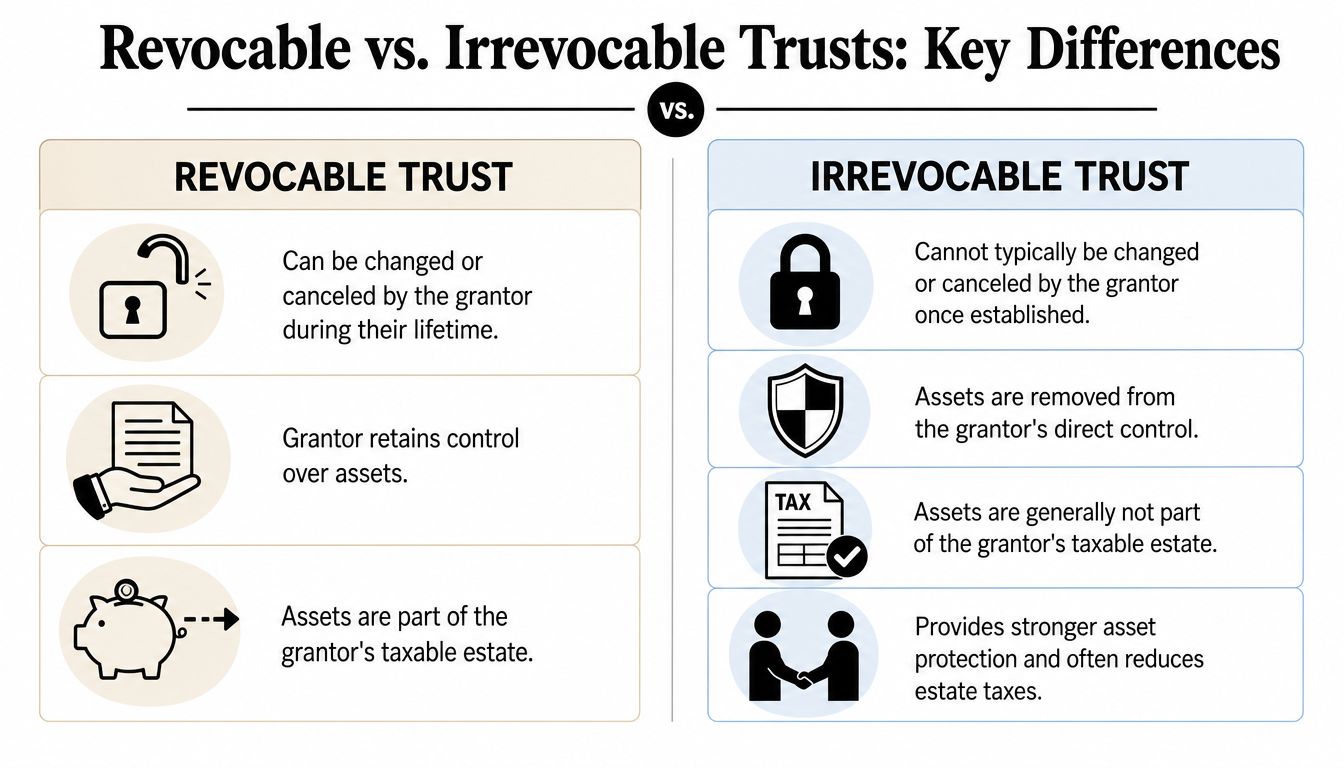
A revocable trust usually works like an estate planning folder the grantor can still edit. The trustee may hold title to property and carry out day-to-day management, but the grantor normally keeps the power to change beneficiaries, amend terms, or revoke the trust altogether.
If you want a plain-English primer, this guide explaining how a revocable trust works in Texas gives useful background.
For that reason, the trustee of a revocable trust is not the person with free-ranging amendment power. The grantor is. If Mom created the trust and still has capacity, Mom usually changes the beneficiary list by following the amendment rules in the document. The trustee does not get to swap one child out for another because family circumstances changed.
Irrevocable trusts
An irrevocable trust is different. It is usually created to make the terms more stable, not more flexible. Families use them for reasons that depend on that stability, such as long-term asset management, tax planning, creditor protection, or caring for a beneficiary over many years.
So the practical rule is simple. If the trust is irrevocable, a trustee generally administers the plan. The trustee does not rewrite the plan.
That does not mean change is impossible. It means change usually requires a separate legal path under Texas law, not a trustee's personal decision. Those Texas mechanisms, including court modification and decanting, are the exception tools. They are not part of a trustee's ordinary authority.
A side by side comparison
| Question | Revocable trust | Irrevocable trust |
|---|---|---|
| Who usually controls changes? | The grantor | Usually no single person acting alone |
| Can the trustee rewrite beneficiaries on their own? | Generally no | Generally no |
| When is change easier? | While the grantor is alive and has capacity | Only through limited legal procedures or powers written into the trust |
| What happens after the grantor's death? | It often becomes fixed | It was usually fixed from the start |
| How flexible is beneficiary design? | More flexible during the grantor's lifetime | Much less flexible |
Why this distinction causes so much confusion
The confusion usually comes from everyday language. People hear “living trust” and assume it stays editable forever. In reality, a revocable trust often becomes functionally locked at death, and an irrevocable trust may have narrow ways to adjust terms, but only through the right process.
Here is a common example. A mother signs a revocable trust leaving equal shares to her three children. While she is alive and competent, she can usually change that distribution herself if she follows the trust's amendment rules. After her death, the successor trustee's job is to carry out her written instructions, not update them because one sibling now seems more responsible or another child has fallen out of favor with the family.
That is the dividing line. A trustee manages the trust property. The person or legal process with amendment authority controls beneficiary changes. In Texas, knowing which side of that line you are standing on is what keeps a trustee from making a well-meant mistake that turns into a lawsuit.
When a Trust Can Be Changed Legal Pathways in Texas
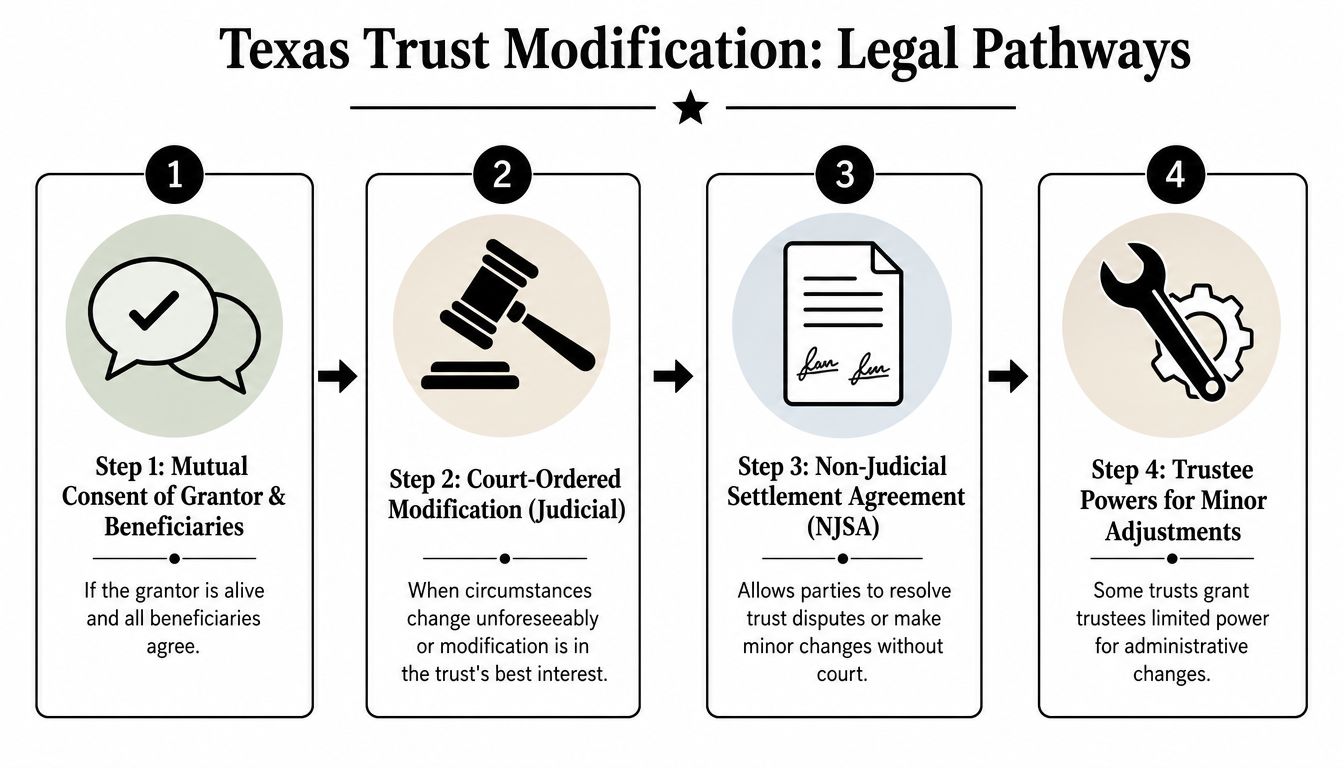
A common Texas scenario goes like this. Dad dies, the trust becomes irrevocable, and a trustee realizes one child now has special needs, another is fighting creditors, or the trust language creates a tax problem no one saw coming. The trustee cannot swap out beneficiaries or rewrite the plan because circumstances changed. Texas law does offer a few narrow ways to adjust an irrevocable trust, but each path has rules, notice requirements, and limits tied back to the settlor's original intent.
The practical question is not, “Can we change this trust?” The better question is, “What is the specific problem, and which Texas procedure fits that problem?”
Judicial modification through the court
Court involvement is one path. It is often the right one when the issue goes to the trust's purpose, when family members disagree, or when the trustee wants the protection of a judge's order before making a major change.
Texas courts may modify an irrevocable trust in limited situations, such as when carrying out the original terms has become impossible, impracticable, wasteful, or inconsistent with circumstances the settlor likely did not anticipate. Courts may also approve changes when the trust's purpose has already been fulfilled, cannot be fulfilled, or when a modification is needed to better carry out that purpose.
A simple way to understand judicial modification is to compare it to asking a referee to clarify the rules before the game gets out of hand. The trustee is not claiming personal authority to change beneficiaries. The trustee is asking the court to approve a lawful adjustment after notice to the people who have a stake in the trust.
That process usually means filing a petition, identifying all interested parties, giving formal notice, and explaining why the requested change fits Texas law and the trust's original objectives.
Decanting as a limited statutory tool
Decanting is the other Texas mechanism people ask about most often. It works like pouring assets from an old container into a new one, while keeping the same basic substance and honoring the limits set by law. In trust administration, that means a trustee may be able to move assets from one irrevocable trust into a new trust with revised terms if the statute and the original trust permit it.
For a trustee, decanting is not a free rewrite. It generally depends on the trustee having discretionary distribution authority under the existing trust. It also comes with boundaries. A trustee cannot use decanting to ignore the settlor's core intent, sidestep creditor protections, or make self-serving changes. Notice requirements matter too. Beneficiaries often need advance notice before the decanting takes effect.
If you want a closer look at the mechanics, this guide on decanting a trust in Texas explains the process in more detail.
One point causes a lot of confusion here. Decanting may change how a beneficiary receives benefits, when distributions are made, or what administrative terms apply. It does not automatically mean the trustee can remove one beneficiary and add another because that seems fair in the moment.
Important: Decanting helps adjust trust administration to current realities. It does not give a trustee personal power to rewrite the settlor's family plan.
A step by step approach for trustees and beneficiaries
If a trust seems unworkable, slow down and work through the problem in order.
Read the trust word for word
Look for discretionary distribution language, definitions of beneficiaries, amendment restrictions, trustee powers, notice provisions, and any clause naming a trust protector or other person with modification authority.Define the core issue Is the problem a drafting mistake, a disabled beneficiary's changed needs, tax inefficiency, family conflict, or an administrative rule that no longer makes sense? The legal path depends on the actual problem, not the frustration level.
Separate beneficiary changes from administrative changes
Trustees often encounter difficulties concerning this distinction. Changing investment language or distribution procedure is one category. Changing who benefits from the trust is another, and it is usually much harder.Choose the Texas tool that matches the problem
A court petition may be the safer option when the change is significant or likely to be challenged. Decanting may fit when the trustee has the right type of discretion and the goal is to improve administration within statutory limits.Give notice and build a paper trail
Keep copies of the trust, written legal advice, notices to beneficiaries, and the trustee's reasons for acting. If the decision is later challenged, that record matters.
Beneficiaries should use a similar checklist from their side. Ask for the trust document or the relevant portions, request a written explanation of the proposed change, and find out whether the trustee is relying on court approval, decanting authority, or some power written into the trust itself.
Practical examples
Here is what this looks like in real life.
A beneficiary becomes incapacitated. The trust pays funds outright, but that structure now threatens the beneficiary's public benefits or leaves no one managing distributions well. A court-approved modification or a properly structured decanting may allow the assets to be held in a more protective form without discarding the settlor's original goal of helping that beneficiary.
Tax rules or family circumstances change. The trust still names the same beneficiaries, but the way distributions are handled now creates avoidable problems. Decanting may help adjust administrative terms if the statutory requirements are met.
The trust directions no longer work as written. For example, a trust created to hold a specific asset or support a now-obsolete purpose may need court involvement because the original design no longer fits reality.
For both trustees and beneficiaries, the lesson is the same. Texas law gives you tools, but each tool is built for a particular job. Using the wrong one can turn a fixable trust problem into a breach of duty claim.
Exceptions and Special Powers in Trust Documents
Some trusts include a built-in exception that changes the analysis. The most important one is often a power of appointment.
That phrase sounds abstract, but the idea is straightforward. The person who created the trust may write into the document a special power allowing a named person to direct where trust assets go within a defined group. Sometimes that named person is the trustee. Sometimes it is someone else.
Why this is different from ordinary trustee authority
A power of appointment is not part of a trustee's basic job. It exists only if the trust says it exists. That distinction matters because many people hear that a trustee “has power” and assume that means broad discretion over beneficiaries. Usually it doesn't.
Existing discussions often say trustees can never change beneficiaries, but some trust instruments expressly grant a trustee a power of appointment that allows designation or removal of beneficiaries if the trustee follows strict requirements, as explained in this discussion of special trustee powers and beneficiary changes.
What to look for in the trust language
If you suspect the trust includes this kind of authority, look for language about:
- A named class of possible beneficiaries rather than one fixed list
- A trust protector or appointment holder
- Written notice requirements for qualified beneficiaries
- Limits on self-benefit, especially if the trustee is involved
A trustee should also compare any appointment language with other trust modification tools. For a practical overview of one separate mechanism, this explanation of decanting a trust in Texas helps show how express trust powers and statutory powers can overlap without being the same thing.
The grantor may have planned for flexibility. If so, the flexibility comes from the document itself, not from the trustee deciding to improvise.
A real-world example
Suppose a grandfather creates a trust for his descendants and gives an independent trustee a limited power to appoint assets among his grandchildren. That trustee may have room to shift shares or exclude a line of distribution if the trust expressly permits it and all required procedures are followed.
That is very different from a trustee reading a silent trust and deciding on their own that one grandchild should be removed. One is planned authority. The other is overreach.
What Happens When a Trustee Acts Improperly
Beneficiaries often sense something is wrong before they know exactly what rule was broken. Maybe the trustee starts talking as if they can “update” the trust. Maybe they stop sharing information. Maybe distributions suddenly favor one branch of the family without a clear explanation.
Those are warning signs worth taking seriously.
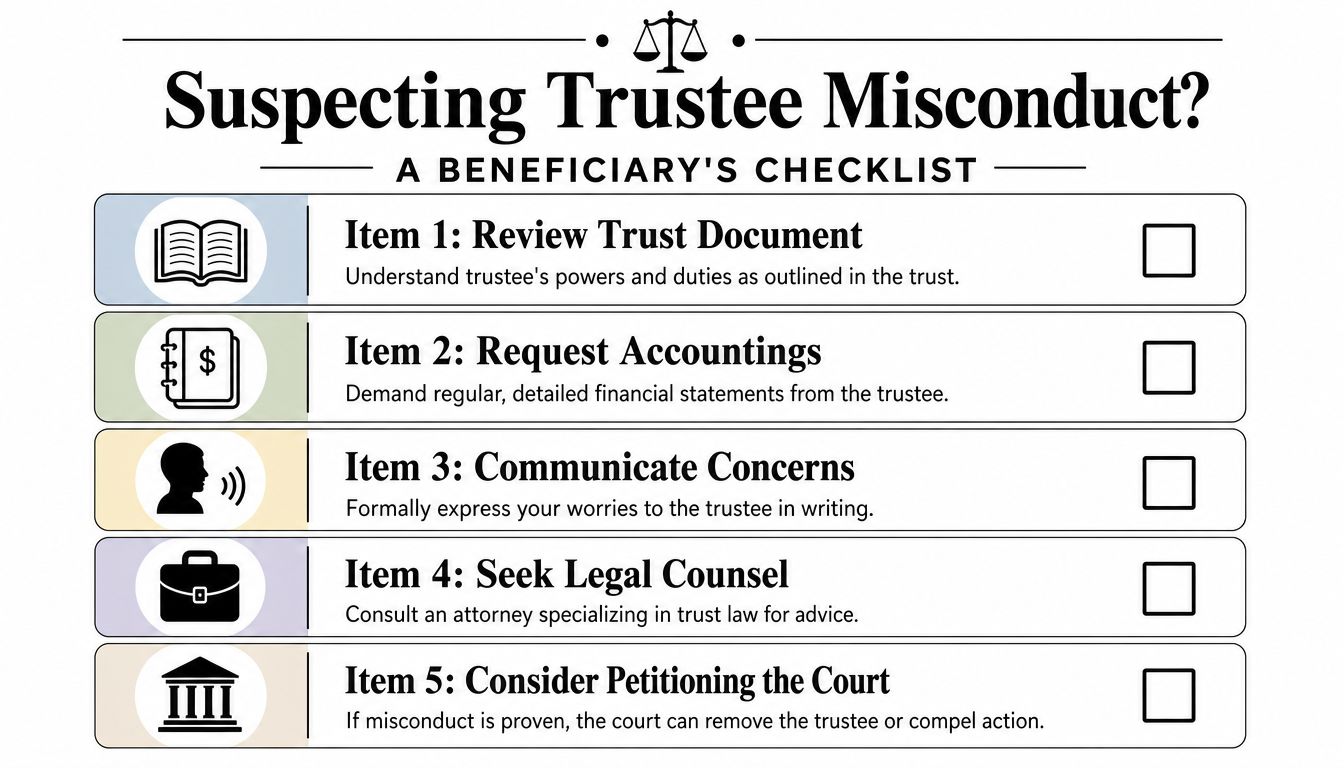
Red flags beneficiaries should not ignore
A trustee may be crossing the line if you see:
- Secretive behavior such as refusing to provide the trust document or explain decisions
- Uneven treatment that appears to favor one beneficiary without support in the trust
- Self-serving changes that benefit the trustee personally
- Statements about rewriting the trust without mentioning court approval or written authority
When these issues appear, beneficiaries don't have to sit back and hope things improve.
Legal options for beneficiaries
Beneficiaries can petition courts to reform drafting mistakes, use Non-Judicial Settlement Agreements to resolve certain trustee-related issues without litigation, and proactively ask the court to remove a trustee for breach rather than waiting for the situation to get worse, as discussed in this review of beneficiary remedies and trustee removal options.
A practical response often looks like this:
Request the trust and accountings
Start with documents. You need to know what authority the trustee claims to have.Put concerns in writing
A calm written request creates a record. It often matters later.Ask whether the trustee is relying on a specific clause or court order
If there's no clear answer, that tells you something.Get legal guidance early
Beneficiaries may need help with trust litigation, probate overlap, or broader wealth preservation issues such as trustee breach of fiduciary duty claims in Texas. In some situations, related guidance on estate planning, probate, guardianship, and asset protection may also be part of the solution.
A beneficiary doesn't need to prove every detail before talking to a lawyer. Suspicious conduct and missing information are enough to justify getting advice.
Why speed matters
Delay can make trust disputes harder. Records disappear. Positions harden. Family members start acting on assumptions. If a trustee is trying to alter beneficiary rights without authority, early action may help preserve the trust and reduce damage.
That doesn't mean every concern turns into a lawsuit. Sometimes a formal demand, clarification of the trust terms, or a negotiated agreement resolves the issue. But if court action is needed, it helps to move before the improper action becomes harder to unwind.
Get Trusted Guidance for Your Texas Trust
The short answer is still the right place to begin. Can a trustee change the beneficiary of a trust? In Texas, the answer is almost always no. A trustee's first duty is to follow the trust, not redesign it.
The fuller answer is where people often need help. A revocable trust and an irrevocable trust operate very differently. Some trusts include narrow built-in powers. Texas law also allows limited tools such as judicial modification and decanting when the facts and the trust language support them.
If you're serving as trustee, don't guess. If you're a beneficiary and something feels off, don't assume you're powerless. Careful trust administration, tax planning, and dispute resolution all start with the same move: identify the legal authority before anyone changes course.
If you're managing a trust or planning your estate, contact Law Office of Bryan Fagan, PLLC for a free consultation. Our attorneys provide trusted, Texas-based guidance for every step of the process.