Losing a loved one is tough enough without the legal maze that follows. Managing a loved one's estate can feel overwhelming, but with the right legal guidance, it doesn’t have to be. It's completely natural that the first question on most people's minds is, "How long is this probate thing going to take in Texas?"
For a straightforward estate with a clear will, you're generally looking at a timeline of six to twelve months. But as with most things in law, that's just a starting point—the real answer can be a lot more complicated.
The Texas Probate Timeline A Realistic Overview
When someone passes away, their entire financial life—all their property, assets, and debts—is bundled into what's called an estate. Probate is simply the court's way of supervising the settlement of that estate. It's a formal process, laid out in the Texas Estates Code, that makes sure the will is valid, any debts get paid, and what's left over goes to the right people.
Think of it as the official closing chapter on someone's financial affairs. It ensures everything is handled by the book, providing a transparent, legal path for distributing assets and formally closing the estate. This process is designed to protect everyone involved, from the executor, who has a fiduciary duty to act in the estate's best interest, to the beneficiaries, by confirming all legal loose ends are tied up.
So, How Long Does It Really Take?
That 6-to-12-month window is a good rule of thumb for straightforward situations, but many families are caught off guard when things drag on. It's a common myth that probate is a quick, rubber-stamp affair. In reality, the timeline is more of a moving target, influenced by a handful of key factors.
The duration really boils down to:
- The complexity of the estate: An estate with a house and a single bank account is worlds away from one with business holdings, rental properties, and a diverse investment portfolio. More moving parts mean more time.
- The clarity of the will: A well-drafted will that clearly names an executor and spells out who gets what can be a huge timesaver. Vagueness and ambiguity are invitations for delays.
- Family dynamics: When everyone is on the same page, things move smoothly. But if beneficiaries are disagreeing or someone decides to contest the will, the timeline can stretch from months into years.
Understanding these variables from the get-go is the first step toward setting realistic expectations. For a deeper dive into what each stage involves, you can explore the complete Texas estate settlement timeline. Our goal is to pull back the curtain on this process, giving you the clarity and confidence to navigate what's ahead.
To give you a clearer picture, here's a look at how different scenarios can affect the probate timeline in Texas.
Estimated Texas Probate Timelines by Estate Type
This table provides estimated timelines for different probate scenarios in Texas, helping families understand potential durations based on their specific situation.
| Probate Scenario | Typical Duration | Key Characteristics |
|---|---|---|
| Simple Estate (with Will) | 6 – 12 Months | Valid will, clear beneficiaries, minimal assets (e.g., one property, bank accounts), no debts or disputes. |
| Complex Estate (with Will) | 12 – 24 Months+ | Multiple properties, business interests, significant investments, potential tax issues, but no family disputes. |
| Contested Will | 2 – 5 Years+ | Beneficiaries are fighting over the will's validity or asset distribution, leading to litigation. |
| No Will (Intestate) | 9 – 18 Months | The court must identify heirs according to state law, which adds administrative steps and potential for disputes. |
| Estate with Significant Debt | 12 – 24 Months | Executor must notify creditors, negotiate payments, and potentially sell assets to cover debts before distribution. |
As you can see, the path through probate isn't one-size-fits-all. The specifics of the estate and the cooperation of everyone involved play a massive role in how quickly things get resolved.
A Roadmap for Navigating the Texas Probate Process
Let’s be honest, the word “probate” can sound pretty intimidating. It often brings to mind a confusing and lengthy legal journey, but it doesn't have to be that way. In Texas, the process is actually more like a well-marked trail, governed by the Texas Estates Code. Once you understand the key milestones, what feels like an overwhelming ordeal transforms into a series of manageable steps.
Think of this section as your roadmap. We’ll walk through each stage, from the initial court filing all the way to the final distribution of assets. Seeing how each step connects will give you a much clearer picture of how a typical 6-to-12-month timeline actually plays out.
This timeline lays out the typical duration for Texas probate cases, from the absolute best-case scenario to more tangled situations.
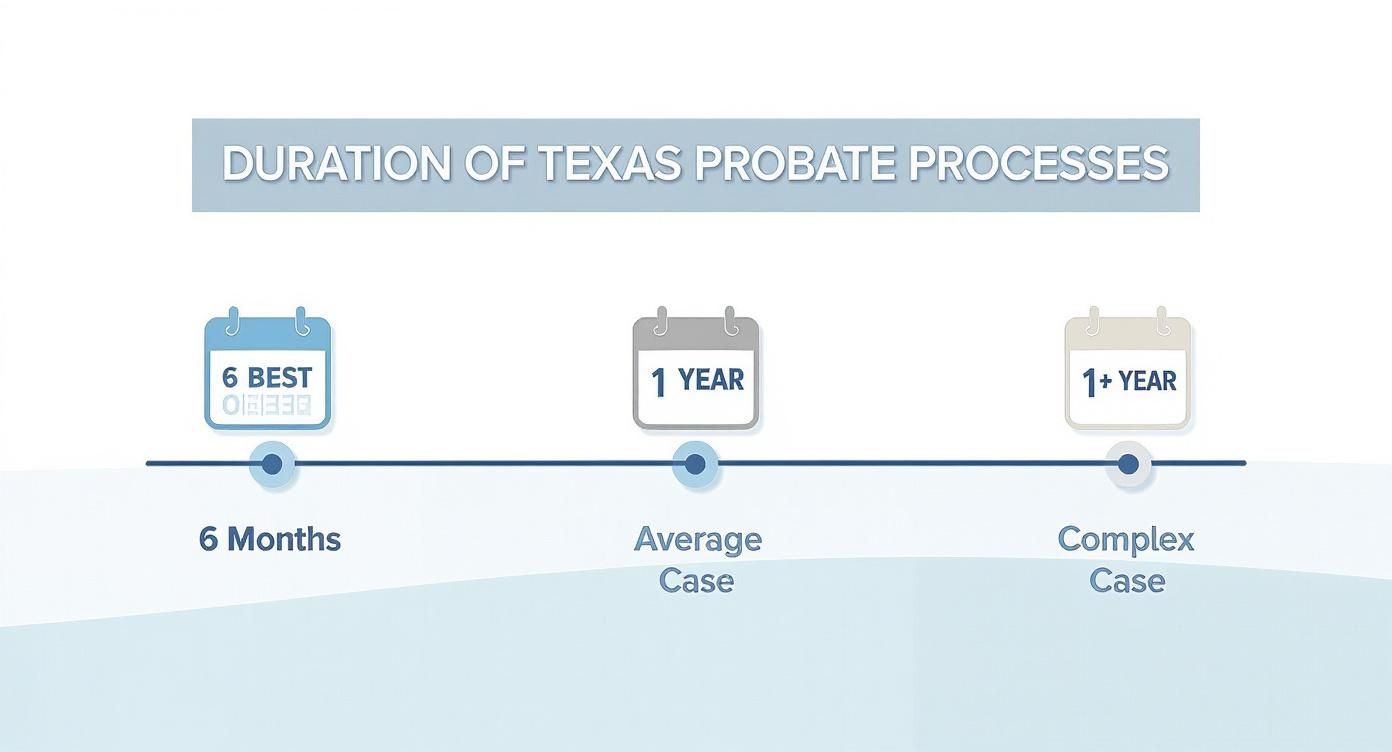
As you can see, a straightforward, uncomplicated estate can sometimes wrap up in about six months. However, most cases land closer to a year, and it’s not uncommon for more complex estates to stretch out even longer.
Key Milestones in the Texas Probate Journey
The whole process kicks off when someone files an application along with the decedent's will in the proper Texas probate court. From that moment on, a sequence of legally required steps begins to unfold.
- Filing and Posting (Takes about 2 weeks): Once the application is filed, the county clerk posts a public notice. This is the court's way of formally announcing that a will has been submitted for probate, putting the world on notice.
- The Waiting Period and Court Hearing (Roughly 2-4 weeks): Texas law mandates a waiting period of about two weeks after filing before a hearing can even be scheduled. At the hearing, a judge reviews the will, confirms its validity, and officially appoints the executor named in the document.
- Executor Qualification (Another 1-2 weeks): The judge's appointment isn't the final step. The executor must then take an oath of office and, in some cases, post a bond. Only after this does the court issue Letters Testamentary—the golden ticket that grants the executor the legal power to manage the estate's affairs.
Getting Down to Business: Managing the Estate
With the Letters Testamentary in hand, the executor can finally roll up their sleeves and get to work. This is where the bulk of the time is spent, as it involves several critical responsibilities.
- Notice to Creditors (Within 30 days of qualifying): The executor has a month to publish a notice in a local newspaper, officially alerting potential creditors about the death. Any creditors they already know about must be notified directly.
- Inventory of the Estate (Within 90 days of qualifying): Next up, the executor has 90 days to compile a detailed inventory of everything the estate owns, get it appraised, and file it with the court. This includes everything from the house and bank accounts to cars and personal belongings. Getting this right is crucial, and it starts with knowing what is and isn't a probate asset. For a deep dive, you can learn more about probate and nonprobate assets in Texas.
- Paying Debts and Distributing Assets: Once the inventory is approved and the required time for creditors to make claims has passed, the executor can start paying the estate's valid debts and final bills. It's only after all the debts are settled that the remaining assets can finally be distributed to the beneficiaries according to the will's instructions.
Common Roadblocks That Can Wreck the Probate Timeline
While a Texas probate is designed to be pretty efficient, some issues can pop up and act like major roadblocks. What should have been a straightforward drive can suddenly turn into a long, stressful slog.
Knowing what these potential hurdles are is the first step to getting around them. It also highlights exactly why having an experienced guide in your corner is so critical from the start.

Plenty of things can stretch out the probate clock, from a backed-up court system to squabbling family members. In Texas, the timeline really hinges on how complex the estate is and whether the court has to supervise every step (dependent administration) or if the executor can act freely (independent administration).
A simple, uncontested estate can often be wrapped up in 6 to 12 months. But throw in a major dispute or a will contest, and you could be looking at one to three years—or even longer. For a deeper dive, you can discover more insights about Texas probate duration.
The Big One: A Will Contest
One of the surest ways to grind probate to a halt is a will contest. This is when an heir or beneficiary legally challenges the will itself, slamming the brakes on the entire process.
Someone might file a contest for a few key reasons:
- Undue Influence: Arguing that the person who died was pressured or manipulated into signing the will.
- Lack of Capacity: Claiming the person wasn't mentally sound or competent when they created the document.
- Improper Execution: Insisting the will wasn't signed and witnessed correctly according to the strict rules of the Texas Estates Code.
Once a will is contested, everything is put on hold. The dispute has to be settled, either through negotiation or a full-blown court battle. This kind of litigation can easily tack on years and a mountain of legal fees to the process.
Headaches with Estate Assets and Debts
Sometimes, the estate itself is the source of the delay. The executor has a fiduciary duty—a legal obligation to act in the estate's best interest—to find, value, and manage every single asset. And that’s often trickier than it sounds.
For example, imagine an estate that includes a family-owned business, a ranch in another state, and a valuable art collection. Each asset requires specialized appraisals to determine its value. Locating digital assets like cryptocurrency or tracking down old, forgotten bank accounts can feel like a forensic investigation.
Unpaid debts can also create a major stall. If there are a lot of creditors or a big lawsuit was pending when the person died, the executor can't hand out assets to the heirs until those liabilities are paid or settled. This negotiation process alone can add months to the clock. Good asset protection planning during a person's life can sometimes make this stage much simpler.
When People Get in the Way: Beneficiary and Executor Conflicts
Even if the will is solid and the assets are simple, family dynamics can throw a wrench in the works. Disagreements among beneficiaries over who gets the sentimental personal items can lead to gridlock. Worse, they might accuse the executor of mismanaging things.
If an executor is disorganized, doesn't communicate, or just drags their feet, beneficiaries can get fed up. They might even take legal action to have the executor removed. Anytime a conflict needs a judge to step in, the timeline gets longer. It really underscores the need for a capable executor and clear communication from day one.
Independent vs. Dependent Administration: Your Timeline's Biggest Fork in the Road
When it comes to how long probate will take in Texas, one decision stands above all others: the type of administration the court orders for the estate. This single choice can be the difference between a smooth, relatively quick process and a long, frustrating legal saga. It’s also one of the best arguments for thoughtful estate planning.
The two paths are known as independent administration and dependent administration. The one the court picks will have a huge impact on both the timeline and the final legal bill for settling the estate.
The Fast Track: Independent Administration
Think of independent administration as the express lane of Texas probate. When a will specifically asks for it—or when every single beneficiary agrees—the court can appoint an independent executor. This person gets the authority to manage the estate’s business with very little court supervision.
Under the Texas Estates Code, an independent executor is free to:
- Pay off the estate’s debts and handle taxes.
- Sell property if needed to cover liabilities.
- Distribute the remaining assets to the beneficiaries according to the will.
This freedom is a complete game-changer. The executor doesn't have to run to a judge for permission for every little thing, which slashes the time it takes to get things done. It’s so efficient that about 80% of Texas probate cases are handled this way, usually wrapping up in a reasonable 6 to 12 months. You can learn more about Texas probate laws and timelines to see just how much faster this is.
The Slow Path: Dependent Administration
On the other hand, dependent administration is the scenic route—and not in a good way. This approach demands constant court oversight, turning even simple tasks into drawn-out legal procedures. A judge has to sign off on nearly every meaningful action the administrator takes.
Imagine a project manager who needs to get approval from the CEO before sending every email or making any decision. That’s dependent administration in a nutshell. The administrator has to file motions, show up for hearings, and wait for court orders just to pay bills, sell a car, or make minor repairs to a house.
This level of micromanagement is usually required when someone dies without a will (intestate) or when there's serious fighting among the heirs. While it adds a layer of protection, that protection comes at a steep price in both time and money. It can easily stretch the probate timeline to one to two years or even longer. For a grieving family, these delays add a mountain of stress, making a powerful case for getting proactive legal guidance on probate matters ahead of time.
Proactive Steps to Speed Up the Probate Process
While you can't control every single variable in a probate case, taking decisive action can absolutely make a difference in how long probate takes in Texas. Both the person creating the will and the executor who later steps in to manage it have opportunities to pave the way for a smoother, faster process.
The single most powerful tool for speeding things up is a clear, professionally drafted will, created long before it's needed during the estate planning phase. A well-written will that leaves no room for doubt—unambiguously naming an independent executor and clearly outlining how assets should be distributed—removes most of the guesswork and potential for conflict that grinds everything to a halt.
For Executors, Organization is Everything
Once probate kicks off, the executor's diligence is what truly drives the timeline forward. Success really boils down to being organized, communicative, and decisive right from day one. A proactive approach can stop minor issues from snowballing into major roadblocks.
Here are a few practical steps an executor can take immediately:
- Gather Documents Early: Don't wait. Start collecting essential paperwork right away, including the will, death certificate, bank statements, property deeds, and insurance policies. Having these ready prevents delays when you need to file with the court or deal with financial institutions.
- Keep Communication Lines Open: Make sure all beneficiaries are in the loop about the estate's progress. Transparent and regular updates can head off misunderstandings and build trust, slashing the odds of disputes that could stall the process.
- Work with a Qualified Attorney: A Texas probate attorney is your most valuable partner in this process. They ensure all legal deadlines under the Texas Estates Code are met, paperwork is filed correctly, and any legal hurdles are handled efficiently.
The executor's role is one of immense responsibility, governed by strict fiduciary duties. Their ability to act promptly and methodically is often the deciding factor between a six-month probate and one that drags on for years.
Strategic Planning for a Faster Finish Line
Beyond just being organized, a few strategic decisions can also help shorten the timeline. For instance, some firms find that hiring experienced paralegals in Texas to support their legal counsel with document prep and case management can further boost efficiency. It’s all about finding ways to keep the ball rolling.
Ultimately, the best strategy is prevention. Thoughtful estate planning can remove many assets from the probate process entirely, which is the surest way to avoid delays. You can learn more about these powerful strategies and how to avoid probate in Texas by using tools like trusts and beneficiary designations. By taking these proactive steps, you can shave significant time off the process, minimize stress on your family, and ensure the estate is settled as efficiently as the law allows.
Answering Your Questions About Texas Probate Timelines
When you're dealing with the loss of a loved one, the last thing you want is a mountain of legal questions. It's completely normal for families to feel overwhelmed by the probate process. Getting clear, straightforward answers isn't just helpful—it provides some much-needed peace of mind during a tough time.
Let's walk through some of the most common concerns we hear from families, breaking down the answers to help you feel more prepared for the road ahead.
What Happens If Someone Dies Without a Will in Texas?
When someone passes away without a will, it’s legally known as dying "intestate," and it almost always makes the probate process longer and more complicated. Instead of following your loved one’s wishes, the court has to step in and follow a rigid formula set by Texas law to divide the estate.
First, the court must formally identify the legal heirs in a separate step called an Heirship Proceeding. This often means appointing an independent attorney—an "attorney ad litem"—to track down and represent any unknown or missing heirs, adding both time and expense.
On top of that, the court will likely require a dependent administration. This is a highly supervised process where a judge has to sign off on every single action taken, from paying a bill to selling a car. Compared to an estate with a clear will, this significantly drags out the timeline.
Can I Avoid Probate Altogether in Texas?
Yes, absolutely. With some strategic estate planning, it's entirely possible to sidestep the probate process completely. The most common tool for this is a Revocable Living Trust, which allows your assets to pass directly to your beneficiaries without any court supervision. Think of it as creating a private pathway for your assets.
Other effective ways to keep assets out of probate include:
- Payable-on-death (POD) designations for your bank accounts.
- Transfer-on-death (TOD) deeds for real estate.
- Beneficiary designations for life insurance policies and retirement accounts like 401(k)s and IRAs.
An experienced Texas estate planning attorney can help you put together a plan that uses these tools to save your family a great deal of time, money, and stress down the line.
Does the Size of the Estate Affect How Long Probate Takes?
It sure does. The size and complexity of an estate are two of the biggest drivers of the probate timeline. A very small, simple estate might even qualify for a shortcut like a Small Estate Affidavit, which is far quicker and easier than a formal court process.
On the other hand, a large estate with business interests, multiple properties, or complex investments just takes more work. Appraising assets, managing ongoing business affairs, and filing tax returns all add layers of time and effort. This complexity will naturally extend the timeline, even when all the heirs are on the same page and working together.
What Is the Executor’s Role in Managing the Timeline?
The executor's performance is absolutely critical. A proactive, organized executor can be the difference between a smooth process and a nightmare. By filing paperwork promptly, communicating clearly with beneficiaries, and efficiently gathering all the needed financial information, they can dramatically speed things up.
Conversely, an executor who is disorganized, avoids communication, or misses deadlines can create massive delays and stir up friction among family members. The key to a smooth process is for the executor to diligently fulfill their fiduciary duties as outlined in the Texas Estates Code. Working closely with a probate lawyer is the best way to ensure all those legal boxes are checked efficiently.
If you’re managing an estate or planning your family's future, contact The Law Office of Bryan Fagan, PLLC for a free consultation. Our attorneys provide trusted, Texas-based guidance for every step of the process.