Skip to content
For a straightforward Texas trust, administration typically takes 6 to 12 months. That's a baseline, not a guarantee, and trusts with disputes, hard-to-value assets, business interests, or tax work can take much longer.
If you've just learned that you're the trustee after a parent's or spouse's death, you may be staring at a binder, a few account statements, and a list of worried family members. Those in that position don't need a lecture. They need a clear answer to one question first: how long is this going to take?
The honest answer is that how long trust administration really takes in Texas depends less on a calendar and more on the work the trustee must complete in the right order. A trustee can't safely jump to distributions just because beneficiaries are ready. Texas fiduciary duties require careful administration, recordkeeping, and communication before the trust can close.
That can feel heavy at first. It also becomes much more manageable when you break the process into steps and understand why each step matters.
Your Guide to Navigating Texas Trust Administration
You become trustee on a Tuesday afternoon. By Wednesday, a family member is asking when distributions will happen, the bank wants paperwork, and you are staring at a trust document full of terms you have never had to apply in real life.
That moment feels intimidating for good reason. A trustee is not just passing property from one person to another. A trustee is taking custody of a legal and financial process that has to be handled in order, much like closing out a small business for someone else's benefit. If you skip a step, the problem usually shows up later, after money has already gone out.
A common Texas example looks like this. A daughter becomes successor trustee after her father dies and expects the trust to wrap up quickly because there is no probate case for the trust assets. Then the actual work begins. She has to read the trust carefully, confirm who the beneficiaries are, collect statements, secure accounts, deal with the house, sort out bills, and figure out what tax reporting is still needed. The timeline is driven by that sequence of tasks, not by the family's hope that everything can be finished quickly.
Practical rule: A trust can avoid probate and still require months of careful administration.
That is why the first question is not only, “How long will this take?” A better question is, “What has to happen before I can safely make final distributions?” Trustees who understand that order make better decisions and avoid many of the mistakes that create delay. If you want a closer look at when a Texas trustee can distribute trust assets, the answer turns on whether the earlier duties have been completed first.
Texas trustees owe fiduciary duties. In plain English, that means you must act in the beneficiaries' interests, follow the trust terms, protect trust property, keep good records, and make decisions with care. Sometimes that work overlaps with estate administration if the person who died also left assets outside the trust. That overlap can confuse new trustees because the jobs are related, but they are not always identical.
A clear roadmap helps. You need to know what to do first, what can wait until later, what documents to save, and when legal advice can prevent a small issue from turning into a larger one.
Some families also need help with related matters, such as estate planning services, probate guidance, guardianship planning, or asset protection strategies. The right approach depends on the trust, the assets, and the people involved.
Texas Trust Administration Timelines What to Expect
Texas doesn't set one statutory finish date for trust administration. Instead, practitioner guidance consistently places a straightforward administration at about 6 to 12 months, and explains that the full timeline is measured in months, not days, because the work must move through multiple required administrative steps before closing the trust, as explained in this Texas trust administration overview.
That range surprises many families. They hear that a trust is “faster than probate” and expect checks to go out right away. Sometimes a trustee can make a limited early distribution if the trust terms and finances allow it. But full administration usually takes longer because the trustee must confirm the trust terms, identify assets, handle debts and taxes, and prepare for final distribution.
Estimated Trust Administration Timelines in Texas
| Trust Scenario | Typical Timeline | Key Factors |
|---|---|---|
| Simple revocable trust with mostly liquid assets | 6 to 12 months | Fewer valuation issues, easier account transfers, simpler administration |
| Trust holding real estate | Often longer than the baseline | Property access, insurance, maintenance, title issues, possible sale |
| Trust with business interests or tax complexity | Can extend significantly | Valuation, records, negotiations, filings, accounting obligations |
| Contested or litigated trust | Can last far longer | Beneficiary conflict, document disputes, court involvement |
Why the baseline still takes months
Even a simple trust has a sequence. The trustee usually needs to:
- Locate governing documents: The trust instrument, amendments, and related records must be confirmed before major decisions are made.
- Accept the role carefully: A trustee needs to understand the authority granted and any limits written into the trust.
- Identify the people involved: Beneficiaries need to be identified and kept appropriately informed.
- Inventory assets: Bank accounts are easy to spot. Closely held entities, personal property, and out-of-state assets are not.
- Address liabilities: Debts, expenses, and tax matters have to be reviewed before the trustee can confidently distribute trust property.
A more technical Texas benchmark reaches the same general conclusion. A straightforward revocable living trust commonly takes about 6 to 12 months, but that advantage can fade when the trust holds illiquid assets, real estate needing sale, business interests, or complicated accounting and tax issues, as discussed in this Texas revocable trust timeline guide.
Beneficiaries usually shouldn't expect final trust distributions in days or weeks, even when the trust itself seems simple.
A useful way to think about timing
Instead of asking only, “How many months will this take?” ask, “What work has to happen before the trustee can safely distribute property?” That question gives you a more realistic timeline.
If you're specifically wondering when a trustee may distribute property, this guide on how long a trustee has to distribute assets in Texas helps frame the issue in practical terms.
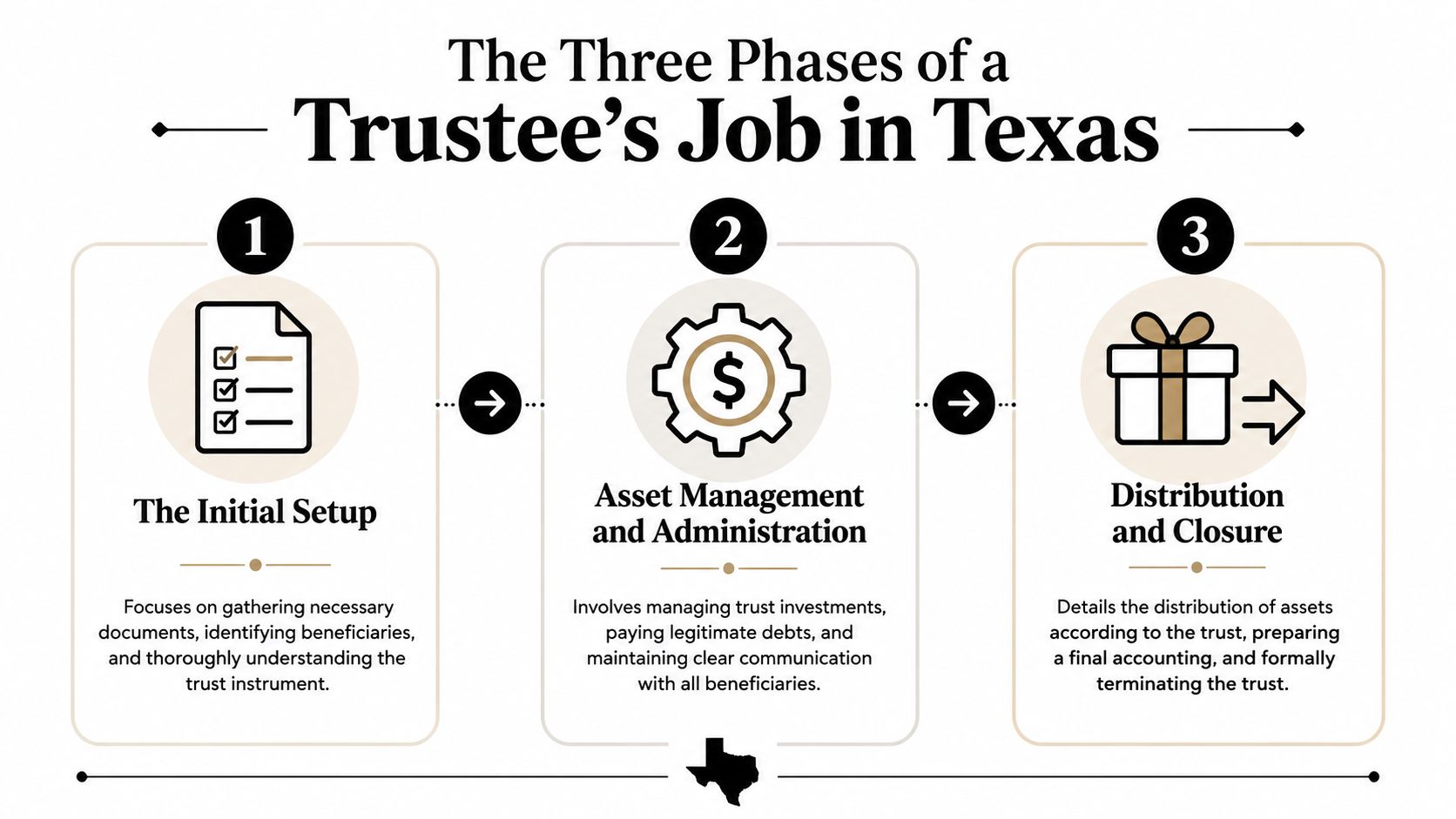
The Three Phases of a Trustee's Job in Texas
The easiest way to understand the timeline is to follow the trustee's actual job. Most administrations move through three broad phases. They may overlap, but they still explain why a routine trust takes time.
Phase one starts with control and clarity
At the beginning, the trustee's job is to get organized before moving money or property.
That usually means locating the trust agreement and every amendment, reviewing the trustee appointment language, identifying current beneficiaries, and gathering a working list of trust assets and obligations. This is also the stage where a trustee confirms whether some assets are part of the trust, whether a related estate administration is needed, and whether professional help from a CPA, appraiser, or Texas trust administration lawyer makes sense.
A trustee who rushes this stage can create trouble quickly. For example, a trustee may assume a house belongs to the trust, only to later find title wasn't transferred during the settlor's lifetime. That changes the path forward and may require probate work alongside trust administration.
Phase two is where most of the months go
Once the trustee has a clear picture of the trust, the administration shifts into active management.
Fiduciary duties in Texas prove to be very practical. The trustee needs to safeguard assets, maintain property, manage accounts, evaluate bills or claims, keep records, and communicate with beneficiaries in a way that is accurate and fair. If there is real estate, someone has to secure it, insure it, and decide whether to retain or sell it. If there are investments, the trustee has to manage them prudently under the terms of the trust and general fiduciary principles.
When debts are part of the picture, trustees and families often need basic background information before deciding what should be paid and from what source. A concise financial guide for survivors can help explain common debt issues after death, though trustees should still get Texas-specific legal advice before acting.
A trustee's delay isn't always inactivity. Often, it's the time required to verify assets, gather records, and avoid distributing property too soon.
During this phase, accurate accounting matters. Beneficiaries may not see all the behind-the-scenes work, but they often feel the effects of poor communication. Silence creates suspicion. A short, factual update usually prevents more conflict than a long legal explanation sent too late.
Phase three ends with distribution and closing
Final distribution is the part everyone notices, but it comes last for a reason.
Before closing, the trustee should be reasonably confident that the trust's obligations have been handled, the trust terms have been followed, and the assets are ready for transfer. Depending on the trust, that may include preparing a final accounting, coordinating deeds or assignment documents, and obtaining receipts or other closing records. The trustee also needs to make sure each distribution matches the trust language. “Equal shares” sounds simple until one beneficiary wants cash and another wants the house.
Here's a practical breakdown of the closing stage:
- Confirm the trust instructions: Read the actual distribution provisions again before making transfers.
- Match assets to beneficiaries: Some gifts are specific, while others are part of a residue or percentage share.
- Document the transfers: Keep copies of deeds, checks, receipts, account statements, and correspondence.
- Close the loop with beneficiaries: Clear communication at the end often reduces later disputes about what happened and why.
For trustees who want a fuller look at the role itself, this explanation of what a trustee does in Texas is a useful companion.
Key Factors That Extend Trust Administration
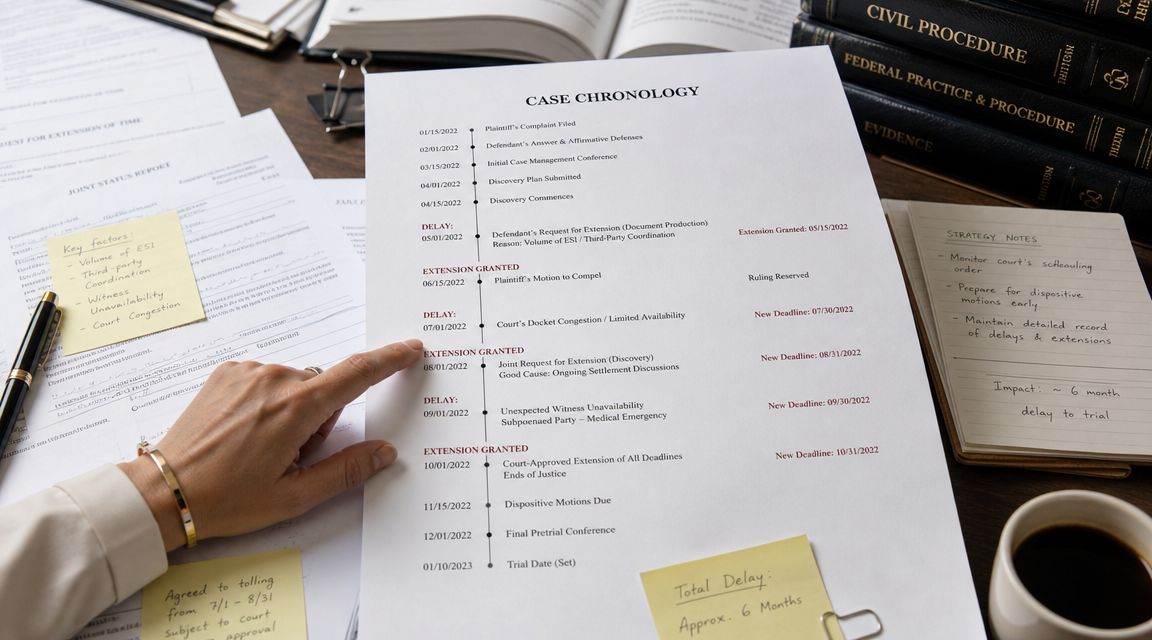
Some delays are built into the job. Others come from the assets or the family. The biggest drivers that push trust administration from months into a year or longer are beneficiary conflict, business interests, real estate in multiple states, and required tax administration. A trust may bypass probate court, but it does not bypass fiduciary duties, appraisals, creditor claims, or IRS and state tax reporting, as noted in this Texas administration timeline discussion.
Asset complexity changes everything
A brokerage account is usually easier to administer than a ranch, mineral interests, or a family company. Illiquid assets take time because the trustee may need appraisals, maintenance, negotiations, or sale documents before value can be fairly allocated.
A simple example is a trust that holds one home and some cash. If one beneficiary wants the home and the others want equal treatment, the trustee may need a valuation and a plan for balancing the shares. That process takes coordination and paperwork even when everyone gets along.
Conflict slows even straightforward trusts
A trust can look simple on paper and still move slowly if family members disagree. Questions about fairness, suspicion about spending, or arguments over personal property can all stall progress.
Some trustees make this worse by going quiet. Others create conflict by speaking casually, making promises, or appearing to favor one beneficiary. Once mistrust grows, every routine step gets harder.
When a trustee senses rising tension, early legal guidance is often faster and less costly than waiting for a full dispute.
If conflict has already started, a trustee may need targeted help with Texas trust dispute resolution and litigation before administration can move forward safely.
Tax and reporting duties can hold up closing
Tax work often feels invisible to beneficiaries because it happens in the background. But it can be one of the main reasons a trustee shouldn't rush final distributions.
Depending on the facts, the trustee may need to gather date-of-death values, coordinate with a tax professional, review prior filings, and wait for enough information to prepare accurate reports. Even when there is no controversy, that process takes time.
A trustee who distributes everything too early can create a second problem. If expenses or taxes appear later, the trustee may have to ask beneficiaries to return money. That conversation rarely goes well.
Common Pitfalls and How a Trust Lawyer Can Help
A trustee often runs into trouble in a familiar way. Someone asks for a quick distribution, a bill needs to be paid, the trust language seems straightforward enough, and the trustee makes a judgment call without stopping to confirm the next step. That one shortcut can slow the whole administration because trust work follows a sequence. If a step is skipped, the trustee usually has to go back, correct the record, and explain what happened.

The practical problem is not just making a mistake. It is making a mistake at the wrong point in the process. Trust administration works a lot like building a file from the ground up. First you identify the assets and the rules. Then you protect and manage what the trust owns. Then you account, resolve open obligations, and distribute. When a trustee jumps ahead, the timeline stretches because the missing work still has to be done.
Mistakes that disrupt the sequence
Some errors create delay almost immediately.
- Blending funds: Trust money should stay in trust accounts. Personal and trust funds mixed together can force the trustee to reconstruct transactions later.
- Acting on assumptions about the document: A trustee should follow the trust's actual instructions, not a general sense of what feels fair.
- Making distributions before the file is ready: Early payments can leave too little in reserve for expenses, tax matters, or unresolved questions.
- Keeping incomplete records: Missing statements, undocumented reimbursements, and informal notes make it harder to prepare an accounting and answer beneficiary concerns.
- Communicating unevenly: If one beneficiary gets detailed updates and another gets silence, suspicion grows fast.
These problems are avoidable, but they are not minor. In Texas, a trustee has fiduciary duties. That means the trustee is expected to act carefully, loyally, and in line with the trust terms. If beneficiaries believe those duties were not met, the trustee may have to defend decisions personally.
How a trust lawyer helps in real life
A lawyer's value is often most clear before a dispute reaches court. Good legal guidance helps the trustee put the work in the right order and document each step as it happens.
A Texas estate planning attorney or trust administration lawyer can read the trust closely, identify what must happen before any distribution, help the trustee set up a recordkeeping system, prepare for beneficiary questions, and coordinate with accountants or other professionals. That support often saves time because the trustee is not guessing, backtracking, or fixing preventable problems months later.
The Law Office of Bryan Fagan, PLLC provides Texas trust administration support that can include trustee guidance, fiduciary compliance, distribution planning, and dispute-related counsel when problems arise.
Video can also help trustees hear these issues explained in a more practical format:
Signs a trustee should get legal help early
Some situations are strong signals that a trustee should stop improvising and get advice.
- A beneficiary is pressing for immediate payment: The trustee needs to know what can be distributed safely and what should wait.
- The trust holds unusual assets: A business interest, mineral rights, rental property, or out-of-state assets often require a more careful plan.
- Family communication is becoming hostile: Once accusations begin, even routine updates should be handled with care.
- The trust terms do not line up cleanly: Amendments, handwritten changes, or conflicting language should be reviewed before the trustee acts.
- The trustee cannot tell what the next proper step is: Uncertainty itself is a warning sign in a fiduciary role.
A new trustee does not need to know everything on day one. The job is to recognize when the work has become too technical, too risky, or too emotionally charged to handle alone. Legal guidance does not just reduce stress. It often keeps the administration on track by making sure each duty is handled in the order Texas trust administration requires.
Achieving Clarity and Confidence in Your Role
A trustee usually feels more confident once the job stops looking like one large legal problem and starts looking like a sequence. First you secure the trust property and gather information. Then you deal with debts, taxes, records, and beneficiary questions. After that, you can make distributions and close out the work with much less risk of mistakes.
That sequence is the definitive answer to the timing question. The months involved are not empty delay. They are the time needed to complete each step in the right order, like clearing a house room by room before you can lock the door for the last time.
If you are serving as trustee, your goal is not speed by itself. Your goal is steady progress, good judgment, and a record that shows you handled the trust with care.
That is also why many trustees feel relief once they get clear advice tied to their actual next task. One meeting can help answer practical questions such as what must be inventoried now, what can wait, when a distribution is safe, and what should be documented before money changes hands.
Whether you are a trustee, a beneficiary trying to understand the process, or someone planning ahead with a Texas estate planning attorney, the right guidance turns an intimidating role into a manageable one.
If you need help with a Texas trust, contact Law Office of Bryan Fagan, PLLC for a free consultation. Our attorneys advise trustees and families on the practical steps required at each stage of administration.