Getting notice that you're a trust beneficiary can feel unsettling. A family member has died or stepped out of control, paperwork starts arriving, and someone says you've “inherited through a trust.” But nobody explains what that means, when you'll receive anything, or what rights you have.
That confusion is common. A trust is not just a pile of assets with your name on it. Under Texas law, it's a legal arrangement governed by the trust's written terms, the Texas Trust Code, and the trustee's fiduciary duties in Texas. If you don't understand the document, the answer isn't to guess, argue with relatives, or rely on verbal promises. The answer is to get the right information, in the right order.
A practical approach usually starts with three things. First, get the complete trust paperwork. Second, identify who the trustee is and what authority that person has. Third, confirm how distributions are supposed to happen, because some trusts pay out promptly while others stay in place and continue to hold assets for a beneficiary.
Inheriting a Trust Can Be Confusing But You Are Not Alone
Many beneficiaries start in the same place. They know they were named in a trust, but they don't know whether they're entitled to money now, later, or only for certain purposes. They may not know whether the trust owns a house, investment accounts, business interests, or something else entirely.
That uncertainty gets worse when family members give different answers. One person says the trustee can decide everything. Another says beneficiaries can demand their share immediately. A third insists “the trust avoids probate, so it should already be done.” In real trust administration, those assumptions often cause more trouble than the trust itself.

What usually helps first
Start with calm, documented steps:
- Get the document: You need the trust instrument, not a summary from a relative.
- Find the trustee: The trustee is the person legally responsible for administration.
- Read the distribution language: That section controls whether you receive a lump sum, staged payments, or continuing trust benefits.
- Ask for a timeline in writing: Clear questions usually produce better answers than emotional demands.
Practical rule: If you don't understand a trust, slow down and gather records before you make assumptions about your inheritance.
Texas beneficiaries often feel pressure to act quickly, especially if siblings are pushing for sales, withdrawals, or side agreements. That usually backfires. The strongest position is an informed one. Once you know what the trust says and who is managing it, your rights become much easier to evaluate and enforce.
Your First Action Securing and Reviewing the Trust Document
If you're wondering what to do if you inherit a trust and don't understand it, the first move is simple. Get the full trust document. Not a screenshot. Not a verbal explanation. Not only the signature page.

A practical inheritance guide explains the core issue well: the first technical step is document control. That means obtaining the full trust instrument, every amendment, and any restatement, then confirming which version controls. It also warns against acting on assumptions before reading the instrument, because beneficiary rights, creditor protections, borrowing limits, and distribution timing are all defined by the trust text itself, as noted in this inheritance management guide.
What documents to request
Ask the trustee for:
- The complete trust agreement
- Every amendment
- Any full restatement
- The name and contact information of the acting trustee
- Any resignation, appointment, or successor trustee paperwork
- Basic information about trust assets and current administration status
In Texas practice, version control matters more than people expect. A trust may have started years ago, then been changed later. The original document may no longer tell you who inherits, when distributions happen, or what discretion the trustee has.
What to review once you have it
Don't try to read the entire document like a novel. Read it like a map.
Look first for these sections:
- Trustee provisions: Who serves now, and who takes over if that person can't.
- Beneficiary provisions: Whether you are a current beneficiary, remainder beneficiary, or contingent beneficiary.
- Distribution terms: Whether the trustee must distribute assets outright or hold them in trust.
- Standards for payments: Some trusts allow distributions for health, education, maintenance, support, or other stated purposes.
- Restrictions: The document may limit borrowing, assignment, early withdrawals, or creditor access.
Here's a useful starting point before you meet with counsel:
What does not work
Beneficiaries lose time when they rely on any of the following:
- Family recollections: People often remember what they hoped the trust said.
- Old drafts: A later amendment may have changed everything.
- Partial copies: Missing schedules or signature pages can create confusion.
- Informal promises: The trustee must follow the trust, not a family consensus.
If the trustee resists providing the operative documents, treat that as a sign to communicate more formally. A Texas estate planning attorney can help you sort out what you're entitled to request and whether the trustee is complying with the duties Texas law imposes.
Understanding Trustee Duties and Beneficiary Rights in Texas
The biggest misunderstanding I see is this: many beneficiaries assume the trust is built around them. Legally, trust administration is built around the trustee, because the trustee is the person charged with managing and distributing trust assets. If a beneficiary hasn't been contacted, the first practical step is to contact the trustee in writing. One Texas trust and estates discussion also notes that trust administration commonly takes about 10 to 18 months on average and that if significant time passes without communication, beneficiaries should escalate, as explained in this Texas trust administration discussion.
That doesn't mean beneficiaries are powerless. It means your rights usually run through the trust document and the trustee's legal duties. Under the Texas Trust Code, a trustee is a fiduciary. In plain English, that means the trustee must manage the trust for the benefit of the beneficiaries and follow the trust's terms with care, loyalty, and fairness.
Texas Trustee Duties vs. Beneficiary Rights
| Trustee's Fiduciary Duty | What It Means for You (The Beneficiary) |
|---|---|
| Duty of loyalty | The trustee should act for the trust's purposes and beneficiaries, not personal gain. |
| Duty of prudence | Trust assets should be handled carefully and responsibly. |
| Duty to follow the trust | The trustee must follow the written terms, even when family members want something different. |
| Duty of impartiality | When there are multiple beneficiaries, the trustee should not unfairly favor one over another unless the trust allows it. |
| Duty to keep proper records | You can expect organized financial information, not vague explanations. |
| Duty to provide required information | You have the right to meaningful information about administration and your interest in the trust. |
Texas law can get technical fast, but the practical point is simple. A trustee has authority, but that authority is not unlimited. If you want a deeper look at beneficiary protections, this guide on rights of trust beneficiaries in Texas is a useful place to start.
What reasonable expectations look like
A trustee may need time to gather assets, value property, pay expenses, review taxes, and interpret the trust before making distributions. That delay is not automatically misconduct. The problem starts when there is no communication, no explanation, or no evidence that the trustee is administering the trust.
Beneficiaries usually get better results by asking focused questions about process, records, and timing than by demanding money on day one.
A short Texas example
Suppose a parent's trust leaves the family home and investment account to three children, but says one child may continue living in the home for a period set by the trustee. In that case, the trustee's job isn't to satisfy whichever sibling speaks the loudest. The trustee has to apply the trust terms, balance competing interests, and document the decisions.
That's where fiduciary duties in Texas matter. If the trustee is acting carefully and consistently with the document, a beneficiary may dislike the answer but still have to respect the process. If the trustee is hiding information or acting for personal advantage, that is a different matter.
How to Ask Questions and Request an Accounting
Good trust communication is direct, written, and specific. Beneficiaries often make things harder by sending emotional messages that ask ten questions at once. A better approach is to send a short letter or email that asks for the documents, current status, and expected next steps.
Questions worth asking early
Use plain language. For example:
- Trust document request: “Please provide a complete copy of the trust agreement, including all amendments and restatements.”
- Trustee identification: “Please confirm the current trustee and provide contact information for any attorney assisting with administration.”
- Administration status: “Please let me know what assets are in the trust and what steps remain before distributions can be made.”
- Timeline request: “Please provide your best estimate of the administration timeline.”
- Distribution explanation: “Please identify the provision that governs my distribution and whether it is mandatory or discretionary.”
That kind of message is firm without being hostile. It also creates a record.
When to request an accounting
An accounting is a formal report showing how the trust has been handled. In practice, it may include receipts, disbursements, assets on hand, and distributions already made. If you're unclear about what the trustee has done with trust property, an accounting is often the most useful request you can make.
For a closer look at the process, see this page on how to get trust accounting in Texas.
Suggested approach: Ask first for information in a professional tone. If the trustee ignores you, repeat the request in writing and keep copies.
Sample wording you can adapt
“Dear Trustee, I understand that I am a beneficiary of the trust. I'm requesting a complete copy of the operative trust document, including any amendments or restatements, along with a written update on the status of administration. Please also let me know whether a trust accounting is available and the expected timeline for any distributions. Thank you.”
That kind of request does three things well. It identifies your role, asks for concrete materials, and avoids unnecessary accusations. If the trustee is doing the job properly, a clear request usually moves the process forward. If the trustee is not, your written request becomes part of the record a lawyer can later use.
What to Do When Communication Fails or You Suspect a Problem
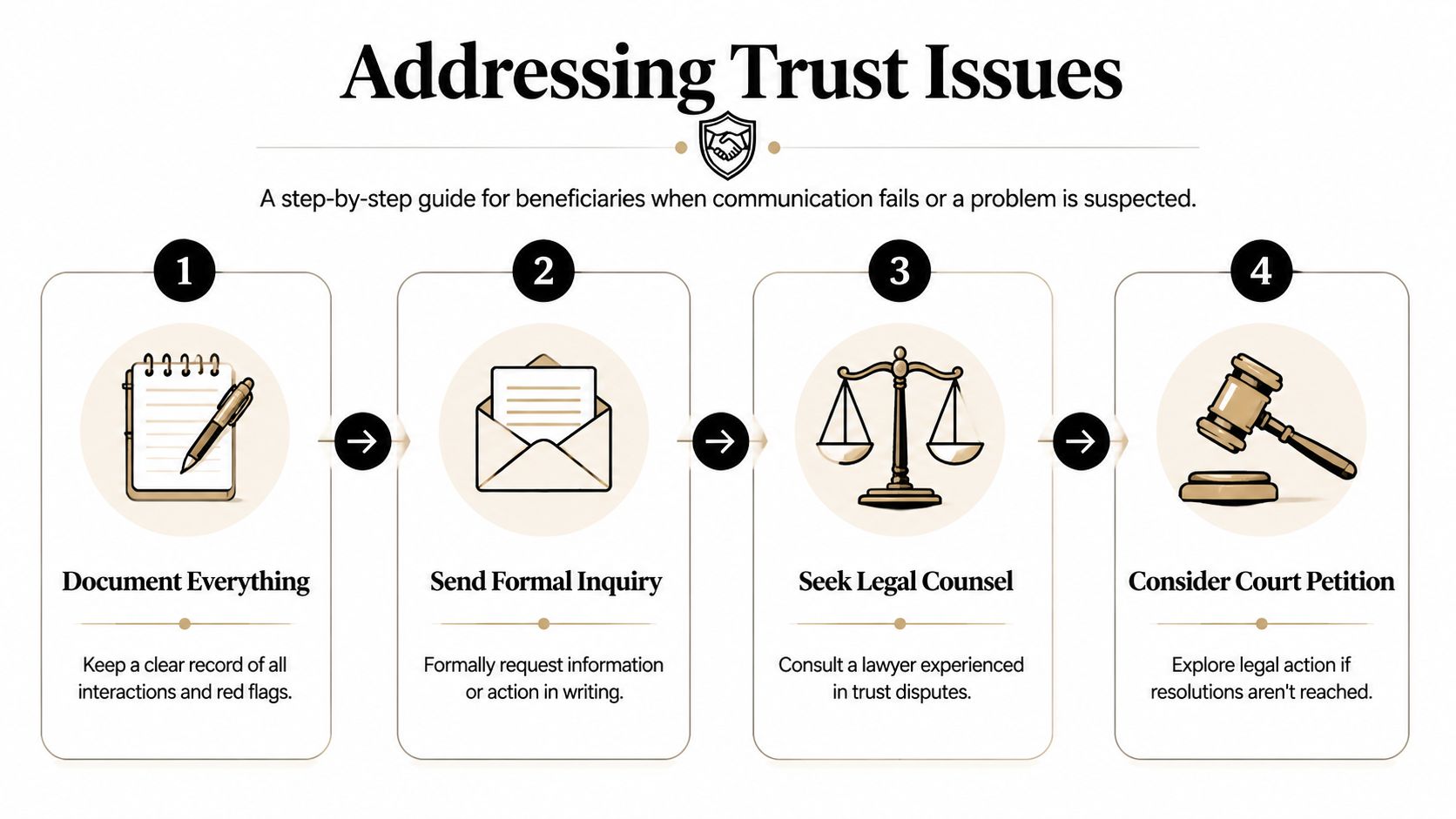
You ask for an update. Weeks pass. Then the trustee sends a vague reply, says a distribution is coming soon, or avoids the question entirely. If that is happening, treat it as a legal administration issue, not just a family misunderstanding.
Under the Texas Trust Code, beneficiaries are not expected to sit idly and hope things improve. You have rights, and the best next step is usually to create a clean paper trail before the problem gets worse.
Red flags that deserve attention
Some warning signs are obvious. Others show up through patterns in the trustee's conduct.
- No documents after repeated requests: You still have not received the trust, amendments, or basic information about administration.
- Expenses that do not make sense: Trust funds appear to be paying charges that are unsupported or unrelated to trust purposes.
- Unequal treatment in communication: One beneficiary gets details while another gets silence.
- Asset movement without explanation: Property appears to have been sold, transferred, retitled, or used without a clear written reason.
- Unexplained delay: Time keeps passing, but the trustee will not give a written status update or timeline.
If records do not add up or you believe property has disappeared, review this guide on how to track missing trust money in Texas. It can help you identify what documents to request and what facts matter most.
Escalation options in Texas
Start with a practical question: is the trustee merely disorganized, or is the trustee refusing to perform legal duties? That distinction matters. A sloppy trustee may respond once counsel gets involved. A dishonest or self-interested trustee may require court action.
In Texas, escalation often happens in stages. Counsel may send a formal demand for information, trust records, or an accounting. Mediation may make sense if the dispute involves family conflict, interpretation issues, or timing disagreements. Court becomes the right tool when the trustee will not provide information, is mishandling assets, is ignoring the trust terms, or is using trust property for personal benefit.
A Texas trust administration lawyer may help with requests to:
- Compel information or an accounting
- Enforce the trust's distribution terms
- Challenge improper trustee conduct
- Seek removal of a trustee when justified
- Address whether a trust can be modified or terminated under Texas law
Why legal help matters here
Beneficiaries often wait because they do not want to inflame family tension. I understand that instinct. In practice, delay usually helps the person holding the records.
A lawyer can separate emotional frustration from the legal issues that support action. Some complaints are about tone, personality, or family history. Others point to real breaches of duty, such as failure to account, self-dealing, favoritism, or unreasonable delay. That distinction saves time and money.
The Law Office of Bryan Fagan, PLLC handles Texas trust administration, probate matters, guardianship issues, asset protection planning, and beneficiary disputes. If taxes, valuation issues, or estate structure are part of the conflict, outside estate tax planning insights may also help you understand the bigger picture.
A beneficiary does not need to prove fraud before asking a lawyer whether a trustee's conduct is a problem.
Your Financial Future Distributions Taxes and Next Steps
Once you understand the trust and distributions begin, the legal question shifts into a personal one. What should you do with the inheritance? The safest answer is usually not “spend it right away.”
Charles Schwab advises beneficiaries to “hit the pause button” and, in many cases, wait about three months before spending an inheritance while holding the funds in a high-yield account, reviewing the full financial picture, prioritizing goals, and speaking with professionals, especially for larger inheritances, as explained in Schwab's guide on what to do with an inheritance.
Practical next moves
- Review the form of distribution: Some trusts pay a lump sum. Others make installments or continue holding assets for your benefit.
- Build an asset list: Identify cash, investments, real estate, business interests, and anything that may need retitling or ongoing management.
- Address immediate planning issues: High-interest debt, emergency reserves, and upcoming obligations usually deserve attention before major purchases.
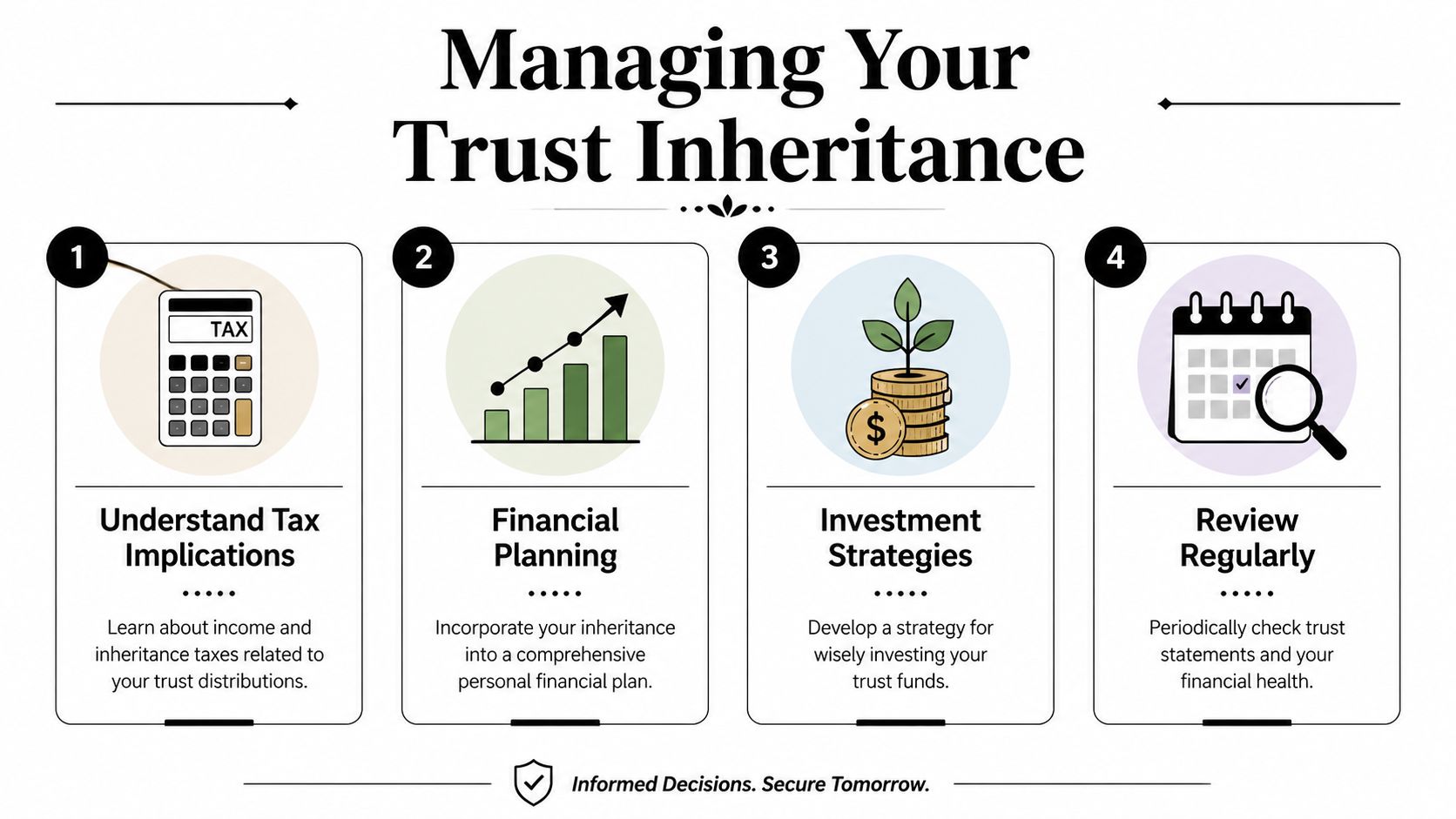
- Ask tax questions early: Texas doesn't impose a state inheritance tax, but trust-related tax issues can still exist depending on the assets and income involved.
Keep your planning coordinated
Beneficiaries often focus so much on receiving the inheritance that they forget to integrate it into a broader plan. A Texas estate planning attorney and tax professional can help you decide whether to hold, invest, distribute, or protect what you've received. If you want a plain-English overview of tax considerations that often come up around inherited assets, Allied Tax Advisors offers helpful estate tax planning insights.
The right next step depends on the trust terms, the asset mix, your existing finances, and your family situation. Slow, organized decisions usually outperform rushed ones.
If you're managing a trust, questioning a trustee's actions, or trying to understand your inheritance under Texas law, contact Law Office of Bryan Fagan, PLLC for a free consultation. Our attorneys provide trusted, Texas-based guidance for trust administration, estate planning, probate, guardianship, asset protection, and dispute resolution at every stage of the process.