Managing a loved one’s trust can feel overwhelming, especially when you are grieving. But with the right legal guidance, it doesn’t have to be. Being named a successor trustee is a profound honor. In Texas, you've been entrusted to carry out a loved one's final wishes, a crucial role that helps their legacy bypass the often slow and public process of probate court. This guide is here to walk you through your responsibilities, step by step.

Stepping Up as a Successor Trustee in Texas
Managing a trust can feel like a monumental task, but it doesn't have to be a source of stress. At its core, a trust is a key part of an estate planning strategy where one person (the "grantor") gives another person (the "trustee") the responsibility to manage assets for the benefit of others (the "beneficiaries").
When the original trustee can no longer serve—due to death or incapacity—that's when you are called to step in. Your primary job is to honor the grantor’s intentions by managing the trust precisely as the document instructs.
Your First Steps and Legal Duties
This role is more than a friendly request; it comes with serious legal responsibilities under the Texas Trust Code. Think of the trust document as your map and the assets as your cargo. You are the captain now, responsible for getting everything to its destination safely. Your immediate duties include:
- Locating and Understanding the Trust: Your first priority is to obtain the official trust document and read it carefully from cover to cover. This is your legal instruction manual.
- Formally Accepting the Role: You will likely need to sign a document to formally accept the position of trustee before you can legally take any action on behalf of the trust.
- Securing the Assets: You have a legal obligation to take control of all trust property—this includes everything from bank accounts and investments to real estate.
The real power of a successor trustee is in avoiding probate. This means a smoother, faster, and more private transfer of assets to the beneficiaries, steering clear of the delays and public record of court proceedings.
We understand this is a lot to take on. At The Law Office of Bryan Fagan, PLLC, we have helped countless Texans navigate this exact process. This guide will demystify your obligations and give you the confidence to fulfill your duties correctly and compassionately.
Understanding Your Fiduciary Duties Under the Texas Trust Code

Stepping into the role of a successor trustee means you have been given a profound level of trust. With that trust comes a serious legal obligation. You are now a fiduciary, bound by a strict set of principles under the Texas Trust Code to act solely for the benefit of the trust and its beneficiaries.
For example, imagine the grantor created the trust to provide for their children's college education. As trustee, your duty is to manage and invest the trust funds prudently to ensure that money is available when the children are ready for college. Using those funds to make a personal investment or give a loan to a friend would be a direct violation of your fiduciary duty.
The Core Fiduciary Duties Explained
In Texas, your fiduciary duties set a high standard for conduct. These aren't just suggestions—they are legal requirements. Fulfilling them protects you from personal liability and, more importantly, honors the faith placed in you.
Here are the non-negotiable principles you must uphold:
Duty of Loyalty: Your loyalty must be absolute. Every decision you make must be for the sole benefit of the beneficiaries. This means no self-dealing, no conflicts of interest, and never putting your own financial needs ahead of the trust's. For instance, you cannot sell a trust-owned home to yourself for a below-market price or loan trust money to your own business.
Duty of Prudence: The Texas Trust Code requires you to manage the trust’s assets like a "prudent person" would manage their own affairs. This is a standard of caution, diligence, and common sense. It means making sensible investment choices, protecting property from damage or loss, and avoiding overly speculative ventures.
Duty to Follow the Trust’s Terms: The trust document is your primary instruction manual. You are legally required to follow its directions for managing and distributing assets. If you ignore the grantor's written instructions, you are not just breaking trust—you are breaking the law.
A key advantage of having a successor trustee is the ability to bypass probate court intervention entirely. Once the original trustee can no longer serve, the successor can immediately begin managing the trust without delay, allowing for seamless asset management and faster distribution to beneficiaries.
Other Essential Duties to Uphold
Beyond these core pillars, your role has other critical layers. These duties work together to ensure the trust is administered with fairness and transparency. Understanding the full scope of your fiduciary duties in Texas is the best way to protect yourself and serve the beneficiaries well.
Duty to Account
You have a legal duty to keep an immaculate paper trail of every transaction. This means recording every dollar that comes in, every bill paid, and every asset distributed. Beneficiaries have a right to request a formal accounting, and you must be prepared to provide it to demonstrate your responsible stewardship.
Duty of Impartiality
When a trust has more than one beneficiary, you must act as a neutral referee. This doesn’t always mean treating everyone identically, but it does mean you cannot play favorites. Whether you're making discretionary distributions or weighing competing needs, your decisions must be balanced and true to the grantor's intentions for all beneficiaries.
A Practical Guide to Texas Trust Administration
Knowing your duties is one thing; executing them is another. When you become a successor trustee, you are the manager of a critical process. Following a clear, step-by-step plan is essential for fulfilling your responsibilities and protecting yourself from personal liability and family disputes.
Step 1: Locate and Internalize the Trust Document
Your first step is to find the original, signed trust document. This is your legal instruction manual, and it overrides any verbal promises, old conversations, or assumptions about what the grantor wanted.
Read it carefully. Then read it again. You must fully understand the grantor’s specific instructions before you do anything else. Once you understand your role, you'll need to formally accept it, usually by signing a document called an "Affidavit of Acceptance." This is the official starting pistol; you have no legal authority to act for the trust until this is done.
Step 2: Gather Key Information and Notify the Beneficiaries
With the signed trust in hand, your next move is to obtain a new Taxpayer Identification Number (TIN) for the trust from the IRS. The trust is now its own legal entity for tax purposes, and this number is essential for banking and tax filings.
You are also legally required to notify all beneficiaries that you are the new trustee. Under the Texas Trust Code, this is not optional. This notification should be a formal, written communication that clearly states your role, provides your contact information, and confirms their status as beneficiaries. Starting with transparent communication builds a foundation of trust and can prevent future conflicts.
Key Takeaway: Open, honest communication isn’t just good manners—it’s a legal mandate. Notifying beneficiaries promptly shows you're taking your fiduciary duties seriously from day one.
Successor Trustee's Initial 90-Day Checklist
The first three months are critical for setting the right tone and getting the administration on solid legal footing. This checklist outlines the essential tasks you should prioritize to start the process correctly.
| Task | Key Action Item | Why It's Important |
|---|---|---|
| Secure the Trust | Find the original trust document and sign an Affidavit of Acceptance. | Establishes your legal authority to act. |
| Obtain EIN/TIN | Apply for a new Employer Identification Number from the IRS. | Required for opening trust bank accounts and filing taxes. |
| Notify Beneficiaries | Send formal, written notice to all named beneficiaries. | Fulfills a legal duty under the Texas Trust Code and promotes transparency. |
| Begin Asset Inventory | Start a detailed list of all known assets (bank accounts, real estate, etc.). | The first step in "marshalling" or gathering the trust's property. |
| Open a Trust Account | Establish a new bank account in the name of the trust. | Creates a clear financial separation and an auditable trail for all transactions. |
| Consult Professionals | Meet with a Texas trust administration attorney and a CPA. | Ensures you have expert guidance to avoid costly legal and tax errors. |
Following these initial steps methodically will help you build momentum and ensure you’re meeting your core responsibilities from the very beginning.
Step 3: Round Up and Secure All Trust Assets
Now comes the legwork. You must identify, locate, and legally take control of every single asset owned by the trust. This process is called "marshalling the assets," and it can be a significant undertaking.
- Build a Detailed Inventory: Create a comprehensive spreadsheet or list of every asset, including bank accounts, brokerage portfolios, real estate, vehicles, jewelry, and art.
- Get Appraisals: For any non-cash assets like a house, car, or valuable collectibles, you must get a professional appraisal. This determines their fair market value as of the date the trust became irrevocable (usually the grantor's date of death). This value is crucial for tax purposes (establishing the "step-up in basis") and forms the foundation of your accounting.
- Retitle the Assets: You need to officially transfer ownership of these assets from the grantor's individual name into the name of the trust. This involves significant paperwork with banks, financial institutions, and county clerks to update titles and account registrations. This step is how you truly secure the assets under your control.
A Texas trust administration lawyer can be invaluable during this phase, ensuring no asset is missed and all legal requirements for retitling are met correctly. For a deeper dive into this stage, see our guide on how to administer a trust in Texas.
Step 4: Manage the Money and Make Distributions
Once you have control of the assets, you are the chief financial officer of the trust. Your responsibilities shift to day-to-day management. This means paying the grantor's final debts, settling ongoing administration costs (like legal or accounting fees), and handling all tax obligations.
You will also be tasked with prudently investing the trust’s assets, following the specific standards in the Texas Trust Code. Finally, you will carry out the grantor’s wishes by making distributions to the beneficiaries as the trust document directs. Whether it’s an immediate lump-sum payout or a long-term plan to manage assets for decades, you must follow the instructions to the letter. When done right, this process allows families to bypass the public and often grueling Probate process—one of the biggest advantages of a well-run trust.
How to Fulfill the Critical Duty to Account
Of all the hats you'll wear as a successor trustee, the bookkeeper hat carries the most weight—and the most personal liability. Under the Texas Trust Code, you are required to keep flawless financial records and provide formal accountings to the beneficiaries. This isn't just a suggestion for good organization; it's a legal mandate that acts as your primary shield against future disputes.
A proper accounting is a detailed story of the trust's financial life. It must clearly show every dollar that came in, every dollar that went out, and every asset distributed to a beneficiary. Meticulous, proactive record-keeping is non-negotiable.
The Legal Standard for Accounting in Texas
The duty to account is one of the most strictly enforced fiduciary duties in Texas. The law, outlined in Texas Trust Code § 113.152, is crystal clear: trustees must maintain complete and accurate records and be ready to provide a detailed accounting to beneficiaries upon request.
Texas courts take this obligation seriously. The landmark case Corpus Christi Bank & Trust v. Roberts serves as a stark reminder. In that case, the court held a deceased trustee's estate liable for the failure to provide an accounting, establishing that this duty is so absolute that it cannot be waived.
To meet this high standard, one of your first actions should be opening a dedicated bank account solely for the trust. You must never commingle trust funds with your own money. Every single expense, from legal fees to lawn care at a trust property, must be paid from this account. This creates the clean, undeniable paper trail you need.
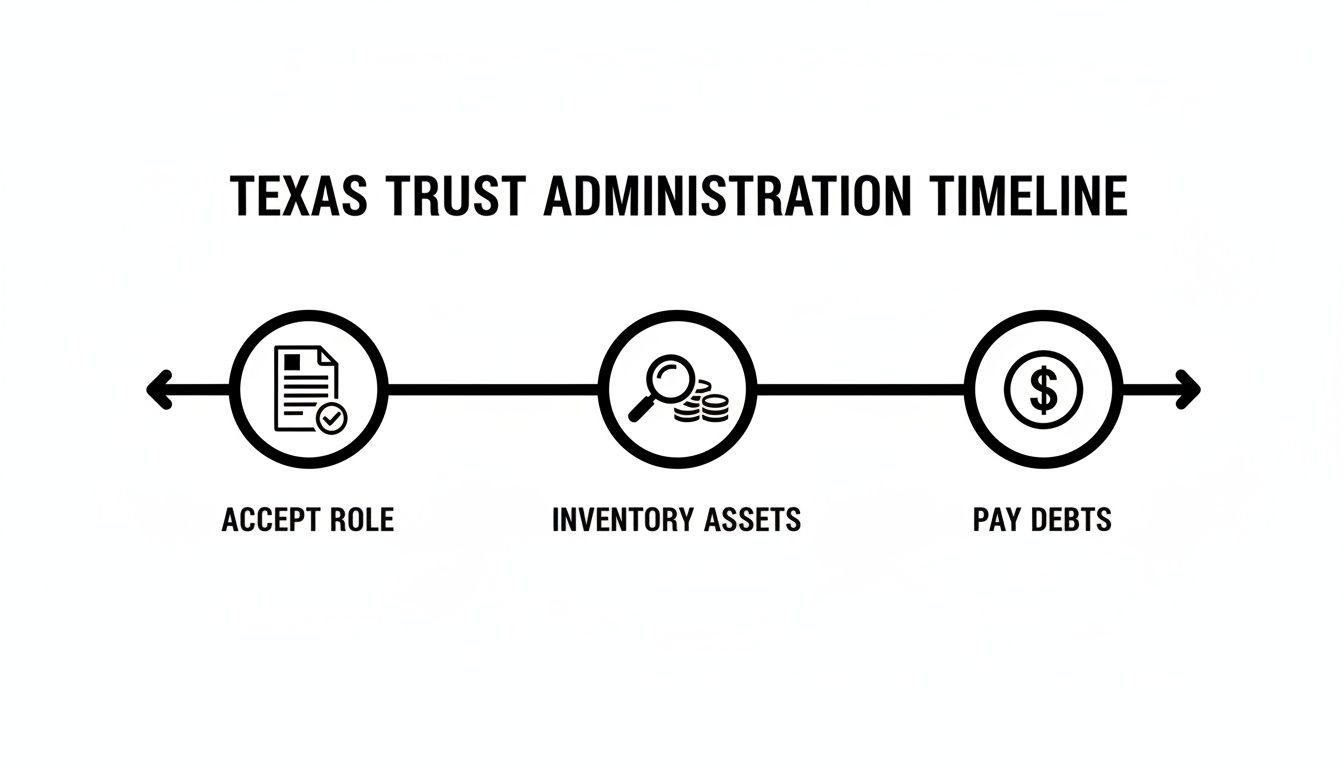
As this timeline shows, the core tasks of accepting the role, inventorying assets, and paying debts are the first chapters in the financial story you are now responsible for telling.
Building Your Accounting System
As the trust's chief financial officer, every transaction, no matter how small, needs to be documented with precision. To do this correctly, you'll need to master the fundamentals of accounting and bookkeeping essentials.
Here are practical steps to build a bulletproof system from day one:
- Use Dedicated Software: Set up accounting software like QuickBooks or a detailed spreadsheet. Categorize every entry so you can generate reports easily.
- Keep All Receipts: Save every invoice, receipt, and bank statement. Digitize them by scanning them into a secure cloud folder for easy access and backup.
- Document All Distributions: When you distribute any assets to a beneficiary, always get a signed receipt. This simple piece of paper confirms what they received and protects both of you.
Your accounting records should be so clear and organized that a complete stranger could pick them up and understand the trust's entire financial history. This level of detail is your best defense if your actions are ever questioned.
Engaging a CPA or a Texas estate planning attorney from the beginning is a game-changer. They can help you establish a system that complies with the Texas Trust Code and review your records to ensure you're on the right track. For a deeper dive, our guide on what trust accounting entails breaks down why this is so critical.
Managing Trustee Compensation and Trust Expenses
Serving as a successor trustee is a serious commitment of time and effort, and Texas law recognizes that you should be compensated for your work. Understanding how to handle compensation and expenses with transparency is crucial.
Your right to payment is a core part of your successor trustee responsibilities in Texas. First, check the trust document itself. The grantor may have specified a flat fee, an hourly rate, or a percentage of the trust's total value.
If the trust document is silent, the Texas Trust Code allows for "reasonable compensation" for your services. What is "reasonable" depends on the work involved.
Determining Fair Compensation
When the trust doesn't specify a fee, "reasonable" compensation is determined by several factors:
- Time and Labor: The actual hours you spend managing the trust.
- Trust Complexity: A trust with a family business and multiple properties requires more work than one with a single brokerage account.
- Trustee Skill: Professional experience in finance, law, or business can justify higher compensation.
- Local Standards: What are corporate trustees or other professionals in your area charging for similar services?
It is absolutely crucial to keep meticulous records of your time and the tasks you complete. This detailed log justifies your compensation and demonstrates to beneficiaries that you are acting in good faith.
Paying for Trust Administration Expenses
You are not expected to pay for trust-related costs out of your own pocket. All legitimate expenses incurred while managing the trust are paid directly from the trust's funds.
These costs often include:
- Legal Fees: Hiring a Texas trust administration lawyer to guide you through legal requirements.
- Accounting Fees: Working with a CPA for tax filings and preparing formal accountings.
- Appraisal Costs: Obtaining professional valuations for real estate, artwork, or business interests.
- Property Maintenance: Paying for insurance, repairs, and upkeep on trust property.
The process of choosing and paying a successor trustee is a vital part of any solid estate plan. The job takes significant time and know-how, which is why the law provides for compensation. If beneficiaries believe you're mismanaging funds or failing in your duties, they have the right to ask a court to remove you. You can explore the important elements of revocable trusts to understand this role's context better.
Understanding Trustee Bonds
In some cases, a court or the trust document itself may require you to post a trustee bond. A bond acts as an insurance policy for the trust, protecting the beneficiaries from financial loss if a trustee mismanages funds or acts dishonestly. The cost for this bond is a legitimate administrative expense, meaning the trust pays the premium, not you. This requirement is similar to the protective measures seen in complex Guardianship cases, where the primary goal is to safeguard an individual's assets.
When You Should Call a Texas Trust Attorney
Serving as a successor trustee is a significant honor, but it can also feel like navigating a legal minefield. Going it alone can lead to costly errors, family conflict, and even personal liability. Knowing when to call for professional backup isn’t a sign of weakness—it’s the hallmark of a smart, responsible fiduciary.
Trying to handle complex scenarios without a Texas trust administration lawyer is a risk you don’t have to take.
Red Flags That Signal You Need Legal Counsel
While some administrative duties are straightforward, others are full of potential problems. If you encounter any of these red flags, it’s time to speak with an experienced attorney.
- Ambiguous Trust Language: If the trust document uses vague terms like providing for a beneficiary's "welfare," disputes can arise. A lawyer can help interpret the grantor's intent as defined by Texas law.
- Beneficiary Disagreements: If beneficiaries are at odds over their shares, your decisions, or the trust’s terms, you need a neutral expert. An attorney can help mediate and ensure you're upholding your duty of impartiality.
- Complex or Unusual Assets: Managing a family business, multiple real estate properties, or mineral rights requires specialized knowledge. You need legal guidance for proper valuation, management, and distribution.
Engaging an attorney is a protective measure, not a last resort. It's about ensuring every action you take is compliant, defensible, and in perfect alignment with your fiduciary duties in Texas, safeguarding both you and the legacy you're managing.
Proactive Legal Support Is Your Best Defense
An attorney can be your most valuable ally, providing the clarity and confidence you need to act decisively. A critical piece of managing trust funds is to meticulously track expenses and all other financial activity. A lawyer ensures this and all other duties are performed flawlessly.
When to Seek an Attorney's Help:
- Facing Tax Questions: Trust and estate tax laws are notoriously complex. An attorney can coordinate with a CPA to manage tax filings, plan for potential liabilities, and keep the trust compliant.
- Accusations of Breach of Duty: If a beneficiary ever accuses you of mismanaging funds, self-dealing, or any other breach, you need legal representation immediately to defend your actions and protect yourself.
- Modifying or Terminating a Trust: Sometimes, a trust's terms no longer make sense. An attorney is essential to guide you through the court process for how to modify a trust in Texas or terminate it according to strict legal standards.
Hiring legal counsel provides crucial Asset Protection for the trust itself. The attorneys at The Law Office of Bryan Fagan, PLLC are dedicated to helping trustees navigate their responsibilities with skill and confidence.
If you’re managing a trust or planning your estate, contact The Law Office of Bryan Fagan, PLLC for a free consultation. Our attorneys provide trusted, Texas-based guidance for every step of the process.
Frequently Asked Questions About Being a Successor Trustee
Stepping into the role of a successor trustee can feel like being handed a map to a place you've never been. It's natural to have questions. Here are some of the most common ones we hear from Texans tasked with this critical responsibility, answered with the clarity you need.
What Happens If the Named Trustee Cannot Serve?
Life happens. Sometimes the person named as trustee simply can’t do the job. They might be overwhelmed by the successor trustee responsibilities in Texas, have their own health issues, or may have even passed away.
A well-drafted trust always has a backup plan. The first place to look is the trust document itself for an alternate or successor trustee. If one is named, they can step in to serve. If there's no backup listed, the situation gets more complicated, often requiring you to petition a Texas court to appoint a qualified trustee.
How Long Does It Take to Distribute Trust Assets in Texas?
There's no single answer to this question; the timeline is as unique as the trust itself. For a straightforward trust holding simple cash accounts with clear instructions, the whole process might wrap up in a few months.
However, things can take a year or even longer if the trust involves more complex assets. Several factors can extend the timeline:
- The need to sell real estate, business interests, or other assets that aren't easily converted to cash.
- The time it takes to file and pay all final taxes for both the grantor and the trust.
- The process of identifying and settling any outstanding debts or claims against the estate.
Can a Trustee Also Be a Beneficiary?
Absolutely. In Texas, it's quite common for a trustee to also be a beneficiary of the same trust. A classic example is a parent naming their oldest child as trustee for a trust that will benefit all their children.
While this arrangement is perfectly legal, it demands a higher level of diligence. As the trustee, you are bound by a strict fiduciary duty of impartiality. You cannot play favorites or prioritize your own interests over those of the other beneficiaries. Keeping meticulous records and maintaining open, honest communication is non-negotiable to prevent conflicts and build trust.
If you’re managing a trust or planning your estate, contact The Law Office of Bryan Fagan, PLLC for a free consultation. Our attorneys provide trusted, Texas-based guidance for every step of the process at https://www.texastrustadministration.com.