Skip to content
A pour-over will in Texas is a safety-net will that works with an existing living trust, not instead of one. To be valid in Texas, it must be in writing, signed by the testator, and witnessed by two credible witnesses who are at least 14 years old, and it must be filed for probate within four years of death.
Planning for the future can feel overwhelming, especially if you've already created a trust and assumed everything was covered. Many Texas families are surprised to learn that a trust only controls the assets transferred into it. If an account, vehicle, or piece of property stays in your individual name, that asset can create problems later.
That's where a pour-over will helps. It acts like a backup document for the assets that never made it into your trust. If you're sorting through what is a pour over will Texas families use, the short answer is this: it helps keep your estate plan together when real life gets messy.
A common example is simple. You create a revocable living trust, transfer your home and main accounts, then later buy a car or open a new account and forget to retitle it. Without a backup will, that asset may pass under Texas intestacy law instead of under your trust instructions. If you're still deciding between these tools, this overview of living trust vs will in Texas helps show why many plans need both.
Planning Your Texas Estate with Confidence
Managing your future estate plan can feel like trying to organize a filing cabinet while new papers keep getting added. You may have signed a trust, stored it safely, and felt relieved. Then life moved on. You changed banks, bought property, inherited something unexpected, or overlooked one account.
That doesn't mean your planning failed. It means your plan needs the same kind of backup system that careful people use in other parts of life.
Why families run into this problem
A living trust is powerful, but it only governs assets that are titled in the trust's name. If something stays outside the trust, your trustee can't automatically take it over after death as if it were already inside. That gap is where confusion begins for executors, trustees, and beneficiaries.
Texas estate planning often works best when several documents support each other. The trust sets the long-term instructions. The will catches what was missed. Fiduciary principles then guide the people in charge, including the executor and trustee, who must act carefully and in the best interests of others.
Practical rule: A trust is the main container. A pour-over will is the backup route that pushes missed assets into that container.
A calmer way to think about it
Instead of asking whether you need a will or a trust, it often helps to ask how the two documents work together. Texas families often need both, especially when they want one coordinated set of instructions for children, inheritances, or asset protection.
That coordination matters for more than distribution. It also affects trust administration, probate filings, beneficiary communication, and tax planning. The Texas Estates Code governs wills and probate. The Texas Trust Code governs trust operation and administration. Fiduciary duties shape how trustees and executors must carry out both.
When those pieces line up, families usually face less confusion, fewer mixed messages, and a more orderly process during a difficult time.
Understanding the Pour-Over Will as Your Estate Safety Net
You sign a living trust, feel relieved, and assume everything you own will follow that plan. Then life keeps moving. A new bank account gets opened in your individual name. A vehicle title never gets updated. A refund check arrives after death made payable to you, not the trust. A pour-over will is the document that catches those loose ends and sends them where your estate plan already says they should go.
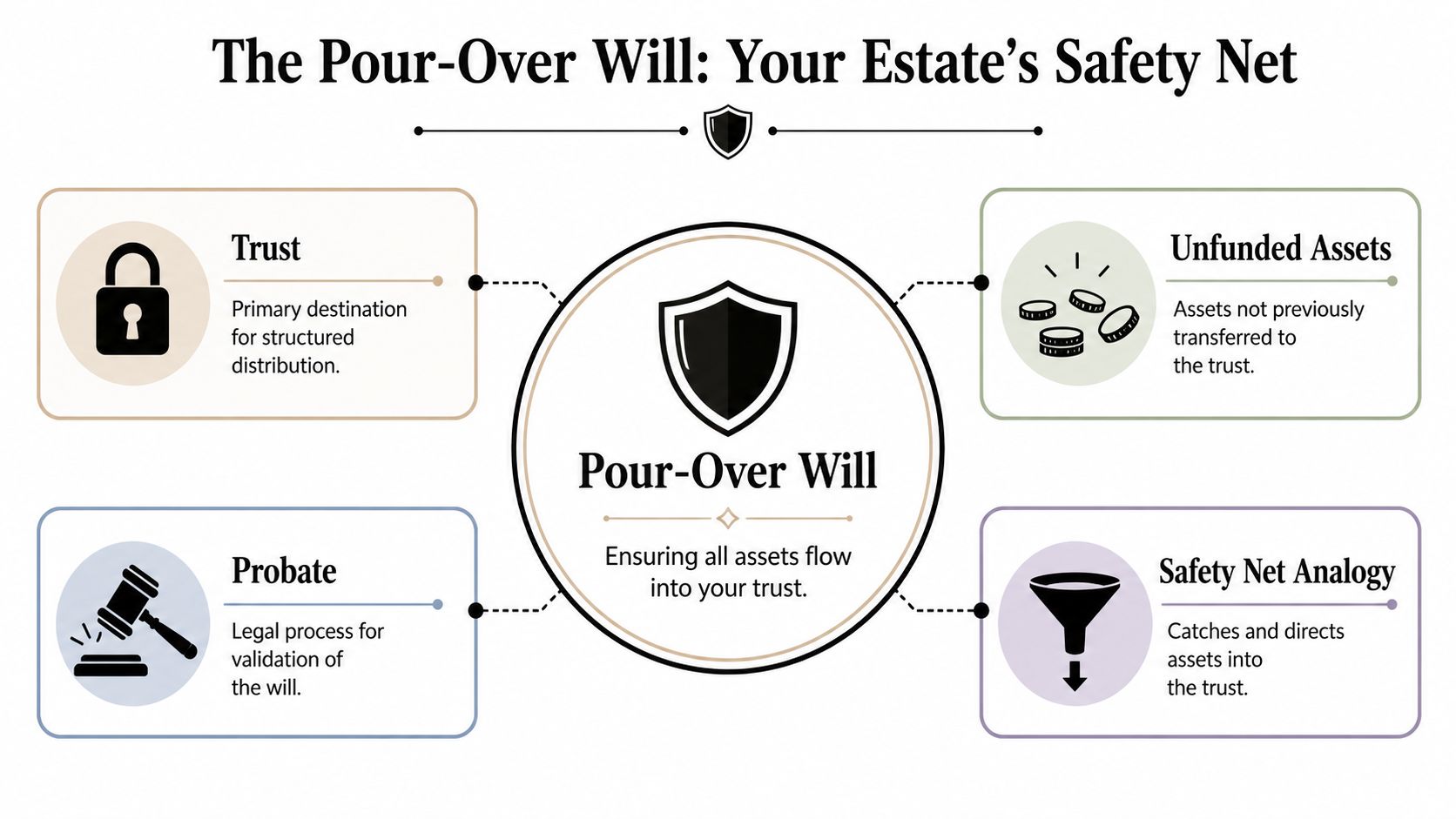
A pour-over will is a special kind of will. Its job is to direct assets left outside your revocable living trust into that trust after death, so the trust can still control how those assets are managed and distributed. Under Texas Estates Code Chapter 251 and this explanation of Texas pour-over wills, property that remains outside the trust at death can be transferred into the trust through the will, rather than being distributed under separate beneficiary instructions in the will itself.
How the safety-net idea works
A helpful comparison is a catch basin placed under a workbench. Your trust is where you meant important items to go from the start. The pour-over will catches what slipped outside that system and directs it back into the trust after death.
That last part matters. The will usually names the trust as the beneficiary of those leftover assets. So instead of saying, "give this account to my daughter" or "give this vehicle to my son," the will says those probate assets should be transferred into the trust, and the trust's terms decide what happens next.
For many Texas families, that creates one coordinated set of instructions. If the trust says a child receives money in stages, or a trustee manages funds for a beneficiary who is young or vulnerable, the pour-over will helps keep those same rules in place for assets that were never properly moved into the trust. If you want a clearer picture of how living trusts work in Texas, it helps to learn the trust first and then view the pour-over will as the backup document that supports it.
Why families use one
People do not usually leave assets outside a trust because they changed their minds. More often, they ran out of time, missed a funding step, bought something new, or never realized a particular asset still needed to be retitled.
Without a pour-over will, that forgotten property may pass under Texas intestacy rules or under terms that do not match the rest of your plan. The result can feel like having one instruction manual for most of the estate and a completely different one for whatever was left out.
The pour-over will helps preserve the logic of your trust plan when real life leaves a few assets behind.
One point that causes a lot of confusion
A pour-over will works with a trust. It does not replace the trust, and it does not do the trust's job by itself. The trust must already exist, or be created as part of the same estate plan, so the will has a valid destination for the property it collects.
This is also where many people get tripped up. Because the will sends assets into the trust, they assume the will avoids probate. It does not. Its purpose is different. It makes sure probate assets end up under the trust's instructions instead of being distributed in a way that conflicts with the larger plan.
That coordination is the primary value. The trust sets the rules. The pour-over will catches what was missed and routes it into those rules.
The Pour-Over Will and the Texas Probate Process
A common Texas scenario looks like this. A parent creates a living trust, transfers the home and some accounts into it, and assumes the rest of the estate will follow the same path automatically. Years later, a vehicle, a new bank account, or a mineral interest is still titled in that parent's individual name. After death, those assets do not jump straight into the trust. The pour-over will directs them there, but the probate court still has to open the gate.

That point clears up one of the biggest misunderstandings about pour-over wills in Texas. The living trust can avoid probate only for assets that were transferred into the trust during life. If an asset stays in the decedent's individual name, the pour-over will usually sends it through probate first and into the trust afterward.
Probate, in this setting, is less about changing the estate plan and more about confirming authority. The court reviews the will, recognizes the executor, and gives that executor legal power to gather the probate property, pay valid estate obligations, and transfer what remains into the trust. The will and the trust work like two connected parts of one system. The will catches stray property. The trust supplies the long-term instructions for managing and distributing it.
How the process usually works
The executor named in the pour-over will files the will in the probate court for the county where the decedent lived. If the court admits the will to probate, the judge appoints the executor and issues Letters Testamentary, which are the documents third parties often want to see before releasing estate property.
From there, the executor identifies assets that are part of the probate estate, deals with debts and other estate matters that apply, and then transfers the remaining property to the trustee. A broader guide to the Texas probate process for estates and wills can help you see where each step fits.
Here is the sequence in plain English:
- Death occurs. Some property is already owned by the trust, and some is still owned individually.
- The executor files the pour-over will in the proper Texas probate court.
- The court reviews the will and decides whether to admit it to probate.
- Letters Testamentary are issued so the executor can act for the estate.
- The executor gathers probate assets and handles estate responsibilities.
- The remaining assets are transferred into the trust and then managed under the trust terms.
One deadline often surprises families. Texas generally expects a will to be filed for probate within four years after death. Missing that window can create extra problems, which is one reason families benefit from acting promptly.
Why this process can still be simpler than a stand-alone will
A traditional will often tries to do all the distribution work by itself. It may spell out who receives each asset or class of assets, sometimes in great detail. A pour-over will usually has a narrower job. Its job is to move probate assets into the trust, where the fuller instructions already exist.
That difference matters in practice. The probate case may still be necessary, but the transfer plan is often more orderly because the trust is already set up to handle beneficiaries, timing, and management rules. Families are not building the distribution plan inside probate. They are using probate to deliver overlooked assets into the plan they already created.
A short video can help make this relationship easier to visualize.
What executors and trustees should keep in mind
The executor and the trustee may be the same person, but the roles are still different. The executor works under the will and the probate court's authority. The trustee works under the trust document and fiduciary duties owed to the beneficiaries.
A helpful way to separate the jobs is this. The executor handles the handoff. The trustee handles what comes next.
Executor focus: obtain court authority, collect probate assets, resolve estate matters, and transfer property to the trust.
Trustee focus: receive trust property, follow the trust terms, communicate with beneficiaries, and keep accurate records.
When those roles are understood early, administration tends to be calmer and more organized. That is the practical value of a pour-over will in Texas. It does not erase probate for individually owned assets. It makes sure probate assets end up where the larger estate plan intended them to go.
Statutory Requirements for a Valid Texas Pour-Over Will
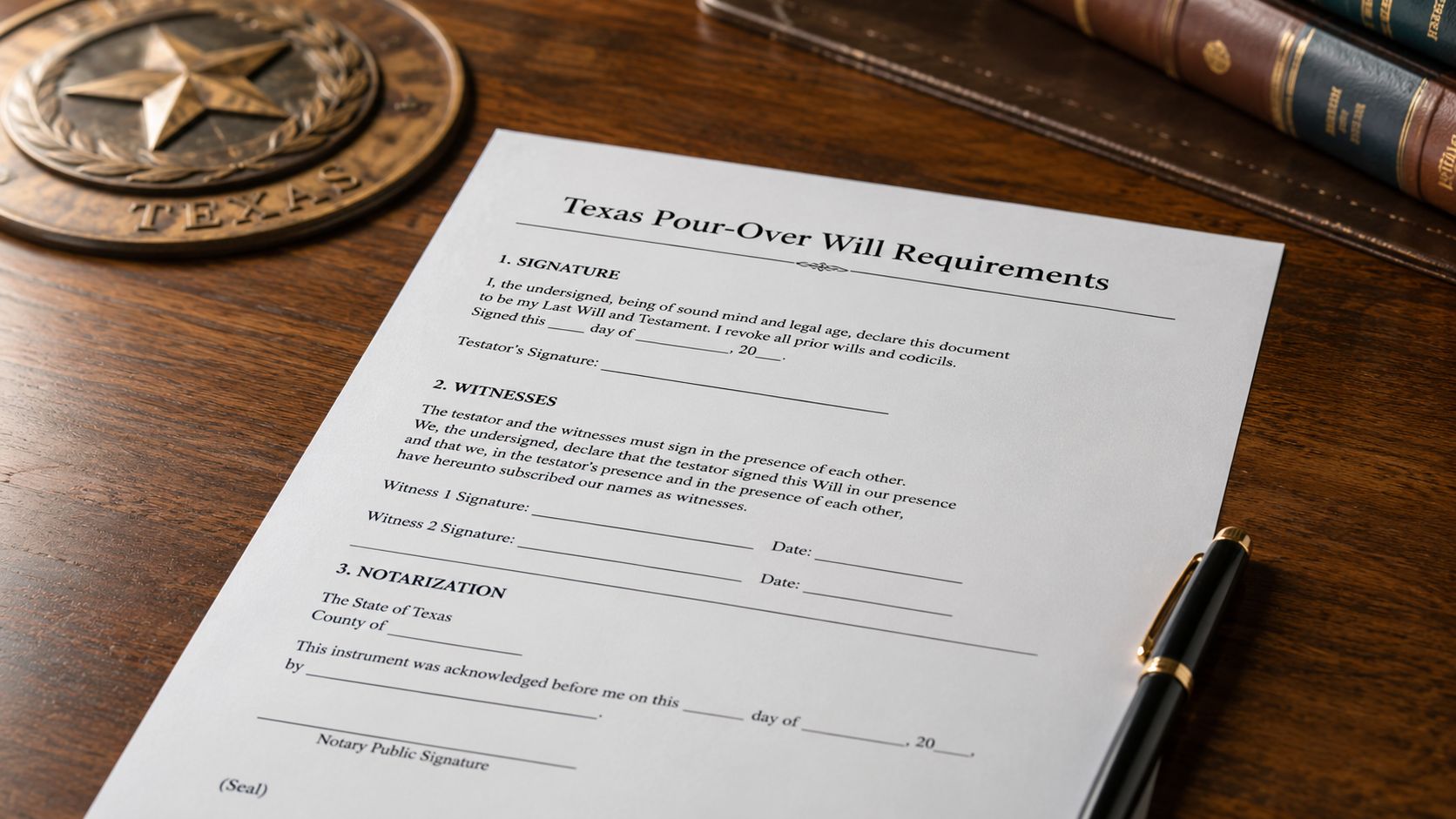
A pour-over will only works if it is validly signed and witnessed under Texas law. In Texas, a pour-over will is legally valid only if it follows the execution requirements in Texas Estates Code, Title 2, Chapter 251, meaning it must be in writing, signed by the testator, and attested by two credible witnesses who are at least 14 years old, as described in this review of Texas pour-over will requirements.
The basic checklist
These rules sound technical, but they're easier to understand when broken down:
- Writing matters because the court needs a clear, reviewable document.
- The testator must sign so the will reflects that person's intent.
- Two credible witnesses are required, and each witness must be at least 14 years old.
- The formalities must be followed carefully because mistakes can lead to disputes or rejection in probate.
These requirements protect families as much as they burden them. They reduce the risk of fraud, confusion, and later fights about whether the document was genuine.
Why strict compliance is so important
Texas probate courts don't treat execution details as minor paperwork. A will is the document that speaks after death, when the person who signed it can no longer explain what they meant. Formal signing rules help the court trust that the document is real.
That matters for beneficiaries, too. If a will is challenged, proper execution gives the executor and trustee a much stronger foundation for carrying out the estate plan.
A well-drafted pour-over will also coordinates with broader fiduciary planning. The executor owes duties to the estate. The trustee owes fiduciary duties under the trust. Clear, valid documents help each person know where authority begins and ends.
If you want a trust-centered plan to work smoothly, the backup will can't be casual. It needs the same level of care as the trust itself.
Practical drafting concerns
Families often focus on the big-picture question of who gets what. Lawyers also focus on the mechanics that keep those wishes enforceable. That includes matching the will to the trust, keeping documents current after major life changes, and making sure the people named as executor and trustee understand their responsibilities.
That's also where tax planning and dispute prevention enter the picture. Clear drafting can reduce confusion around administration, beneficiary expectations, and asset transfers, even when no one expects conflict at the start.
Common Scenarios Where a Pour-Over Will Is Essential
The value of a pour-over will becomes obvious in ordinary situations. Most estate planning problems don't start with dramatic mistakes. They start with everyday life.
A newly purchased vehicle
Maria creates a revocable living trust and transfers her house and major financial accounts into it. A year later, she buys a car in her own name and never gets around to updating title documents. When she dies, the car is outside the trust.
Her pour-over will acts as the safety net. Instead of leaving the family to sort out who should receive the car under default rules, the probate estate can transfer that asset into the trust so the trust's instructions control.
An unexpected inheritance
David already has a trust. Later, he receives money from a relative's estate, and the funds are issued to him personally. He plans to move them into the trust but dies before doing so.
Without a pour-over will, those funds may not follow the same distribution path as the rest of his carefully designed plan. With one, the asset can be gathered into the estate and then routed into the trust.
A pour-over will often matters most when someone intended to update paperwork but never got the chance.
Personal property that was never formally assigned
This happens more often than people expect. Jewelry, artwork, collections, family heirlooms, or business-related items may never be formally moved into the trust. Families then discover that the trust is detailed, but some property never became trust property.
A pour-over will helps prevent those items from drifting into a separate legal path. That can be especially important in blended families, second marriages, or situations where the trust includes management rules for younger beneficiaries.
Why these stories matter for families
These scenarios also show why executors, trustees, and beneficiaries need practical guidance. An executor may need to identify what belongs to the probate estate and what already belongs to the trust. A trustee may need to receive assets and account for them properly. Beneficiaries often need plain-English communication so they understand why some assets move directly and others go through court first.
The same planning mindset also connects to related areas such as guardianship, asset protection, and long-term family management. A trust can hold and protect assets. A pour-over will helps keep overlooked property from escaping that structure.
Weighing the Benefits and Drawbacks of a Pour-Over Will
A pour-over will works like the catch tray under a filing cabinet. If an asset was supposed to be placed in the trust but never made it there, the will gives the executor a way to collect it and send it into the trust. That is a real benefit. It is also the source of the most common misunderstanding.
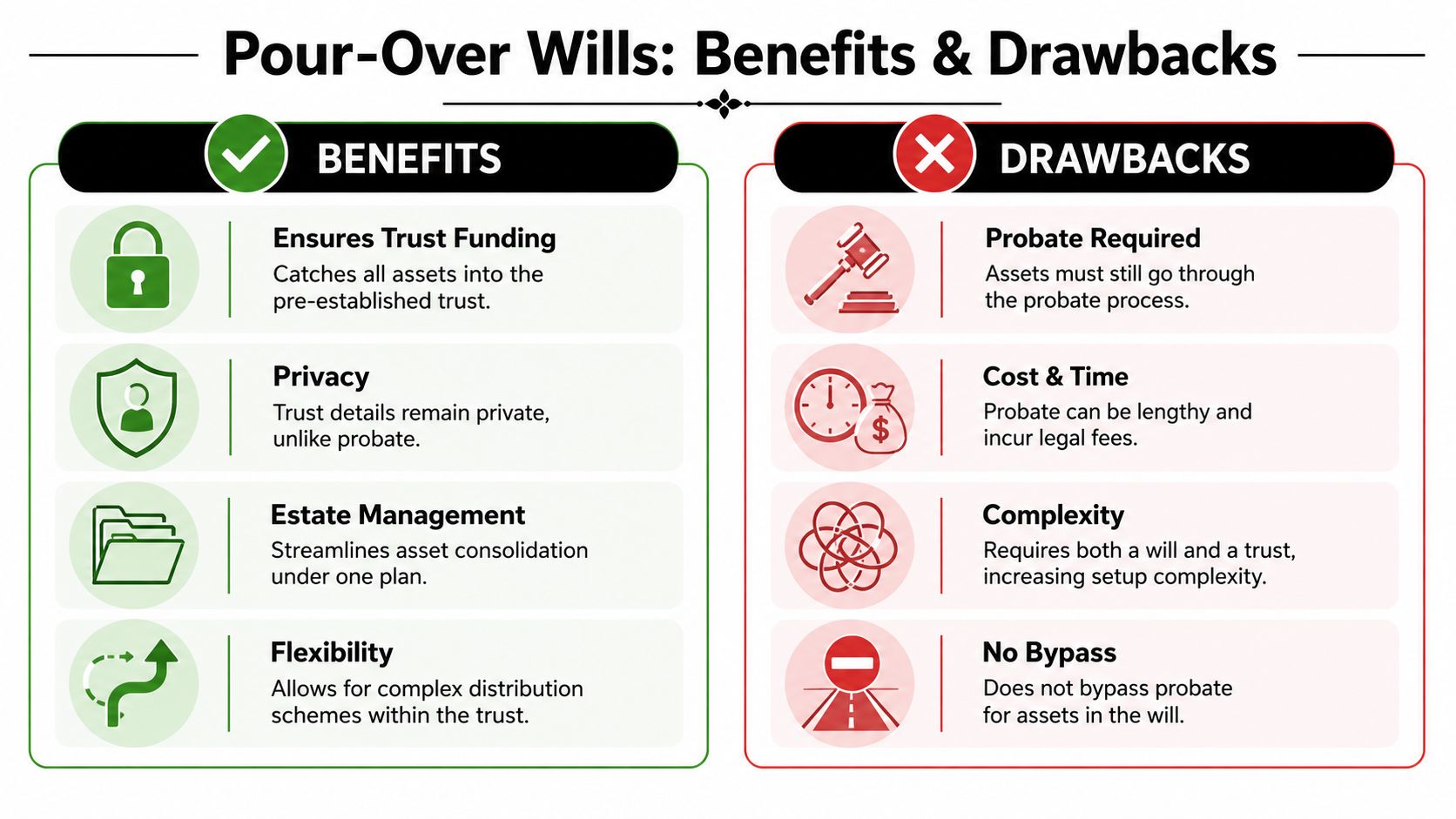
A pour-over will does not make every asset skip probate in Texas. It helps direct assets that were left outside the trust, but those assets usually must still pass through the probate court before they can be transferred into the trust. The trust and the will work together, but they do different jobs. The trust is the main container. The pour-over will is the backup instruction sheet for anything left outside that container.
The strongest advantage
The biggest advantage is consistency. If your trust says a child receives funds in stages, or a beneficiary's share stays in trust for protection, a pour-over will helps keep forgotten assets under those same rules instead of letting them follow a separate path.
That can spare a family from a messy result. One account follows the trust. Another account passes under different rules. A pour-over will reduces the chance of that split.
The clearest drawback
The drawback is time and process. If an asset is not already owned by the trust, the executor may need to open a probate case, gather the asset, address creditor issues if needed, and then transfer what remains to the trustee. For families who believed a trust plan meant "no probate at all," this can come as an unwelcome surprise.
That point matters because Texas probate court still has a role in a trust-based plan. The pour-over will does not replace the court. It gives the court a roadmap for assets that never reached the trust during life.
A practical comparison
| Consideration | What a pour-over will helps do | What it does not do |
|---|---|---|
| Missed assets | Sends overlooked property into the trust | Prevent the problem of incomplete funding |
| Distribution rules | Keeps one set of trust instructions in control | Replace beneficiary designations or proper titling |
| Probate court | Gives the executor a legal path to transfer assets | Avoid probate for assets outside the trust |
| Family administration | Reduces the risk of separate distribution tracks | Eliminate executor and trustee work |
Who usually benefits most
A pour-over will often makes the most sense for people who want their trust terms applied broadly, even if life gets in the way and paperwork is missed.
That includes:
- Parents with minor or young adult children who want one system for management and timing of distributions.
- People who acquire assets over time such as new accounts, vehicles, business interests, or personal property.
- Families with blended family concerns who want overlooked assets folded back into the same trust instructions.
- Anyone who values order and wants a backup plan if an asset is not retitled correctly.
Where disappointment usually starts
Disappointment usually starts with expectations, not with the document itself. If a person understands that the living trust avoids probate only for assets titled in the trust, the pour-over will makes sense as backup protection. If that person expects the pour-over will to pull everything into the trust without court involvement, the plan will feel broken even when it is working as designed.
That is why funding the trust still matters so much. The better the funding work during life, the less the family may need to rely on the pour-over will later.
Bottom line: A pour-over will is helpful because it catches assets that slipped through the cracks. Its limit is just as important to understand. Those assets may still need to pass through Texas probate before the trust receives them.
Families who like to research related professional topics sometimes also read Digital Skyrocket's SEO insights. For legal planning itself, a firm such as Law Office of Bryan Fagan, PLLC handles Texas trust administration, estate planning, probate, guardianship, and asset protection matters that often overlap in these situations.
Secure Your Estate Plan with a Texas Trust Attorney
A trust-based estate plan works best when the details match the intention behind it. If your goal is to keep your estate organized, protect beneficiaries, and make administration easier for your family, a pour-over will is often the document that closes the gap.
That's why this topic matters so much. A living trust can do the heavy lifting, but a trust plan is still vulnerable if assets are left outside it. The pour-over will gives your executor and trustee a legal path to pull those assets back into the plan you created.
What careful planning should include
Strong planning usually means more than signing documents once and putting them in a drawer. It often includes:
- Reviewing asset titles so major property is aligned with the trust.
- Choosing fiduciaries carefully because executors and trustees will carry real legal responsibilities.
- Planning for disputes early by using clear documents and beneficiary communication.
- Considering tax planning and administration issues so the people you leave behind have a workable system.
If you've been researching what is a pour over will Texas attorneys recommend, the practical answer is simple. It's a backup will that supports your trust and helps preserve the estate plan you meant to create.
Families who like to learn before meeting with counsel may also appreciate broader resources on professional communication and visibility, including Digital Skyrocket's SEO insights, which explain how educational legal content helps people find reliable answers early in the process.
If you're managing a trust or planning your estate, contact The Law Office of Bryan Fagan, PLLC for a free consultation. Our attorneys provide trusted, Texas-based guidance for every step of the process.
If you need specific help with a pour-over will, probate, trust administration, guardianship, or asset protection, schedule a free consultation with Law Office of Bryan Fagan, PLLC. A Texas trust administration lawyer or Texas estate planning attorney can help you understand fiduciary duties in Texas, build a coordinated plan, and answer practical questions such as how to modify a trust in Texas for your family's needs.