Skip to content
Managing a loved one's trust can feel overwhelming, especially when you suspect the person in charge isn't acting in your best interest. Getting a trustee removed in Texas isn't as simple as just being unhappy with them. It requires filing a petition with the court and proving there's been a material breach of the trust, gross mismanagement, or another specific problem laid out in the Texas Trust Code. A beneficiary or a co-trustee has to start the process, and the burden is on them to convince a judge that the trustee’s actions are genuinely harming the trust and everyone involved. With the right legal guidance, it doesn’t have to be an impossible task.
Knowing When It's Time to Remove a Trustee

It’s an incredibly stressful and frustrating feeling when you suspect a loved one's trust is being mismanaged. You might feel powerless, especially when your calls go unreturned or your valid concerns get brushed aside. But as a beneficiary, you have legal rights and very real options to protect the trust's assets and make sure the creator's wishes are actually being followed.
Removing a trustee is a major step. But sometimes, it's the only way to safeguard your inheritance and the legacy a family member worked so hard to build. The law understands that not all trustees act with the level of care and loyalty required of them.
Understanding Fiduciary Duties in Texas
The entire issue comes down to one core concept: fiduciary duty. Under the Texas Trust Code, a trustee has a legal and ethical obligation to act only in the best interests of the beneficiaries. This is the highest standard of care our legal system recognizes.
When a trustee falls short of this standard, you likely have grounds for removal. We cover this in much more detail in our guide to trustee duties and responsibilities.
Most of the time, the reasons for seeking removal come from a breach of these fundamental fiduciary principles. Common examples we see in our practice include:
- Mismanagement of Trust Funds: Making speculative or unauthorized investments that lose significant value.
- Lack of Communication: Refusing to provide accountings or answer reasonable questions from beneficiaries.
- Conflicts of Interest: Using trust assets for their own personal gain or unfairly favoring one beneficiary over others.
- Outright Misconduct: The worst-case scenario—stealing from the trust or committing fraud.
A complete breakdown in communication between a trustee and the beneficiaries can, on its own, be enough for a Texas court to justify removal if it impedes the proper administration of the trust.
Deciding to pursue removal isn't just about frustration; it's about protecting the trust itself. If you're seeing signs of misconduct or incompetence, you need to understand your legal options. To help you determine if your concerns have legal merit, here is a summary of the grounds a Texas court will consider.
Grounds for Trustee Removal Under the Texas Trust Code
| Reason for Removal | What It Looks Like in Practice |
|---|---|
| Material Violation of Trust Terms | A trustee sells the family lake house that the trust explicitly stated should be kept for the beneficiaries' use. |
| Gross Mismanagement or Incompetence | They fail to file required tax returns for years, leading to substantial penalties and interest for the trust. |
| Conflict of Interest | The trustee uses trust money to make a loan to their own struggling personal business. |
| Hostility or Lack of Cooperation | The trustee consistently refuses to communicate with beneficiaries, making it impossible to manage the trust effectively. |
| Insolvency or Incapacity | The trustee declares personal bankruptcy or becomes medically unable to handle their own affairs, let alone the trust's. |
Looking at this table can be a good first step in assessing whether you have a strong case. If you see your situation reflected here, it might be time to take action.
Legal Grounds for Trustee Removal in Texas

If you're considering asking a court to remove a trustee, your reasons must be more than personal frustration or a simple disagreement. You have to connect what's happening to the specific legal justifications laid out in the Texas Trust Code §113.082. This statute provides judges the clear authority to step in when a trust or its beneficiaries are at risk.
Simply put, the law requires you to show the trustee's actions—or inaction—are actively harming the trust. Understanding these legal grounds is the first step toward building a solid case and feeling confident about taking action.
Material Violation or Attempted Violation of Trust Terms
One of the clearest paths to removal is when a trustee ignores the instructions in the trust document. The person who created the trust (the grantor) had a specific vision, and the trustee’s primary job is to follow it. A material violation isn't a minor slip-up; it's a significant breach that fundamentally undermines the trust's purpose.
Real-World Scenario: A trust clearly states that a family vacation home in Galveston must be kept and maintained for all beneficiaries to use. If the trustee decides to sell that house to a developer because they believe it's a "better investment," that’s a material violation. They've directly contravened the grantor's explicit wishes.
A trustee’s personal judgment about what’s "best" for the trust never outweighs the specific, written directives in the trust document. The grantor’s intent is paramount.
Trustee Insolvency or Incapacity
A trustee must be financially responsible and mentally capable of handling complex duties. If a trustee becomes insolvent—meaning they have filed for bankruptcy or cannot manage their own finances—Texas law deems them unsuitable to manage someone else's assets.
The same applies to legal incapacity. If a medical condition like dementia or a serious injury leaves a trustee unable to perform their duties, they must be replaced. In these cases, removal isn't a punishment. It's a protective measure to ensure the trust is safe from neglect or poor decisions.
Breach of Fiduciary Duty and Self-Dealing
This is a significant issue in trust law. A trustee has what's called a fiduciary duty, a powerful legal obligation to act with absolute loyalty to the beneficiaries. Any action that puts their own interests ahead of the trust's is a serious breach, often manifesting as self-dealing.
Here are a few common ways this occurs:
- Improper Investments: Using trust funds to chase high-risk, speculative investments that do not align with the trust's goals.
- Commingling Funds: Mixing their personal money with trust assets. This makes it impossible to accurately track the trust’s finances and is a major red flag.
- Favoritism: Unfairly distributing assets to one beneficiary while ignoring others, especially if it contradicts the trust's instructions.
When a trustee crosses these lines, the financial damage can be substantial. To learn more, read our guide on what constitutes a trustee breach of fiduciary duty.
Failure to Account or Communicate
By law, trustees must keep meticulous records and provide beneficiaries with regular accountings. When a trustee goes silent—dodging questions, refusing to provide financial statements, or failing to explain their decisions—it's more than just poor service. It's a potential breach of their duty.
This lack of transparency breeds mistrust and makes it impossible for beneficiaries to know if the trust is being managed properly. If you are considering legal action, you will often need to formally audit financial records to uncover the kind of mismanagement a secretive trustee might be trying to hide.
Other Justifiable Cause for Removal
The Texas Trust Code includes a flexible provision that allows a court to remove a trustee "for other cause." This gives a judge the discretion to remove a trustee for reasons not specifically listed in the statute, as long as retaining them would be detrimental to the trust.
A classic example is significant hostility between the trustee and the beneficiaries. If the relationship has completely broken down to the point where they can no longer work together, a judge might agree that a change is necessary for the good of the trust. This reflects a deep-seated principle in trust law: the trust's well-being comes first.
Taking the Matter to a Texas Court
When you’ve tried other options and removing a trustee is the only path left, the idea of a formal court process can be intimidating. However, it's a structured, legal way to protect the beneficiaries and honor the trust's original purpose. It’s not about lodging a complaint; it’s about carefully building a case that gives a Texas judge a clear reason to act.
Your first and most important step is to consult a lawyer who specializes in Texas trust administration. Before any documents are filed, a skilled attorney will analyze the trust document, review your evidence, and provide an honest assessment of your case's chances. This initial meeting is where your strategy begins.
Filing the Petition to Remove the Trustee
Once you and your lawyer decide to proceed, the next step is filing a "Petition for Removal of Trustee" with the appropriate Texas court. This document officially initiates the lawsuit and must be drafted with precision. Knowing the ins and outs of effective court petition drafting is crucial for making sure your argument is presented clearly.
This petition serves as the blueprint for your case. It needs to lay everything out perfectly and must include:
- Identifying Parties: The document will clearly identify you (the petitioner), the trustee you want removed (the respondent), and all other beneficiaries.
- The Legal Basis: It must reference the specific sections of the Texas Trust Code that provide grounds for removal, such as a breach of fiduciary duty or gross mismanagement.
- The Factual Allegations: This is where your evidence comes into play. The petition will detail the trustee's specific actions (or inactions) that are causing harm.
- The Relief Requested: The petition formally asks the judge to remove the current trustee and, typically, to appoint a successor.
After it’s filed, the petition must be legally "served" to the trustee and all other beneficiaries, ensuring everyone is formally notified and has an opportunity to respond.
Digging for the Truth: Discovery and Evidence
With the initial paperwork filed, the lawsuit moves into a phase called discovery. This is the formal process where both sides can request and gather evidence from each other. It’s often the longest part of the legal journey, but it’s where the facts are officially brought to light.
During discovery, your attorney can use several tools:
- Requests for Production: A formal demand for the trustee to provide all relevant documents—financial records, bank statements, emails, and correspondence.
- Interrogatories: Written questions sent to the trustee, who must answer them in writing and under oath.
- Depositions: Questioning the trustee or other key witnesses in person, under oath, while a court reporter transcribes the testimony.
The purpose of discovery is to uncover the full picture of any misconduct. It is a meticulous process that requires an experienced legal hand to guide it.
It's worth noting that a global push for financial transparency has made holding trustees accountable a bit easier than it used to be. The 2022 Tax Justice Network Financial Secrecy Index report found that over 120 countries now have some form of trust registration. This increased oversight means more and clearer records of a trust's activities, which can be pure gold when you're trying to prove misconduct in court.
The Hearing: Presenting Your Case to the Judge
If the parties cannot reach a settlement, the case proceeds to a court hearing. This is your day in court, where your lawyer will present the evidence gathered during discovery, call witnesses to testify, and argue your case directly to the judge. The trustee will also have the opportunity to present their side.
There are no juries in these cases. The judge listens to both sides, weighs the evidence, and decides whether you have proven that the trustee should be removed. If the judge agrees, they will issue a court order making it official. That order will also likely address who pays for the legal fees and how a new successor trustee will be appointed.
Navigating this process—from filing the first document to the final ruling—takes time, money, and emotional stamina. For particularly complex situations, you may need specific guidance on dispute resolution and litigation in Texas trusts. Keeping your expectations realistic and having a skilled legal team in your corner is key to a successful outcome.
Exploring Alternatives to Court Action
The thought of a courtroom battle can be draining. It’s often expensive, lengthy, and can cause permanent damage to family relationships. Before you commit to the stress and cost of a lawsuit, it's wise to explore less confrontational paths.
Fortunately, Texas law and well-drafted trust documents often provide ways to remove a trustee without involving a judge. These alternatives can save money, preserve family harmony, and achieve the same goal: placing the trust in more capable hands.
Look Inside the Trust Document First
The very first place to look for a solution is within the trust document itself. A thoughtfully prepared trust, often drafted with an experienced Texas estate planning attorney, will likely include specific provisions outlining how to remove and replace a trustee without court intervention.
This is a standard feature in modern estate planning. The person who created the trust (the grantor) likely anticipated that circumstances could change or that the chosen trustee might not be the right fit forever.
Common provisions you might find include:
- Beneficiary Vote: The trust may allow adult beneficiaries to remove a trustee with a majority or unanimous vote.
- Power of Appointment: The document could name a "trust protector" or give a specific person the power to remove a trustee.
- Specific Conditions: It might list triggers for automatic removal, such as the trustee moving out of state or being convicted of a crime.
If the trust contains such a clause, you have a clear, built-in mechanism for change. This is by far the most straightforward and cost-effective alternative.
Negotiate a Voluntary Resignation
Sometimes, the simplest solution is a direct conversation. A trustee who is struggling with their duties, overwhelmed by the complexities of Texas trust administration, or tired of conflict with beneficiaries may be open to stepping down voluntarily.
This isn't a conversation you should have alone. Having an attorney facilitate the negotiation ensures it is handled professionally and legally. The goal isn't to force an admission of guilt; it's to frame the resignation as a practical step for the good of the trust. A skilled lawyer can help draft a resignation agreement that protects everyone involved and ensures a clean break.
A negotiated resignation lets the trustee exit gracefully while giving beneficiaries the change they need. It sidesteps the public drama and emotional toll of a court fight, making it the perfect solution for families who want to move on constructively.
This process often involves agreeing on terms for a seamless transition, such as requiring the trustee to complete a final accounting and formally hand over control of trust assets to their successor.
Use Mediation to Find Common Ground
If direct negotiation fails, mediation is an excellent next step. In mediation, a neutral third-party mediator facilitates a conversation between the trustee and the beneficiaries. The mediator does not make decisions; their role is to help both sides find a mutually agreeable solution.
Mediation is confidential, less formal than court, and significantly less expensive. It provides a structured setting where everyone can voice their concerns while a professional keeps the discussion productive. Often, the mediator can help the trustee understand the beneficiaries' perspective and the legal risks they face if the matter escalates to court.
This process can lead a trustee to realize that resigning is in everyone's best interest, including their own. A successful mediation ends with a signed agreement that is just as binding as a court order.
While Texas law provides the framework, removing a trustee is a complex legal matter often governed by the trust instrument and statutory law. This is a global principle; many offshore trusts, for instance, give specific removal powers to a protector or settlor, who must use that power in the beneficiaries' best interests. You can discover more insights about these global trust principles on charlesrussellspeechlys.com.
The infographic below shows the typical steps involved when court action does become necessary.
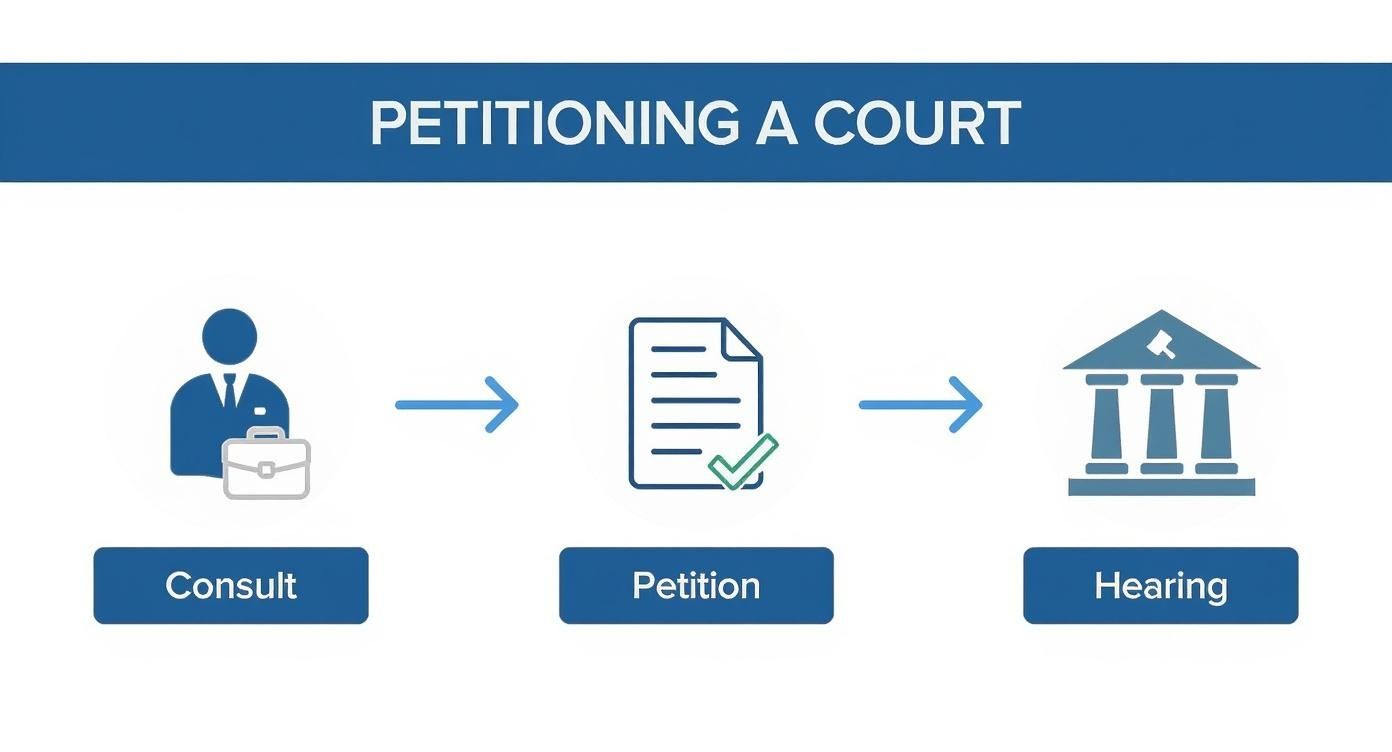
As you can see, even the court process begins with careful consultation, which highlights why exploring these alternatives first is such a crucial and strategic move.
What Happens After a Trustee Is Removed?

Removing a trustee is a significant victory—a critical step toward protecting the trust's assets. While you can certainly feel a sense of relief, the process isn't over. Now begins the important work of ensuring a smooth and secure transition, which involves appointing a successor and finalizing the former trustee’s duties.
This transition phase is essential. Handled correctly, it can prevent further disruptions and pave the way for responsible Texas trust administration for years to come. Knowing what to expect is key to keeping the trust safe for the long term.
Appointing the Successor Trustee
First, a new trustee must be appointed to take control. This process typically follows one of two paths: either the trust document dictates the successor, or the court makes the appointment.
Most well-drafted trusts, usually created with the help of a knowledgeable Texas estate planning attorney, will name at least one successor trustee. If the document provides a clear line of succession, the handover is relatively straightforward. The next person in line simply needs to formally accept the role.
However, if the trust document is silent on the matter or if the named successors are unable or unwilling to serve, the court will get involved. Beneficiaries can petition the court to appoint a qualified individual or a corporate trustee, such as a bank's trust department. The court's primary goal is to select a successor who is trustworthy, competent, and prepared to manage the trust in the best interests of the beneficiaries.
Final Duties of the Outgoing Trustee
Even after being officially removed, the former trustee has final, critical tasks to complete. They cannot simply walk away. The Texas Trust Code is clear: they remain bound by their fiduciary duties in Texas until the transition is fully complete.
Their final to-do list typically includes:
- Preparing a Final Accounting: The removed trustee is responsible for providing a detailed final accounting of all trust activity that occurred during their tenure. This report must show all income, expenses, and distributions, giving everyone a clear financial snapshot.
- Transferring Trust Assets: All property, from bank accounts and investment portfolios to real estate, must be legally transferred into the new trustee’s name. This involves retitling assets and ensuring the successor has complete control.
- Handing Over Records: The outgoing trustee must turn over all relevant documents, including the trust instrument, tax records, property deeds, financial statements, and all related correspondence.
A seamless handover of records is non-negotiable. The successor trustee needs a complete and organized history of the trust's administration to effectively manage its future and protect the beneficiaries' interests.
Dealing with an Uncooperative Former Trustee
Unfortunately, not every removed trustee cooperates. A trustee removed for misconduct might become uncooperative, refusing to provide a final accounting, delaying the transfer of assets, or withholding important records.
This behavior is a serious legal problem. If this happens, the successor trustee or the beneficiaries can return to court. A judge can issue an order compelling the former trustee to fulfill their final duties.
If they still refuse, they can be held in contempt of court, which could lead to significant fines or even jail time. This legal recourse is vital for protecting the trust from last-minute mismanagement or spiteful actions. Tackling this situation often requires skilled legal support, sometimes touching on asset protection strategies to fully secure the trust's holdings.
Common Questions About Trustee Removal
When you're facing the complexities of trust administration, it's natural to have questions. And when you're considering a step as serious as removing a trustee, you need clear, plain-English answers. Let's address some of the most common questions we hear from beneficiaries in Texas.
Can I Remove a Trustee Just Because We Disagree?
This is the most frequent question we encounter. The short answer is no. In Texas, you cannot remove a trustee simply because of a personality clash or a minor disagreement over a decision. The law sets a much higher standard.
You must demonstrate that the trustee's actions—or lack thereof—are actively harming the trust or violating its terms. The court’s focus is on their performance and adherence to their fiduciary duties in Texas, not on whether you get along. For instance, if a trustee consistently ignores your calls and emails, that could be a failure to communicate—a legitimate ground for removal. But if you simply dislike their reasonable investment strategy, that likely won't be enough. A seasoned Texas trust administration lawyer can help you distinguish between a personal dispute and a genuine breach of duty.
Who Pays the Legal Fees for a Removal Lawsuit?
The potential cost of a lawsuit is a valid and significant concern for most beneficiaries. Who pays the bill depends on the case's outcome and the severity of the trustee's misconduct.
If you win and the trustee is removed for proven misconduct—such as self-dealing, gross mismanagement, or a major breach of the trust's terms—the judge can order the trustee to pay your legal fees from their own personal funds. This holds them personally accountable for the harm they caused.
On the other hand, if the removal is justified but did not involve malicious behavior, the court might rule that the legal fees for both sides should be paid from the trust's assets. Be aware, however, that if your lawsuit is unsuccessful and the court finds it lacked merit, you could be responsible for your own legal costs.
What If the Trust Says the Trustee Cannot Be Removed?
Some trust documents contain an "exculpatory clause," a legal provision designed to limit a trustee's liability or make them difficult to remove. While courts take these clauses seriously, they are not an absolute shield.
Ultimately, Texas courts have the authority to protect a trust and its beneficiaries. Even if a trust document states a trustee is irremovable, a judge can override that language in certain situations.
- Serious Breach of Trust: If a trustee has committed an egregious act, such as stealing money or engaging in a significant conflict of interest, no clause will protect them.
- Defeating the Trust's Purpose: A court can also intervene if keeping the current trustee in place would completely undermine the reason the trust was created.
The court’s primary responsibility is to honor the grantor's intentions and ensure the trust is managed properly. When a trustee's actions make that impossible, a judge has the power to act, regardless of what the document says. This is a critical protection embedded in Texas trust law.
If you’re managing a trust, planning your estate, or facing a dispute over a trustee's actions, you don't have to navigate it alone. Contact The Law Office of Bryan Fagan, PLLC for a free consultation. Our attorneys provide trusted, Texas-based guidance for every step of the process. https://texastrustadministration.com