Yes, a trustee generally can evict someone from trust property in Texas, but the right and process depend heavily on the trust's terms and the occupant's legal status. If the person living there has no valid right to stay under the trust, a lease, or another legal interest, the trustee may pursue possession through Texas eviction procedures.
Managing a loved one's trust can feel overwhelming, especially when the house is tied up in family conflict. One sibling may say, “Mom wanted me to stay here.” Another beneficiary may want the property sold. The trustee is left trying to protect the asset, follow the trust, and avoid making a mistake that leads to a lawsuit.
That tension is real. It's also where careful trust administration matters most. The right question usually isn't just whether a trustee can remove someone. It's whether the trustee can do it lawfully, fairly, and in a way that protects the trust and the trustee.
Understanding a Trustee's Duty to Manage Trust Property
A parent dies. The home is held in trust. One adult child is still living there, the other beneficiaries want answers, and the trustee is standing in the middle of grief, money pressures, and family history.
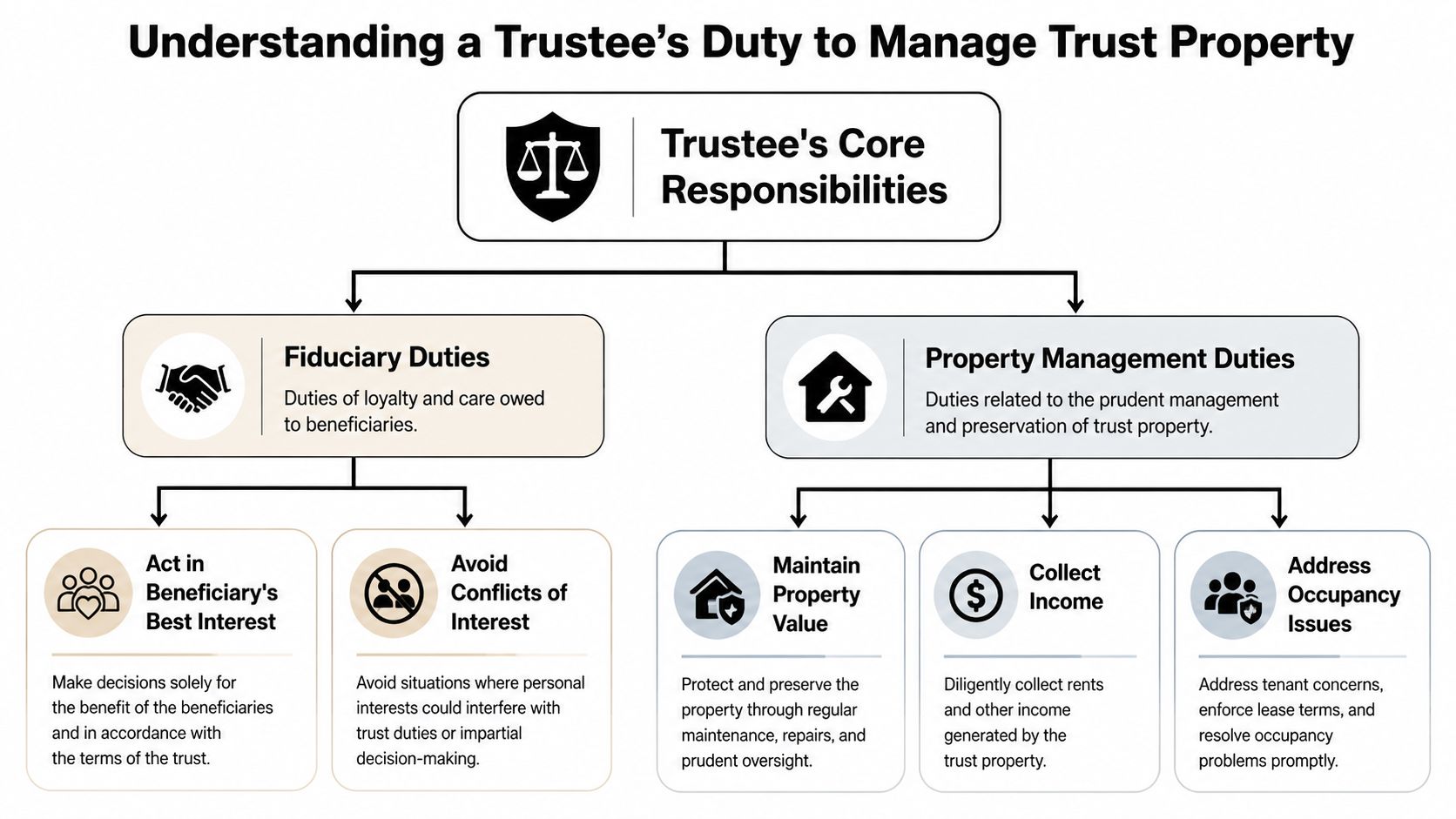
In that moment, the trustee's job is not to pick sides. The job is to manage the property the way the trust requires and to protect the interests of all beneficiaries.
Fiduciary duty changes the trustee's analysis
A trustee cannot treat a trust-owned house like personal property or make occupancy decisions based on family pressure. The trustee has a fiduciary duty to act in good faith, follow the trust terms, preserve trust assets, and deal fairly with the beneficiaries as a group.
That duty affects every early decision about the house. If someone is living there without paying expenses, if the property is uninsured, or if the home is deteriorating while the family argues, delay can create real risk for the trust and for the trustee personally. On the other hand, rushing into eviction without checking the trust language, title records, and any lease or occupancy agreement can create a different problem. A bad filing can expose the trustee to claims that they exceeded their authority.
A trustee should answer a few practical questions before doing anything else:
- What does the trust require? Some trusts direct a sale. Others allow temporary occupancy, reimbursement of expenses, or discretion to hold the property.
- Who is bearing the cost? Mortgage payments, taxes, insurance, utilities, and repairs matter. Rent-free occupancy often shifts value away from the other beneficiaries.
- Is the asset being protected? Condition, security, maintenance, and insurance coverage need immediate attention.
- Is there written proof of the arrangement? Trustees should gather the trust document, deeds, leases, correspondence, and payment records before making demands.
Trustees who need a broader grounding in these responsibilities can review this explanation of what a trustee does in Texas.
Practical rule: Start with the trustee's duty to the trust, not the trustee's frustration with the occupant.
Management authority includes judgment, not just control
Trustees do have authority over trust property, but authority is only part of the job. Sound administration also requires judgment. In many cases, the legally correct first step is not filing an eviction case. It is documenting the trust's position, giving clear written notice, and deciding whether the occupant should be offered a short-term agreement, a deadline to vacate, or a chance to start paying fair-market rent.
That is especially true in family trusts. An occupant may be a beneficiary with no right to possession, a former caregiver who was allowed to stay informally, or a tenant whose lease still has to be honored. Those distinctions matter, and they often determine whether the trustee should negotiate, terminate an agreement, or seek court action.
Families also benefit from understanding the property aspects of trust ownership. This essential guide to real estate trusts gives helpful background on how property is commonly titled and managed through a trust.
The trustees who avoid trouble usually do the same few things well. They document the file, treat all beneficiaries evenhandedly, and make decisions they can defend later with records, not recollections.
Identifying the Occupant's Legal Rights
Before a trustee files anything, the first job is classification. Who is in the property, and why are they there?
That sounds simple, but it usually decides the entire case. A trustee's ability to remove someone depends on the occupant's underlying property interest. If a beneficiary is a tenant under a valid lease or has a present possessory interest created by the trust, the trustee must honor that interest until it expires or is lawfully terminated. A beneficiary with only an equitable interest and no possessory estate is typically removable through ordinary possession proceedings, as discussed in this analysis of whether a trustee can evict a beneficiary.

Three occupant types trustees see most often
The same house can involve very different legal rights depending on the paperwork and the facts.
| Occupant type | Typical right to possession | What the trustee should check first |
|---|---|---|
| Tenant | Possession based on a lease | Lease terms, rent records, default notices |
| Beneficiary with occupancy rights | Possession based on the trust itself | Exact trust language creating the right |
| Licensee or informal family occupant | Permission only, often revocable | Who gave permission, when, and whether it was withdrawn |
Tenant under a lease
If the person living in the home signed a valid lease, the trustee usually steps into the role of landlord for that property. The trustee can't skip lease obligations just because the property is in a trust.
That means the trustee should review rent payment history, lease duration, renewal terms, and any default provisions. If the tenant is also a beneficiary, that doesn't erase the lease. The lease still matters.
Beneficiary with a true possessory right
Some trusts go beyond giving a beneficiary money or eventual title. They grant a current right to live in the home for a period of time, for life, or until a stated event occurs. If the trust does that, the trustee generally must respect it.
Trustees ought to exercise caution. The answer to “can a trustee evict someone from trust property in Texas” may be yes for one beneficiary and no for another, depending on the trust language.
For a clearer picture of how beneficiary interests can affect administration decisions, review rights of trust beneficiaries in Texas.
A beneficiary is not automatically a lawful occupant. But a trustee should never assume a beneficiary is removable without first reading the trust line by line.
Licensee, guest, or family member with informal permission
This is often the hardest category emotionally and the easiest category legally. A child, cousin, or surviving partner may have lived in the property for years with informal permission, but no lease and no express trust right to remain.
In many cases, that person is a licensee. A license is permission to be there, not a property estate. Once permission is revoked, the trustee may be able to move toward possession proceedings.
Watch for complicating facts, though:
- Long-term residence: A long stay doesn't automatically create ownership rights, but it can make the dispute more contested.
- Improvements to the home: If the occupant paid for major work, they may raise reimbursement arguments.
- Mixed roles: The occupant may be both a beneficiary and a family member who believed they had permission to stay.
Those facts don't always defeat eviction, but they do affect strategy.
The Texas Eviction Process A Step-by-Step Guide
A common call goes like this. A parent has died, the house is in the trust, and an adult child or relative still lives there. The trustee wants to protect the property and carry out the trust terms, but does not want to create a bigger legal mess by forcing the issue the wrong way.
That concern is justified. In Texas, a trustee may have the right to remove an occupant, but the trustee still has to use the same court process other property owners use to recover possession. The hard part is usually not filing the eviction. The hard part is making sure the trustee has clean authority, gives the right notice, and avoids turning a possession case into a trust fight.
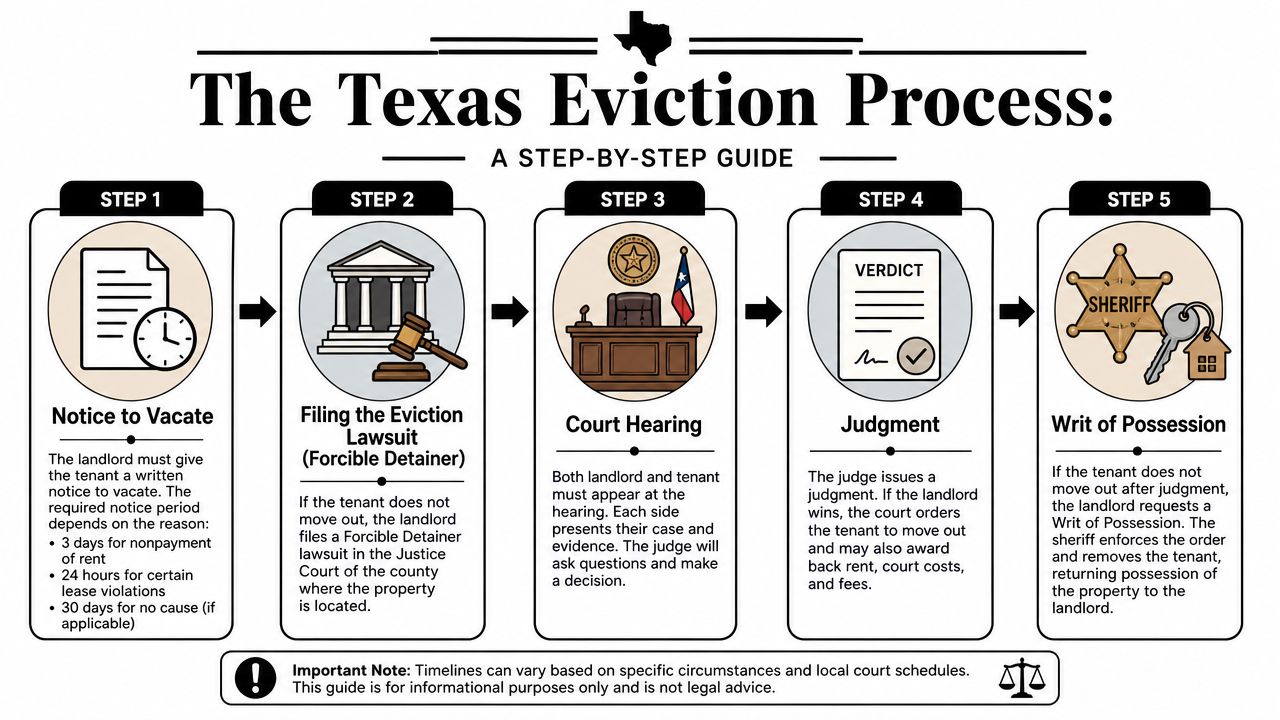
A visual overview helps before getting into details.
Step 1, review authority before serving notice
Start with the papers, not the confrontation.
Before a trustee serves a notice to vacate, confirm four things:
- The property is part of the trust estate or otherwise under the trustee's present control.
- The trust terms let the trustee control possession under the current facts.
- The occupant has no current right to stay under the trust, a lease, a court order, or another written agreement.
- The correct trustee is acting. If co-trustees serve together, check whether one can act alone or both must sign off.
Trustees can either save time or lose months. If the occupant is a beneficiary, former caregiver, relative, or long-term guest, I usually want the trustee to slow down long enough to match the facts to the trust language before any notice goes out. A weak first step often gives the occupant a defense that could have been avoided.
Step 2, serve a proper notice to vacate
If the trustee has authority, the next step is a written notice to vacate that clearly demands possession and gives the occupant the time Texas law requires.
Clarity matters. So does tone. A notice that mixes legal demands with family accusations often creates more problems than it solves.
Keep the file clean:
- Identify the property clearly
- State the deadline to leave
- Say who is demanding possession and in what capacity
- Keep proof of delivery
- Avoid mixed messages in texts or emails after notice is served
Trustees sometimes undercut their own case here. One message says, “You must be out by Friday.” The next says, “Stay as long as you need.” That kind of inconsistency invites arguments about permission, waiver, or confusion.
For a contrast in how another state structures removal cases, this overview of California tenant eviction laws is useful. Texas procedure is different, and that difference matters.
Step 3, file the eviction case in the proper court
If the occupant does not leave by the deadline, the trustee may file a forcible detainer case in the appropriate Justice Court.
Keep the claim focused on immediate possession. That point matters more than many trustees expect. Justice Court is usually not the place to resolve broad trust interpretation disputes, contested title issues, or competing ownership theories. If the case depends on those questions, the trustee may need a district court action, a declaratory judgment claim, or both.
This short video gives a practical overview of how Texas courts handle eviction procedure.
Step 4, prepare for the hearing like a records case
Trustees do better when they present this as a proof case. Judges want documents, dates, and a clear right to possession.
Bring the documents that answer the court's basic questions:
- Who owns or controls the property
- What gives the trustee authority to act
- What notice was served
- How the notice was delivered
- Why the occupant no longer has the right to remain
A practical hearing file usually includes trust excerpts, deeds or other property records, the notice to vacate, proof of service, any lease or occupancy agreement, and written communications that show the history of permission or nonpayment.
Family history may explain why the dispute exists. It rarely wins the possession hearing by itself.
Step 5, obtain judgment and use lawful enforcement
If the trustee obtains judgment and the occupant still does not leave, the next step may be a writ of possession through the court.
Trustees should not change locks, cut off utilities, remove personal property, or try to pressure the occupant into leaving. Self-help creates unnecessary risk, especially when the occupant is also a beneficiary or family member likely to challenge the trustee's conduct later.
The lawful approach is slower than a weekend lockout, but it is far safer. In trust administration, that trade-off is usually the right one.
Common Defenses to Eviction from Trust Property
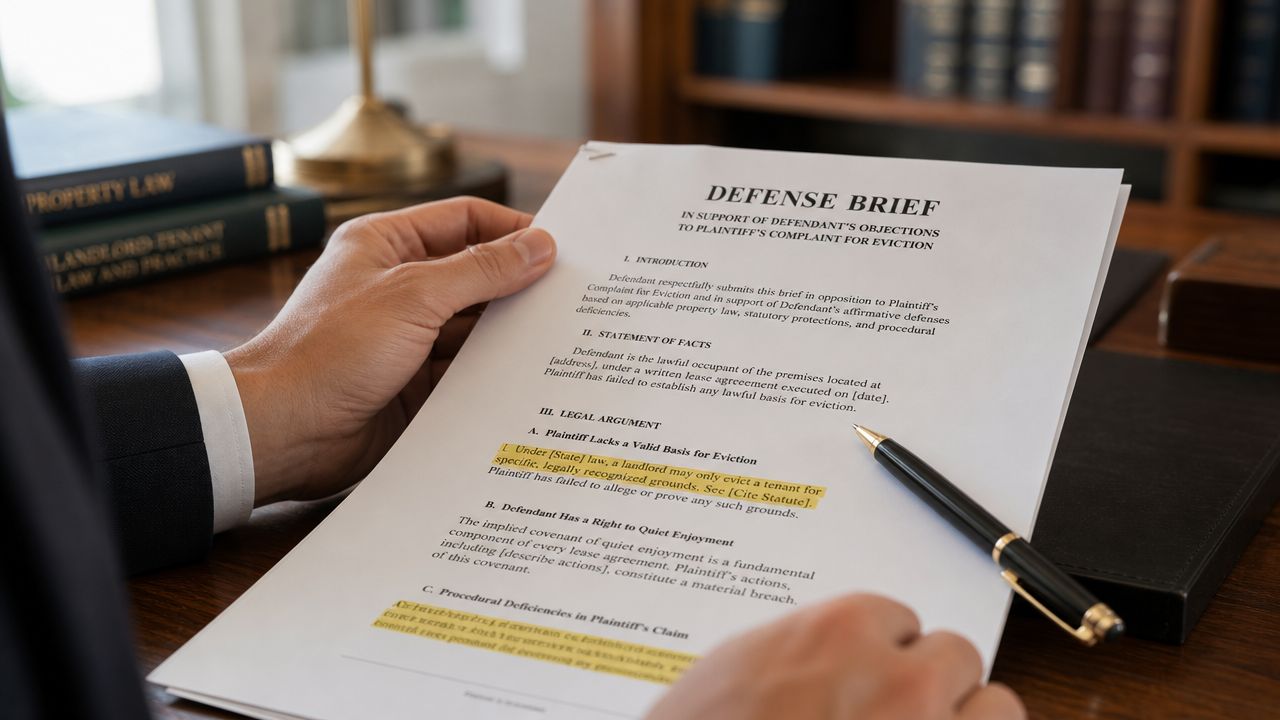
Even a strong case can get derailed if the trustee overlooks the occupant's likely defenses. Some defenses are procedural. Others go to the heart of whether the trustee has the right to remove the person at all.
Occupancy rights created by the trust
The biggest substantive defense is often the trust document itself. A significant exception to a trustee's eviction power is a life estate or other specific occupancy right granted in the trust, and courts can be highly fact-dependent when the occupant is both a beneficiary and a long-term family member, as discussed in this review of trustee eviction limits involving beneficiaries and co-trustees.
If the trust says the beneficiary may live there for life, until remarriage, until incapacity, or until the property is sold under stated conditions, eviction may not be the right remedy. The trustee may need declaratory relief, construction of the trust, or another court order first.
Procedural defenses trustees often underestimate
Some defenses don't challenge the trustee's authority in theory. They challenge whether the trustee handled the eviction properly.
Common examples include:
- Improper notice: The notice to vacate was unclear, incomplete, or not delivered the right way.
- Wrong party filed: A co-trustee should have joined, or the person filing lacked present authority.
- Waiver by conduct: The trustee accepted rent or otherwise acted as if the occupant could stay.
- Possession facts are disputed: The occupant claims a separate oral agreement or renewed permission.
These are not glamorous issues, but they matter. Courts often decide possession cases on procedure.
Family history can complicate clean legal lines
An occupant who has lived in the home for years may argue more than simple possession. They may say they paid taxes, covered repairs, cared for the deceased owner, or spent personal funds improving the property.
Those facts do not automatically create a right to remain, but they can push a court toward a more cautious approach. In some cases, related claims for offsets, reimbursement, accounting, or partition may be more appropriate than trying to force every issue through a basic eviction file.
Some trust property disputes are really about occupancy. Others are about years of unequal contributions, expectations, and unfinished estate planning. Treating both cases the same is where trustees get into trouble.
Alternatives to Eviction and When to Call an Attorney
Trustees sometimes assume that once they have authority, eviction is the obvious next step. Often it isn't. A legal right to evict and the best fiduciary choice are not always the same thing.
If the occupant is a family member, a negotiated exit can preserve value and reduce conflict. That may include a written move-out agreement, short-term rent, a reimbursement discussion, or a structured handoff so the property can be sold or leased. Mediation also works well when the underlying dispute is between beneficiaries and the house is merely where the conflict is showing up.
Options that may work better than filing first
A trustee should consider whether one of these paths better serves the trust:
- Short written occupancy agreement: Useful when the trustee needs time to market the home or coordinate distribution.
- Move-out agreement: Gives a firm date, access terms, and expectations for condition of the property.
- Rent and expense arrangement: Sometimes appropriate when immediate removal would create unnecessary conflict.
- Court instructions or declaratory relief: Helpful when the trust language is uncertain and the trustee needs protection before acting.
- Mediation: Best when legal rights are mixed with sibling conflict, caregiving claims, or informal promises.
For trustees deciding whether the matter has reached the point where counsel is necessary, this discussion of when to hire a trust administration attorney in Texas is practical and timely.
When legal help stops being optional
Some situations should push a trustee to get counsel quickly:
| Situation | Why it needs legal review |
|---|---|
| The occupant says the trust lets them stay | The trust may create a valid possessory right |
| The occupant is also a beneficiary | Fiduciary duties to all beneficiaries are in play |
| There are co-trustees or family disagreements | Authority and decision-making may be contested |
| The occupant made improvements or paid expenses | Offset and reimbursement claims may arise |
| The trustee wants to sell the home soon | Possession problems can delay the sale |
The Law Office of Bryan Fagan, PLLC handles trust administration, fiduciary disputes, probate-related conflicts, and related estate planning matters in Texas. That kind of counsel can help a trustee decide whether eviction, negotiation, declaratory relief, or another strategy is the cleaner path.
Get Trusted Guidance for Your Trust Administration Needs
A trustee can often remove someone from trust property in Texas, but the answer depends on the trust document and the occupant's legal status. That's why these cases should never be reduced to “they're in the house, so just evict them.” The safer approach is to identify the right at issue, protect the trust asset, and choose a process that fits the facts.
For trustees, both legal clarity and practical judgment are essential. A rushed eviction can create avoidable delay. On the other hand, doing nothing can expose the trustee to complaints from other beneficiaries who believe the property is being mishandled.
Families also need to remember that trust disputes rarely stay limited to real estate. Occupancy fights often connect to broader issues involving fiduciary duties in Texas, estate planning gaps, probate administration, guardianship concerns, or asset protection decisions that were never fully documented. A careful review by a Texas estate planning attorney or Texas trust administration lawyer can reveal options that aren't obvious at first, including whether the trust should be enforced as written, clarified in court, or addressed through a broader settlement strategy. In some cases, the underlying question isn't just possession. It's also how to modify a trust in Texas or how to administer it in a way that treats all beneficiaries fairly.
If you're managing a trust or dealing with an occupant in trust property, specific legal advice can protect both the asset and your role as trustee.
If you're managing a trust or planning your estate, contact Law Office of Bryan Fagan, PLLC for a free consultation. Our attorneys provide trusted, Texas-based guidance for every step of the process, including trust administration, probate, guardianship, estate planning, and asset protection.