Managing a loved one's trust can feel overwhelming, especially when the trust owns a house that now needs to be sold. You may be sorting through paperwork, fielding questions from family, and trying to understand what Texas law requires. That's a heavy place to be.
The good news is that selling trust property usually becomes much more manageable once you separate it into a few practical questions. Do you have authority to sell? What do beneficiaries need to know? What will the title company ask for? How should the proceeds be handled after closing?
For first-time trustees, the hardest part often isn't the estate transaction itself. It's knowing how to act confidently while staying within the trust document, your fiduciary duties in Texas, and the expectations of buyers, agents, and title companies. If you're searching for guidance on selling property held in a trust Texas rules, this guide is meant to help you move carefully and calmly.
Your Role as Trustee in a Property Sale
A common Texas scenario looks like this. A parent created a trust, put the family home into it, and named one adult child as successor trustee. After the parent's death or incapacity, that child now has to decide what to do with the home. The house may be empty, taxes and insurance still need attention, and siblings may already have opinions about whether to sell, rent, or keep it.

In that moment, your role isn't to do what feels easiest or what the loudest beneficiary wants. Your job is to follow the trust terms, protect the trust property, and act in the beneficiaries' best interests. That is the heart of a trustee's fiduciary role.
What a trustee is really doing
Think of yourself as a manager, not an owner. The home may be in the trust, but that doesn't mean you can treat it like your personal property. You're handling someone else's legal instructions and someone else's beneficial interests.
A trustee selling a house in Texas usually has to balance several duties at the same time:
- Follow the written trust terms so the sale matches the powers and limits in the trust
- Protect the value of the property by making reasonable decisions about listing, pricing, repairs, and timing
- Stay fair to beneficiaries when there are multiple people with different interests
- Keep records so you can show what you did and why
Practical rule: A trustee's safest path is rarely the fastest one. It's the one you can document later.
Why trustees get stuck
Most trustees don't get into trouble because they meant harm. They get into trouble because they assume. They assume being named trustee automatically means they can sign. They assume all beneficiaries must agree. They assume the title company will “work it out” at closing.
Those assumptions cause delays.
A careful trustee asks better questions early. Is the home titled in the trust? Are there amendments? Is there more than one acting trustee? Does the trust require notice or consent? Are there family tensions that need to be managed before the property hits the market?
If you treat the sale as both a legal task and a communication task, you'll be in a much stronger position.
Confirming Your Legal Authority to Sell
Before you list the property, clean it out, or sign anything with a real estate agent, confirm that you have the legal power to sell. That power starts with the trust document, not with family agreement and not with assumption.
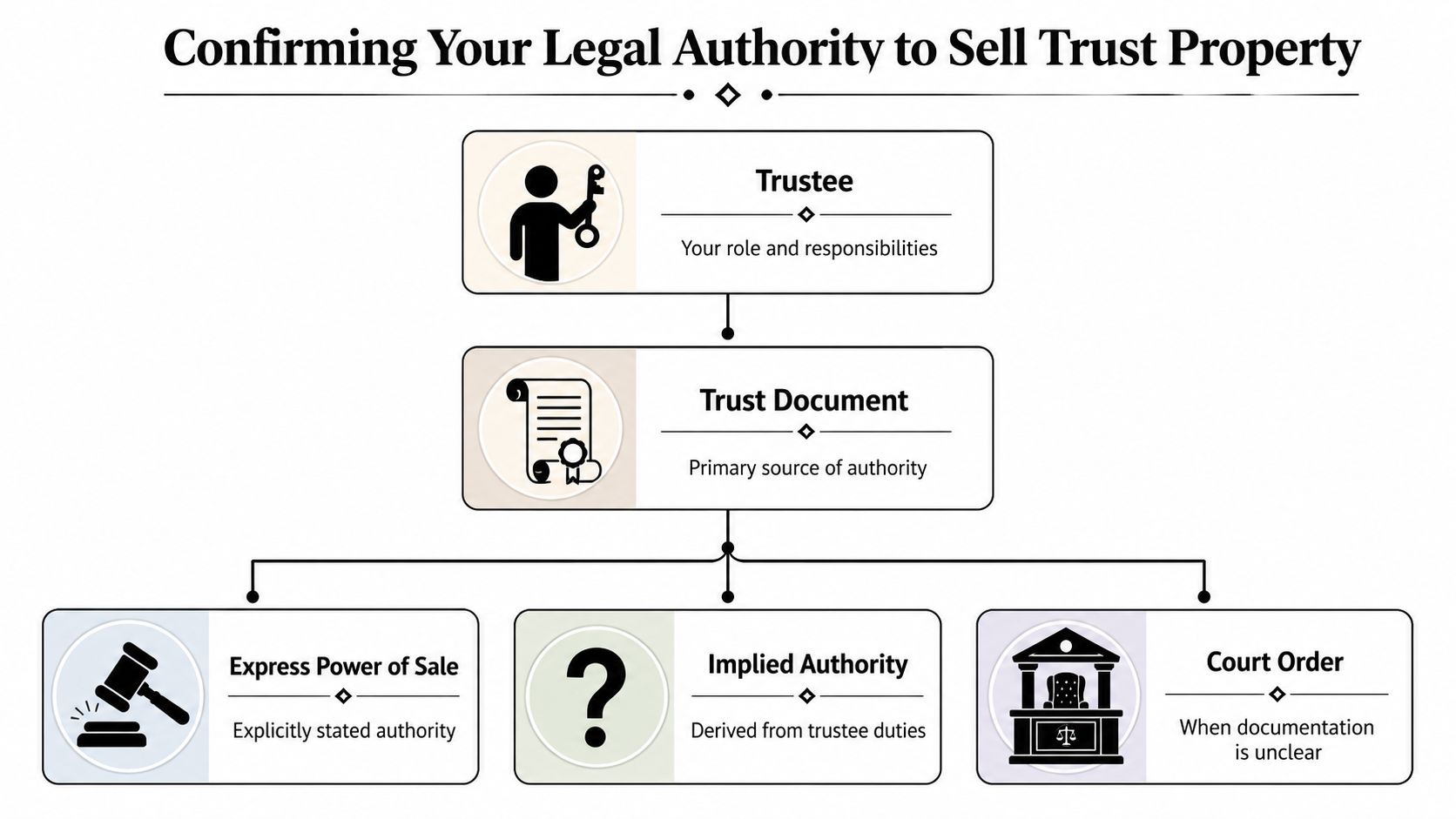
Under the Texas Trust Code, a trustee must have the legal capacity to “take, hold, and transfer” trust property, which is the statutory foundation for selling real estate held in trust in Texas, as stated in Texas Property Code Chapter 112. In plain language, Texas law supports a trustee's ability to transfer trust property when the trust itself grants that authority.
Read the trust first. If the trust gives you power to sell, Texas law generally recognizes that authority. If the document is restrictive or unclear, the problem is not just the sale. The problem is proving authority to everyone else involved.
Start with the trust instrument
The trust document is your operating manual. You're looking for language that gives the trustee authority to manage, market, or sell real property. Sometimes the language is direct. Sometimes it appears in a broader list of trustee powers.
Check these items carefully:
- Power of sale language that clearly allows the trustee to sell real estate
- Successor trustee provisions showing that you are the current acting trustee
- Amendments or restatements that may have changed earlier terms
- Special restrictions such as beneficiary approval, co-trustee signatures, or conditions tied to timing or use of the property
If the trust was funded properly, the deed should also show the property is owned in the trust or by the trustee in that capacity. If you need background on how assets are placed into trust ownership, this overview of transferring property to a trust is a helpful companion.
Authority and proof are not the same thing
Many first-time trustees think, “I know I'm the trustee, so I can sign.” In practice, that's only half the issue. Buyers, title companies, and closing agents need documentation that shows you have authority.
That often means assembling a small authority file, which may include:
- The trust agreement and any amendments
- Proof that the prior trustee died, resigned, or became unable to serve
- Your acceptance or confirmation as successor trustee
- Identification and related closing documents requested by title
What if the trust is silent or unclear
Here, many sales stall.
A trust may name a trustee but say little about whether the trustee can sell real estate. Or the wording may be broad enough to suggest authority, but not clear enough for a cautious title company. In other cases, the trustee has only part of the paperwork, or siblings disagree about what the trust means.
When that happens, don't treat it like a minor paperwork issue. It may require legal interpretation, additional evidence, or court involvement before a clean closing can happen.
Here's a simple way to think about it:
| Situation | Practical result |
|---|---|
| Trust clearly grants power to sell | Sale can usually move forward once authority documents are provided |
| Trust has restrictions | You must follow those restrictions before signing |
| Trust language is vague | Title may pause the file until authority is clarified |
| Key documents are missing | You may need legal help to rebuild the record or seek court guidance |
The key point is simple. Being trustee doesn't automatically answer every signing question. In Texas trust administration, the document controls.
Fiduciary Duties to Beneficiaries Notices and Consents
Once you know you have authority, the next issue is how you deal with the people who benefit from the trust, a process where many trustees feel the most pressure. One beneficiary wants a quick sale. Another wants to keep the home. A third barely responds to anything.
Your role is not to please everyone. Your role is to act with loyalty, fairness, and reasonable transparency.
What fiduciary duty looks like during a sale
A trustee's fiduciary duties in Texas include acting in the beneficiaries' interests and staying faithful to the trust terms. In a property sale, that usually affects how you handle price, timing, disclosures, conflicts, and records.
That duty often shows up in practical choices such as:
- Choosing a reasonable listing strategy instead of rushing into a private sale that benefits one person
- Documenting the property value so you can explain why you accepted a particular offer
- Avoiding self-dealing if you, a relative, or a business partner want to buy the property
- Keeping trust funds separate so sale proceeds are handled as trust assets, not personal money
If you want a fuller explanation of these obligations, this discussion of fiduciary duties of trustees is useful background.
Beneficiary communication is not busywork. It's part of how a trustee shows loyalty, fairness, and good judgment.
Notice versus consent
This point confuses people all the time. Informing beneficiaries is not always the same as asking permission.
Some trusts require beneficiary consent before a sale. Many do not. If the trust gives the trustee independent authority, the trustee may be able to proceed without formal approval from every beneficiary. But even when consent isn't legally required, notice is often the wiser path.
A practical communication plan may include:
- Early notice that the property will likely be sold
- Basic reasoning such as carrying costs, equal distribution needs, or trust instructions
- Sale updates including listing status and serious offers
- Closing summary with the final contract terms and how proceeds will be held or distributed
A simple example
Suppose a trustee lists a Houston home without telling the other beneficiaries. Two weeks later, a sibling learns the property is under contract at a price they think is too low. Even if the trustee had legal authority, the lack of communication can spark distrust, accusations, and demands for an accounting.
Now compare that with a trustee who shares the listing strategy, keeps copies of the comparative market analysis or appraisal, and explains why the accepted offer made sense. The second trustee is far better positioned if someone later asks questions.
When consent may be wise even if it's not required
There are times when a signed consent or written acknowledgment can help, even if the trust doesn't require it.
Consider getting written buy-in when:
- Family conflict already exists and you want to reduce later claims
- The sale is to a related party and appearance matters as much as legality
- The price is lower than a beneficiary expected because the home needs repairs or title work
- There are co-trustees and you want everyone aligned before the contract stage
That doesn't mean you hand over decision-making to beneficiaries. It means you use communication as a risk-management tool.
The Practical Sales Process From Listing to Closing
The legal question is whether you can sell. The operational question is how to get from “we should sell this house” to a completed closing without the file falling apart at title.
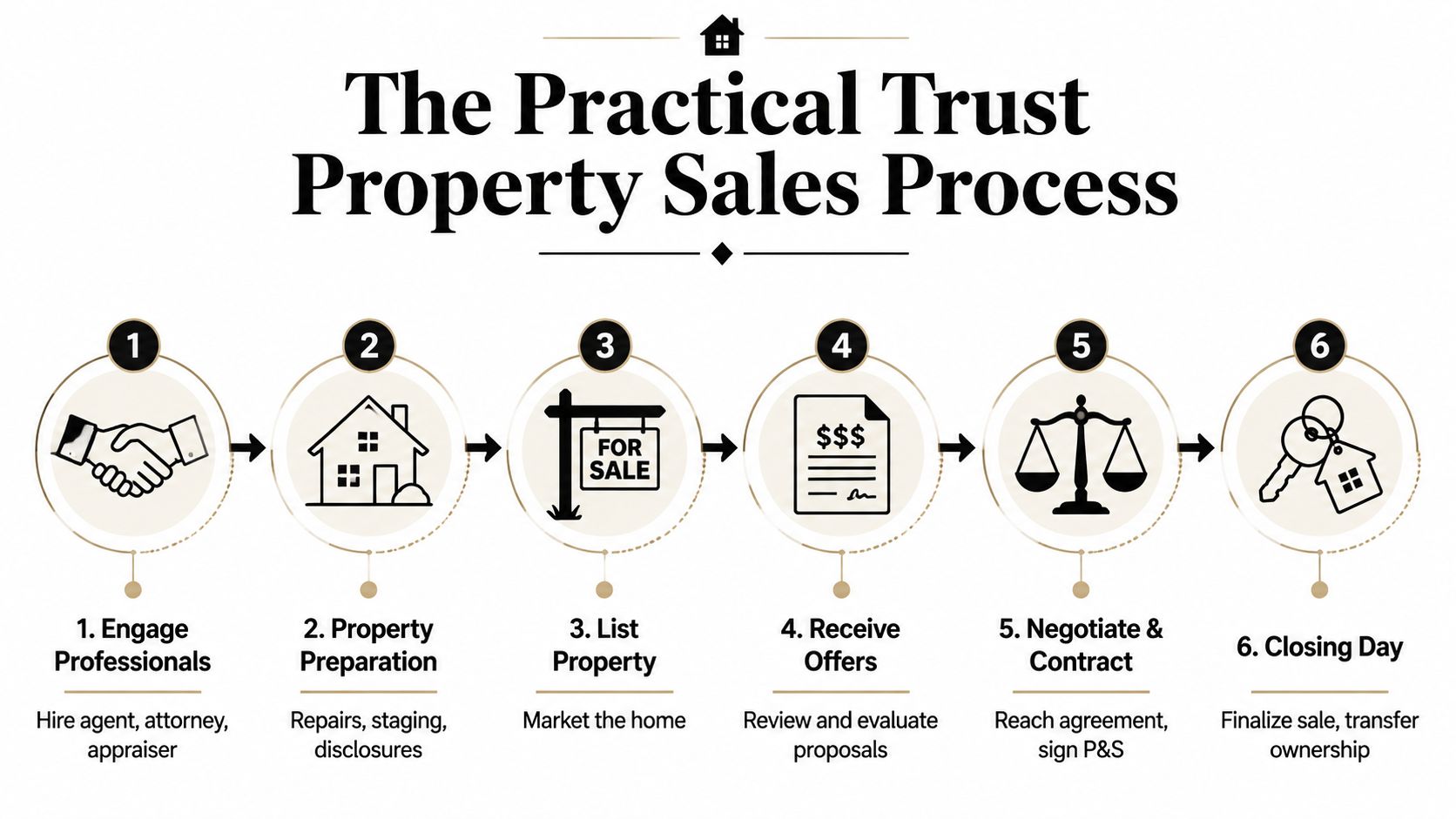
Before a trust-held Texas property can be sold, the trustee must confirm that the trust instrument grants a power of sale, then provide a trust certification or similar authority packet to title or escrow. If the trust language is restrictive or unclear, court approval may be needed before closing, as described in this guide to how to sell a house in a trust.
Build your closing file early
Trust sales move more smoothly when you prepare documents before the property goes live. Don't wait until there is a buyer under contract.
Gather these items first:
- The trust agreement and amendments so authority can be reviewed
- Proof of trustee status such as resignation, death-related paperwork, or acceptance documents if applicable
- Property records including the deed, tax information, and insurance details
- Lien and payoff information for mortgages, taxes, HOA balances, or judgment issues
A trustee who organizes this early usually avoids the last-minute scramble that delays closing.
For trustees dealing with broader property issues inside an estate or trust plan, this overview of real estate considerations in Texas estate planning helps frame the bigger picture.
What a Certification of Trust does
A Certification of Trust is the document title companies often want because it summarizes key authority information without requiring full public disclosure of every trust term. It is often the bridge between your legal authority and the title company's underwriting requirements.
A typical certification may address:
| Item title wants to confirm | Why it matters |
|---|---|
| Name of the trust | Matches the ownership records |
| Name of the acting trustee | Confirms who can sign |
| Trustee powers | Shows authority to transfer property |
| Whether the trust is in effect | Confirms the trust is currently operative |
| Signature authority | Clarifies whether one or more trustees must sign |
If the certification is incomplete, outdated, or inconsistent with the deed, title may ask for more. That's normal. It doesn't always mean the sale is impossible. It means underwriting needs a cleaner record.
Here's a quick explainer before you get too far into the paperwork:
The trustee's real-world workflow
A trust sale often follows this sequence:
- Review authority documents before talking price or listing terms
- Hire the right professionals, which may include a real estate agent, a trust administration lawyer, and sometimes an appraiser or CPA
- Prepare the property by deciding what to repair, disclose, or sell as-is
- List and market the home in the trustee capacity
- Evaluate offers carefully with an eye on both value and risk
- Deliver the authority packet to title well before closing
- Sign in trustee capacity on the contract, deed, and closing documents
Closing problems usually begin long before closing day. They begin when the trustee waits too long to gather authority documents.
How to sign correctly
Trustees shouldn't sign only their personal name on sale documents. They generally sign in their representative role. The exact format depends on the trust name and title instructions, but the key principle is that you're signing as trustee, not as the individual owner.
That detail matters because the chain of title needs to show the trust's representative is the one conveying the property.
Tax Considerations When Selling Trust Property in Texas
Taxes are one of the biggest reasons trustees should slow down before closing. The trust may hold a house, but that doesn't mean every trust is taxed the same way when the property is sold.
The most important distinction is usually whether the property sits in a revocable living trust or an irrevocable trust.
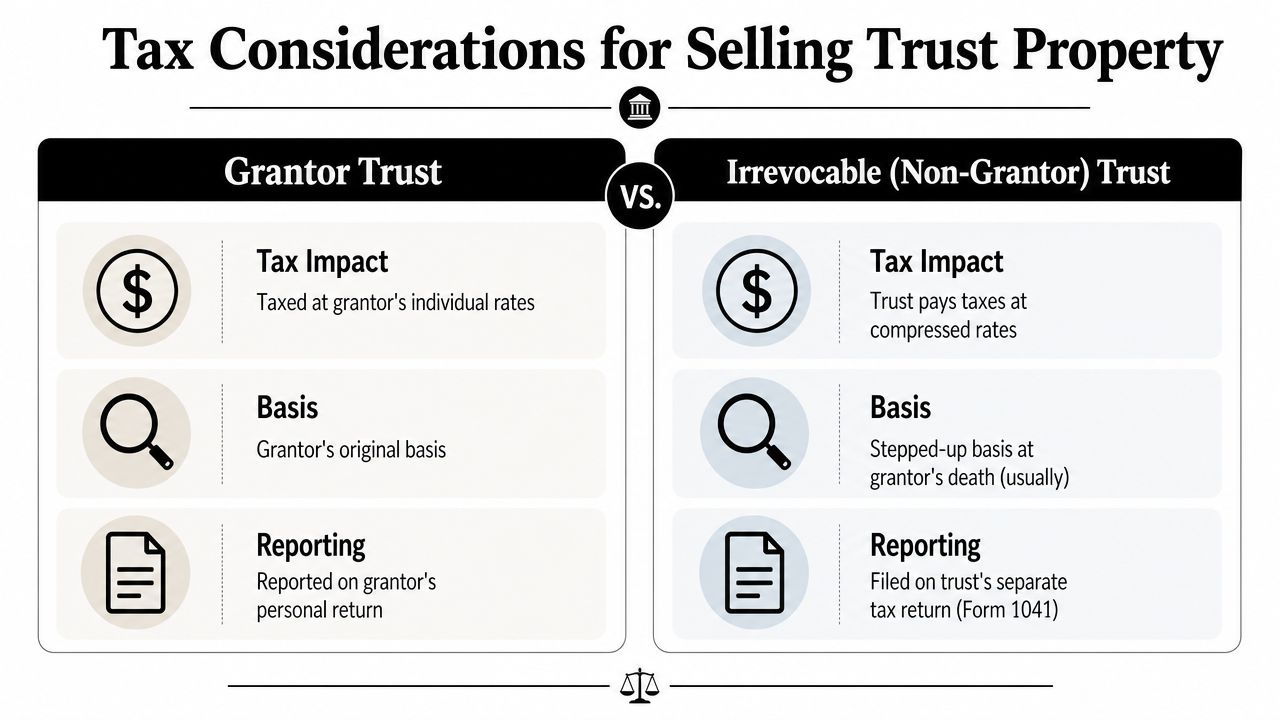
For a primary residence held in a revocable living trust, federal tax rules generally preserve the home-sale exclusion of up to $250,000 for a single filer or $500,000 for married couples filing jointly, if the owner meets the use and ownership requirements. By contrast, an irrevocable trust is treated as a separate taxable entity and can be taxed at the highest federal rate of 37% once income is only about $16,000, which is why careful planning matters, as explained in this discussion of tax ramifications of selling a house in trust.
Revocable trust versus irrevocable trust
Here's the practical difference.
In many revocable trust situations, the trust is closely tied to the grantor for tax purposes. If the property is a primary residence and the required tests are satisfied, the familiar home-sale exclusion may still be available. That can make the sale feel much more like a standard homeowner transaction from a tax standpoint.
An irrevocable trust is different. It is often treated as its own taxpayer. That changes how gain is reported and why trustees need tax planning before they sign a contract.
A simple comparison
| Trust type | Common tax posture |
|---|---|
| Revocable living trust | Often tied to the grantor's individual tax treatment |
| Irrevocable trust | Often treated as a separate taxable entity |
| Primary residence in revocable trust | May preserve the home-sale exclusion if requirements are met |
| Irrevocable trust sale | Often needs closer review because trust-level taxation can be less forgiving |
Questions every trustee should ask before listing
The tax issue is rarely just, “Will there be capital gains tax?” A better set of questions is:
- What kind of trust is this really? The label on the binder may not tell the full story
- Is this a primary residence or investment property? That can change the tax conversation
- What is the property's basis? Trustees often need help understanding how basis affects gain
- Who reports the sale? The trust, the grantor, or the estate-related tax filing path may matter depending on the facts
If the property was rented, vacant for a long time, or improved substantially, ask a CPA to review the full history before closing.
Helpful tools and professional coordination
A trustee doesn't need to become a tax preparer. But the trustee does need to know when to bring in the right people. In practice, that often means coordinating with a CPA, a Texas trust administration lawyer, and sometimes a real estate professional handling the listing. The Law Office of Bryan Fagan, PLLC works with clients on trust administration issues that often intersect with sale authority, fiduciary recordkeeping, and distribution questions.
If the property is not a primary residence and you're trying to estimate tax exposure on an income-producing property, PropLab's rental property tax tool can help you frame questions before meeting with your tax advisor.
A trustee's tax mistake is often not in the return itself. It's in signing a contract before understanding how the sale will be taxed.
Don't forget the proceeds
After the sale, the money does not become personal money. It remains trust property unless and until the trust authorizes distribution. That means the proceeds may first need to cover debts, expenses, taxes, reserves, or other administration needs before beneficiaries receive anything.
This is one reason trustees should avoid making verbal promises about payouts before speaking with legal and tax advisors.
Troubleshooting Common Hurdles and Property Sale Disputes
The smooth version of a trust sale is simple. The trustee has full documents, title is comfortable, beneficiaries stay informed, and closing happens on schedule. Real life is often messier.
A major practical problem in Texas is figuring out who can sign and close when the trust document is silent or unclear, especially in successor-trustee situations. Buyers and title companies often want proof of authority, yet many guides don't address what happens when the certification of trust is incomplete, a successor trustee cannot locate the full instrument, or multiple trustees disagree, as noted in this article on selling a house in a trust in Texas.
Scenario one with a missing trust document
A successor trustee has the deed, some account statements, and a partial certification, but not the full trust agreement. The buyer is ready. Title is not.
In that situation, the issue is evidentiary. Title wants enough documentation to insure the transfer. If the missing pages affect trustee powers, successor provisions, or amendment language, the sale may pause until the record is reconstructed or a court provides direction.
The practical response is to gather every related document you can find. That may include prior certifications, amendments, correspondence from the drafting attorney, resignation records, or death-related documents. A trust attorney can then evaluate whether the evidence is enough or whether court action is safer.
Scenario two with disagreeing co-trustees
Two siblings serve as co-trustees. One wants to accept an offer because the home needs work and insurance costs are rising. The other thinks the family should wait for a higher price.
This is not just a family dispute. It is a trust administration problem. The answer depends on the trust language. Some trusts require joint action. Others allow one trustee to act, or provide a tie-breaking mechanism. If the document doesn't solve the deadlock, legal counsel may need to step in before the property can be sold.
Scenario three with a beneficiary who objects
A beneficiary says the trustee is “selling too cheap” or “doing this too fast.” That doesn't automatically stop the sale. But the trustee should take the concern seriously.
Good practice usually includes:
- Showing your valuation basis such as an appraisal or market analysis
- Keeping written records of offers, repair issues, and carrying costs
- Explaining the decision process instead of becoming defensive
- Seeking court guidance if the dispute threatens the transaction or your protection as trustee
When trust documents are unclear, delay can be cheaper than closing on weak authority and defending the sale later.
The recurring lesson is that title-company bottlenecks and beneficiary disputes usually turn on proof, process, and paperwork. Not just on who feels right.
Frequently Asked Questions About Trust Property Sales
What happens to the sale proceeds after closing
The proceeds usually remain trust assets after closing. A trustee typically deposits them into a trust account, pays approved expenses or obligations, and distributes funds only according to the trust terms. If taxes, debts, or reserve issues remain unresolved, immediate distribution may not be appropriate.
Can a trustee sell the property to a family member
Sometimes, yes. But this is one of the highest-risk situations for later dispute. A trustee must be very careful about valuation, disclosure, and fairness. If the buyer is a beneficiary, relative, or the trustee personally, the transaction may invite claims of self-dealing or favoritism unless it is clearly authorized and carefully documented.
Does every beneficiary have to agree to the sale
Not always. The answer depends on the trust language. Some trusts require consent. Others allow the trustee to act independently as long as the trustee follows fiduciary duties in Texas and keeps beneficiaries reasonably informed.
What if the property still has a mortgage
A mortgage usually doesn't prevent a sale by itself. But the payoff must be handled through closing, and the trustee should confirm the lender balance early. The trustee also needs to identify other items that may affect title, such as unpaid taxes, HOA obligations, or judgment liens.
Can the trustee sell the house as-is
Often, yes. That can be a sensible choice when the trust lacks cash for repairs or when the home needs substantial work. The trustee still needs to make informed decisions, disclose known material issues as required, and show that the chosen sale strategy served the trust rather than the trustee's convenience.
When should a trustee ask a lawyer for help
Early is usually better than late. Legal help is especially important when the trust is unclear, the document is incomplete, co-trustees disagree, a beneficiary challenges the sale, or title refuses to close without more authority. Trustees also often benefit from broader advice tied to estate planning, probate, guardianship, or asset protection when the property sale is only one part of a larger family matter.
If you're managing a trust or planning your estate, contact The Law Office of Bryan Fagan, PLLC for a free consultation. Our attorneys provide trusted, Texas-based guidance for every step of the process.
If you need help with selling property held in a trust under Texas rules, or you're facing questions about trustee authority, beneficiary disputes, probate, guardianship, or asset protection, Law Office of Bryan Fagan, PLLC offers free consultations for Texas families and fiduciaries. A focused legal review can help you confirm your authority, prepare the right documents, and move toward closing with more confidence.