Losing a loved one is hard enough. Finding out that a trust says something you didn't expect can make that grief feel sharper, more confusing, and more urgent.
A common Texas family scenario goes like this. A parent passes away. One child believed the estate would be divided evenly, but the trust or an amendment suddenly favors a caregiver, a new spouse, or one sibling. The family starts asking questions, but no one knows where the original trust is, who controls the assets, or how long they have to challenge what happened.
That's where many people get stuck. They know something feels off, but they don't know whether they're dealing with a trust problem, a will problem, or a trustee problem.
The good news is that there is a legal path forward. Texas law gives beneficiaries and other interested people a way to investigate and, in some cases, challenge a trust after death. The key is acting early, getting the right documents, and understanding the deadlines before they control the outcome.
Your First Steps After a Loved One's Death
In the first days after a death, most families aren't thinking about litigation. They're arranging services, handling property, and trying to make sense of paperwork. But if you suspect a trust was changed unfairly, the first 90 days matter because they shape the evidence you may need later.
Start with the basics. Ask for the trust document, any amendments, and the name of the current trustee. If you already know who the trustee is, communicate in writing and keep copies of every message. That simple step often becomes important later.
Three early questions usually matter most:
- Where is the trust document You need the full instrument, not just a summary or a verbal explanation from a family member.
- Who is serving as trustee The trustee controls administration and usually has access to records, accounts, and property information.
- What changed near the end of life If a major amendment appeared during illness, isolation, or dependence on another person, that can raise legal questions.
A practical example helps. Suppose your mother had a long-standing estate plan, but after a hospitalization, a new trust amendment leaves most assets to one person who had daily control over her medications, visitors, and finances. You may not yet know whether that amendment is invalid. But you do know you should preserve records, request documents, and avoid waiting for “the family to work it out” if no one is being transparent.
If the trust includes real estate, families also run into immediate questions about whether a house can be sold before everyone agrees on what the trust means. For a plain-language overview of that issue, this Buys Houses guide for selling trust property helps explain the practical side of a trust-owned home after death.
Early focus: Don't try to decide the whole case in the first week. Focus on identifying the trustee, securing documents, and preserving a paper trail.
Understanding the Critical Timelines in Texas
The biggest mistake people make is assuming all estate disputes follow the same deadline. They don't.
In a contesting a trust after death in Texas timeline, the trust deadline and the will deadline are often confused. That confusion can cost someone the right to file.

The trust deadline and the will deadline are different
Under one Texas rule set, the statute of limitations for contesting a trust after death is generally four years from the date the trust becomes irrevocable, usually at the settlor's death, while will contests must generally be filed within two years. The same source notes that over 65% of trust disputes filed post-2020 were dismissed due to missed deadlines (Texas probate litigation overview).
That's the point many families miss. A trust is not a will. Even when both documents are part of the same estate plan, they don't always follow the same contest timeline.
Here's a simple comparison:
| Issue | General Texas timeline |
|---|---|
| Contesting a trust after death | Generally four years from when the trust becomes irrevocable |
| Contesting a will | Generally two years from admission of the will to probate |
When the clock usually starts
For many revocable living trusts, the trust becomes irrevocable when the person who created it dies. That's often the date families use as the starting point for evaluating deadlines.
But readers should be careful here. The exact legal start date can depend on the type of claim, the trust language, notice issues, and whether the dispute is really about trust validity or trustee conduct. That's one reason families should avoid relying on rough internet summaries alone.
If you want a broader administrative overview, this guide on the timeline for trust administration in Texas helps place the litigation deadline within the larger post-death process.
Why the first 90 days still matter if the deadline is longer
A longer filing window doesn't mean you should wait. Evidence gets harder to find as time passes. Medical records may take time to obtain. Witness memories fade. Financial documents can become harder to trace. Property may be sold, accounts may be moved, and family communication often gets worse, not better.
That is why I tell families to treat the first 90 days as an evidence-preservation period, not a waiting period.
If you think a trust was signed under pressure, during incapacity, or through deception, don't measure urgency by the final statute alone. Measure it by how quickly proof can disappear.
Limited exceptions can complicate the analysis
Some claims may involve allegations like fraud or concealment. Those situations can change how lawyers analyze timing. But those are not automatic extensions, and they shouldn't be assumed.
Texas trust and estate law values finality. Courts expect people with a real financial interest to move with reasonable speed. If you wait too long, the court may never reach the merits of your complaint.
What Are Valid Grounds for Contesting a Trust
Being disappointed by a trust isn't enough. To challenge a trust in court, you need a recognized legal ground.
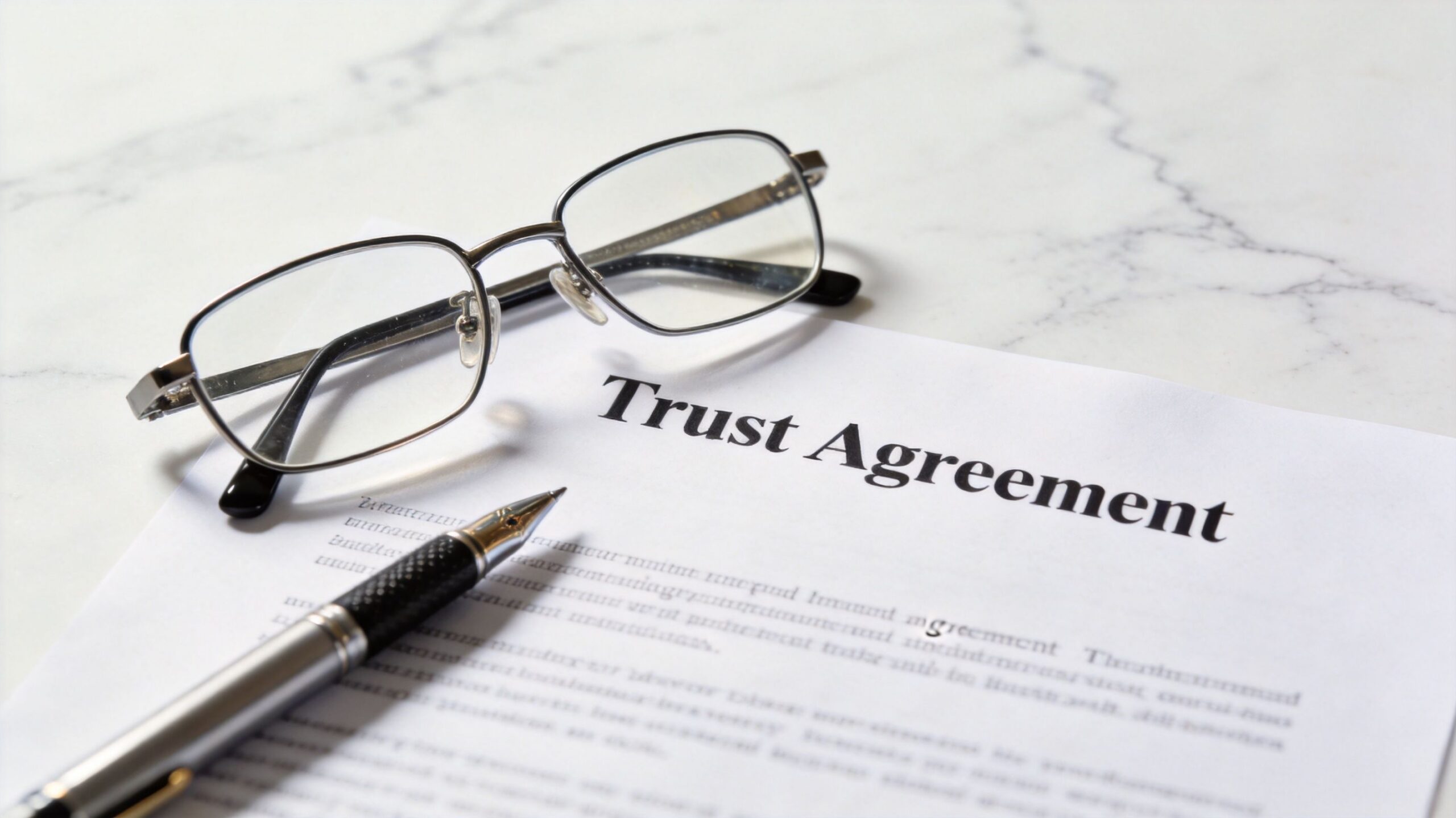
Texas trust disputes often fall into two broad categories. One category attacks the validity of the trust or amendment itself. The other concerns how the trustee is administering the trust.
For a closer look at defects that can undermine a trust document, this resource on what invalidates a trust in Texas is a useful companion to the issues below.
Lack of capacity
A person creating or changing a trust must understand what they're signing and the effect of that decision. If illness, dementia, medication, or severe mental decline prevented that understanding, capacity may be in dispute.
Example: A father signs a major amendment while heavily medicated after a medical event. He no longer recognizes close relatives and appears confused about his finances. That doesn't automatically prove incapacity, but it raises a serious question.
Undue influence
Undue influence happens when someone overcomes the trustmaker's free will and pushes them into a change they would not have made on their own.
A common fact pattern involves dependency. An elderly woman becomes isolated from family, relies on one caregiver for daily needs, and then signs a new amendment that sharply benefits that caregiver. Courts don't decide these cases based on suspicion alone. They look for pressure, opportunity, vulnerability, and unusual changes.
Fraud or forgery
Fraud can involve deception about what the person was signing or why. Forgery involves a false signature or altered document.
Example: A trustmaker is told a document is a routine medical or banking paper, but it is a trust amendment. In another case, family members may suspect the signature itself isn't genuine.
Practical rule: If your concern is document validity, gather records tied to the date of signing. Medical visits, text messages, emails, and witness names often matter as much as the document itself.
Improper execution
Trust documents and amendments must be executed in a legally sufficient way. If the signing process was flawed, the document may be challenged.
This issue often comes up when a family finds multiple versions of the same trust, unsigned pages, or amendment language that doesn't match the formal requirements that applied at the time.
A short video can help frame these questions before you meet with counsel:
Trustee misconduct is different from a validity challenge
Sometimes the trust itself is valid, but the trustee is mishandling it. That can involve failing to communicate, withholding information, self-dealing, or distributing assets contrary to the trust's terms.
That kind of claim usually isn't “the trust was invalid.” It's closer to “the trustee breached fiduciary duties in Texas.” That distinction matters because the legal theory, evidence, and requested court relief may be different.
The Trust Contest Litigation Process Explained
Many people picture trust litigation as one dramatic court hearing. In reality, it's a sequence of stages. Each stage has a different purpose, and most cases move unevenly.
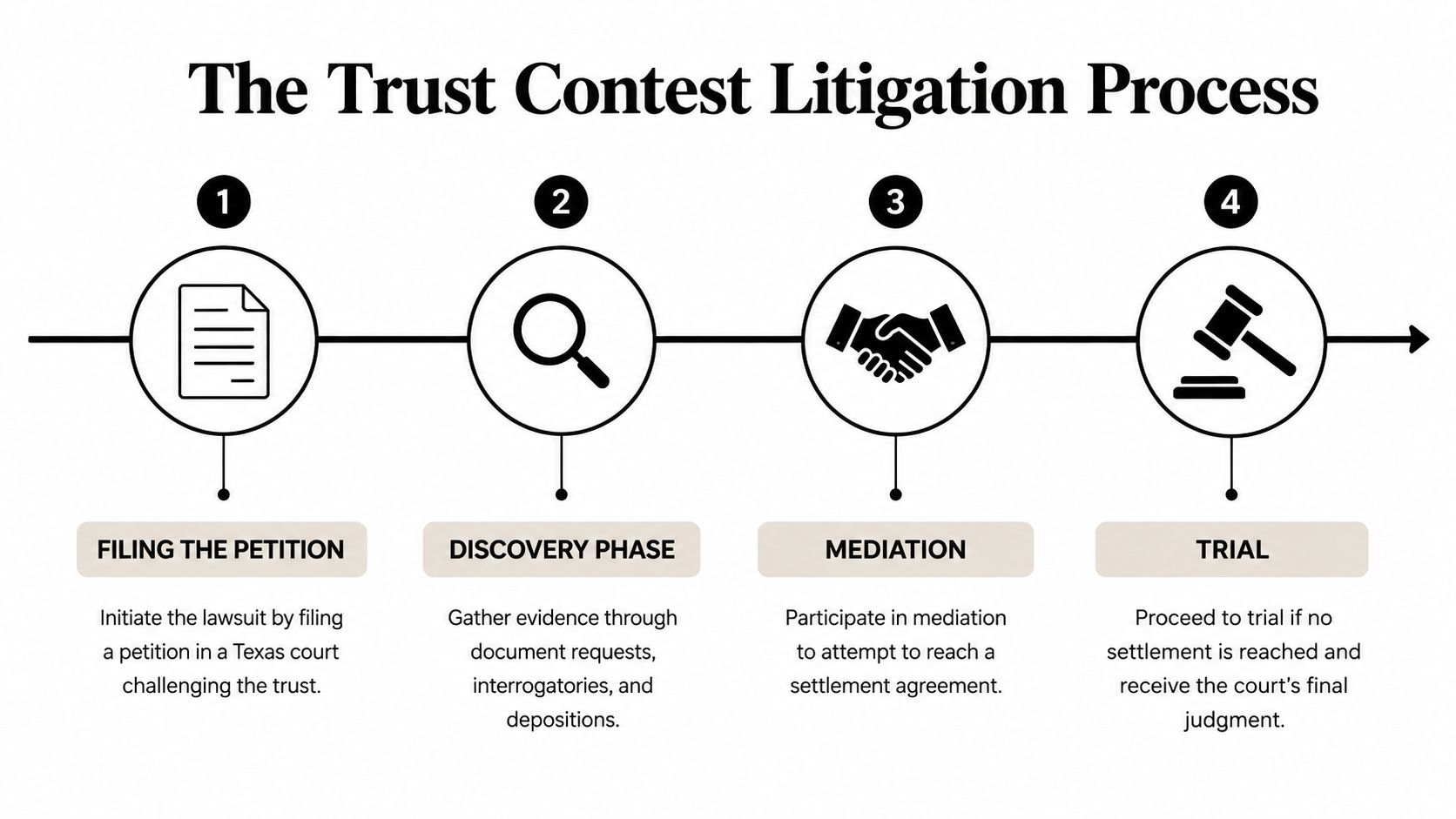
Filing the petition
The case starts when your attorney files a petition in the appropriate court. That document identifies the parties, explains why you have standing, states the legal grounds, and tells the court what relief you're asking for.
Relief may include setting aside an amendment, interpreting the trust, requiring an accounting, freezing certain actions, or removing a trustee in the right case. The filing isn't just paperwork. It frames the dispute and sets the litigation in motion.
Families often ask whether filing means they're “declaring war.” Not necessarily. Sometimes filing is the first step needed to stop a sale, preserve evidence, or force a clear response.
Service and response
After filing, the other side has to be formally served and given a chance to respond. The trustee, the person who benefited from the disputed change, or both may become active parties.
At this stage, defenses start to appear. One side may argue the claim was filed too late. Another may argue the challenger lacks standing. The trustee may take a neutral role in some disputes and a defensive role in others, depending on the issue.
Discovery and evidence gathering
Discovery is where the case becomes concrete. Each side requests documents, asks written questions, and may take sworn testimony through depositions.
Typical discovery materials include:
- Medical records showing cognitive function, diagnoses, or medications near the signing date
- Financial records that reveal unusual transfers, new joint accounts, or abrupt changes in asset control
- Communications such as emails, texts, handwritten notes, and calendars
- Witness testimony from lawyers, notaries, caregivers, neighbors, friends, and family members
When the facts involve a suspicious death, a disputed cause of incapacity, or medical complexity, outside experts may become important. In some cases, medical analysis can help courts understand condition, timing, and credibility. For readers curious about that type of role, Texas Autopsy Services has a helpful discussion of providing scientific clarity in legal disputes.
A trust contest is often won or lost in the records. Families remember conversations. Courts look for documents, dates, and testimony that can be tested.
Temporary orders and pretrial disputes
Some cases need immediate court action. If a trustee plans to distribute assets, sell property, or move money while the challenge is pending, a party may ask the court for temporary relief.
Pretrial disputes also happen over what evidence can be used, whether expert testimony is allowed, and whether some claims should be dismissed before trial. This stage can feel technical, but it often impacts the bargaining power for settlement.
Mediation and settlement
Many trust contests resolve before trial. Mediation gives the parties a structured setting to negotiate with the help of a neutral mediator.
Settlement can be especially useful when families want privacy, faster resolution, or a practical division of disputed assets. It can also preserve part of a family relationship that a trial would likely destroy.
That said, settlement only works when both sides have enough information to assess risk. A rushed settlement before key records are obtained can be a mistake.
Trial
If no settlement is reached, the case goes to trial. The judge, and sometimes a jury depending on the claims, hears testimony and reviews documents.
At trial, the court decides whether the challenged trust or amendment is valid, whether fiduciary duties were breached, and what remedy should follow. Trials are emotionally demanding. Family members often testify about painful events, end-of-life care, and private conflicts.
Possible appeal
A final judgment isn't always the final word. One side may appeal if there is a legal basis to challenge the trial court's decision.
Appeals focus less on reliving all the facts and more on whether the law was applied correctly. That makes trial preparation critical from day one.
Practical Considerations Before You File a Lawsuit
Filing a trust contest isn't just about whether something feels wrong. It's about whether you can bring the claim, support it, and survive the risks that come with litigation.

Standing comes first
You must have a legal stake in the outcome. In plain English, that usually means the trust affects your financial interest.
That can include a current beneficiary, a prior beneficiary whose share disappeared under a later amendment, or an heir who would benefit if the challenged document is set aside. If you can't show that the case affects your rights, the court may dismiss the claim before it gets far.
Evidence decides whether suspicion becomes a case
A strong consultation usually starts with a timeline. When did the trust change. Who was involved. What was the person's condition. Who isolated them. What records exist.
Helpful materials often include:
- Document history Earlier versions of the trust, amendments, powers of attorney, and related estate planning papers
- Medical context Records tied to cognition, memory, medication, and major diagnoses
- Behavior changes Written proof of isolation, dependency, or unusual gatekeeping by one person
- Property activity Sales, transfers, withdrawals, or beneficiary changes that don't fit prior patterns
A Texas trust administration lawyer can help organize this information into legal issues instead of family grievances. That difference matters in court.
A no-contest clause can change your risk
Some trusts contain a no-contest clause, also called an in terrorem clause. These provisions can punish a beneficiary for filing certain types of challenges.
Texas courts strictly enforce these clauses under Property Code § 112.035, and recent Texas appellate case data shows that 65% of trust disputes involving these clauses result in partial or full enforcement against the challenger (Texas no-contest clause enforceability reference).
That doesn't mean every challenge is doomed. It means you should never file first and analyze later. A trust contest can put your inheritance at risk if the clause applies and the court decides your claim lacked probable cause.
Before filing, ask two separate questions. “Do I have a complaint?” and “What happens to my interest if I lose?” Those are not the same question.
Strategy matters as much as emotion
The right next step may be a demand for records, a negotiated pause in distributions, a petition focused on trustee conduct, or a validity challenge. Not every problem requires the same lawsuit.
One practical option families consider is getting a focused case assessment from a firm that handles these disputes, such as the Law Office of Bryan Fagan, PLLC, which works on Texas trust administration, fiduciary disputes, and related estate litigation. The value of that early review isn't hype. It's issue-spotting.
When to Contact a Texas Trust Litigation Attorney
Many individuals wait too long because they hope more facts will appear on their own. Usually, they don't.
The better time to speak with counsel is when you first notice facts that don't fit. Maybe a longtime plan changed suddenly. Maybe the trustee won't share documents. Maybe property is being sold before basic questions are answered. Those are signs to get legal advice, not signs to wait.
What a lawyer actually does early on
A Texas estate planning attorney or trust litigation lawyer doesn't just file lawsuits. Early legal work often includes identifying the right claim, requesting the right records, preserving evidence, and preventing avoidable mistakes.
That can include:
- Deadline analysis figuring out which limitations period may apply
- Standing review confirming whether you have the legal right to challenge the trust
- Evidence preservation sending requests and notices before documents disappear
- Trustee communication making formal written demands for information, accountings, or records
- Risk evaluation reviewing whether a no-contest clause creates danger
If you're looking for practical help with administration issues before or during a dispute, this overview of a Texas trust administration attorney shows how counsel can assist trustees, beneficiaries, and families.
Why timing and guidance work together
People often search for “contesting a trust after death in Texas timeline” because they want a simple number. But the timeline is only part of the answer. The central question is how your facts fit the law, what proof exists, and what risk attaches to filing.
A trustee may owe fiduciary duties in Texas. A beneficiary may have rights to information. A family may also need related help with probate, guardianship questions, or asset protection concerns if the dispute touches multiple parts of the estate plan.
That's why legal guidance matters early. It helps you separate valid legal grounds from understandable grief, and it gives you a plan that fits the actual documents and facts.
You don't need to know everything before you call an attorney. You just need enough concern to ask whether your rights need protection.
If you're facing uncertainty after a loved one's death, don't assume silence means everything is proper. Don't assume delay is harmless either. A short consultation can clarify whether you're dealing with a trust validity problem, a trustee conduct problem, or a different estate issue entirely.
If you're managing a trust or planning your estate, contact Law Office of Bryan Fagan, PLLC for a free consultation. Our attorneys provide trusted, Texas-based guidance for every step of the process. Whether you need help with trust disputes, probate, estate planning, guardianship, or asset protection, we can help you understand your options and move forward with confidence.