Skip to content
Managing a loved one's trust can feel overwhelming, but with the right legal guidance, it doesn't have to stay that way. Most new trustees in Texas aren't failing when they feel lost. They're reacting normally to a role that carries legal duties, family pressure, paperwork, deadlines, and often grief at the same time.
When a client calls and says, “I'm the trustee and I have no idea what to do next,” the answer usually isn't to do everything at once. It's to triage the situation. First, stop the bleeding by securing assets and records. Next, stabilize communication so beneficiaries aren't left in the dark. Then diagnose the full picture by reviewing the trust terms, identifying property, and deciding whether you can serve effectively or need help.
You're a Trustee in Texas and Feeling Overwhelmed
A trustee's job rarely arrives at a convenient moment. It often begins after a death, an illness, or a sudden resignation. You may be sorting through bank statements, real estate issues, family questions, and a trust document you've never read carefully before.
That's why the phrase “trustee overwhelmed? what to do next in Texas” is more than a search query. It describes a real moment many families face. You've been given responsibility, but not always a clean set of records, a clear timeline, or cooperative beneficiaries.
Texas law treats trustees as fiduciaries. In plain English, that means you're expected to act carefully, with integrity, and in the beneficiaries' interests. The role isn't passive. If administration stalls, the duties still remain.
A practical starting point is to review a checklist built for new trustees, such as these first steps after becoming a trustee in Texas. The point isn't to memorize every rule on day one. It's to create order quickly enough that the trust stays protected while you get oriented.
You do not need to know everything immediately. You do need to stop avoidable problems from getting worse.
Most overwhelmed trustees calm down once the job is broken into sequence. Secure authority. Protect assets. Communicate in writing. Build a record. Then decide whether you're continuing, sharing the role, or stepping aside.
Your Immediate Priorities for a Texas Trustee
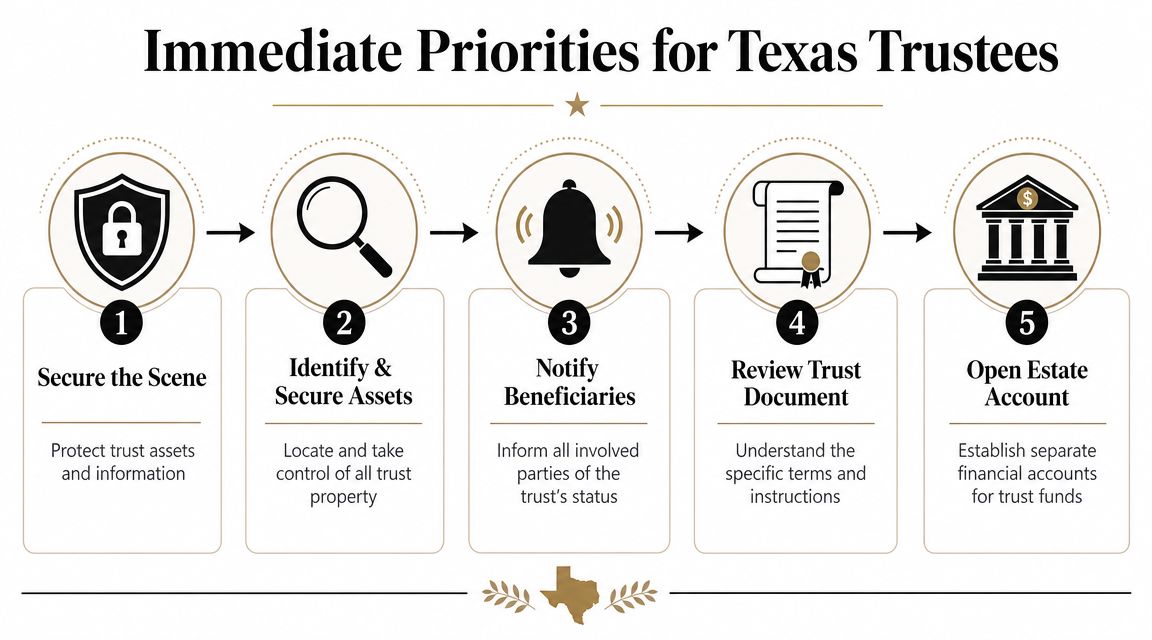
The first few days call for triage. A new trustee does not start by solving every family disagreement or deciding who gets what. The immediate job is to stop preventable loss, stabilize communication, and get enough information to make sound decisions.
Confirm your authority before you act
Start with the signed trust agreement and every amendment you can find. Then gather the documents that explain why you are now serving. That may include a death certificate, a written resignation, medical incapacity documentation, or an acceptance of trusteeship if the trust requires one.
This step feels administrative, but it affects almost everything that follows. Banks, brokerage firms, title companies, and insurance carriers usually will not deal with a new trustee until the paper trail is clear. If your authority is incomplete or disputed, even routine tasks can stall.
Read the trust for the practical points first. Who are the current beneficiaries. What assets are mentioned. Are there co-trustees. Does the trust limit distributions, require notices, or give special instructions about real estate or business interests. You are looking for operating instructions, not trying to master every clause in one sitting.
Stop the bleeding by securing assets
New trustees get into trouble when they make distributions or informal promises before they have control of the property. The safer approach is to secure everything first.
Focus on the assets that can deteriorate, disappear, or create liability quickly:
- Real estate. Confirm who has access, whether the property is insured, whether taxes and utilities are current, and whether the house needs basic maintenance or a lock change.
- Bank and investment accounts. Identify accounts titled in the trust's name, get recent statements, and review automatic drafts, deposits, margin features, or beneficiary-linked activity.
- Tangible property. Locate vehicles, firearms, jewelry, collectibles, safes, business records, and original estate planning documents.
- Digital access. Preserve phones, laptops, password managers, email access, and account recovery information if it is available lawfully and practically.
If there is a business, rental property, or vacant home in the trust, urgency goes up. Those assets can lose value fast and create daily problems if no one is actively managing them.
Stabilize the patient by communicating early
Once the property is secure, turn to the human side. Beneficiaries do not need a polished final answer in week one. They do need to know that someone is in charge, the trust is being reviewed, and distributions will wait until assets and obligations are understood.
Written communication is usually the better first move. It lowers the chance of inconsistent messages, creates a record of what was said, and helps slow down pressure from the loudest person in the room. A short, calm notice is enough. State that you have begun serving, that you are collecting information, and that more detail will follow after review.
This is also the point to identify any immediate friction. If one beneficiary is demanding money, another is occupying trust property, or a family member has account access that should be cut off, those facts affect your next decisions.
Diagnose the situation with an inventory and file setup
After the immediate risks are contained, build a working inventory. List what the trust owns, what it may owe, who is involved, and what deadlines may be approaching. Include account numbers, property addresses, insurance information, contact names, and any missing records you still need to get.
Open a trust administration file at the same time. Keep copies of statements, invoices, letters, tax records, and notes of material calls. Trustees must maintain detailed records of account activity, expenses, statements, and distributions, and keep beneficiaries reasonably informed, as noted in guidance on how trust administration works after death.
Practical rule: If you pay it, move it, transfer it, store it, or discuss it, record it that day.
If the trust is now operating as its own tax entity, address that early as well. That may mean getting a tax ID, routing income correctly, and making sure no one keeps using a deceased person's Social Security number out of habit.
Set a first-week benchmark
A good first benchmark is simple and realistic. By the end of the first week, aim to do four things: confirm your authority, secure the known assets, send written notice to the relevant parties, and create a basic inventory and transaction log.
That sequence gives you control without rushing into permanent decisions. It also puts you in a better position to decide the next question honestly: can you handle the administration with the right help, or do you need to consider stepping aside?
Understanding Your Core Fiduciary Duties in Texas
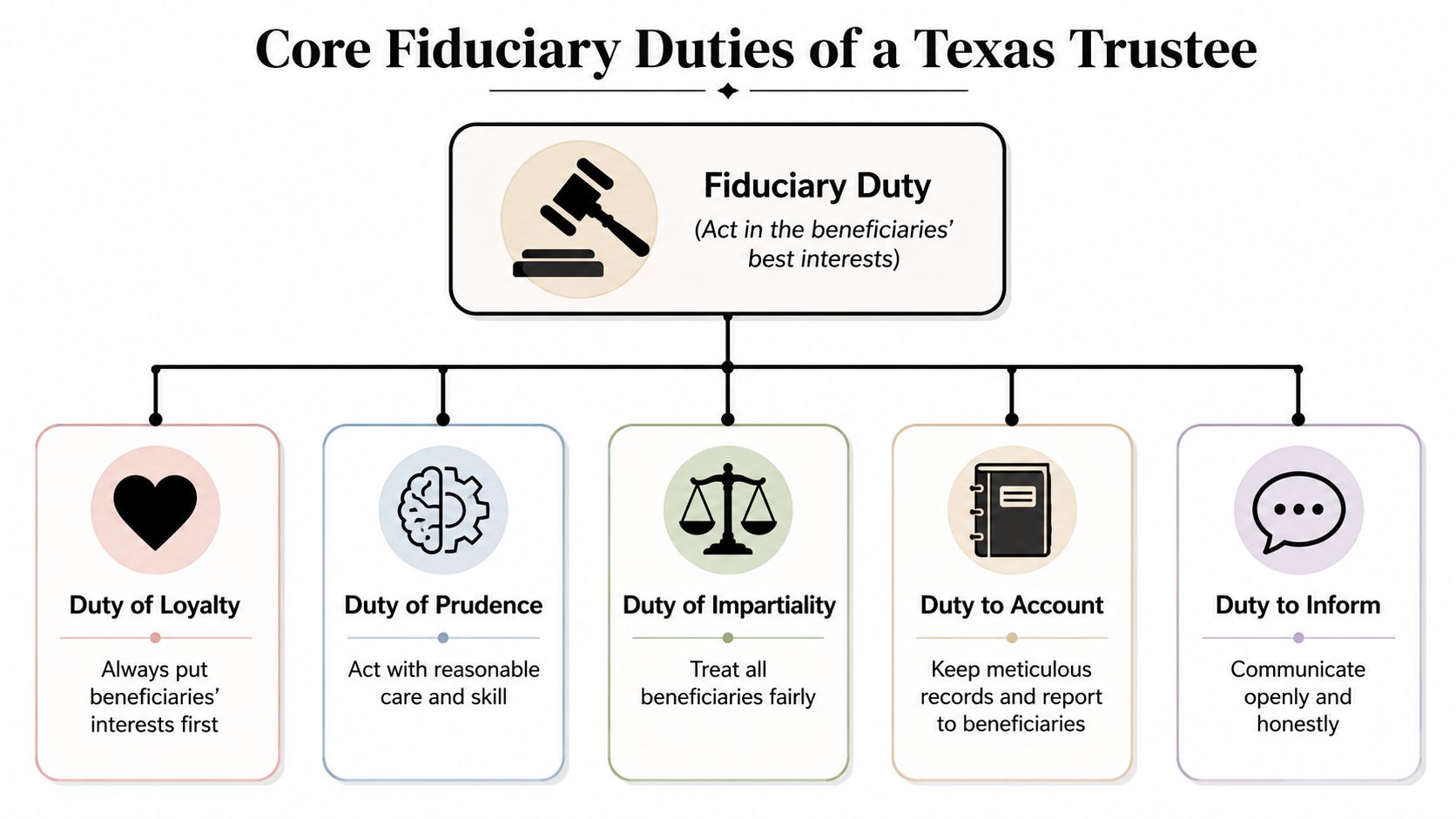
A trustee's fiduciary duties in Texas require action that serves the trust and its beneficiaries, not the trustee's personal interests. If the first part of this article was triage, this is the standard of care that governs every decision after the initial rush settles down.
Loyalty, prudence, and impartiality
The duty of loyalty is the first filter. Before you use trust property, approve a payment, or discuss a side arrangement with family, ask whether the decision benefits the trust or benefits you. If the trust owns a house, living there rent-free is usually a problem unless the trust clearly permits it and the terms are documented correctly. If trust property will be sold, buying it yourself at a favorable price can create a serious conflict.
The duty of prudence is about judgment, process, and restraint. Texas trustees are not expected to know every tax rule, investment rule, or title issue from memory. They are expected to recognize when a decision has risk and get the right help before making it. That may mean hiring a CPA, appraiser, financial advisor, property manager, or trust attorney. For a rental property, that can also mean comparing self-management against property management for investors if the trust needs steady oversight and the trustee does not have the time or experience to handle tenant issues directly.
The duty of impartiality becomes harder when beneficiaries have different personalities, different financial needs, or old grievances. The beneficiary who calls every day does not get priority for that reason alone. The quiet beneficiary does not lose rights by staying quiet. Your job is to apply the trust terms fairly, even when family pressure points in the opposite direction.
Here's a short visual explanation before going deeper:
Accounting and communication are part of the job
Many trustees worry first about distributions or investments. In practice, poor records and poor communication create just as many problems.
Beneficiaries are generally entitled to reasonable information about the trust and its administration. A trustee who feels overwhelmed still has to protect assets, maintain records, and respond appropriately. Silence usually makes suspicion worse. Sloppy records make even honest decisions harder to defend.
A workable standard looks like this:
- Keep a running ledger. Every deposit, expense, reimbursement, and distribution should be traceable.
- Save the backup. Bank statements, invoices, receipts, letters, emails, and notes from important calls should stay in the file.
- Answer in writing when the issue matters. You do not need a long legal letter for every question, but you do need a clear record of what was asked and how you responded.
- Follow the trust document, even when family members disagree. Personal opinions about what seems fair do not override the written terms.
Trustees in Texas often get into trouble for two reasons: acting without authority, or failing to document the authority they had.
What this looks like in real life
Consider a trust that holds a rental house, a brokerage account, and a checking account. One beneficiary wants an immediate distribution because bills are due. Another wants the house sold right away. A prudent trustee does not react to the loudest request first.
The trustee confirms how title is held, checks insurance, reviews account ownership and beneficiary demands, identifies current expenses, and determines whether debts, taxes, repairs, or reserve needs must be handled before any distribution. That approach can feel slow to the family. From a fiduciary standpoint, it is often the safer choice because it protects the trust before money leaves it.
That is the triage mindset applied to fiduciary duty. Stop self-dealing. Stabilize communication. Diagnose the facts. Then make decisions you can explain and document later.
What Are Your Options When You Feel Overwhelmed
Feeling overwhelmed doesn't mean you must resign immediately. It means you need to decide what level of support the trust requires, and what level of responsibility you can realistically carry.
Four realistic paths
Some trustees should stay in the role and add professional support. Others should share authority. Some need a clean resignation. In a few situations, court involvement becomes the practical answer.
| Option | Control Level | Cost Implication | Best For |
|---|---|---|---|
| Hire professional help and remain trustee | High | Moderate to potentially significant, depending on assets and advisors used | Trustees who are responsible, organized, and willing to supervise the process |
| Add a co-trustee if allowed | Shared | Varies based on whether the co-trustee is a family member or professional | Trusts with ongoing management needs or family members who can work together |
| Resign properly | Low after transition | Transition costs may apply | Trustees facing health, time, conflict, or skill limitations |
| Seek court appointment of a replacement trustee | Low to shared, depending on outcome | Usually higher because of litigation or court process | Situations with no clear successor, disputes, or inability to complete a handoff |
Staying in the role with help
This is often the best choice when the trustee is honest, available, and willing to follow systems. You can remain trustee while hiring a CPA for tax work, an appraiser for valuation, a financial advisor for investment oversight, and legal counsel for administration strategy.
For example, a trustee handling rental property may need vendor coordination, lease issues, repairs, or occupant management. In that kind of case, even a non-legal operational resource about property management for investors can help a trustee understand the difference between owning property and actively administering it. The lesson is simple. Trust-owned real estate creates ongoing duties, and unmanaged property becomes a legal and accounting problem quickly.
A Texas trust administration lawyer can also handle notices, review distribution standards, coordinate accountings, and reduce the chance that informal family communications create later disputes. The Law Office of Bryan Fagan, PLLC provides that type of Texas-based trust administration support, along with related services in estate planning, probate, guardianship, and asset protection.
Sharing the role
A co-trustee arrangement can work well if the trust allows it and the people involved can cooperate. One person may handle property and records. Another may handle beneficiary communication or business decisions.
The risk is friction. Shared authority can reduce workload, but it can also slow decisions if co-trustees disagree or if one person assumes the other is handling an urgent issue.
The wrong co-trustee doesn't cut the work in half. Sometimes it doubles the conflict.
Resigning the right way
Resignation can be the most responsible choice if you lack time, health, neutrality, or records. But resignation must be done carefully. The trust document often controls how a trustee resigns and how the next trustee steps in.
Before stepping away, you should usually organize records, prepare a clear accounting of what you did, identify assets under your control, and transfer information cleanly. A sloppy resignation can leave you exposed to later questions.
When court involvement makes sense
If there is no named successor trustee, if beneficiaries are already fighting, or if someone contests authority, a court may need to appoint a replacement. That process costs more and takes more effort, but it can provide structure when the trust can't move forward informally.
Common Pitfalls and When to Seek Legal Counsel
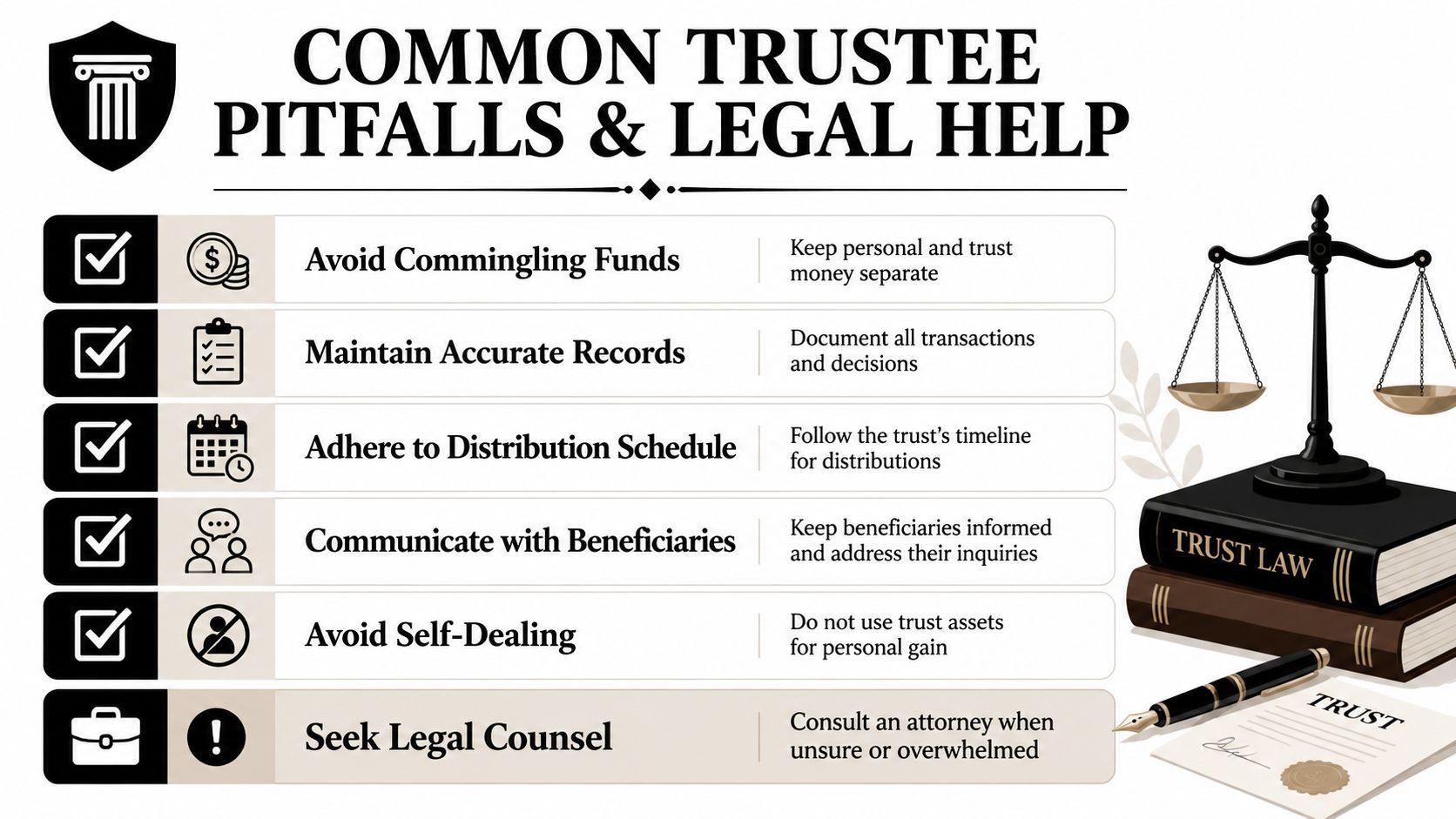
Trustees usually don't create risk through dramatic misconduct. More often, they create it through small unforced errors that pile up. A missing statement. A verbal promise. A reimbursement with no receipt. A transfer made before authority is confirmed. An unanswered beneficiary email that turns into a lawyer letter.
The mistakes that create the most exposure
Some problems show up again and again in Texas trust administration.
- Commingling funds means mixing trust money with personal money. Even innocent commingling can undermine your accounting and credibility.
- Poor documentation makes reasonable actions look questionable later. If a file doesn't show why money moved, beneficiaries may assume the worst.
- Premature distributions can backfire when expenses, taxes, or title issues surface afterward.
- Digital access delays can stall the entire administration. Many trustees can't move forward because they don't have passwords, device access, or the documents institutions demand.
- Unrecorded oral conversations create conflicting memories and avoidable conflict.
A growing practical issue involves digital-first administration. Trustees may not know how to access online banking, email-linked accounts, payment apps, or cloud storage. Practice guidance also notes that families increasingly run into access problems after death, and the FTC reported consumers lost more than $10 billion to fraud in 2023, which helps explain why institutions are tightening verification requirements, as described in this successor trustee checklist for managing a trust.
Delay turns routine administration into a dispute
A trustee who goes quiet often thinks, “I'll update everyone when I know more.” Beneficiaries often hear something else: “The trustee is hiding something.”
That's when legal pressure starts. If a trustee refuses to correct problems, beneficiaries may petition a court to compel an accounting or remove the trustee. In litigation, the trustee typically has about 20–21 days after service to file an answer, creating a very short window before a default judgment may be possible, as explained in this discussion of trustee litigation deadlines in Texas.
That timeline is one reason I tell trustees to preserve records before they take any major action. Emails, text messages, receipts, letters, statements, and handwritten notes can all become important if the dispute moves into discovery.
If a beneficiary is upset, your memory is not enough. Your file is what protects you.
When hiring counsel stops being optional
A Texas trust administration lawyer isn't only for courtroom emergencies. Early legal guidance often costs less than cleaning up a preventable dispute later.
You should strongly consider legal counsel when:
- The trust holds unusual assets. Closely held businesses, mineral interests, litigation claims, or multiple properties require more than casual administration.
- Beneficiaries already disagree. Once conflict shows up, written strategy matters.
- Authority is unclear. If amendments conflict, successor language is confusing, or funding questions exist, you need legal review before acting.
- You're considering resignation. A proper transition protects both the trust and the outgoing trustee.
- You don't know the next correct step. Uncertainty is itself a reason to get advice.
If you need help deciding whether to bring in counsel, this resource on when to hire a trust administration attorney in Texas is a useful next read.
Taking Control with Confidence and a Clear Plan
The trustee role becomes manageable when you stop treating it like one giant job and start treating it like a series of controlled decisions. First protect the assets. Then steady communication. Then build the file, review the legal authority, and decide whether you are the right person to continue.
That triage mindset matters because trust administration in Texas isn't a quick handoff. It can continue well beyond the moment a trustee takes office, especially when records are incomplete, property needs attention, or family tension is already present. A careful trustee doesn't rush to appear decisive. A careful trustee creates a record that shows good faith, sound judgment, and respect for fiduciary obligations.
If you're trying to regain control, one practical step is improving your system for papers, statements, notices, and receipts. This guide on how to organize trust records and documents in Texas can help you set that foundation.
Trustees who do well usually follow the same pattern. They don't guess. They document. They communicate in writing. They ask for help before a manageable problem becomes a lawsuit.
You can serve responsibly without doing everything alone. That may involve a Texas estate planning attorney, a CPA, a financial advisor, a probate professional, or support tied to broader planning needs such as guardianship or asset protection. The right support structure protects the trust, the beneficiaries, and you.
If you're managing a trust or planning your estate, contact Law Office of Bryan Fagan, PLLC for a free consultation. Our attorneys provide trusted, Texas-based guidance for every step of the process.